Kevin McDonald
Collector, researcher, and curator of the archive.
Who I Am Today

My name is Kevin McDonald, and I have been collecting Holt Howard ceramics since 2002. What began as a chance encounter with a few unusual Pixieware jars eventually grew into a collection, a research project, and ultimately the archive you are exploring today.
Over the past two decades, I have devoted countless hours to studying Holt Howard's history, identifying and documenting pieces, researching product lines, comparing variations, and sharing discoveries with fellow collectors. Along the way, the collection itself grew far beyond anything I could have imagined when I purchased my first Pixieware piece.
Like many collectors, I began simply because I enjoyed the charm and personality of the objects themselves. Over time, however, my interests expanded beyond collecting. I became increasingly interested in the people behind the company, the stories behind the products, and the challenge of documenting pieces that had never appeared in catalogs, collector guides, or published references.
Today, that passion has resulted in an extremely large and comprehensive Holt Howard collection, but more importantly, it has led to a deeper appreciation for the creativity, humor, and imagination that made the company so special. The collection remains a source of enjoyment, but the research, discoveries, and friendships formed within the collecting community have become equally rewarding.
This archive grew out of that experience. Its purpose is not simply to showcase a collection, but to preserve information, document discoveries, and help ensure that the history of Holt Howard remains accessible to future collectors and researchers.
But the story of how I became a collector did not begin with Holt Howard. In some ways, it began much earlier.
The Collector Before the Collection
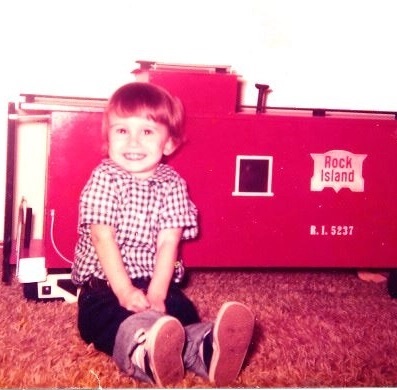
Looking back, the signs were probably there from the beginning.
As a child, I was drawn to things that could be collected, organized, displayed, and preserved. Like many children growing up during the 1970s and early 1980s, I enjoyed Star Wars toys, Matchbox and Hot Wheels cars, and trading cards. But the hobby that captured my imagination most completely was LEGO.
Over the years, I assembled nearly the entire line of LEGO Space sets released during that era. They quickly became the birthday and Christmas gifts I looked forward to most. More importantly, I treated them less like disposable toys and more like a collection. I kept the original boxes, saved the instructions, and took pride in maintaining complete sets.
Years later, after my mother passed away in 2014, I discovered that she had carefully preserved those LEGO sets long after I had left home. When she converted my childhood bedroom into a more adult space, she packed the sets away rather than discarding them. The boxes spent decades stored in the attic of my parents' home before I eventually brought them back to Chicago.
Curious to see what had survived, I reassembled every set, verified that the pieces were complete, and then carefully packed them away once again. Eventually, I sold the collection to new owners who could enjoy it as much as I once had. Looking back, the process felt surprisingly familiar. The objects were different, but the instincts were exactly the same.
Long before I discovered Holt Howard, I enjoyed collecting, organizing, researching, preserving, and documenting the things that interested me. The collections changed over the years, but the collector remained remarkably consistent.
What I did not know at the time was that a chance encounter on Mother's Day in 2002 was about to introduce me to a collection that would prove far more difficult to walk away from than LEGO ever was.
Mother's Day 2002
If there is a single moment that marks the beginning of my Holt Howard collecting journey, it occurred on Mother's Day in 2002.
At the time, I was living in Chicago and spent much of my free time exploring antique malls, flea markets, thrift stores, and secondhand shops. Like many collectors, I enjoyed the thrill of discovering unusual objects, even if I wasn't actively looking for anything in particular.
On that particular day, I found myself browsing through Broadway Antique Market on North Broadway Street in Chicago. Among the countless pieces of glassware, furniture, and collectibles, three ceramic jars caught my attention. They were a mustard jar, an instant coffee jar, and a ketchup jar from Holt Howard's Pixieware line.
I had never seen anything quite like them before.
The jars were whimsical, expressive, and unlike the more traditional kitchenware I was accustomed to seeing in antique stores. Their faces seemed to give them individual personalities. They looked less like containers and more like characters that had somehow wandered onto a kitchen shelf.
Most collectors can point to a single piece that started everything. In my case, it was not a purchase that changed my life, but a discovery. I left the antique mall that day without buying any of the jars, yet I found myself thinking about them long afterward.
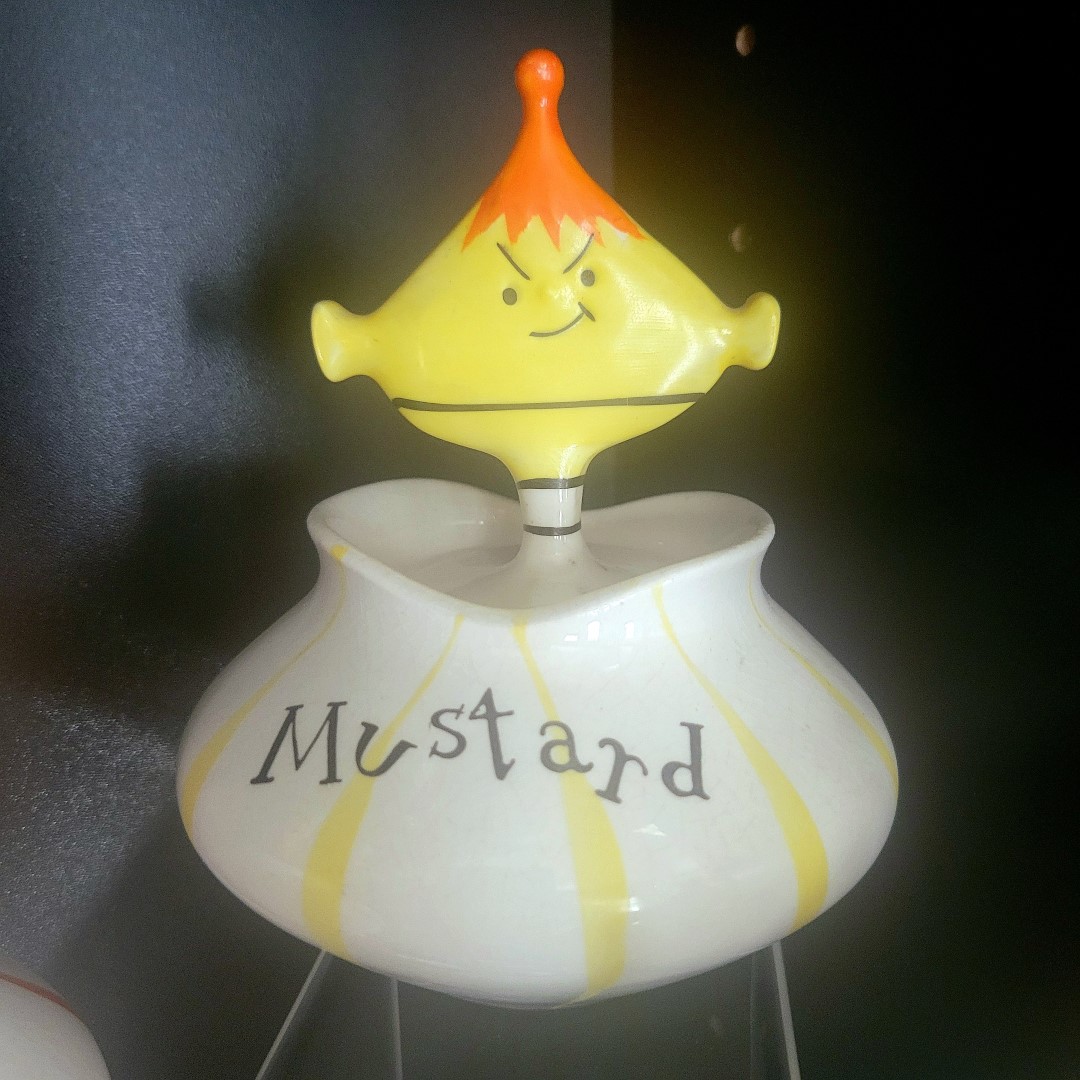
Something about those strange ceramic faces had captured my attention.
Over the following weeks, curiosity gradually turned into research. I began searching for information about Holt Howard and Pixieware, learning what I could about the company and its products. Before long, I located a mustard jar available through eBay. The seller happened to operate a junk shop and antique store on Chicago's North Side and offered local pickup.
Less than six weeks after first encountering those jars at Broadway Antique Market, I purchased my first piece of Pixieware.
Looking back, it is remarkable how much grew from that single decision. What began with one mustard jar eventually became a collection, a research project, lifelong friendships within the collecting community, and ultimately the archive you are exploring today.
One Mustard Jar Becomes a Collection
Most collectors can identify the moment when a hobby quietly becomes something more. In my case, that transformation happened gradually.
After purchasing my first Pixieware mustard jar, I began learning more about Holt Howard and the growing variety of pieces the company had produced. What started as curiosity quickly became a search for information. At the time, reliable resources were limited, and many pieces appeared only occasionally in antique shops, flea markets, and the still-young world of online auctions.
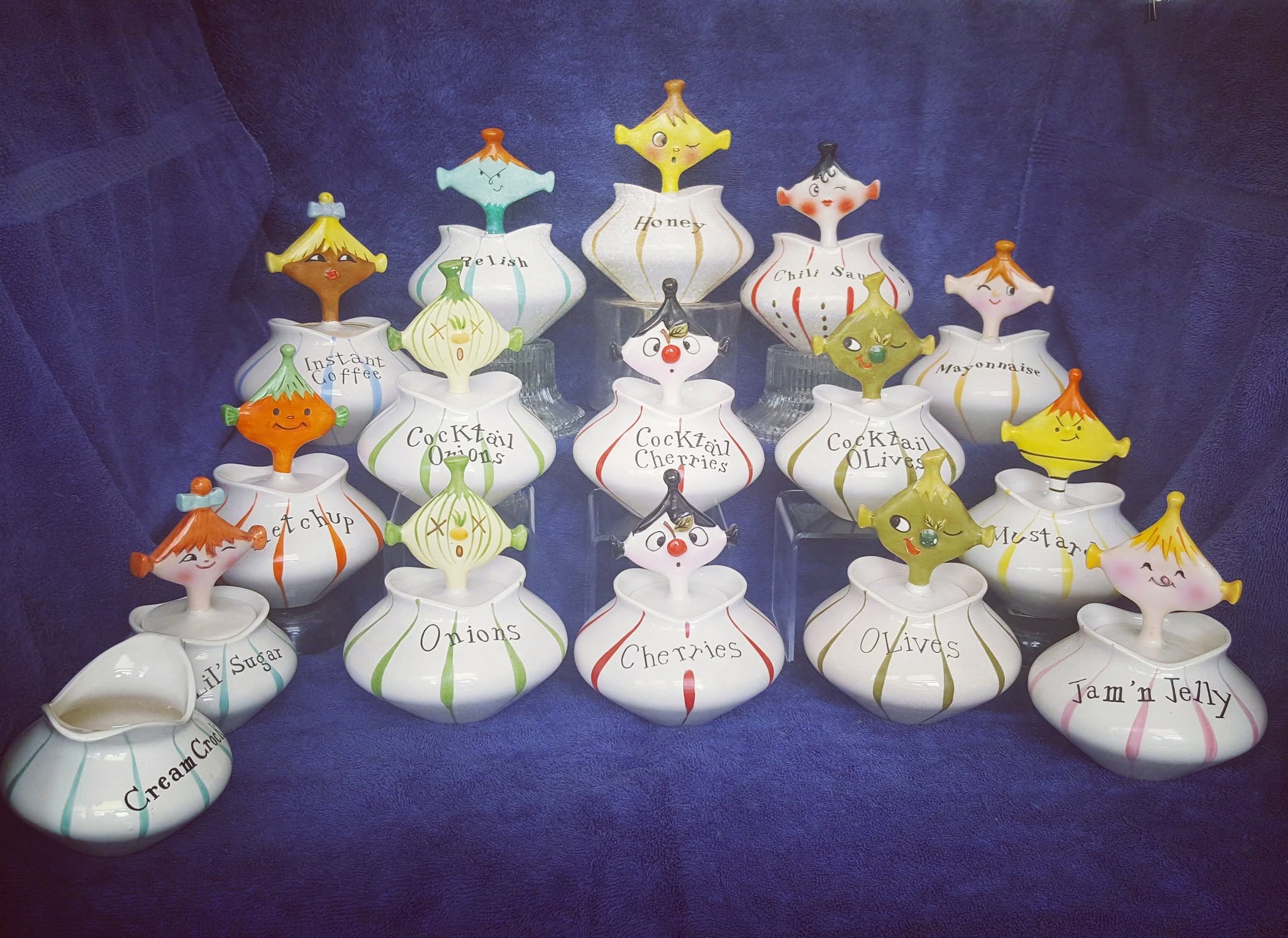
One discovery led to another. A single Pixieware jar became several. Then came pieces from other Holt Howard lines. Along the way, I began noticing differences in production, variations in design, undocumented items, and products that seemed to appear nowhere in the available reference materials. The thrill of finding a new piece was matched by the satisfaction of learning something new about the company itself.
As the collection expanded, so did my appreciation for the creativity behind the designs. What fascinated me was not simply the objects themselves, but the imagination that produced them. Holt Howard had a remarkable ability to transform ordinary household items into characters with distinct personalities. A mustard jar could smirk mischievously. A ketchup jar could seem cheerful. A humble kitchen accessory could suddenly feel alive.
The collection continued to grow over the years, eventually filling display cabinets and shelves throughout my home. What began with a single mustard jar evolved into an extensive collection representing dozens of Holt Howard product lines and hundreds of individual pieces. Yet the excitement of discovering something new never entirely disappeared. Even today, I occasionally encounter an item I have never seen before.
Collecting also introduced me to a community. Through antique shows, online groups, collector forums, and conversations with fellow enthusiasts, I discovered that many others shared the same fascination. Some became trusted sources of information. Others became friends. Together we traded photographs, compared notes, debated variations, and helped piece together parts of Holt Howard history that might otherwise have been forgotten.
Over time, the collection became more than an accumulation of objects. It became a research tool, a visual record, and a way of preserving a small but important piece of American design history. What had started with a single mustard jar was gradually becoming something much larger than a collection.
And then I discovered Walter Dworkin's guides.
From Collector to Researcher
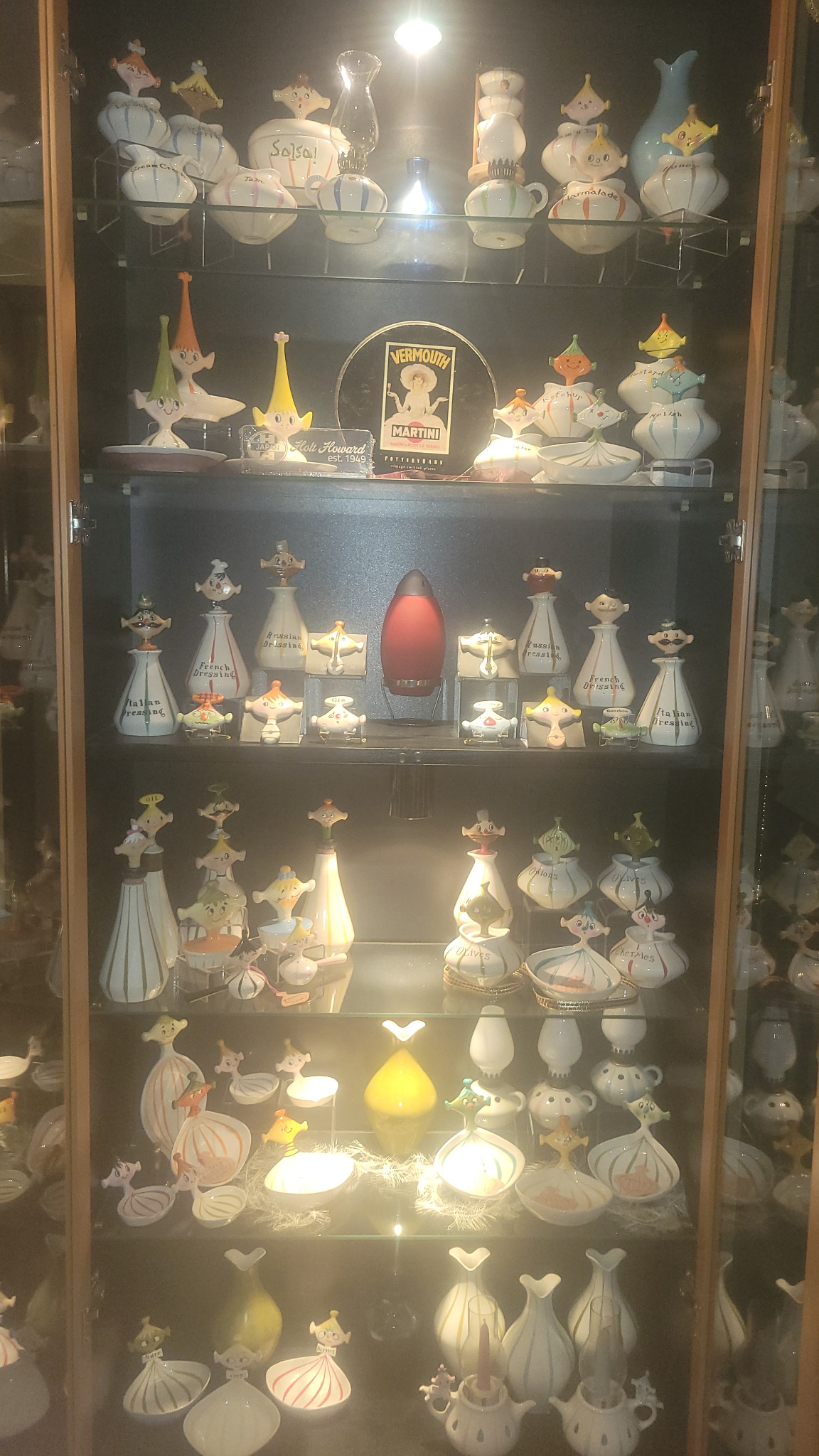
As my collection grew, so did my desire to better understand the history behind the pieces. Like many collectors during the early years of the hobby, I quickly discovered that reliable information about Holt Howard could be surprisingly difficult to find. Pieces surfaced in antique shops and online auctions, but details about their history, production dates, variations, and rarity were often scattered or incomplete.
That began to change when I discovered Walter Dworkin's collector guides. For the first time, I had access to a resource that attempted to document Holt Howard's products, catalog information, and company history in a systematic way. The guides provided a foundation that helped transform collecting from a simple hobby into a deeper research interest.
At first, I used the books the way most collectors did—as reference guides. Over time, however, I found myself comparing pieces in my own collection against the published information, studying variations, and occasionally encountering items that did not seem to appear in the guides at all. What began as collecting gradually evolved into investigation.
The more I learned, the more questions I found myself asking. Why were certain pieces undocumented? Were some variations produced later than others? How many product lines had been overlooked or only partially documented? Each answer seemed to lead to another question.
Years later, those same questions would become one of the motivations behind this archive. The goal was never to replace the work that came before, but to build upon it—to incorporate new discoveries, document previously overlooked pieces, and help preserve information for future collectors.
Readers interested in learning more about Walter Dworkin and the lasting impact of his publications can find a more detailed discussion in the later section, Walter Dworkin & The Guides.
Why This Archive Exists
This archive is the result of that long progression: from childhood collector, to Pixieware enthusiast, to Holt Howard researcher, to someone increasingly aware of how much information could be lost if it were not gathered, organized, and preserved.
Holt Howard pieces were made to be used, enjoyed, displayed, and given as gifts. They were not always treated as objects that needed to be documented for history. Many were discarded, damaged, separated from their original packaging, or passed along without context. Catalogs disappeared. Hang tags were thrown away. Family stories faded. Even now, important discoveries often surface only because a collector notices something unusual and takes the time to share it.
That is why this archive exists.
Its purpose is to gather what is known, preserve what can still be preserved, and leave room for what has yet to be discovered. It is part reference guide, part collector's notebook, and part love letter to a company that turned everyday objects into characters with humor, charm, and personality.
I hope this archive helps new collectors learn what they have found, helps experienced collectors compare notes, and helps preserve the history of Holt Howard for the next generation. More than anything, I hope it captures some of the delight that made me stop in front of three Pixieware jars at Broadway Antique Market on Mother's Day in 2002 and wonder what, exactly, I had just discovered.
Support the Archive
The Holt Howard Pixieware and Other Midcentury Ceramics Archive is provided free of charge and is continually expanded as new information, photographs, and previously undocumented pieces are discovered.
Enjoying the Archive? If you'd like to help keep it online and growing, you can buy me a coffee. The suggested donation is just $3—less than most cups of coffee these days—and every contribution is appreciated, though never expected.