Lefton Vegetable Head Pixieware
Fruit, vegetable, cocktail, and holiday character jars from one of Holt Howard's most important mid-century competitors.
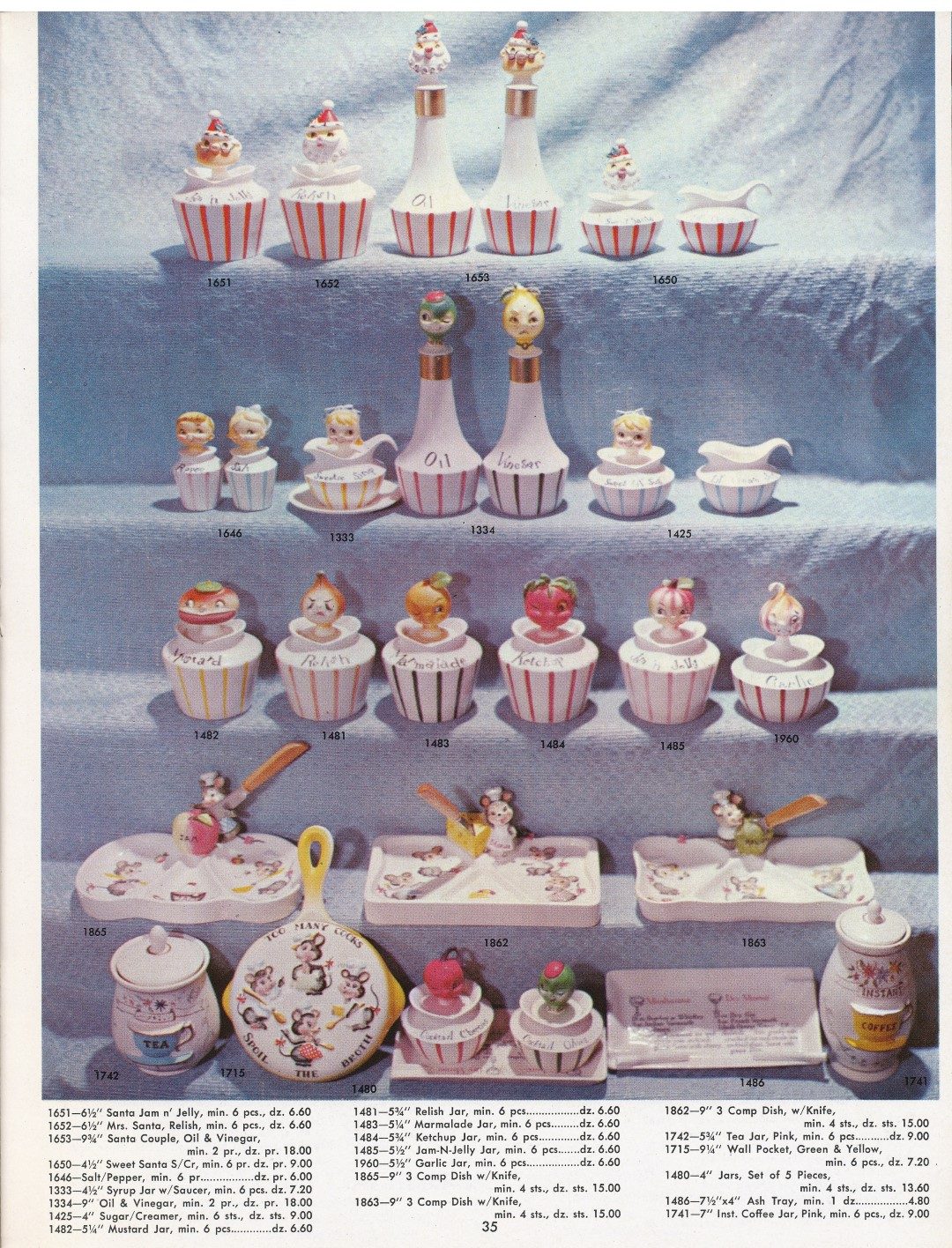
George Zoltan Lefton founded the Lefton Company in Chicago in 1941. After World War II, Lefton, like many American giftware firms, developed manufacturing relationships in Japan and built a large business importing china, figurines, holiday ceramics, and novelty giftware.
By the late 1950s, Lefton had entered the same novelty-condiment market made famous by Holt Howard's Pixieware. Unlike Davar, which copied the pixie concept directly, Lefton created a broader family of fruit-, vegetable-, food-, and character-headed jars. These pieces are not Holt Howard products, but they are an important part of the same mid-century Japanese novelty ceramics world.
How to Distinguish Lefton from Holt Howard Pixieware
- Character type: Lefton used fruit, vegetable, food, human, and holiday heads rather than Holt Howard's pixie-head format.
- Jar shape: Lefton bases are more cylindrical and generally have higher collars than Holt Howard condiment jars.
- Stripes: Most Lefton pieces have 13 vertical stripes, although several forms have fewer. Holt Howard Pixieware also uses vertical striping, so stripe direction alone does not separate Lefton from Holt Howard the way it does with Davar.
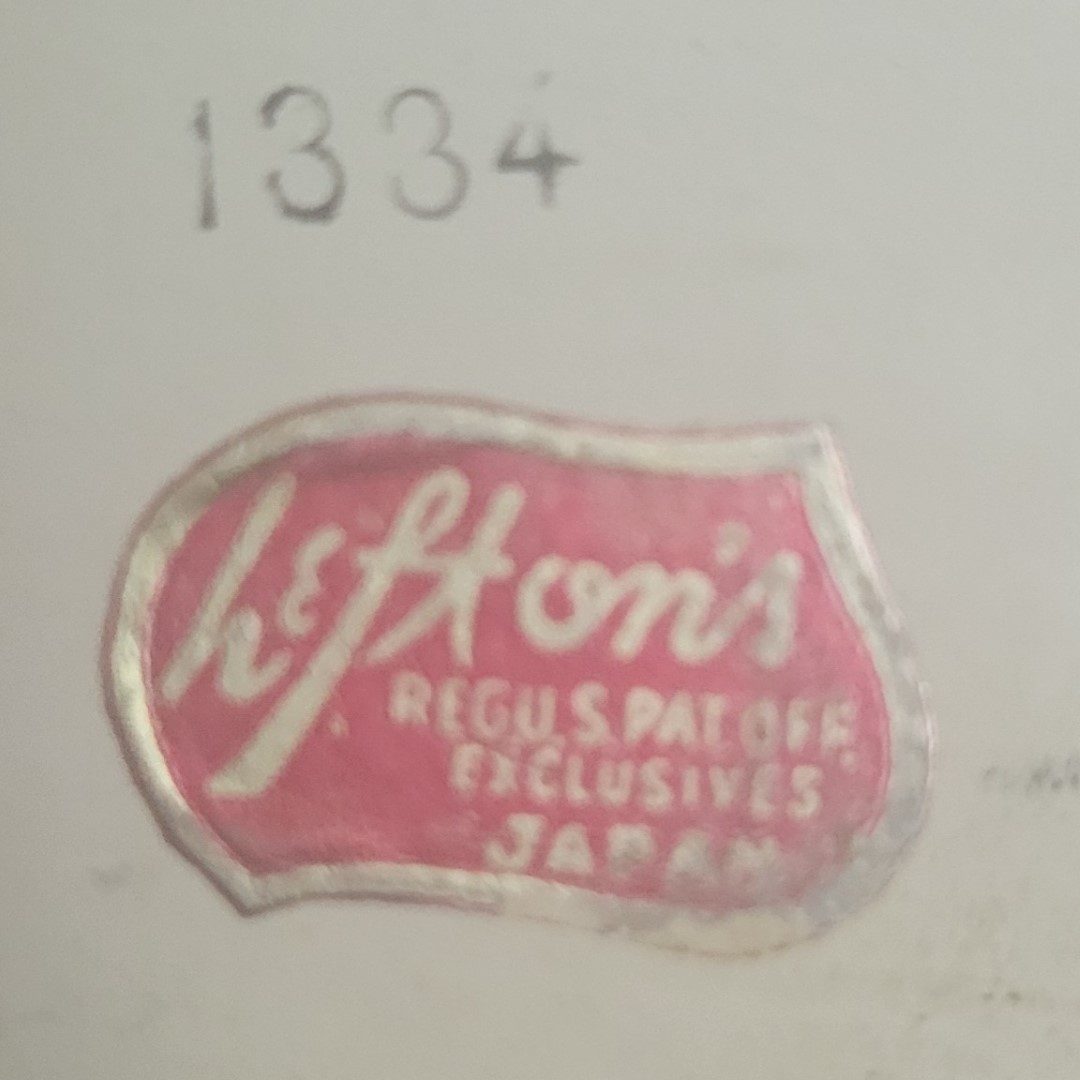
- Product numbers: Lefton pieces typically carry black catalog or product numbers on the underside. ESD-distributed examples may carry comparable ESD markings.
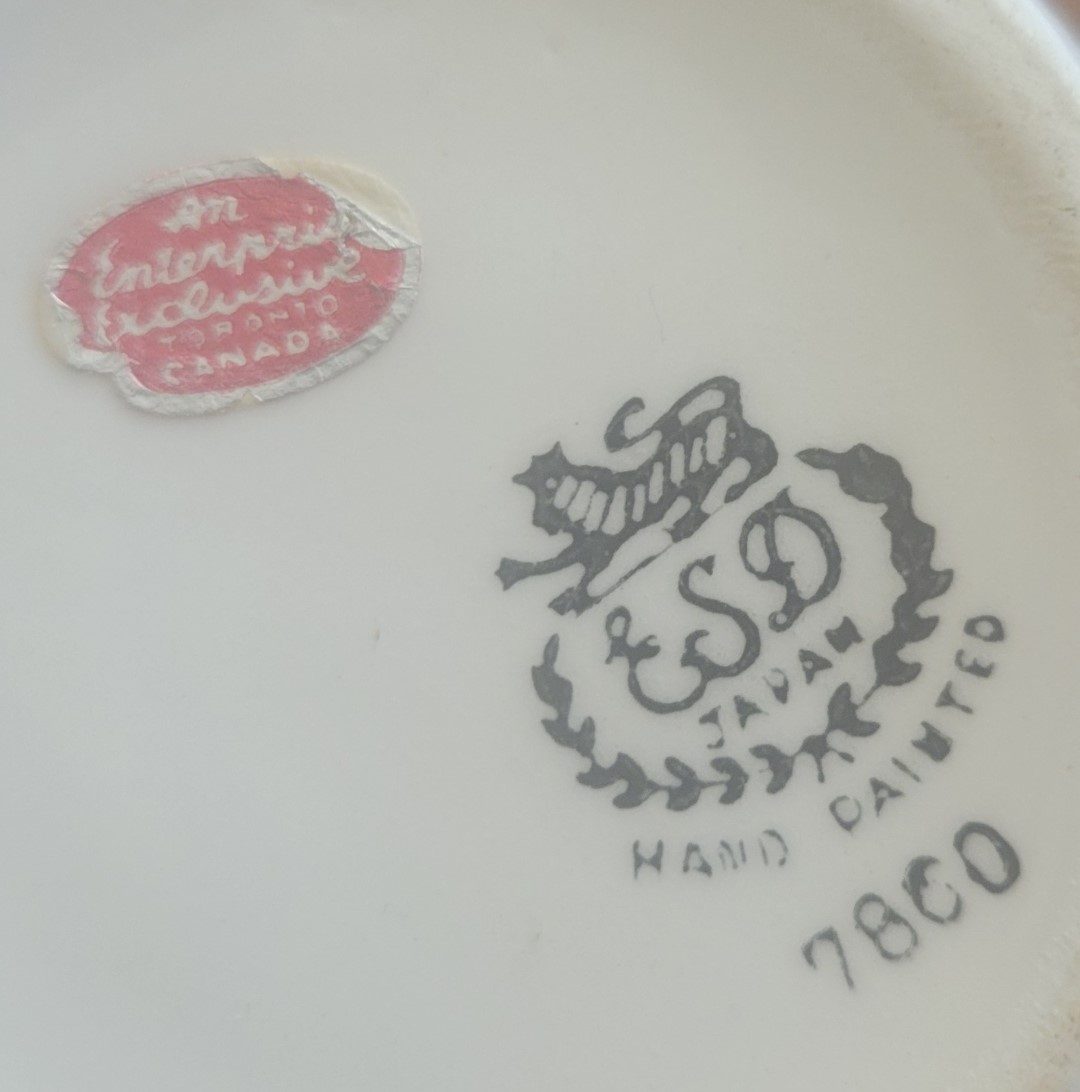
- Marks: Examples may appear with Lefton foil labels, Lefton backstamps, ESD marks, Japan labels, or only the black catalog number if labels have been lost.
Standard Condiment and Table Pieces
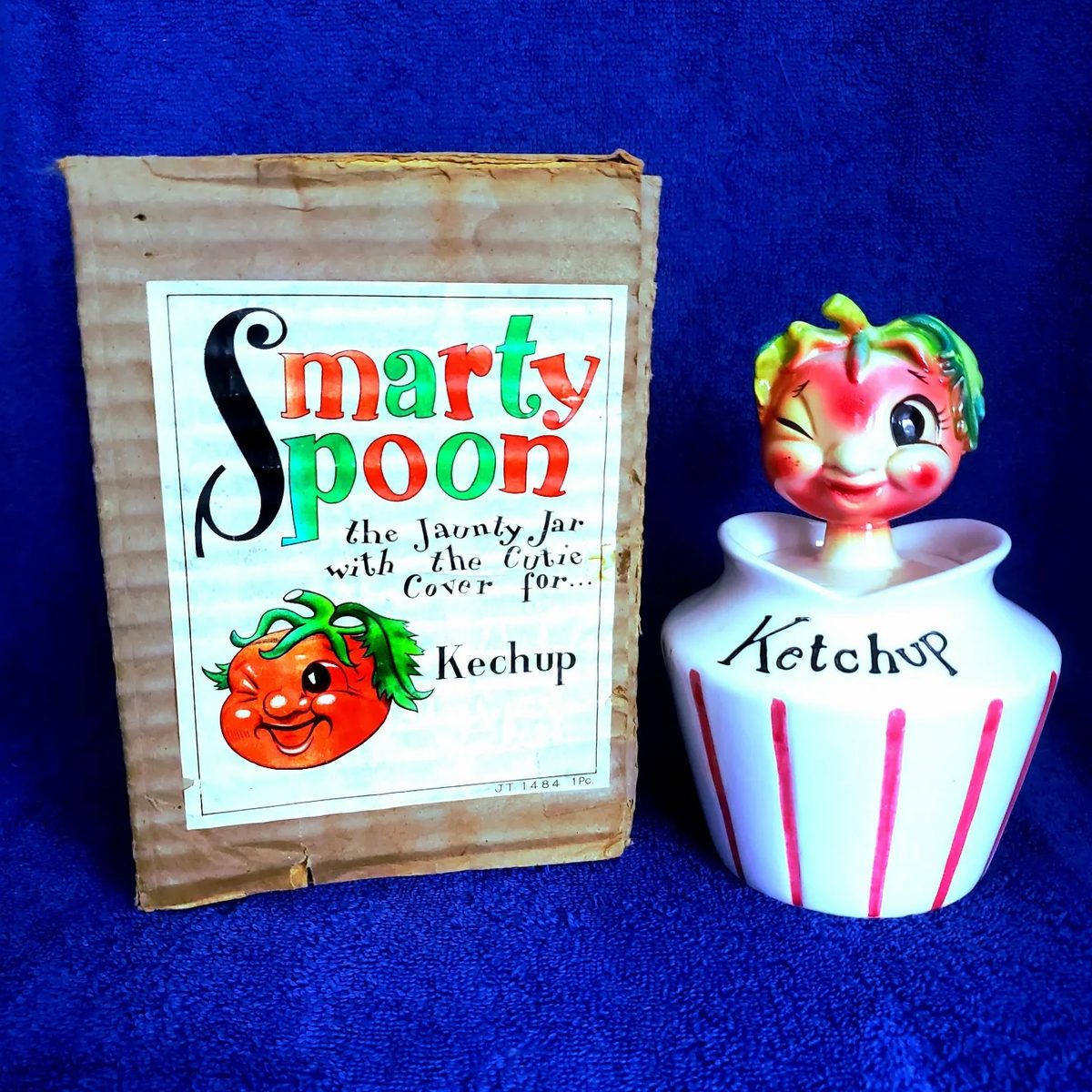
Ketchup
The Ketchup jar uses a tomato head with a leafy green hairdo. Unlike many pieces in the line, the pale red vertical stripes on the base coordinate directly with the red tomato face, making the correct head-and-base pairing relatively easy to recognize.
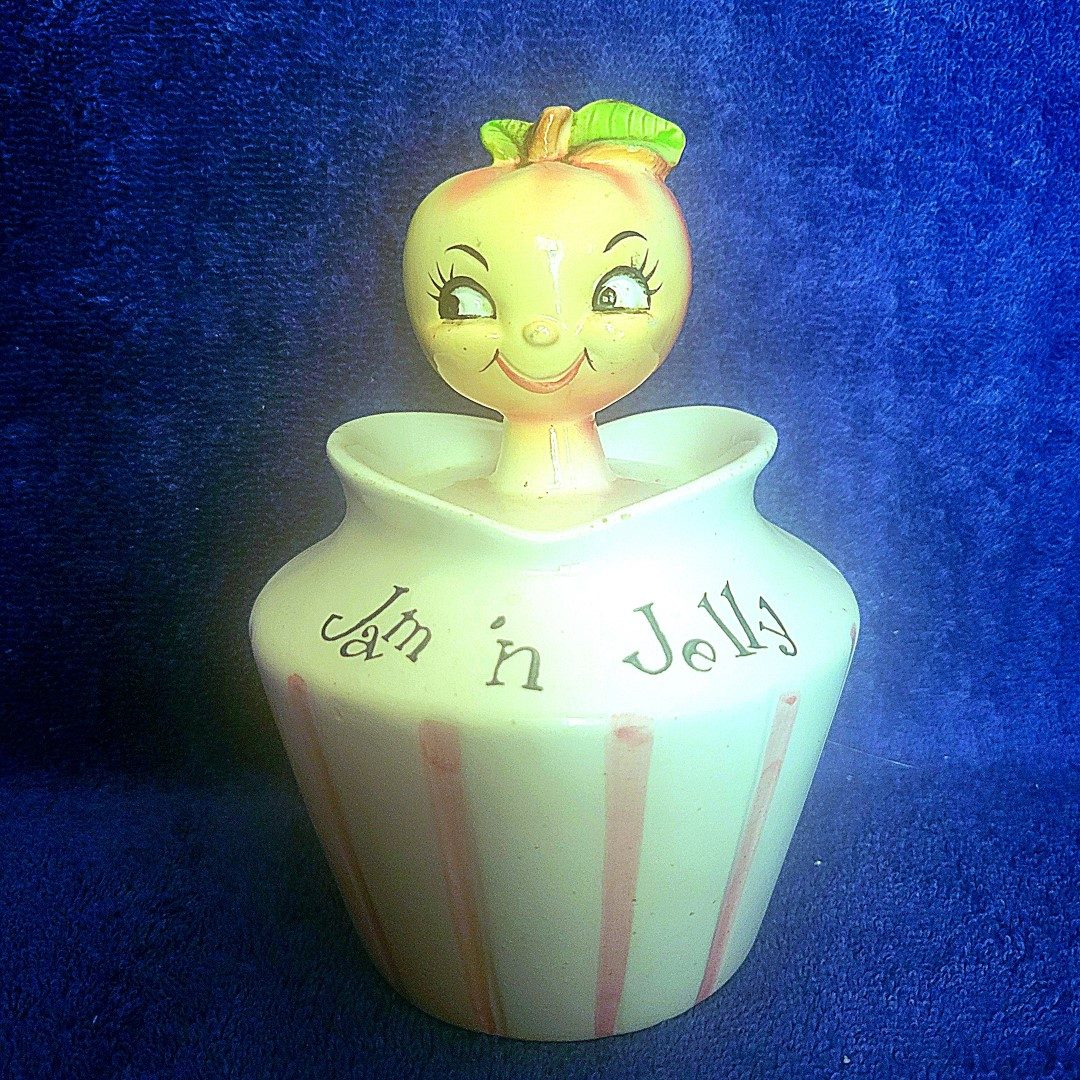
Jam 'n Jelly
The Jam 'n Jelly jar is topped by a red apple head with a green patch of color on one side. Its pink vertical stripes coordinate with the apple head, and it is one of the Lefton vegetable-head pieces most frequently encountered by collectors.
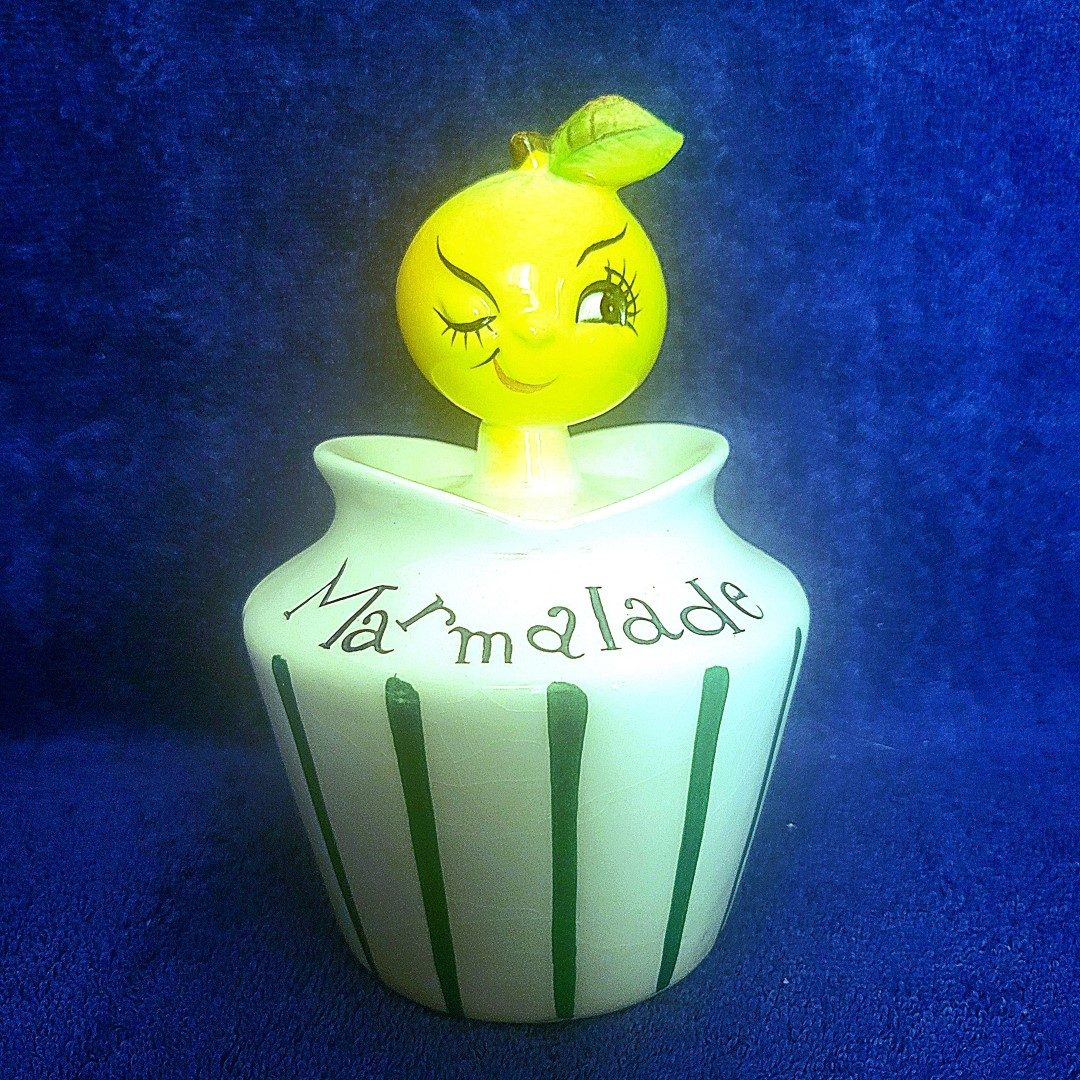
Marmalade
The Marmalade jar is topped by a winking grapefruit head with an upright leaf. The dark hunter-green stripes on the base do not match the head, but the pairing is still logical: grapefruit rind is one of the citrus rinds traditionally used in marmalade.
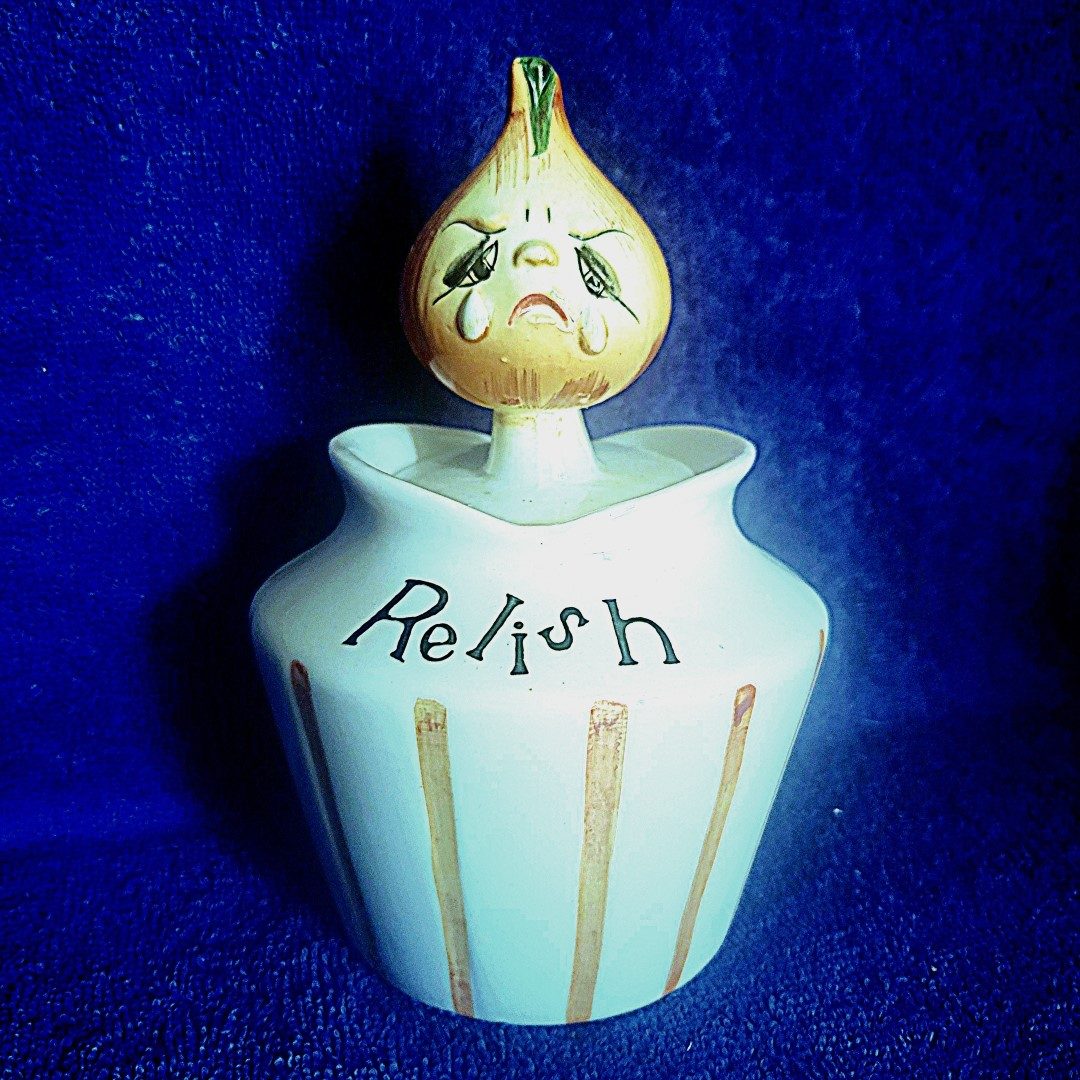
Relish
The Relish jar uses a crying onion head, a design choice that can confuse collectors who expect an onion head to belong on an onion or cocktail onion jar. Walter Dworkin noted that Lefton catalog evidence identifies the onion head as the correct match for Relish, which makes sense given onion's role as a relish ingredient.
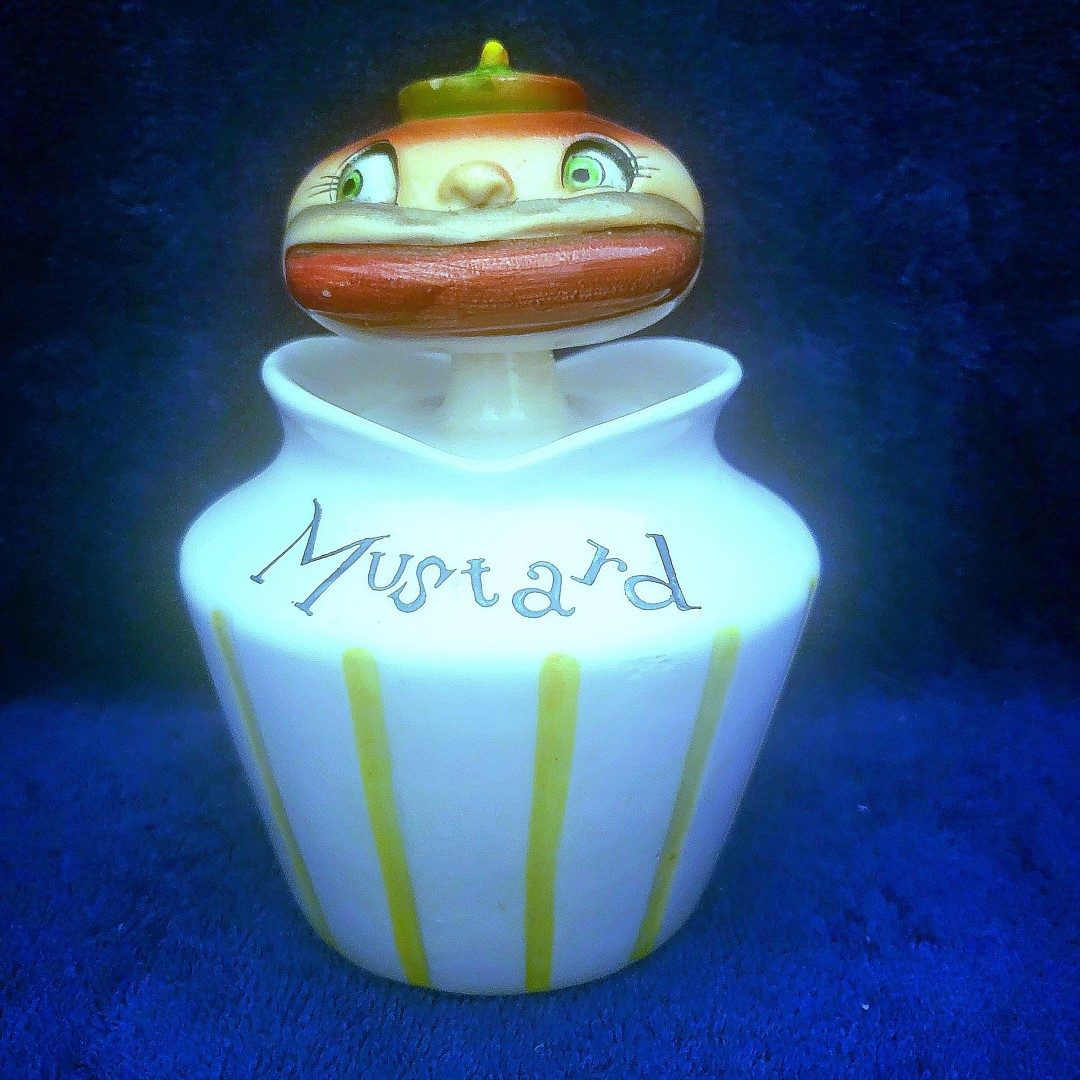
Mustard with Hamburger Head
The more familiar Mustard jar is topped by a hamburger bun head wearing a pickle for a hat. This head is documented on the Mustard base in Lefton catalog material and is the version most often encountered today.
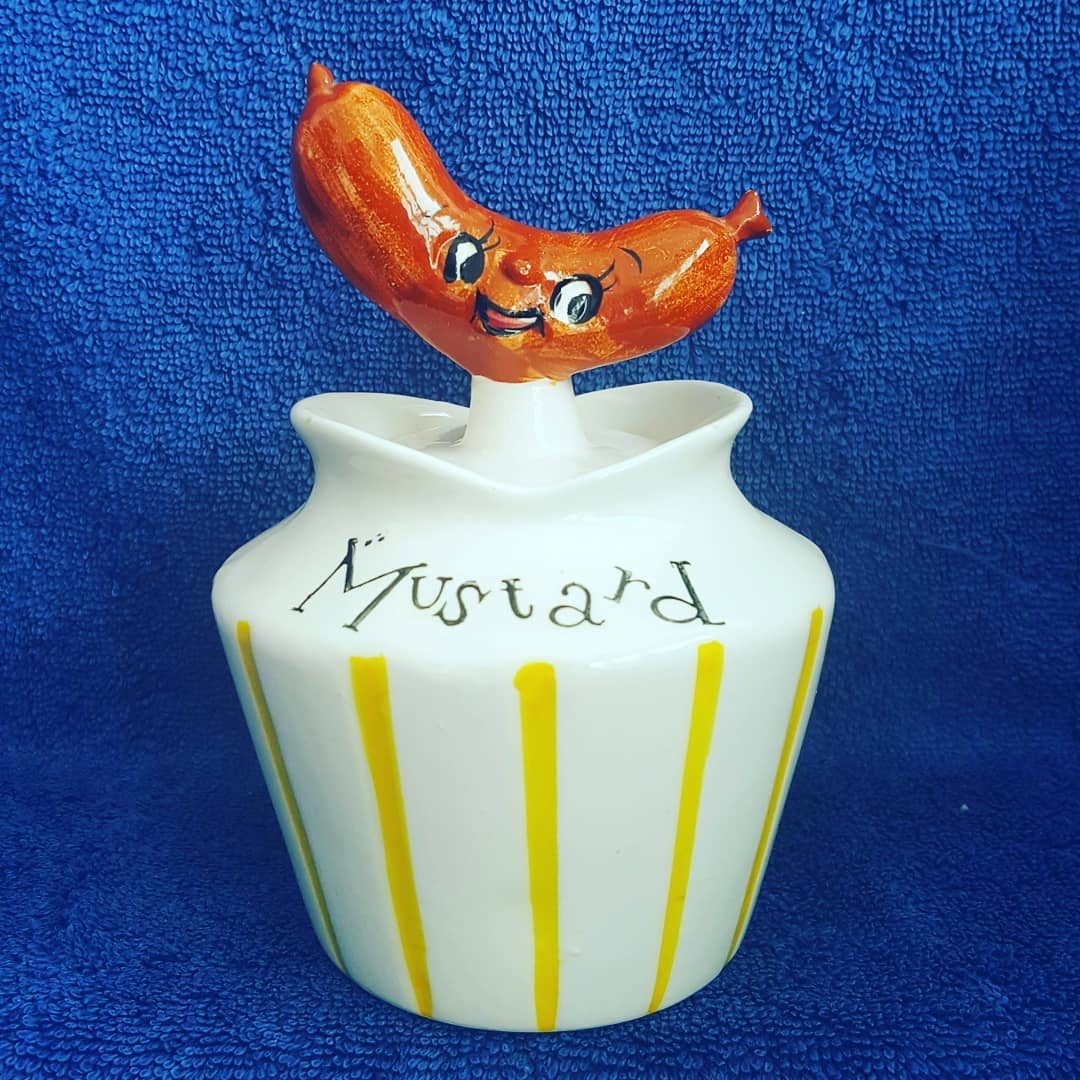
Mustard with Hot Dog Head
The hot dog-head Mustard is the great rarity of the standard Lefton condiment line. The head has no yellow to match the base stripes, but the pairing is thematically obvious: mustard belongs on a hot dog. The reason for this variant remains undocumented. One plausible explanation is that the hot dog version was an early design replaced quickly by the hamburger head, but no surviving company record has yet confirmed that theory.
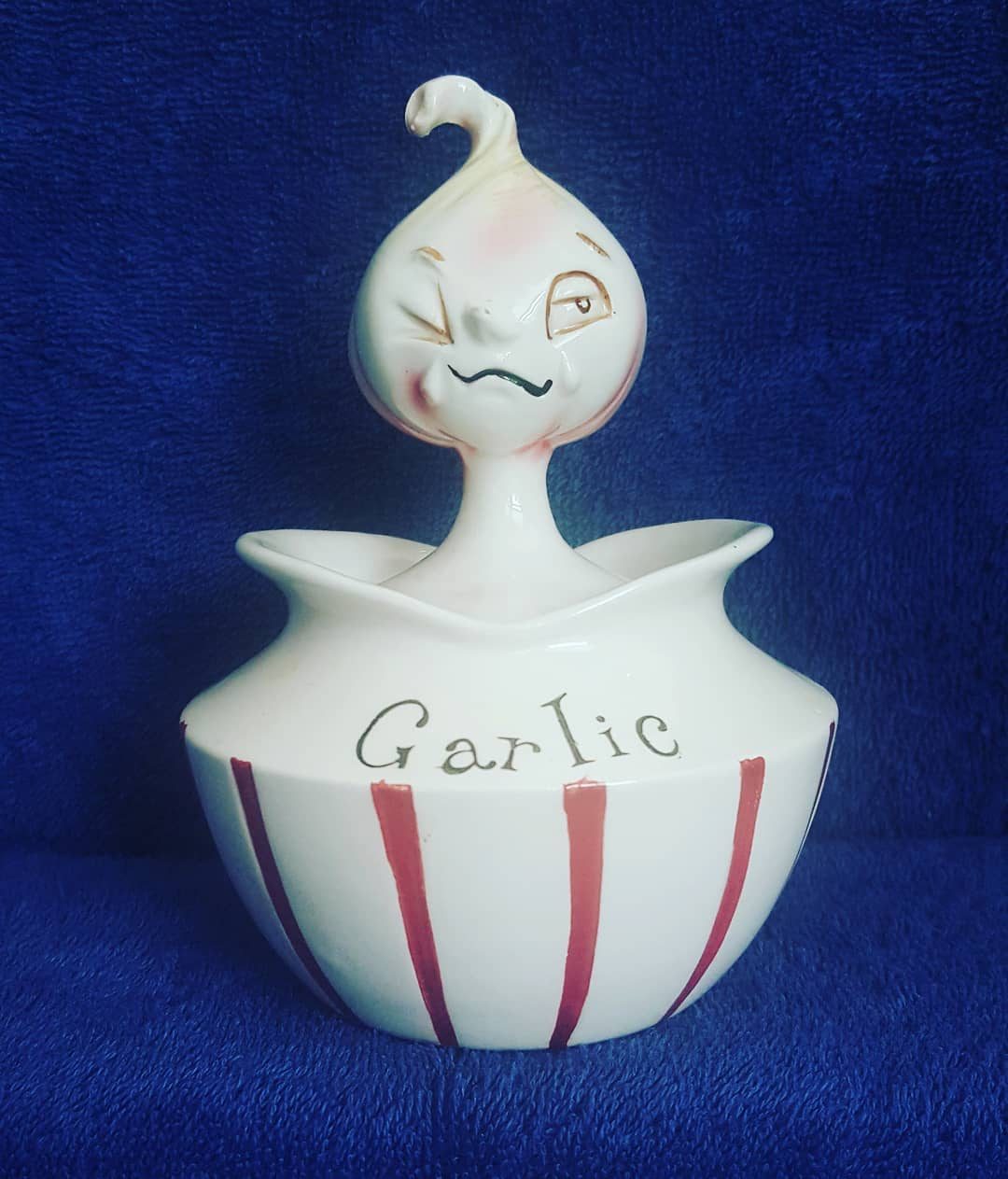
Garlic
The Garlic jar is structurally different from the standard Lefton condiment jars. It is shorter, lacks an attached spoon, and uses a cork liner around the lid to help seal in the smell of garlic. Its unusual shape and relative scarcity make it one of the more difficult non-holiday pieces in the line.
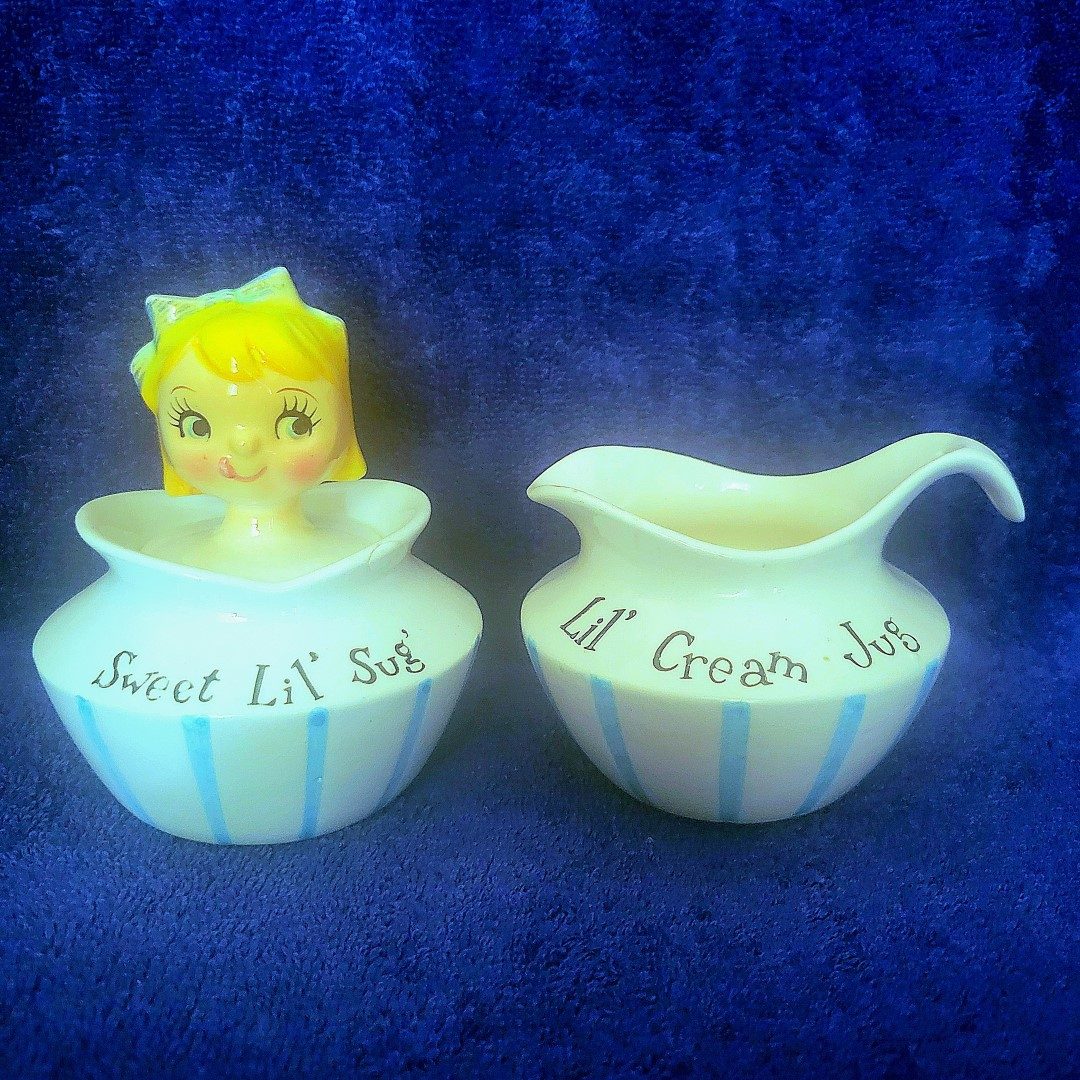
Sweet Lil' Sug & Lil' Cream Jug
Sweet Lil' Sug is a smaller sugar bowl with a built-in spoon and blue-striped base, paired with a matching Lil' Cream Jug. The sugar character's face closely relates to the girl used on the salt shaker and Sweetie Syrup.
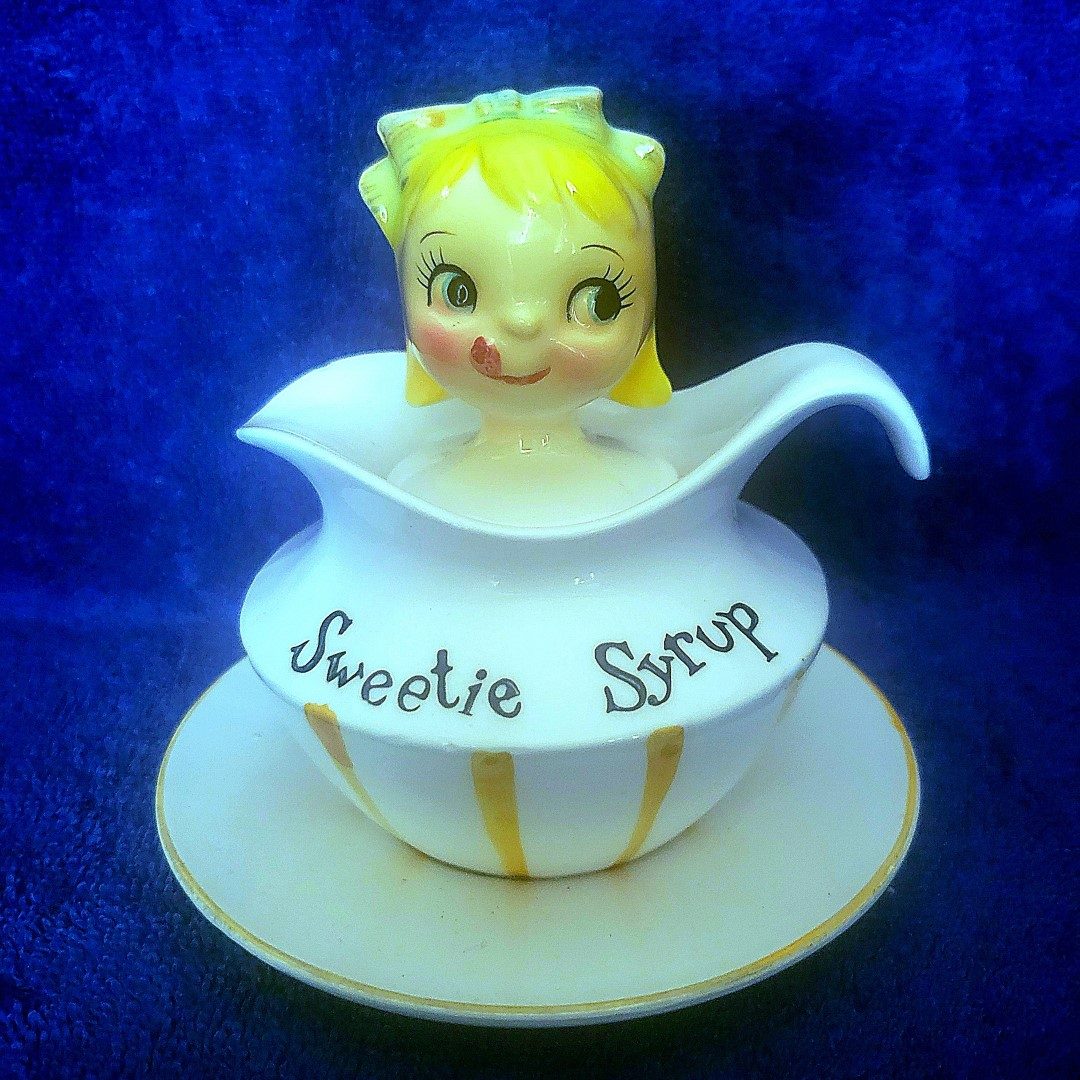
Sweetie Syrup
Sweetie Syrup features a blonde girl head licking her lips and a built-in underplate designed to catch drips. The jug has yellow vertical stripes, while the underplate has a yellow rim rather than matching striping.
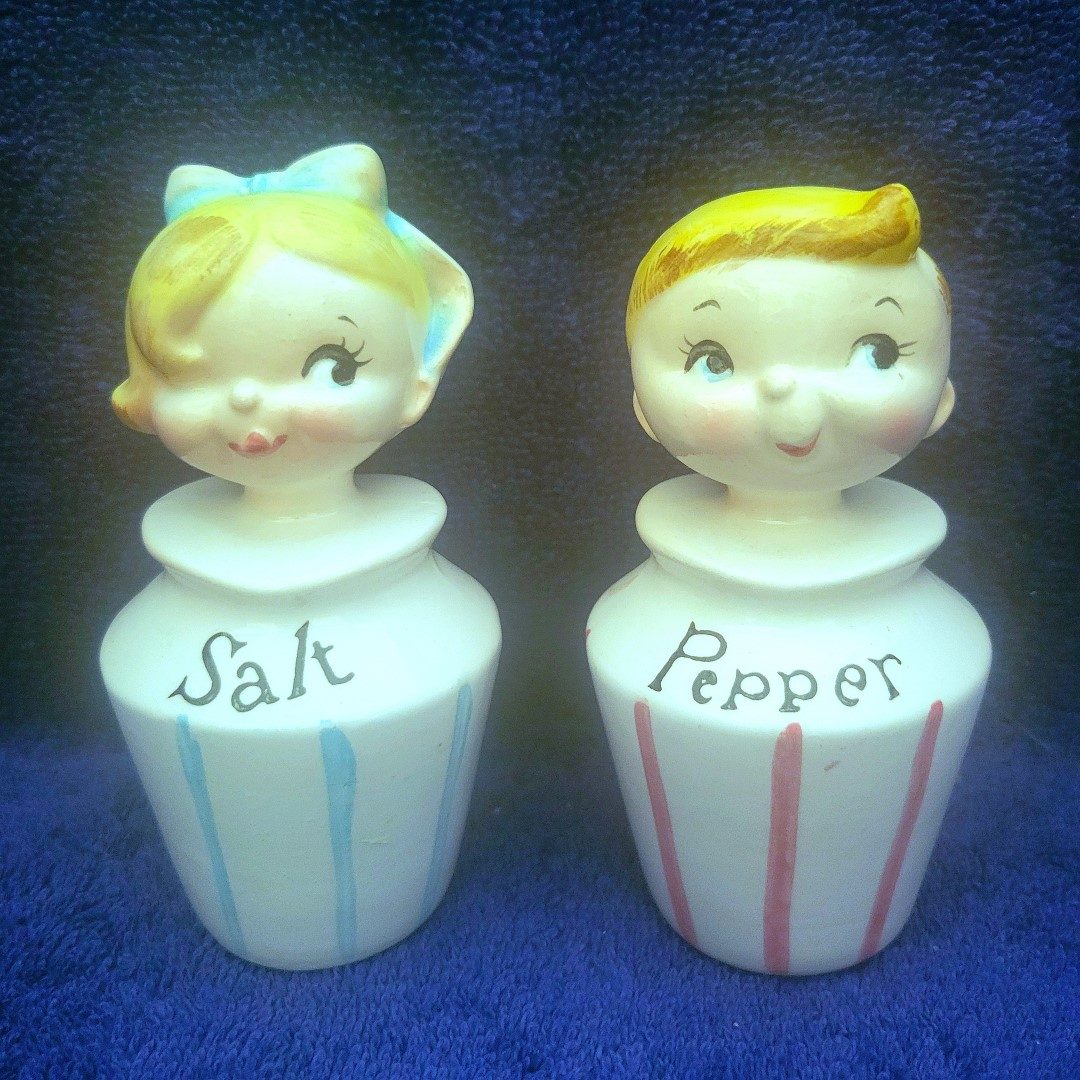
Boy & Girl Salt & Pepper Shakers
The salt and pepper set pairs a winking girl shaker with a smiling boy companion. The set has crossover appeal beyond Pixieware-related collecting, which likely contributes to its strong collector demand.
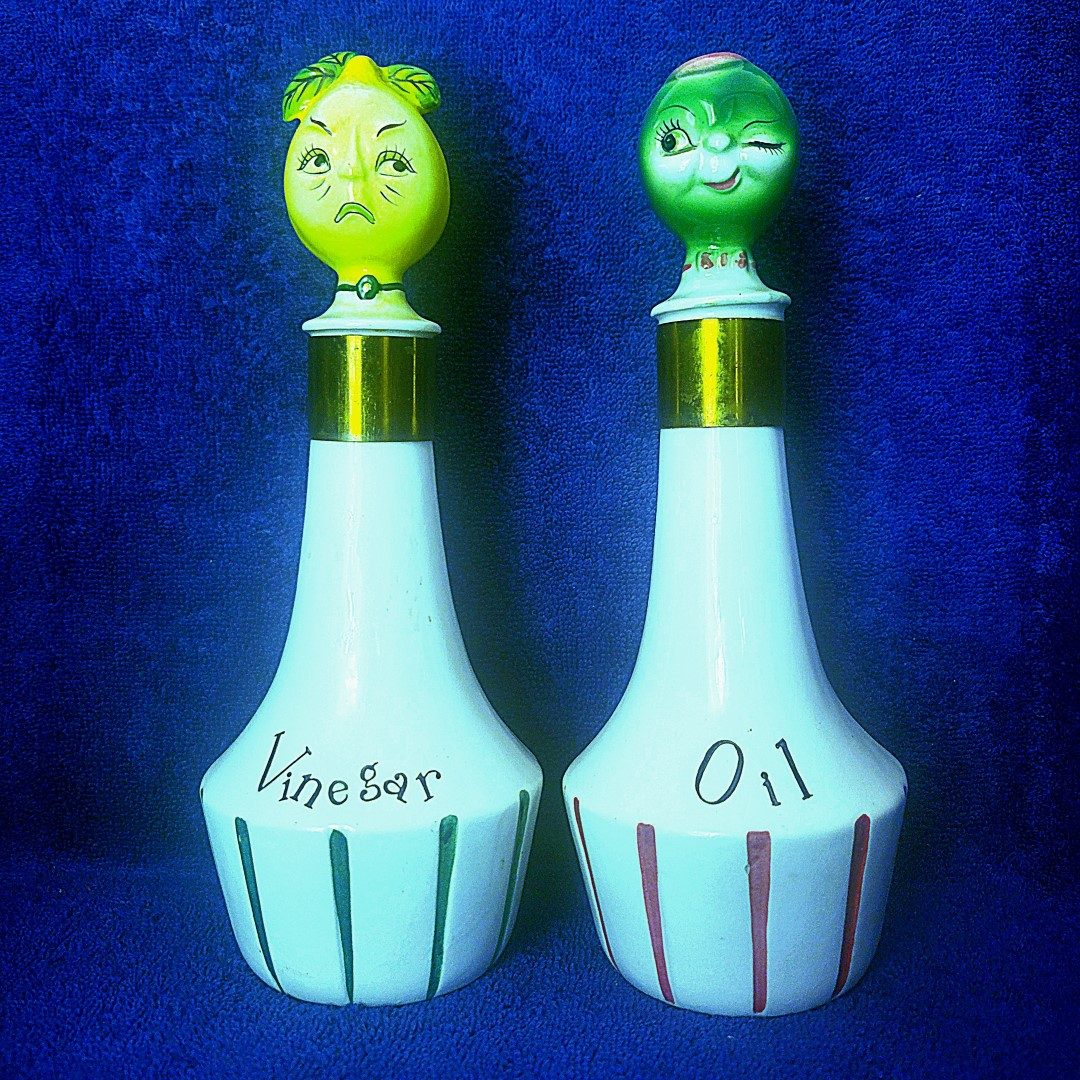
Oil & Vinegar Cruets
Lefton's oil and vinegar pair uses an olive head for oil and a lemon head for vinegar. When positioned as shown here, the olive cruet appears to be winking flirtatiously toward the lemon cruet, while the lemon remains thoroughly uninterested. The tall white bottles have internal plastic pouring spouts surrounded by cork to reduce leakage.
Full-Sized Cocktail Cherries & Olives
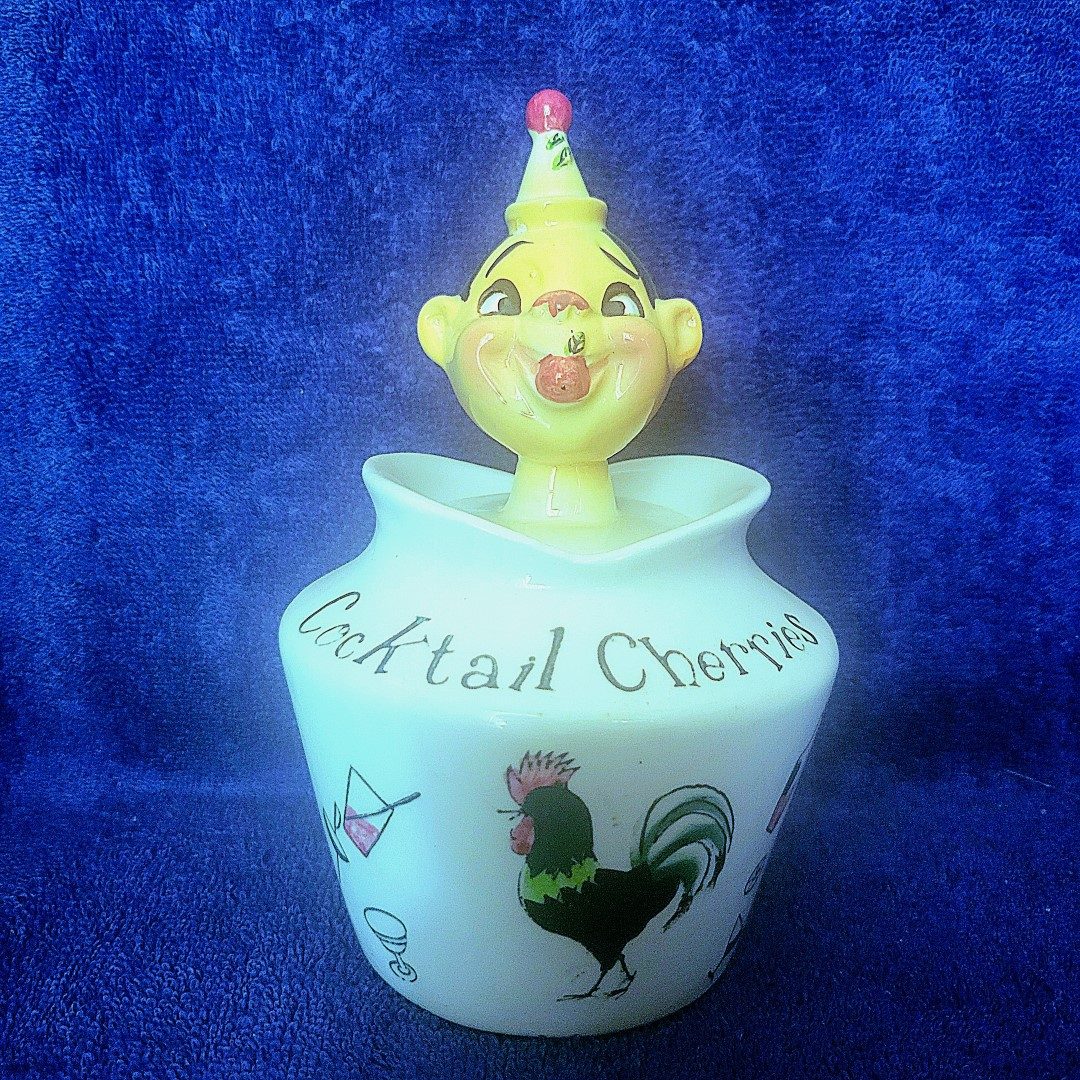
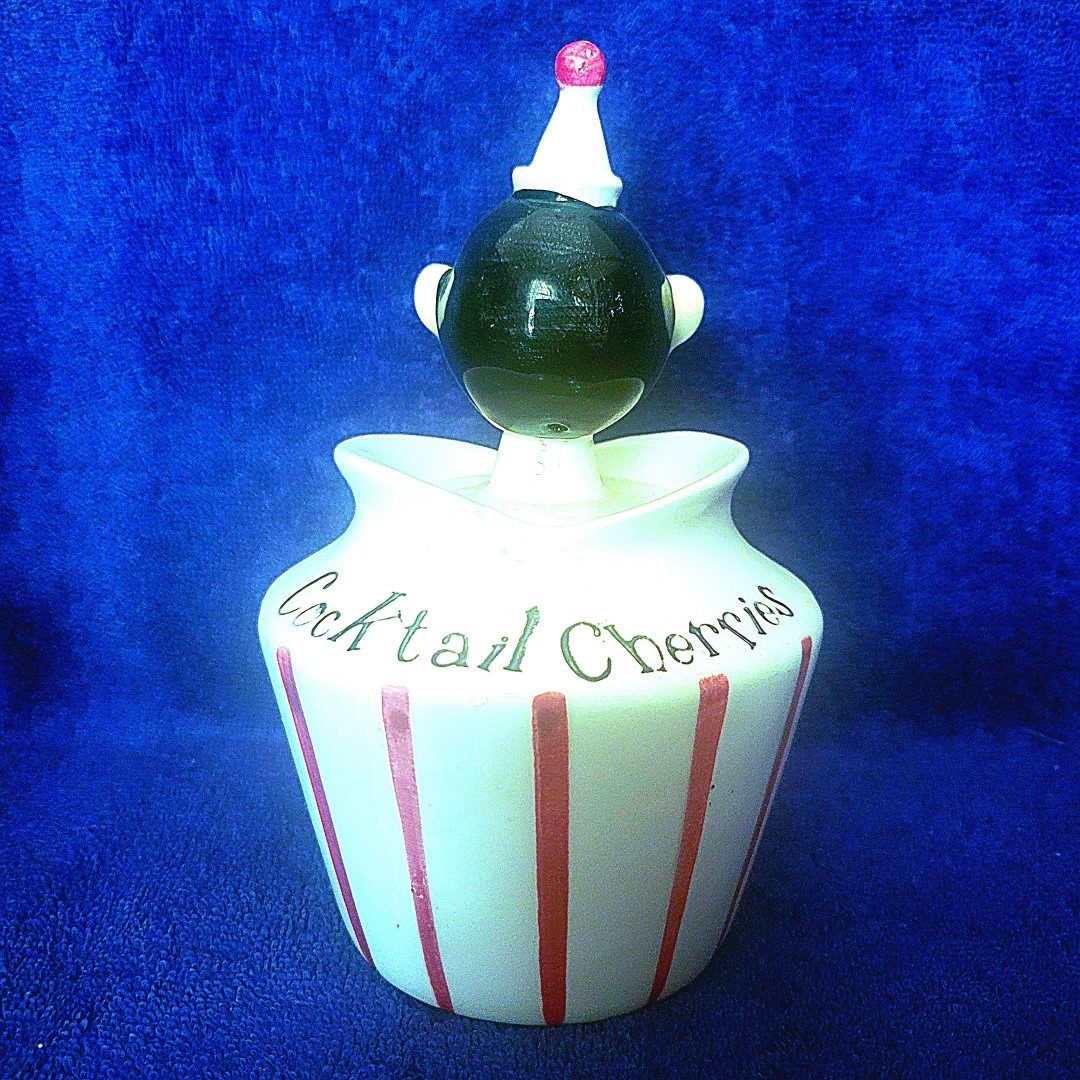
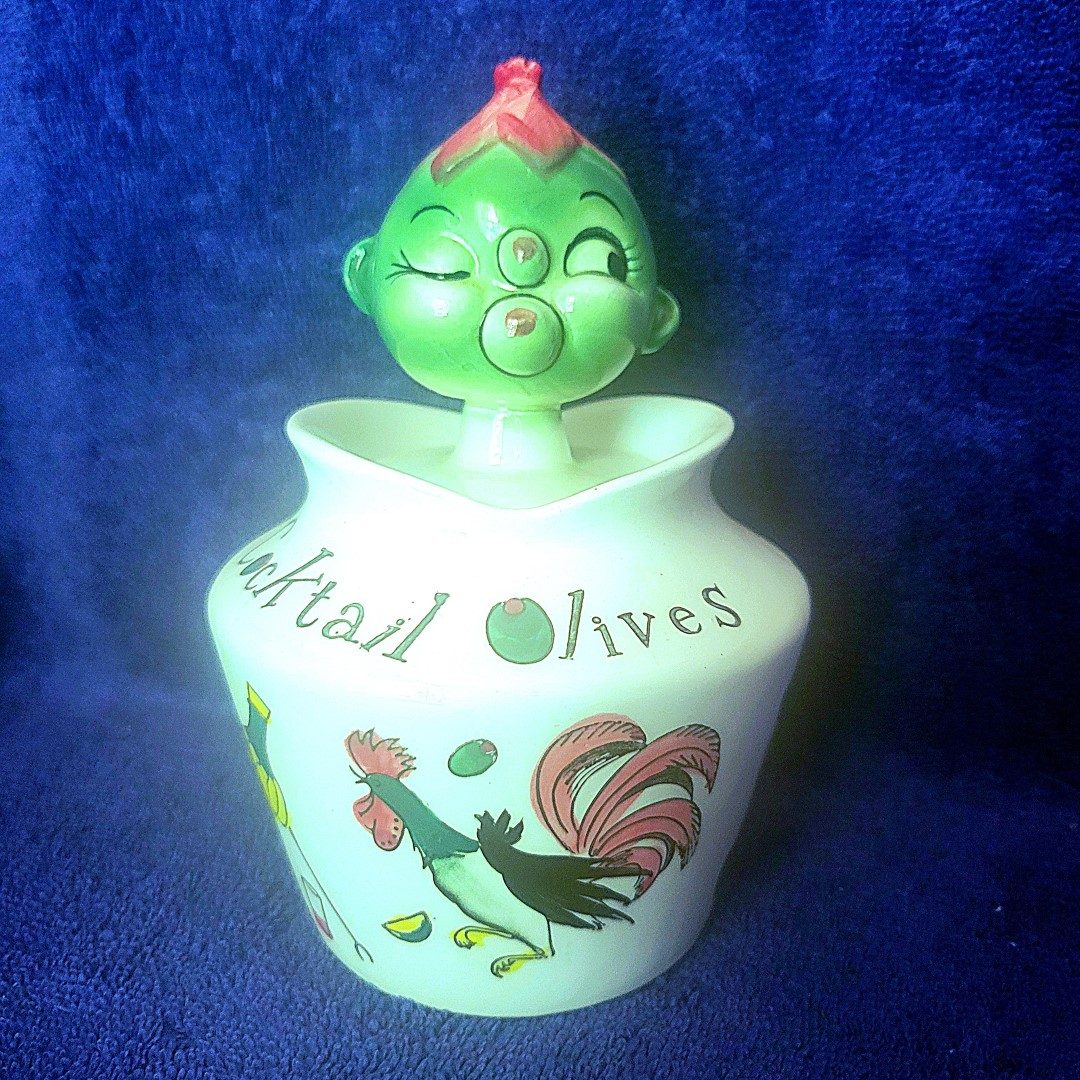
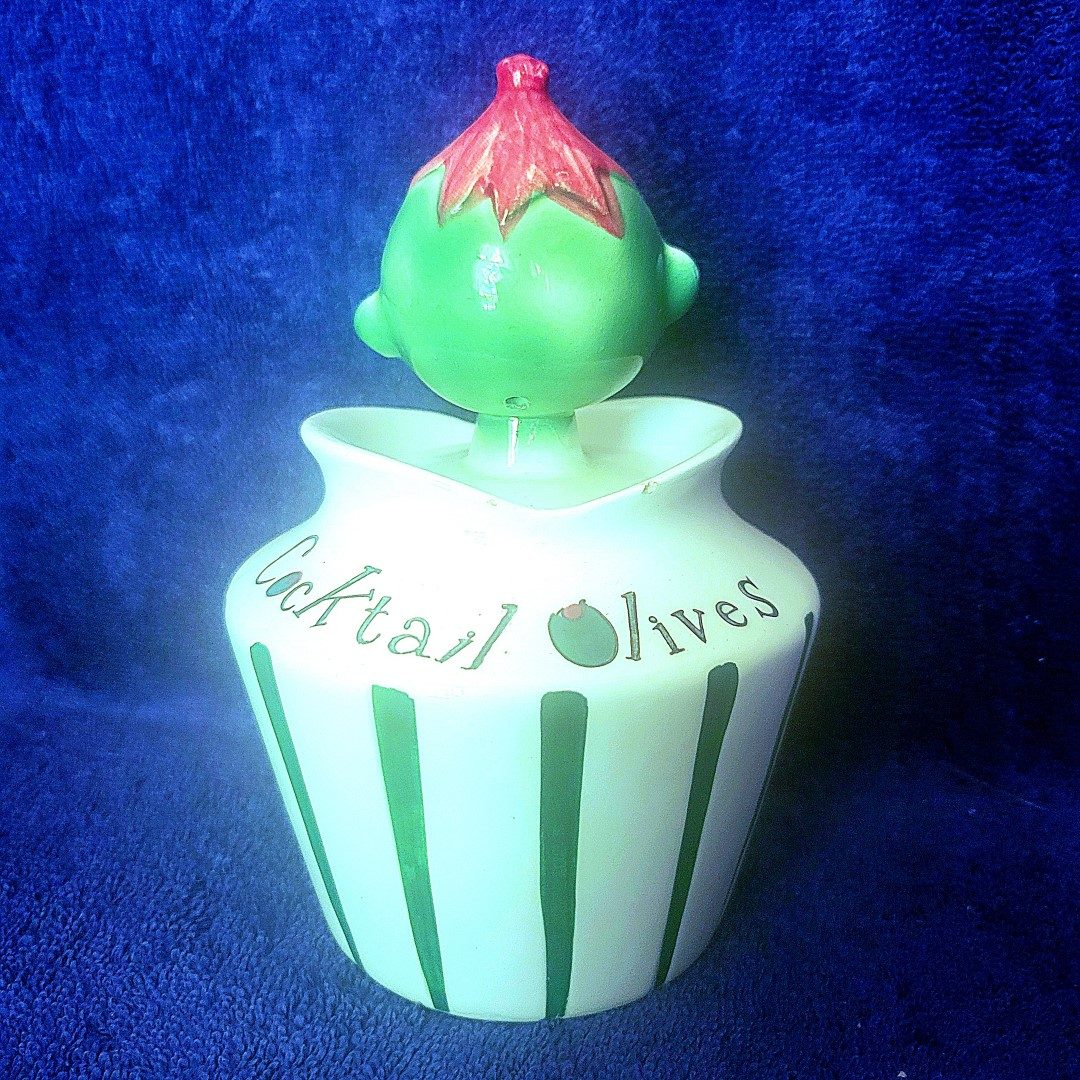
The full-sized Cocktail Cherries and Cocktail Olives jars differ from the standard condiment jars because their decoration is asymmetrical. The product name and seven vertical stripes appear on one side, while the reverse side carries rooster and cocktail-themed artwork.
Full-Sized Cocktail Cherries
This human-headed jar shows a party-hatted child with cherries incorporated into the face and head decoration. Unlike the standard condiment jars, the stripes appear on the front rather than continuing all the way around the piece. The reverse side is decorated with a rooster and cocktail paraphernalia.
Full-Sized Cocktail Olives
The full-sized Cocktail Olives jar uses a winking olive head with a pimento-stuffed olive in its mouth. Like the Cocktail Cherries jar, it has front-only striping and a decorated reverse side featuring cocktail-themed imagery.
Miniature Cocktail Cherries & Olives Set
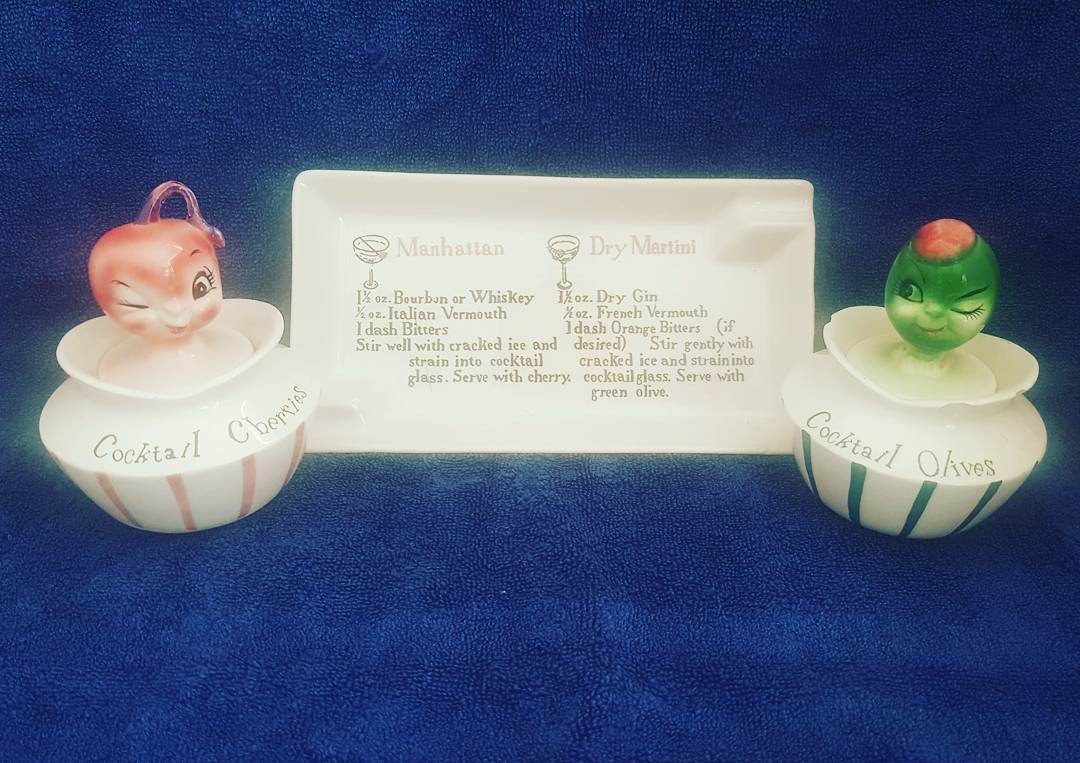
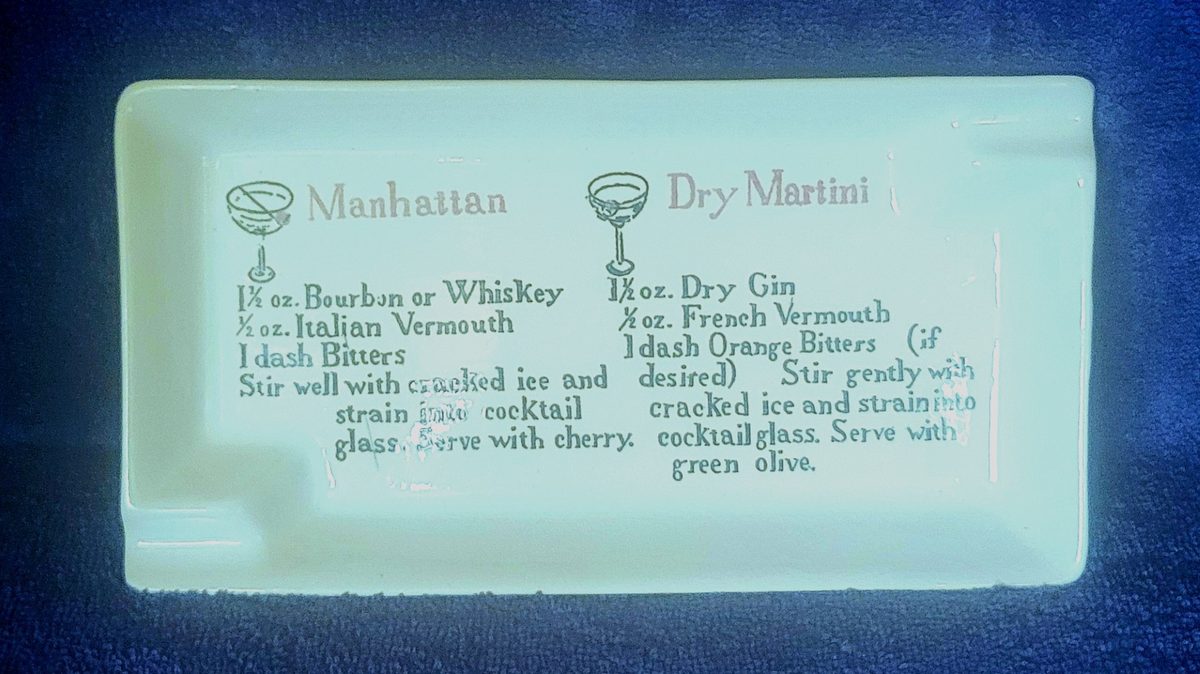
Miniature Cocktail Cherries & Olives with Tray
This smaller cocktail set pairs miniature Cocktail Cherries and Cocktail Olives jars with a rectangular ceramic tray that doubles as an ashtray. The tray is printed with drink recipes for a Manhattan and a Dry Martini, reflecting the cocktail-party culture of the period.
Original catalog ordering information indicates that the tray could be purchased with the miniature jars or ordered separately as its own item.
Research & Discoveries: Correctly Matching Lefton Tops and Bases
Lefton tops and bases are not always color-coordinated in the way a novice collector might expect. Some pieces, such as Ketchup and Jam 'n Jelly, have base stripes that coordinate with the head. Others, such as Marmalade and Relish, rely more on the subject of the head than on a direct color match.
The Mustard jar is especially important because two different heads are known for the same product number: the common hamburger-head version and the exceptionally rare hot dog-head version. The hot dog head may represent an early production design that was replaced by the hamburger head, but no surviving company record has confirmed the reason for the change.
The Christmas Vegetable Head Pieces
Lefton adapted the same striped-jar format for Christmas giftware, producing Santa and Mrs. Claus condiment and tableware pieces that clearly descend from the standard vegetable-head line.
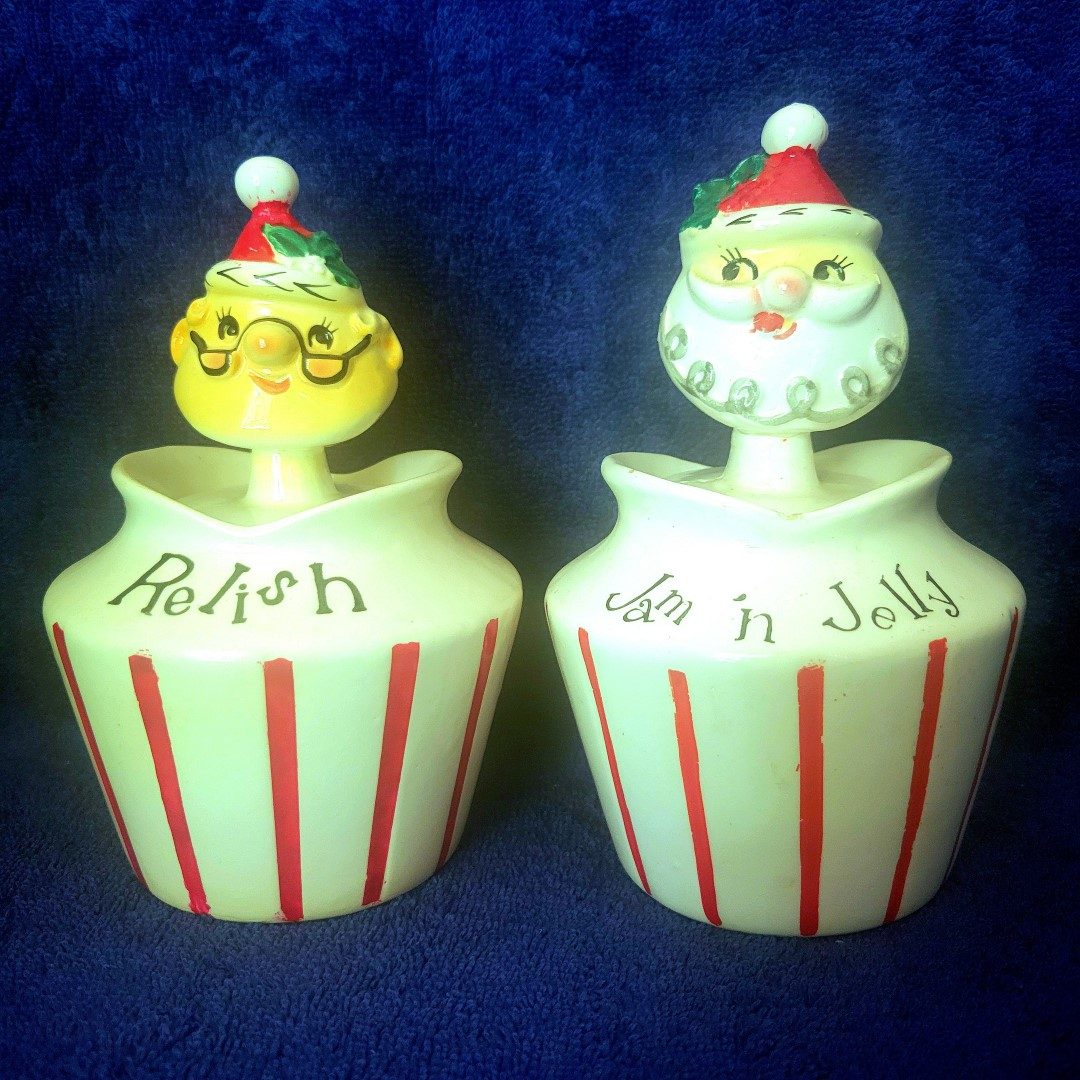
Santa Jam 'n Jelly & Mrs. Claus Relish
The Christmas condiment pair uses red-striped bases and Santa-themed heads. Although a catalog photograph shows the heads reversed, the printed ordering information identifies the correct pairings as Santa Jam 'n Jelly and Mrs. Claus Relish.
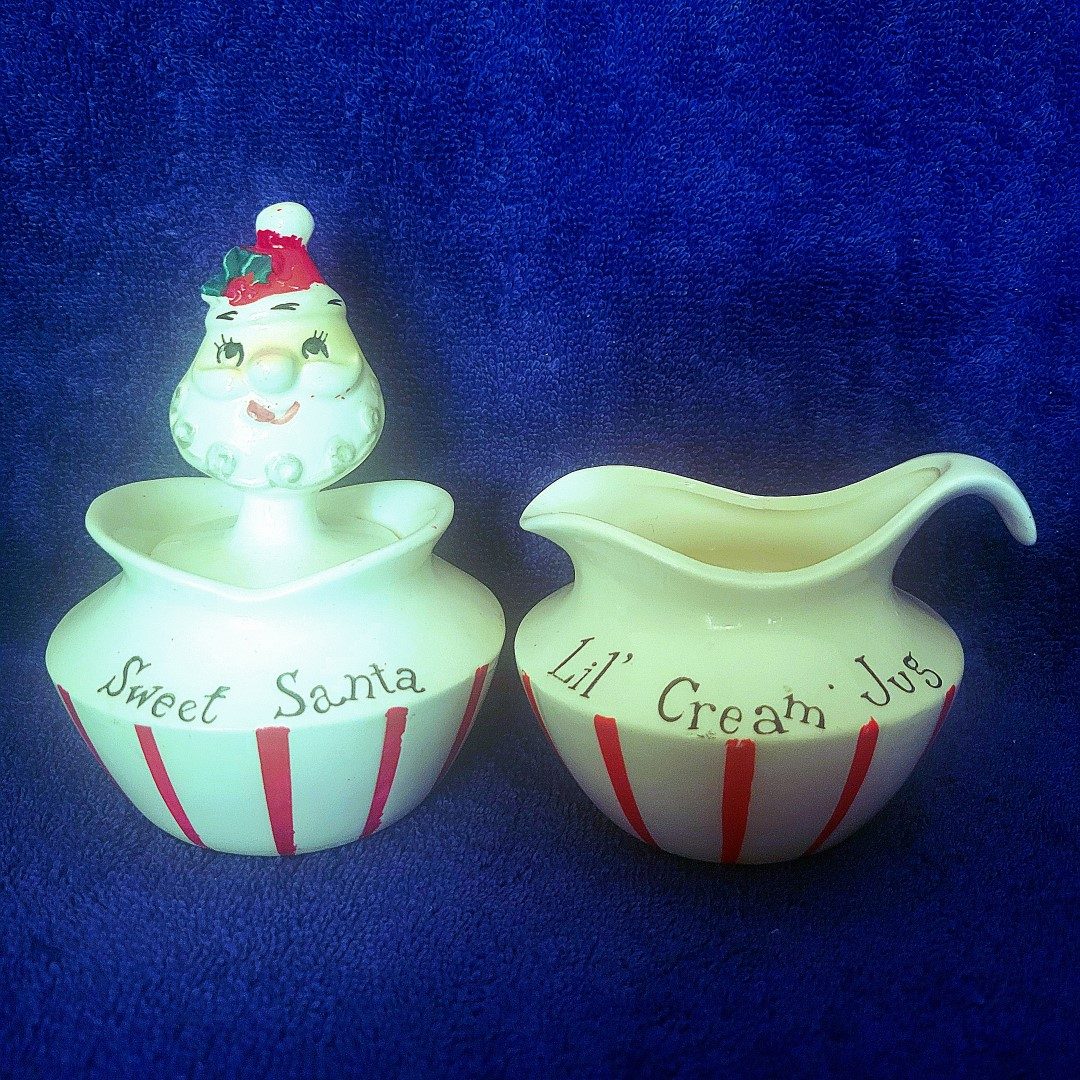
Sweet Santa & Lil' Cream Jug
The holiday sugar and creamer set miniaturizes the Santa jar format and pairs it with a matching red-striped Lil' Cream Jug. It parallels the non-holiday Sweet Lil' Sug and Lil' Cream Jug set.
Research & Discoveries: The Santa and Mrs. Claus Head Mix-Up
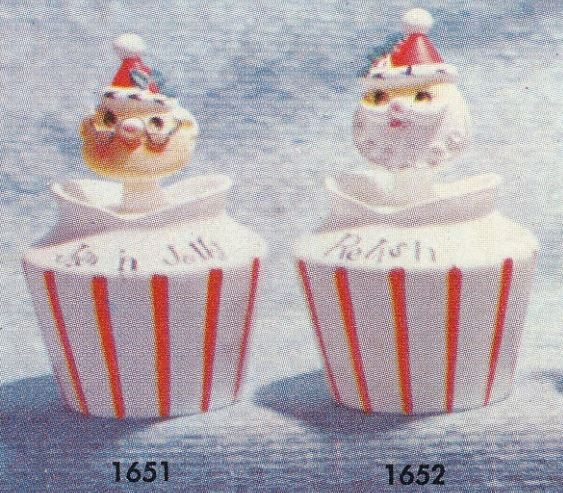

The original Lefton catalog photograph shows Santa and Mrs. Claus placed on the wrong jars. Walter Dworkin repeated the inconsistency in his guide, likely because the photograph appears to have been the visual source used to identify the pieces.
The printed ordering text at the bottom of the catalog page resolves the issue. It identifies the pieces as Santa Jam 'n Jelly and Mrs. Claus Relish, which also makes thematic sense: Santa belongs with Jam 'n Jelly, echoing the familiar description of Santa's belly as “like a bowl full of jelly.”
The Santa and Mrs. Claus Oil and Vinegar Ghost Cruets
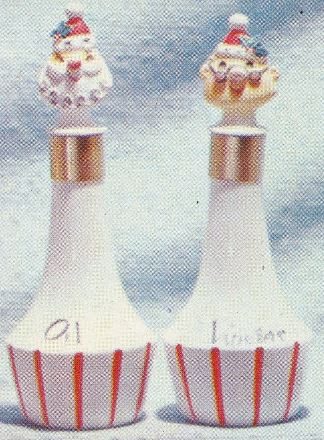

One of the most intriguing unresolved questions in the Lefton vegetable-head line concerns the Santa and Mrs. Claus oil and vinegar cruets. The original catalog page shows a Santa Couple Oil & Vinegar set and the ordering information identifies it as item #1653.
To date, however, no confirmed production examples have surfaced in collector hands or in documented secondary-market listings. The catalog image strongly suggests that at least one sample set existed for photography or ordering purposes, but the absence of surviving examples raises the possibility that the set was never produced beyond samples, or was produced only in extremely limited quantities.
Until a documented example appears, the Santa and Mrs. Claus oil and vinegar cruets remain a ghost item: visible in the historical record, but not yet confirmed as a surviving production piece.
Identifying Marks
Research & Discoveries: Lefton and ESD
Some pieces in this line appear with Lefton markings, while others appear with ESD marks. This is not evidence of a copy, reproduction, or unrelated manufacturer. It reflects a documented distribution relationship between Lefton China and ESD — Enterprise Sales & Distributors, Ltd. — a Canadian company owned by Harry Pearl.
George Zoltan Lefton and Harry Pearl were friends, and the two men traveled together on buying trips to Japan. The companies purchased items jointly, especially from the Miyawo Company, and used their combined orders to meet larger production quantities and reduce manufacturing, shipping, and import costs for both the United States and Canada.
After the goods arrived in North America, the shipments were divided between the two companies for their respective markets. Pieces distributed by Lefton in the United States received Lefton identifying marks, while pieces distributed by ESD in Canada received ESD backstamps or labels. This is why otherwise identical jars can legitimately appear with either Lefton or ESD identification.
For collectors, the practical point is important: ESD was not owned by Lefton, but the companies were closely allied. Many ESD-marked examples represent Canadian-distributed versions of the same Japanese-made novelty ceramics sold under the Lefton name in the United States.
Lefton's Place in the Competitor Landscape
Lefton's vegetable-head jars occupy a different place from Davar's pixie copies. Davar directly echoed Holt Howard's pixie concept, while Lefton developed a broader line of food, fruit, vegetable, and character-headed novelty ceramics. The result is a product family that is immediately recognizable, widely collected, and historically important to the larger world of mid-century Japanese kitchen novelties.