Jolly Floral Girls
A cheerful and unusually complex Japanese novelty line with American jars, Australian export variants, multiple Salt & Pepper sets, Oil & Vinegar color variations, and one enduring importer mystery.
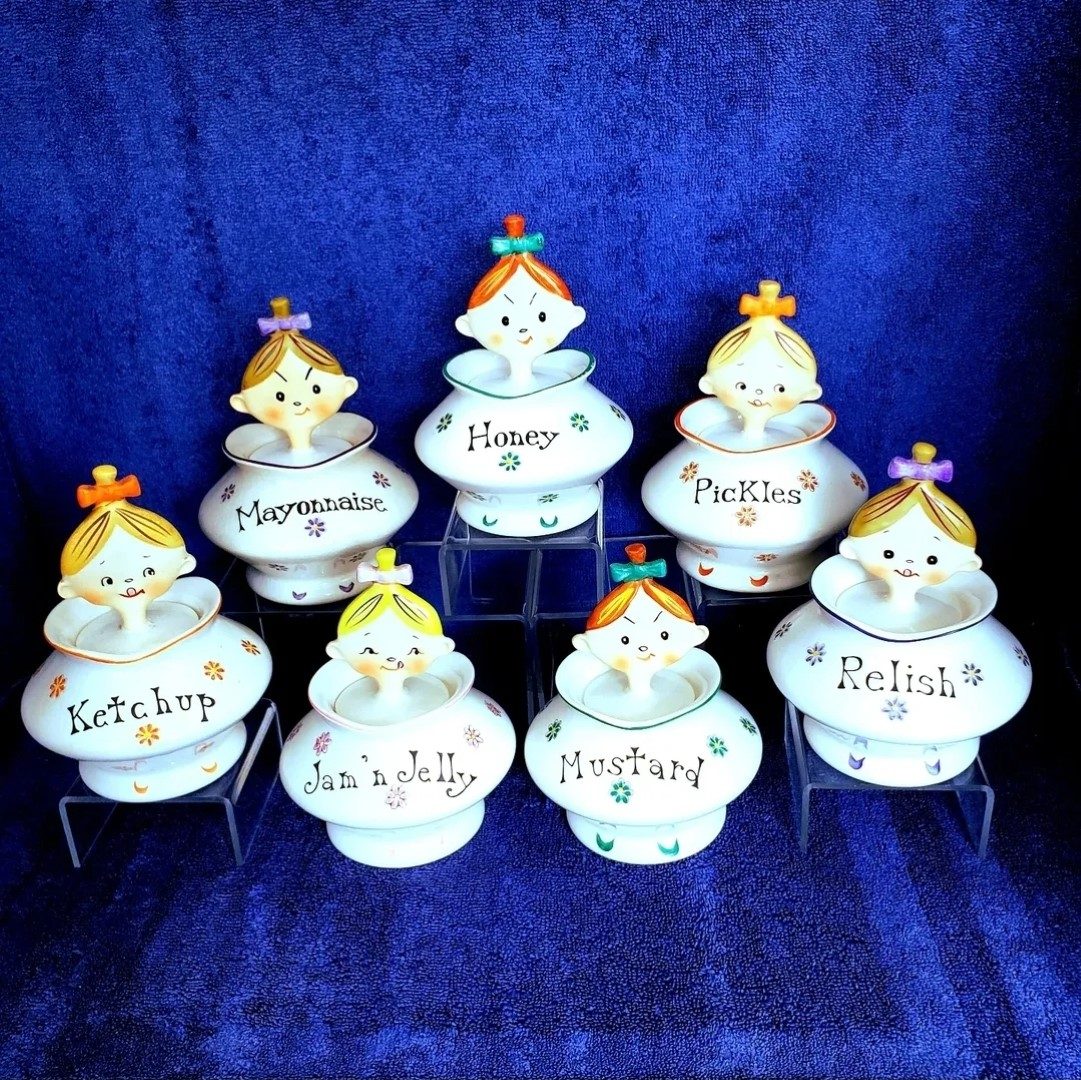
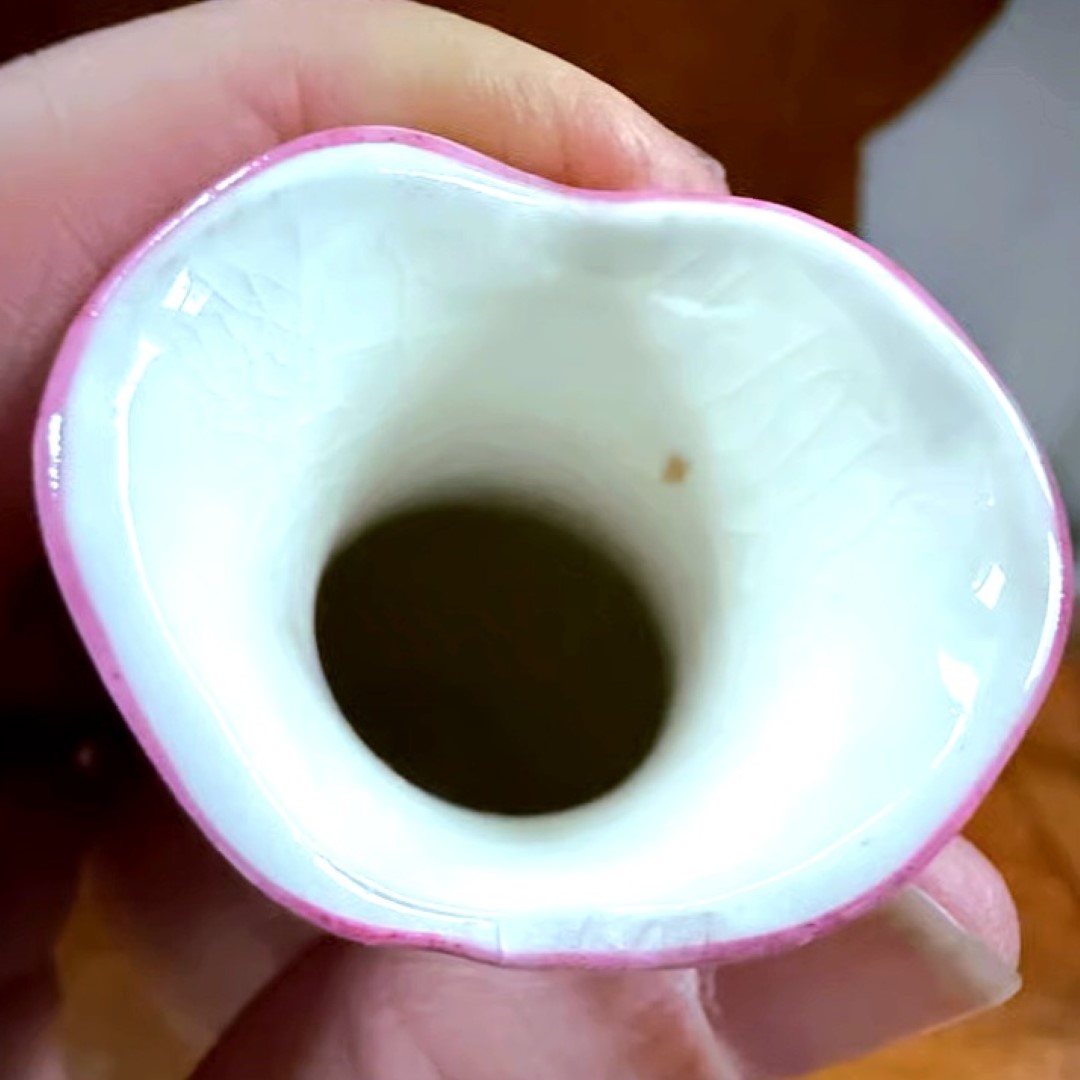
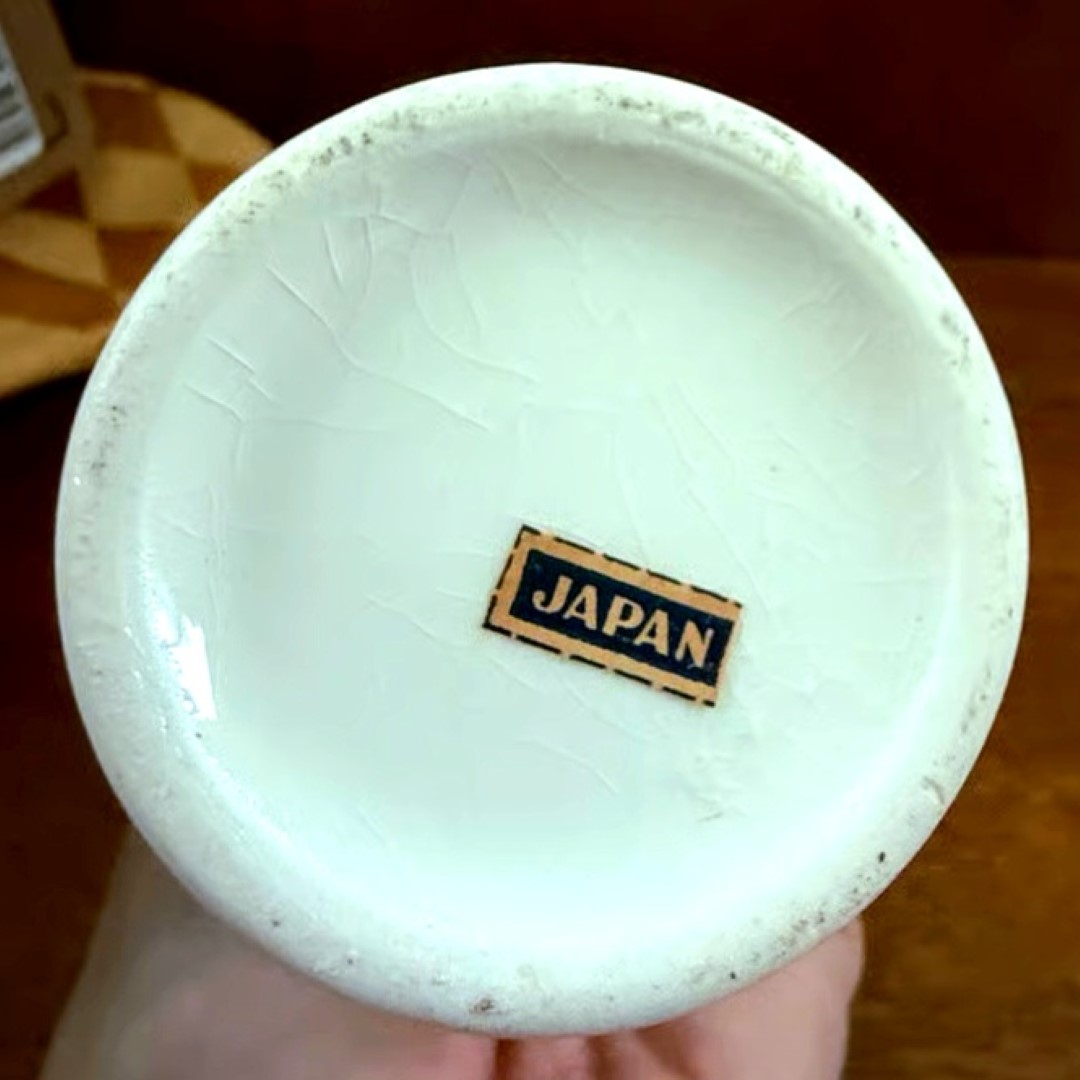
Among the competitor lines discussed in this section of the Archive, the Jolly Floral Girls remain one of the most intriguing. Unlike Lipper & Mann, Lefton, Napco, Norcrest, or other documented import lines, no surviving catalog, advertisement, or company record has yet conclusively identified the firm responsible for importing them. Known examples are not found with a manufacturer name and generally carry only a simple Japan designation.
Despite that mystery, the line itself is remarkably cohesive. The American condiment jars, Australian export jars, matching Salt & Pepper sets, and Oil & Vinegar cruets all share the same whimsical girl forms, flared collars, painted bows, flowered dress bodies, and coordinated feet or shoe colors. The pieces are sometimes misidentified as Holt Howard or Lipper & Mann, but they are a separate line with their own distinct design vocabulary.
This page presents the known Jolly Floral Girls in three broad groups: first the American condiment jars, then the Australian market jars based on those American forms, followed by Salt & Pepper and Oil & Vinegar sets. The final research section walks through the evidence suggesting that the line may have been imported by Quality Products, while making clear that the attribution remains a well-supported hypothesis rather than a conclusively documented fact.
American Condiment Jars
Collector's Note — Correct Color Pairings
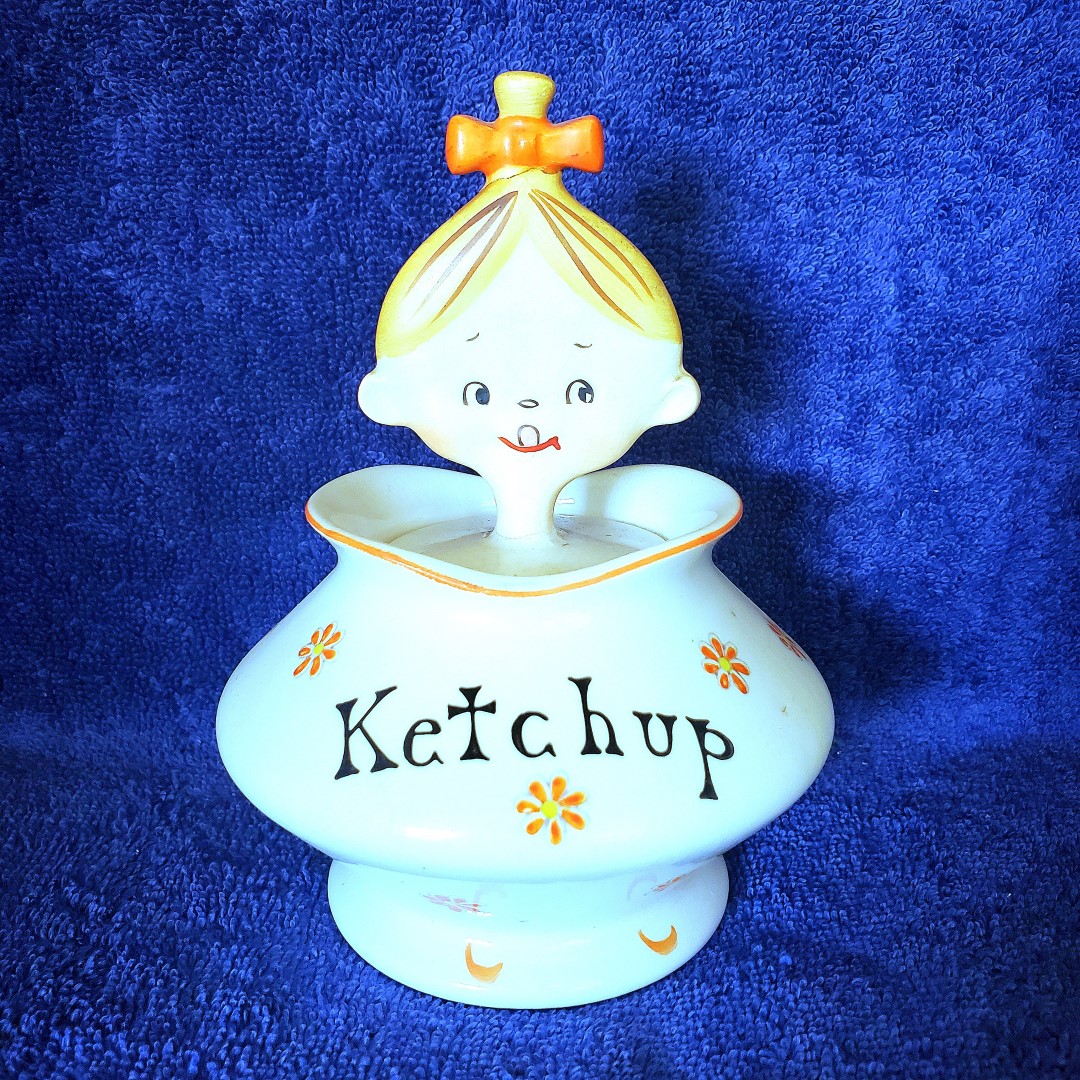
The correct head and body pairings are determined by color coordination. On the American jars, the color of each girl's bow matches the flowers on the jar body, the painted shoes, and the colored pinstriping around the flared collar. The examples illustrated in this Archive represent the correct factory pairings.
Ketchup
The Ketchup jar is one of the four standard American condiment jars in the line. It has the typical rounded jar body, flared collar, painted floral decoration, and a girl-head lid with bow and top knob.
Mustard
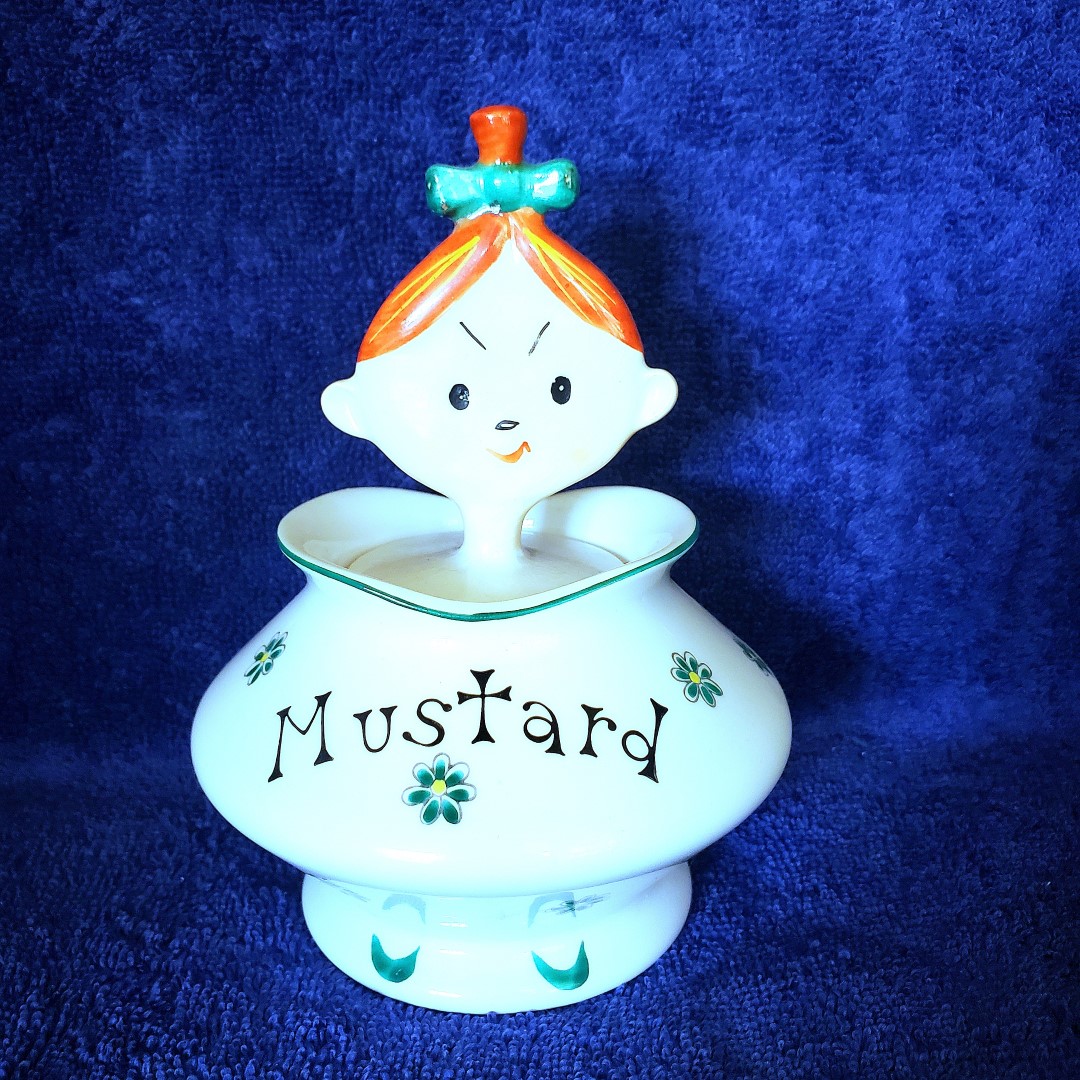
The Mustard jar follows the same general form as Ketchup but uses green accent coloring. Mustard has a spreader rather than a standard spoon, reflecting its intended use.
Jam 'n Jelly
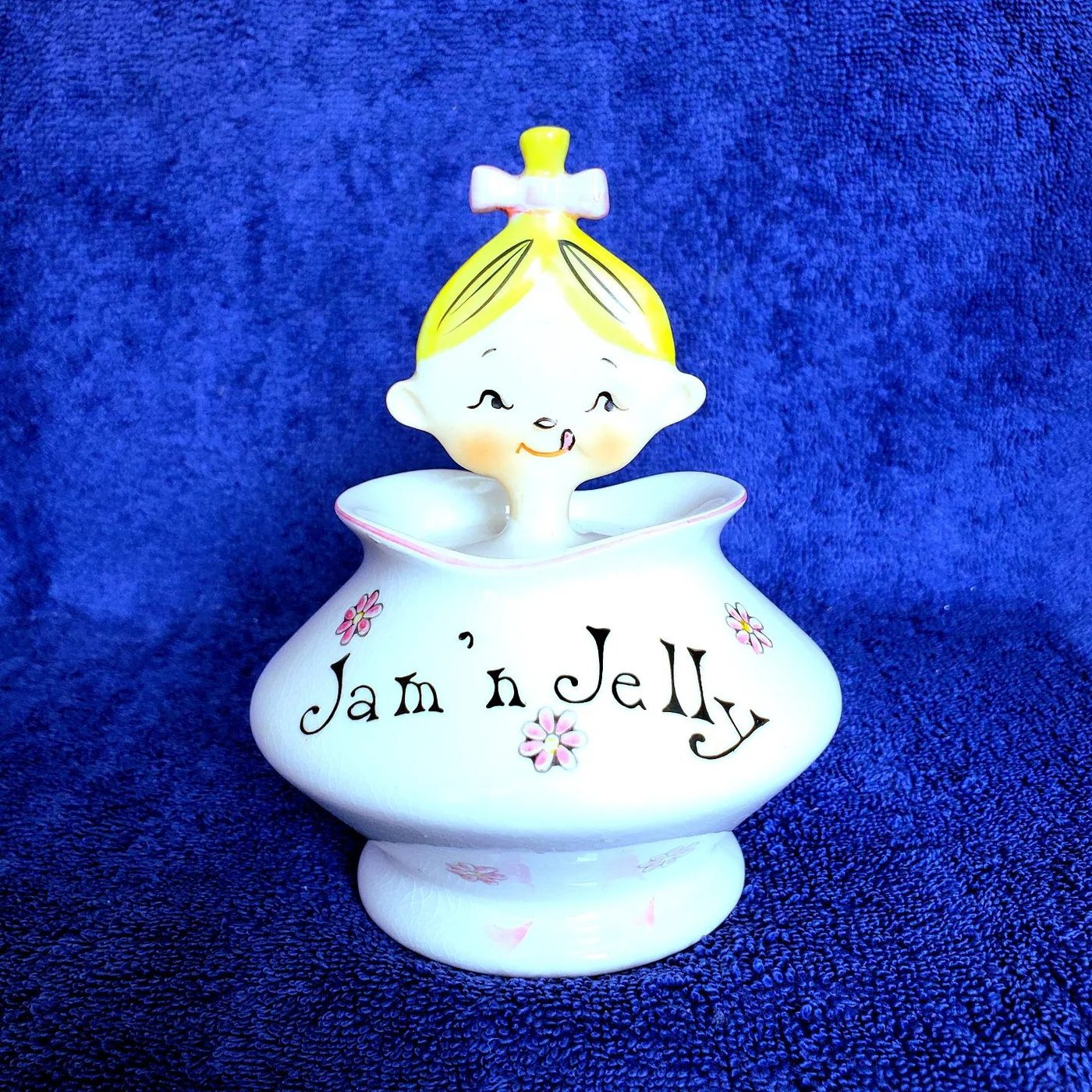
Jam 'n Jelly is another of the four American condiment jars. It shares the standard body form and attached spoon construction, with pale pink color coordination on the bow, flowers, shoes, and collar trim.
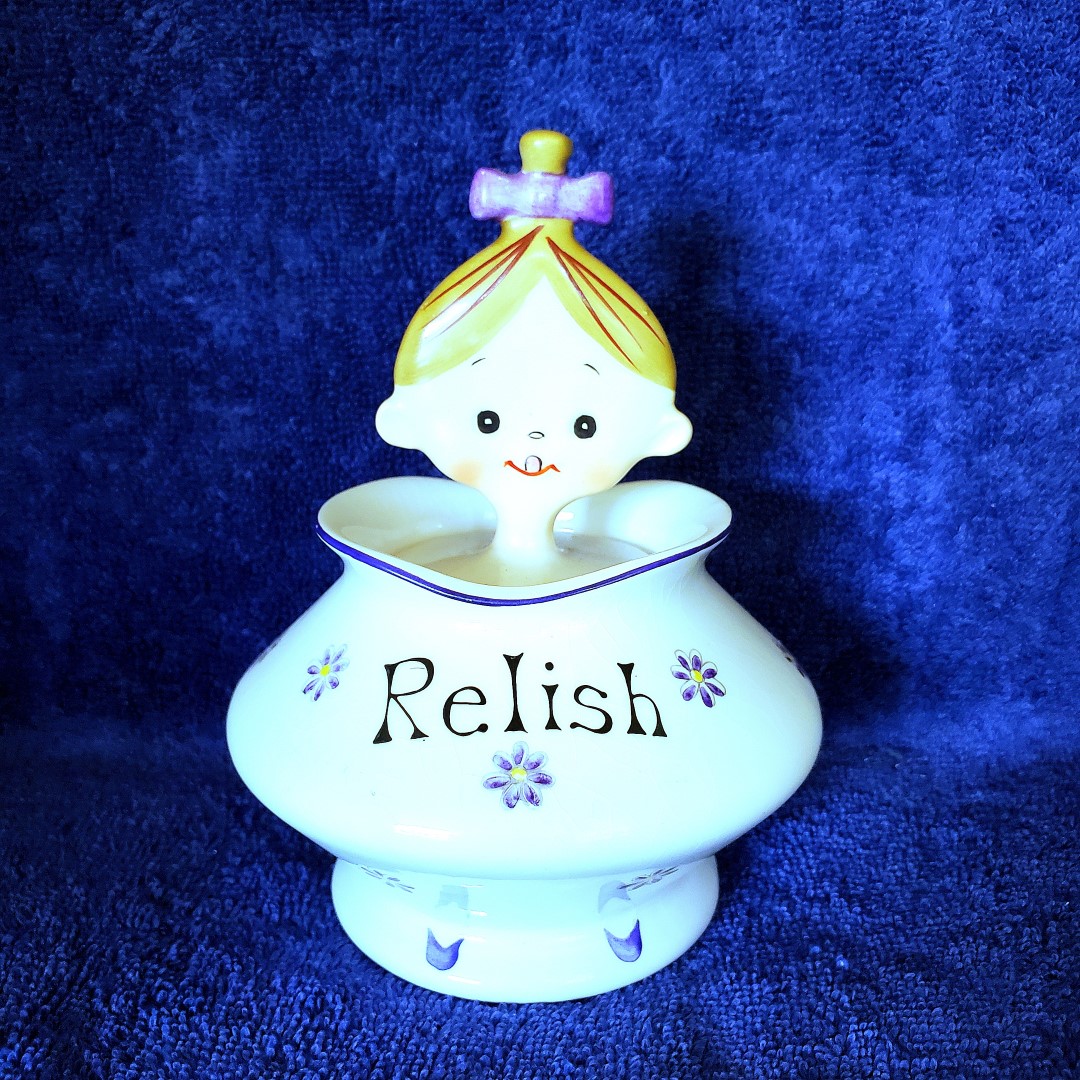
Relish
The Relish jar completes the four-piece American condiment group. It uses the same form as the other American jars but has purple color coordination and a different facial expression.
Australian Market Jars
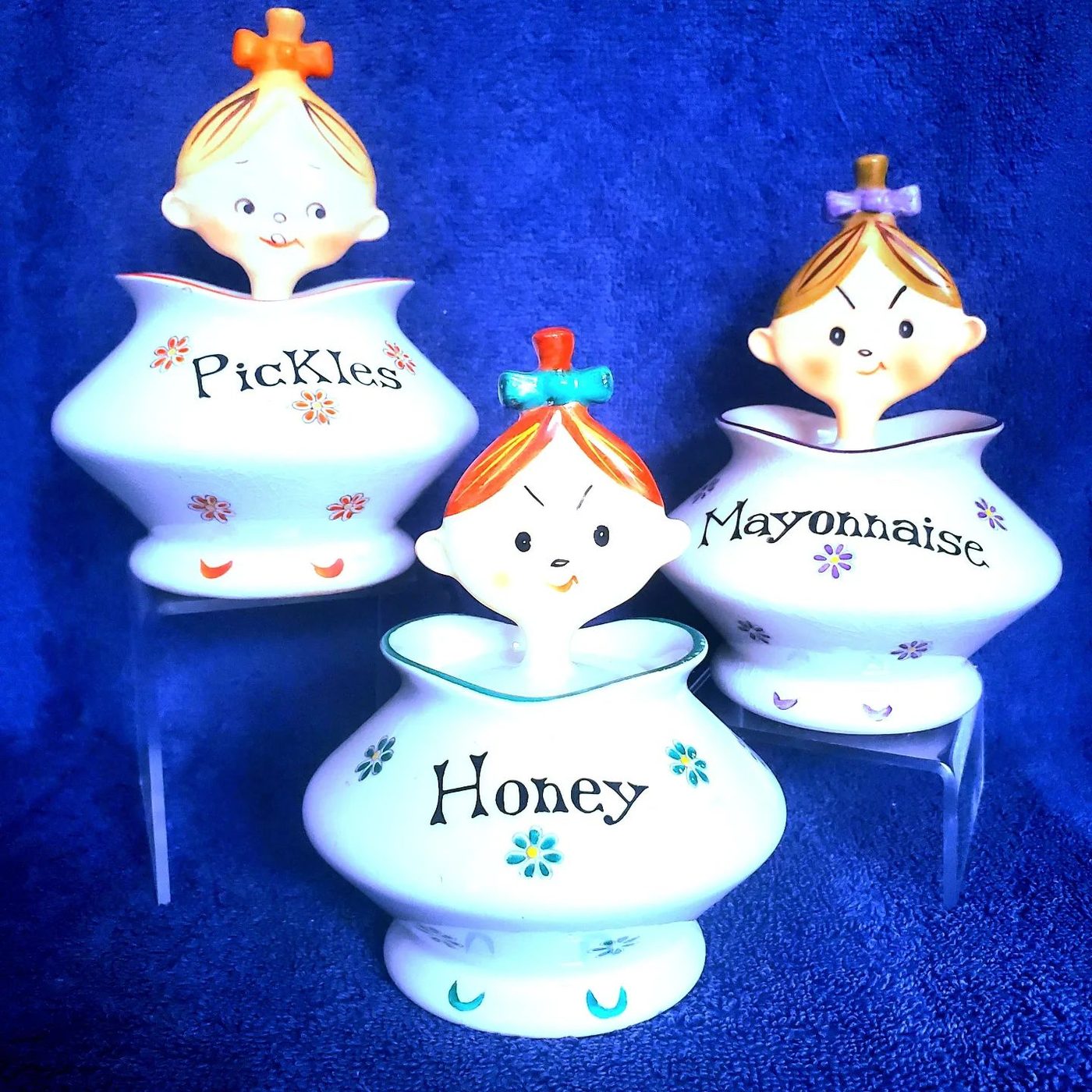
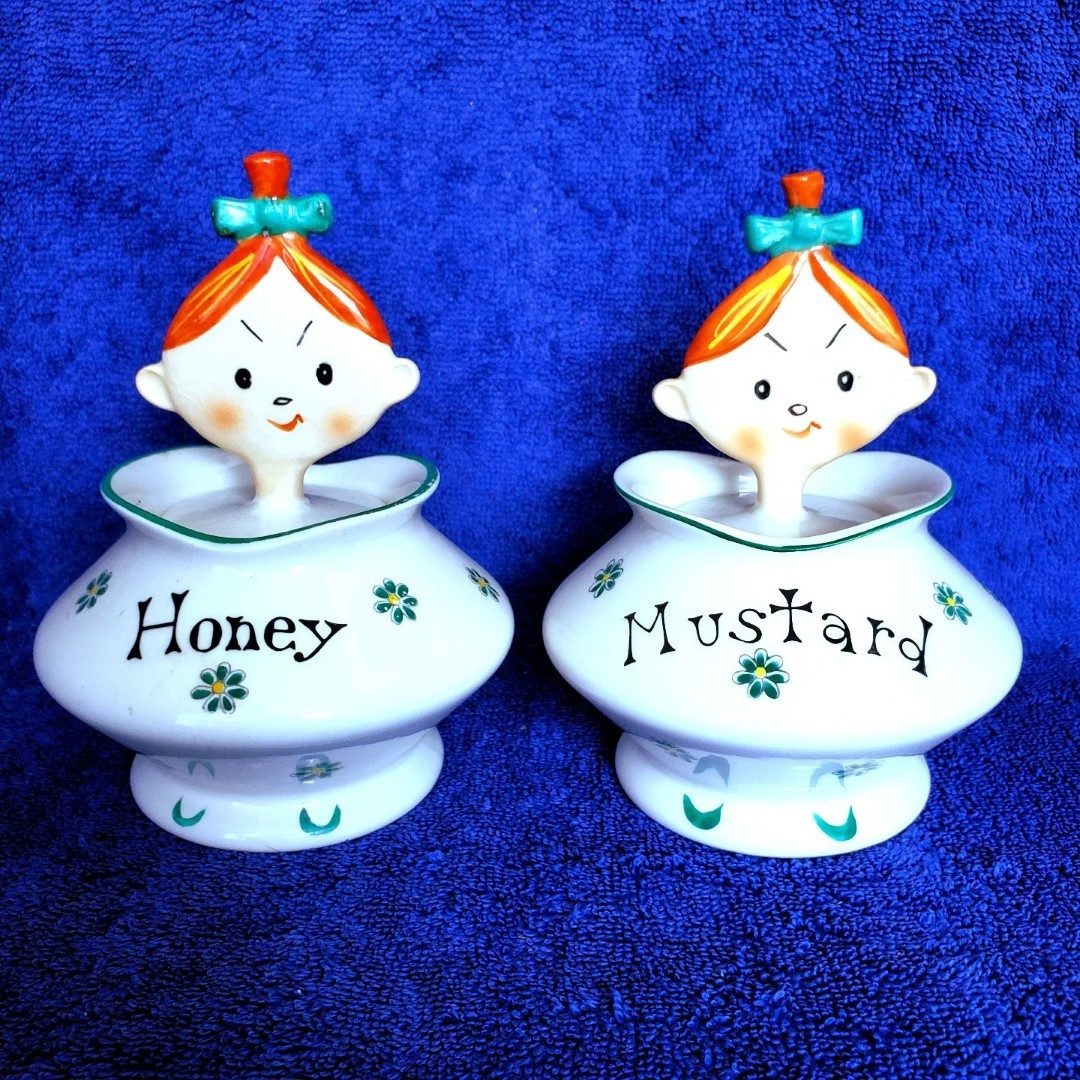
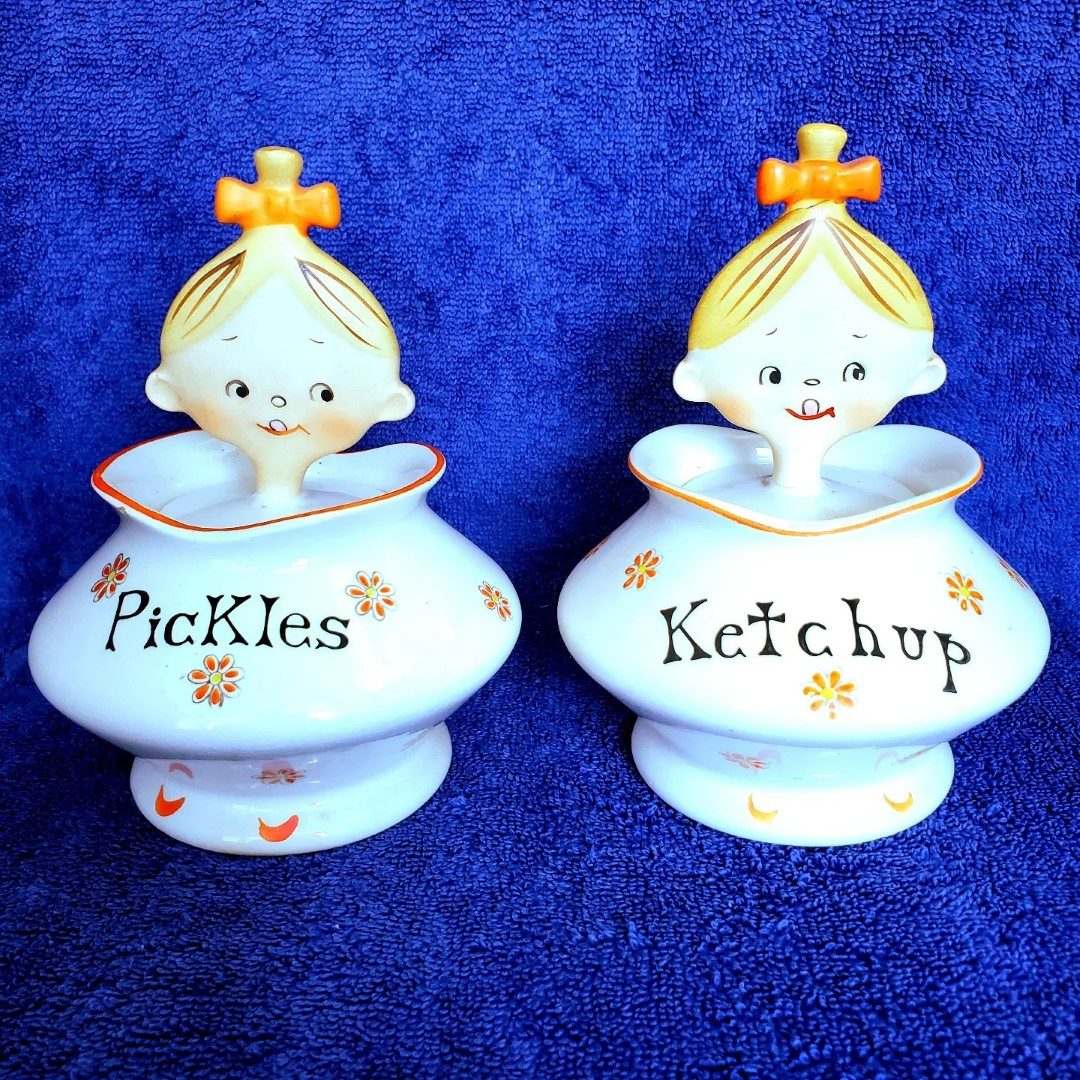
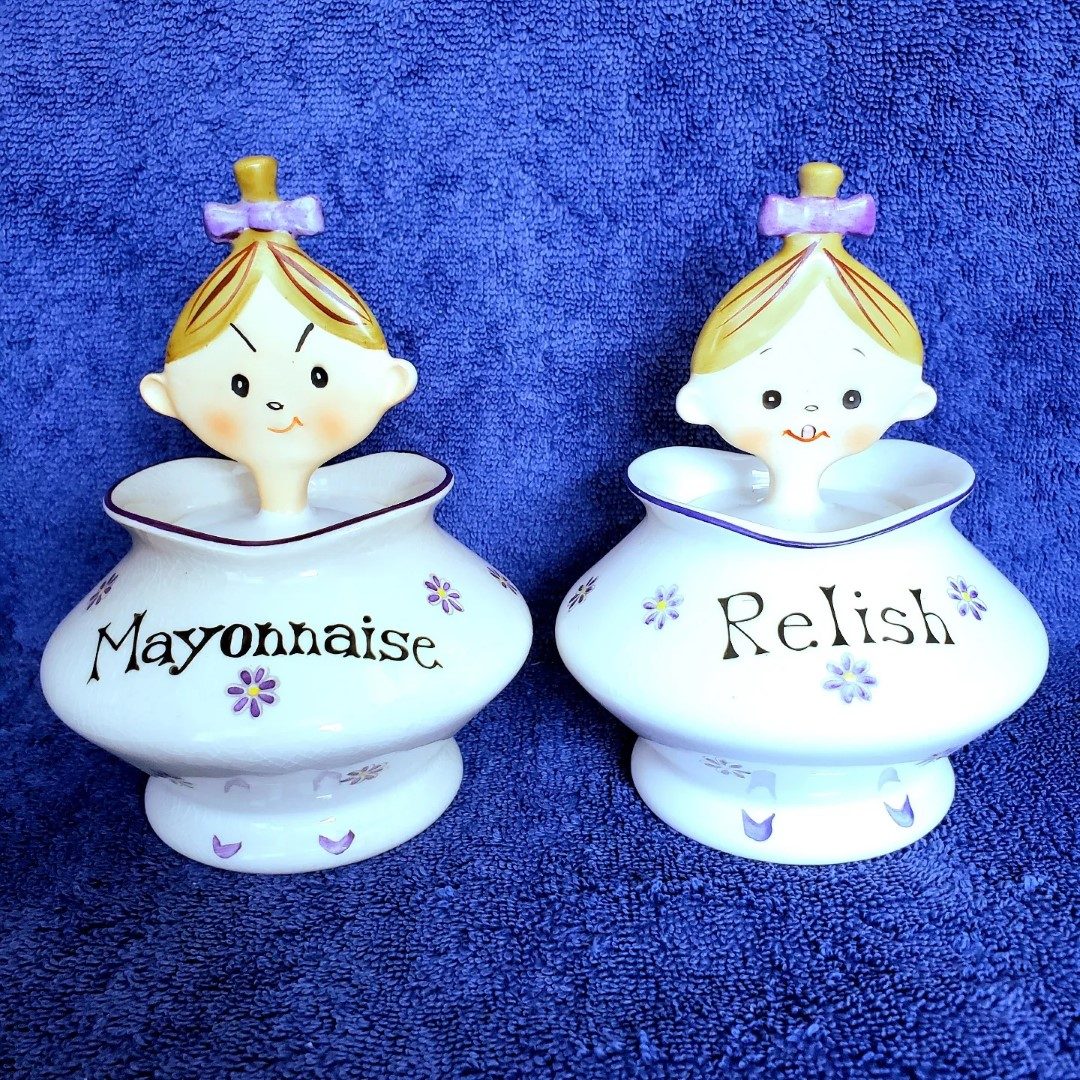
The Australian market jars closely mirror the American counterparts on which they are based. Honey corresponds to Mustard, Pickles corresponds to Ketchup, and Mayonnaise corresponds to Relish. Apart from the changed lettering and, in the case of Mayonnaise, a revised facial expression, there are no consistently documented differences in decoration or coloration. Apparent color differences are more likely attributable to ordinary hand-painted production variation than to intentional design changes.
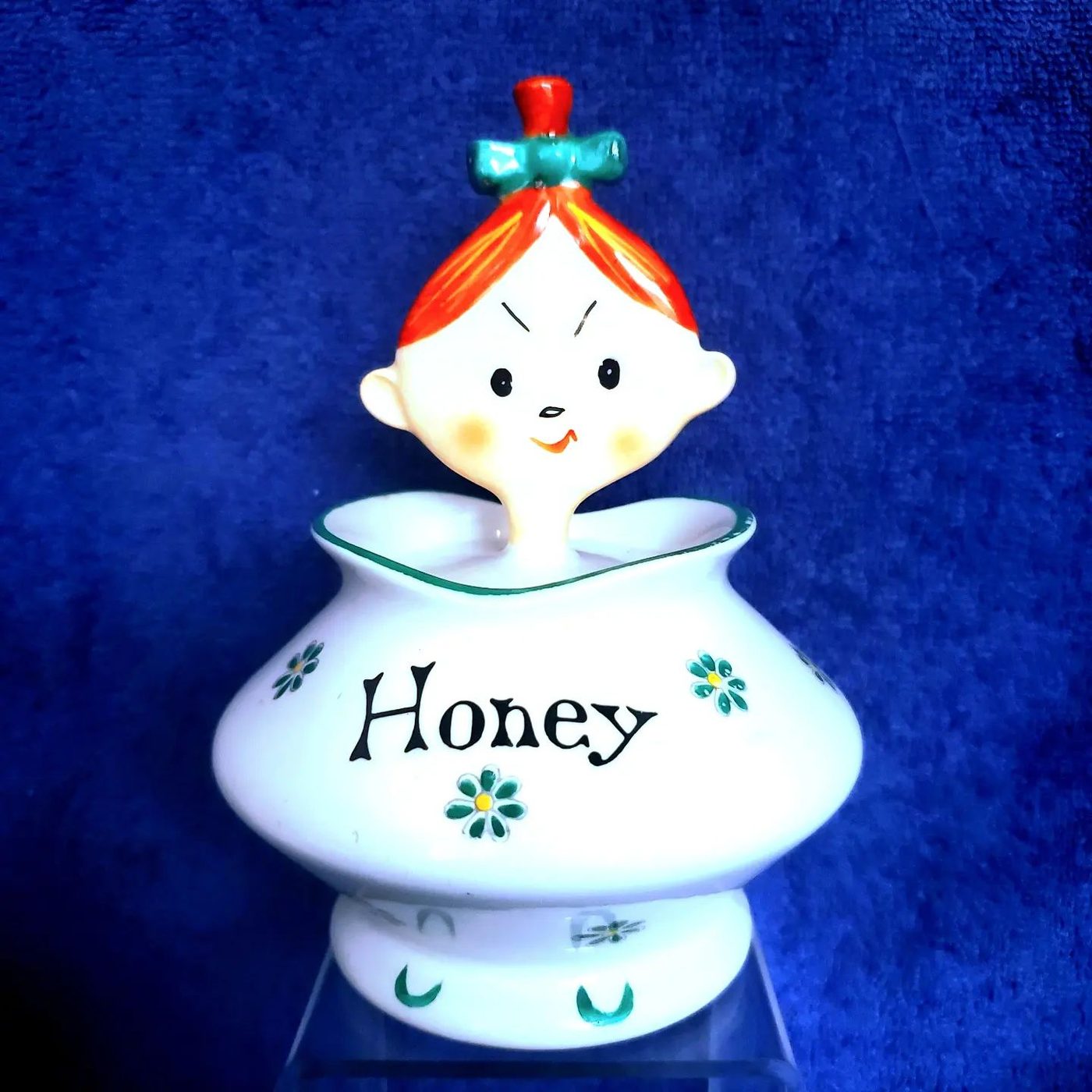
Honey
Honey appears to have been produced for the Australian market and is based on the American Mustard jar. The form, color program, and general decoration closely follow its American counterpart, with the product name changed for the export market.
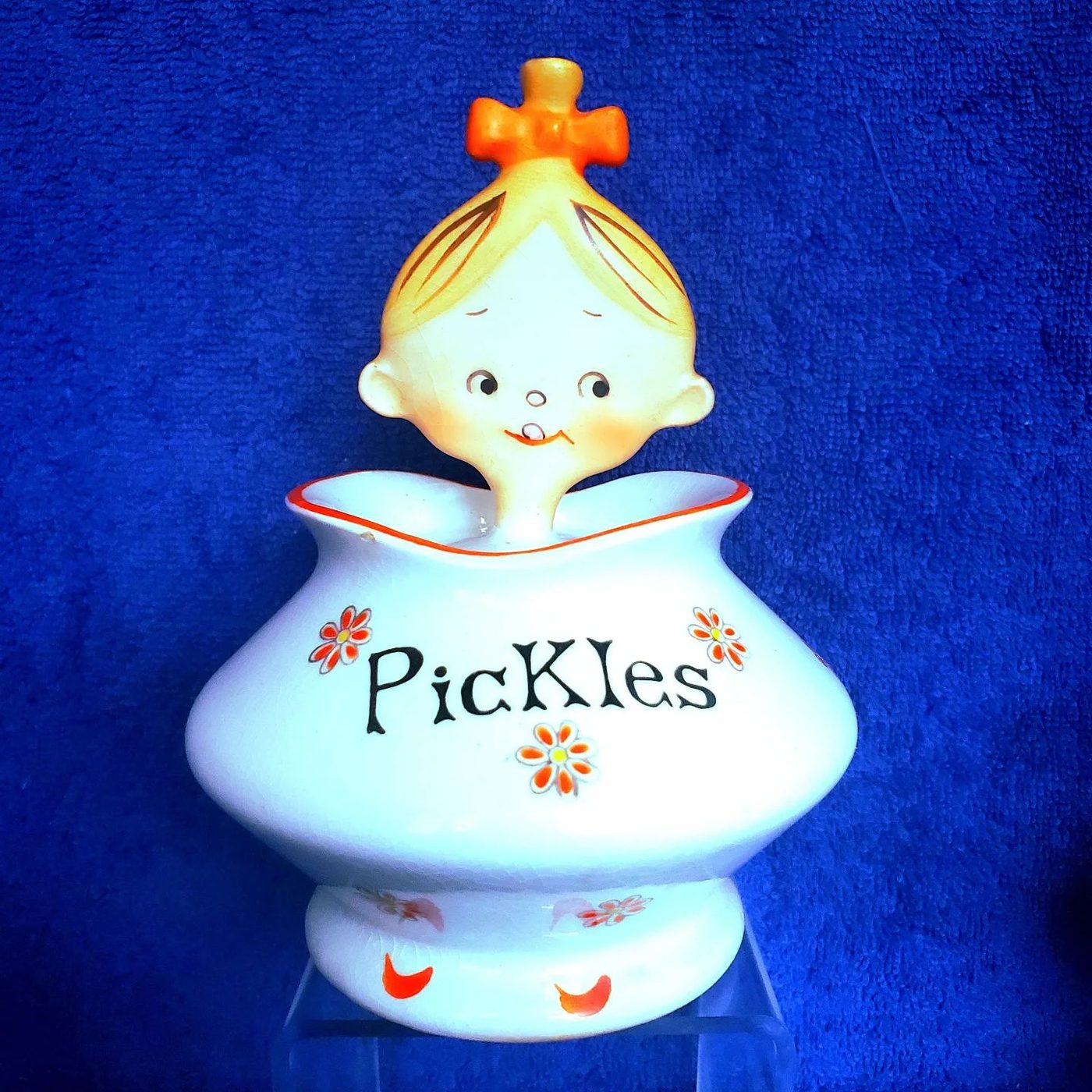
Pickles
Pickles is the Australian market counterpart to the American Ketchup jar. The two pieces are extremely close in body form and decoration, with the product lettering providing the most obvious distinction.
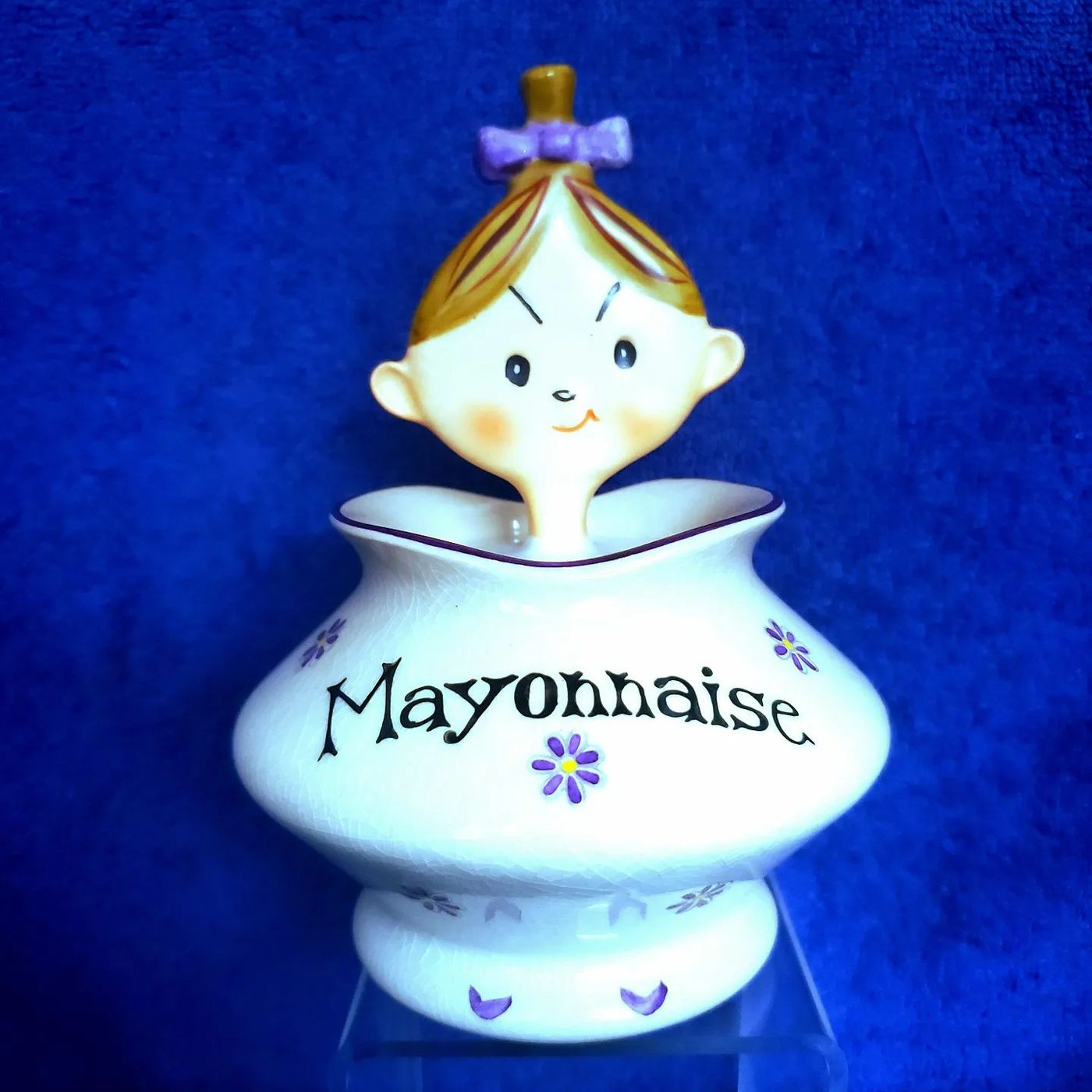
Mayonnaise
Mayonnaise is based on the American Relish jar but has the most notable design difference among the Australian jars: the face is revised. The American Relish girl appears to lick her upper lip, while the Australian Mayonnaise girl has a more mischievous expression.
American and Australian Jar Comparisons
Salt & Pepper Shakers
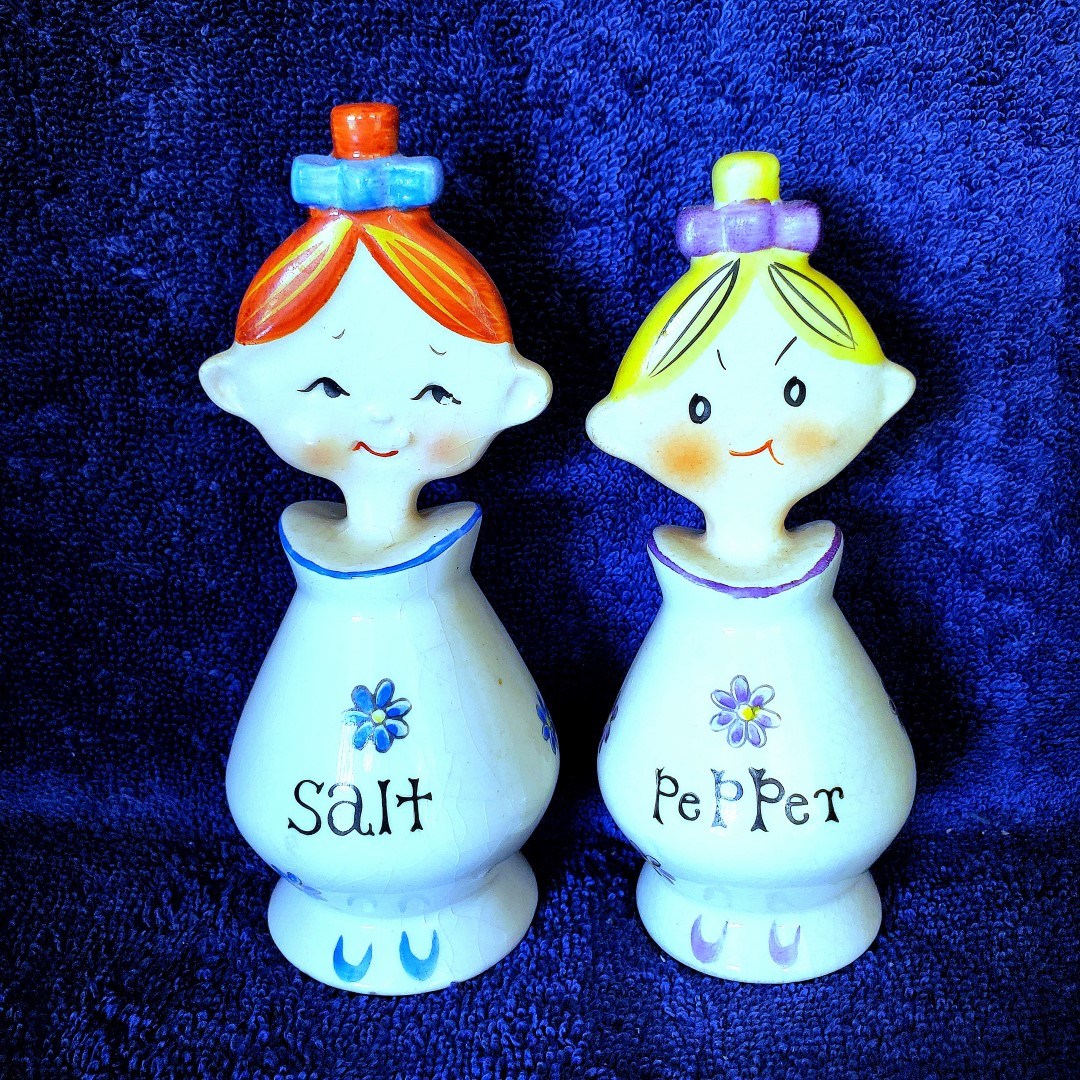
Standard Blue & Purple Set
The standard Salt & Pepper set pairs a blue-bowed Salt shaker with a purple-bowed Pepper shaker. The blue Salt is notable because it is the only known Jolly Floral Girl with blue bows and blue flowers on her dress. Both shakers have the same number of holes behind their necks, although the Salt holes are larger.
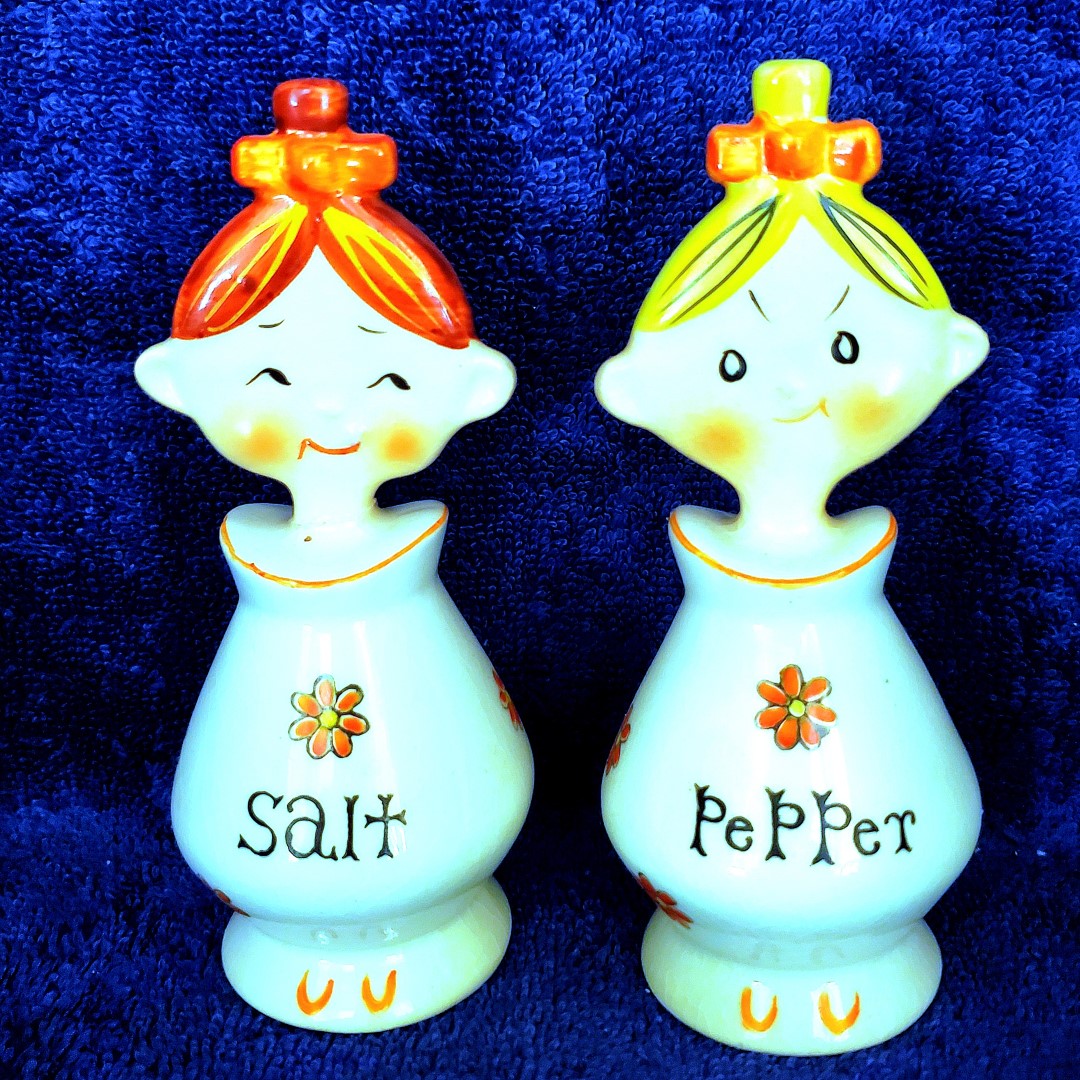
Orange Variant Set
The orange Salt & Pepper set is one of four known same-color variant sets. Unlike the standard blue/purple pairing, both shakers use the same bow and flower color.
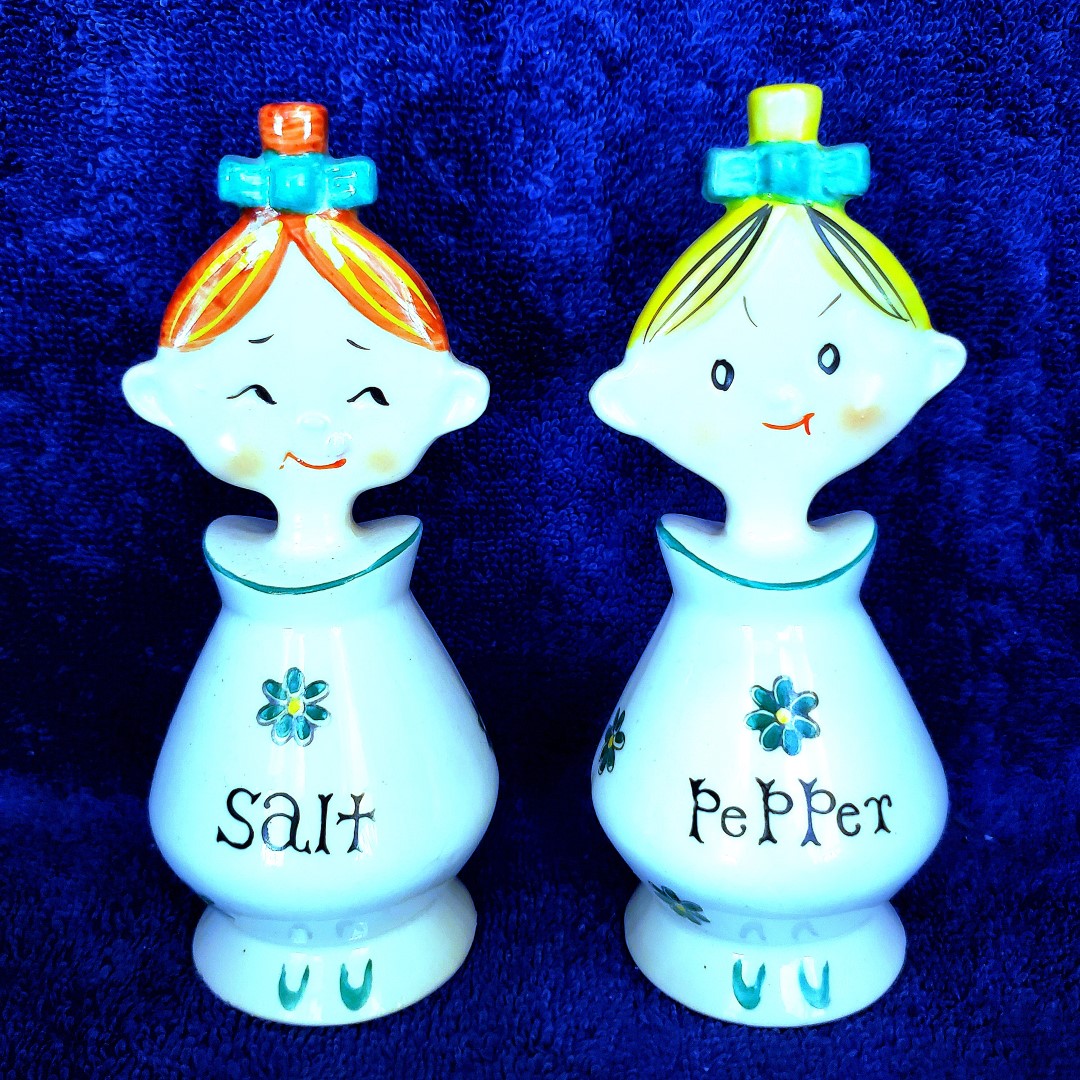
Green Variant Set
The green set mirrors the same-color approach seen in the other variant Salt & Pepper sets and corresponds to one of the documented Oil & Vinegar color variations.
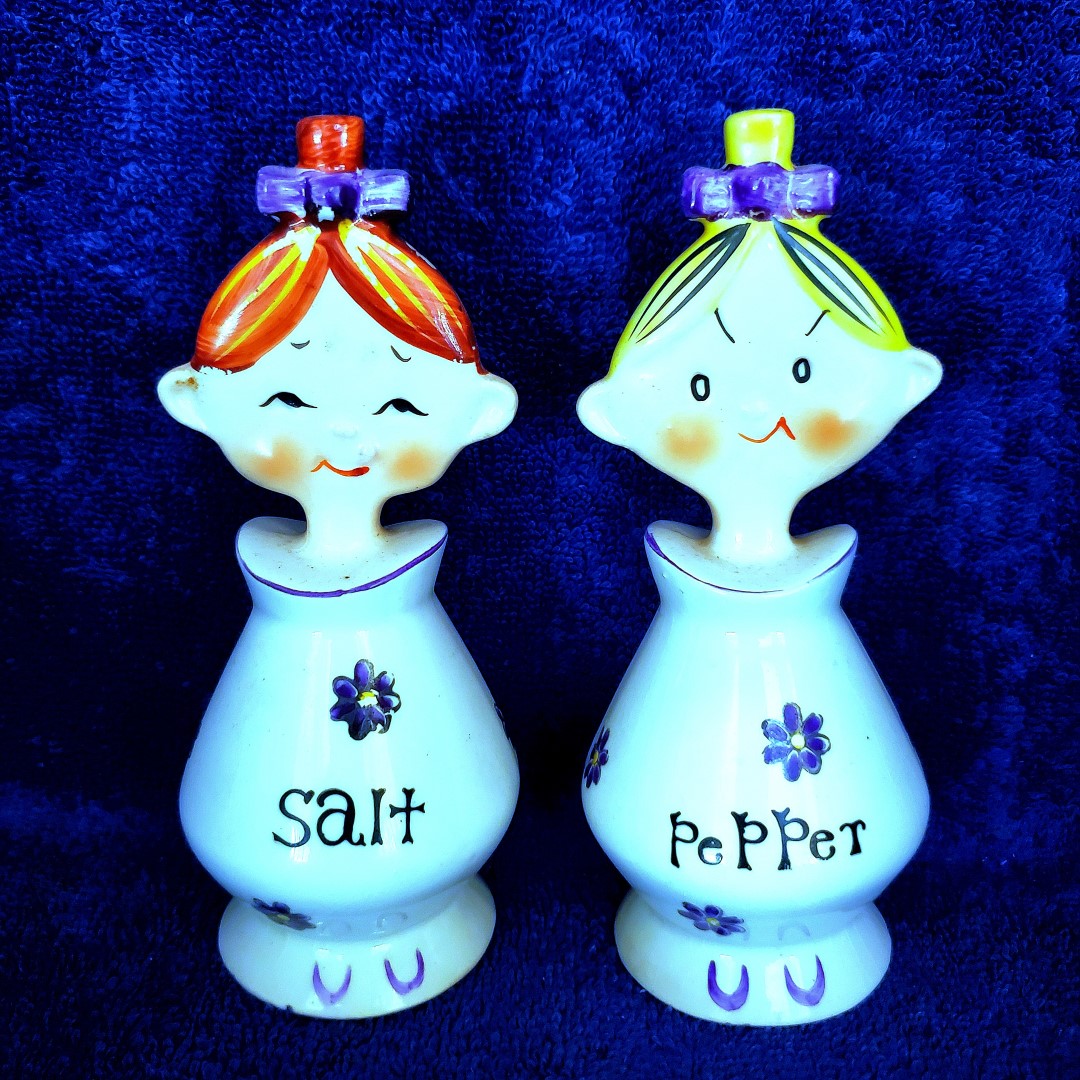
Purple Variant Set
The purple Salt & Pepper set is another same-color variant. Its existence helps establish that the same-color color program extended beyond a single alternate pair.
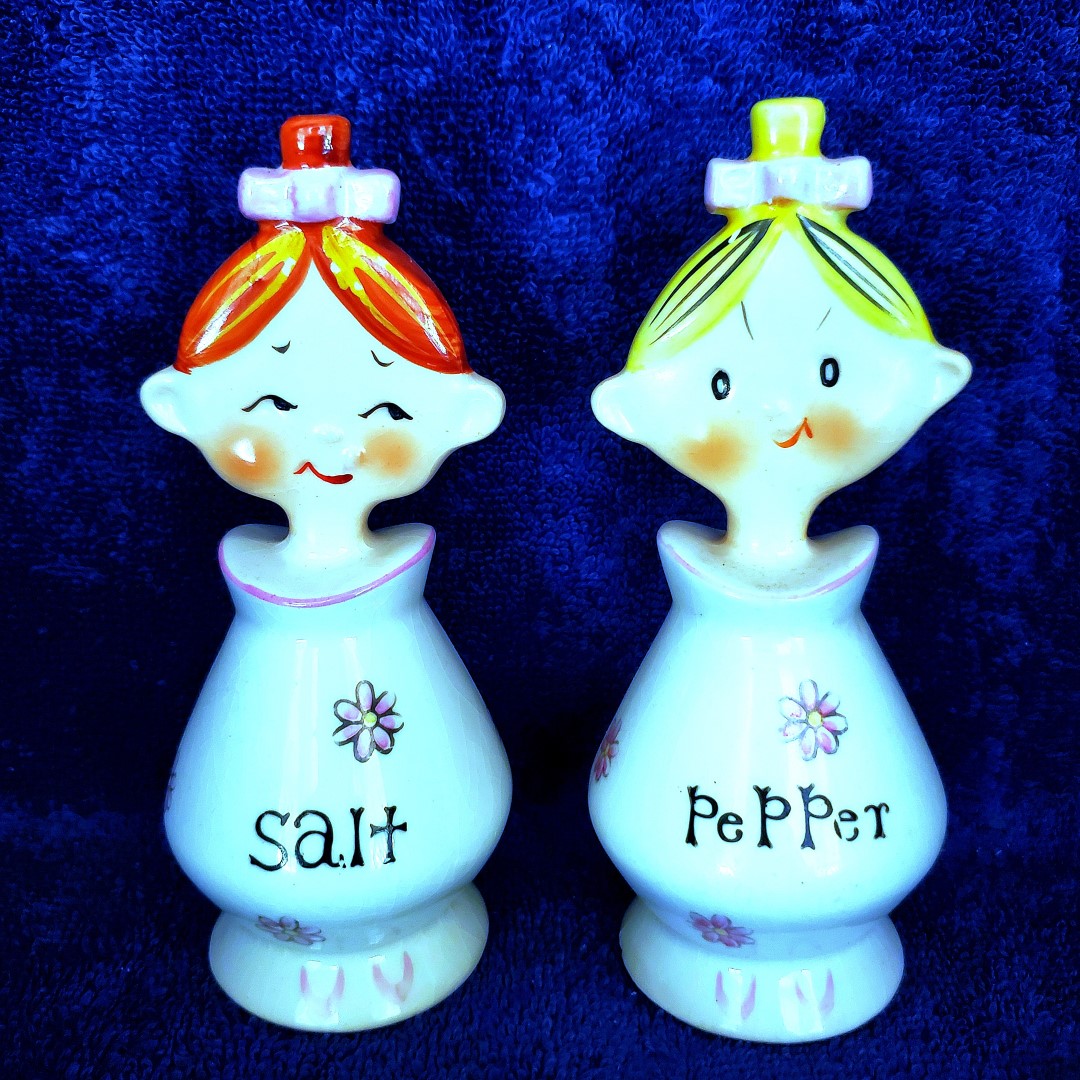
Pink Variant Set
The pink Salt & Pepper set is especially important because a matching pink Oil & Vinegar variation has now been confirmed. Same-color Salt & Pepper variants are known in orange, green, purple, and pink, and the recently documented pink Vinegar cruet establishes that the same four-color program extended to the Oil & Vinegar pieces as well.
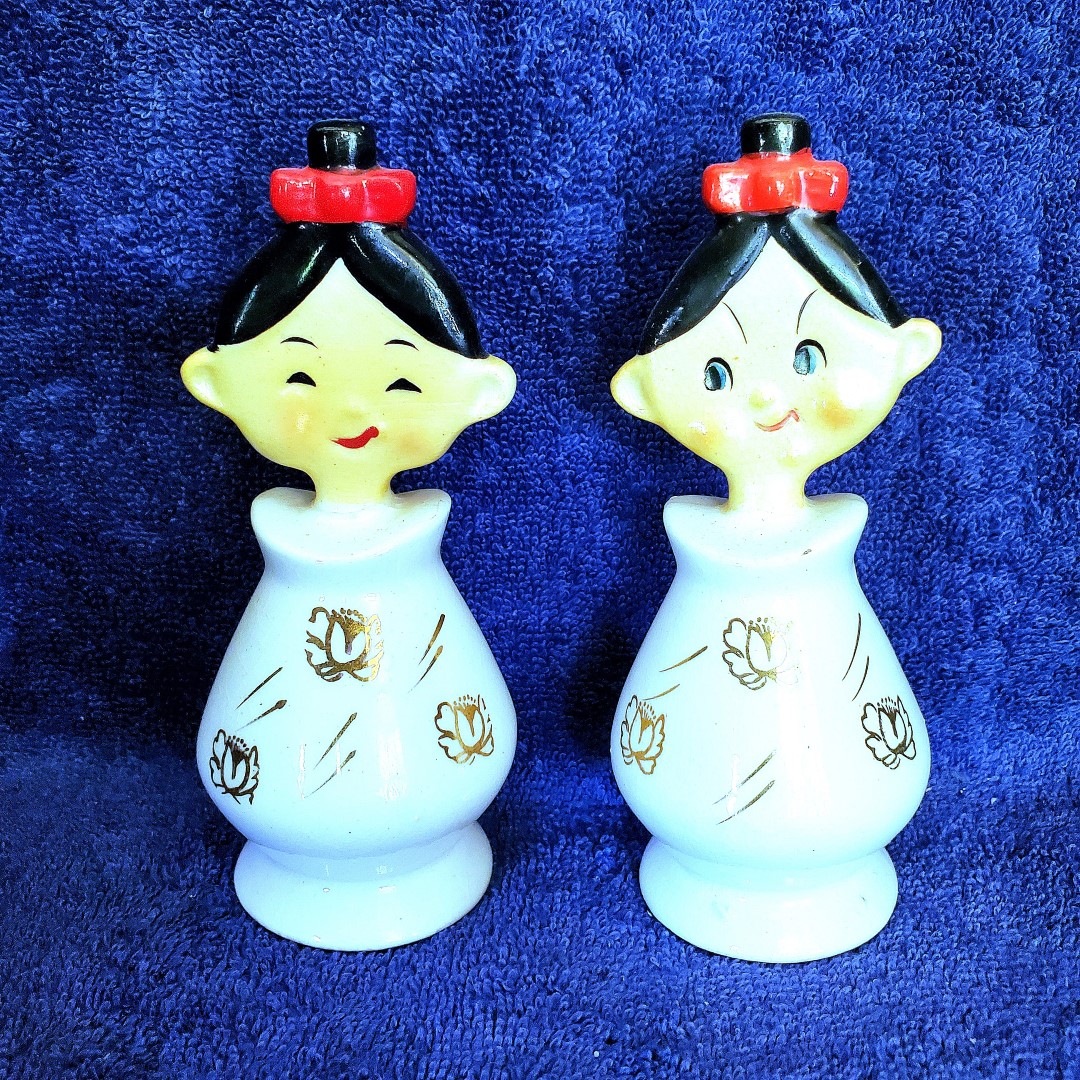
Jolly Asian Girls Salt & Pepper
The Jolly Asian Girls are related to the standard shaker form but differ in theme and decoration. They are rare and are distinguished by their Asian influence, lack of shoes, and gold Asian lotus blossom decoration rather than the daisy-type flowers used on the standard Jolly Floral Girls shakers.
Oil & Vinegar Cruets
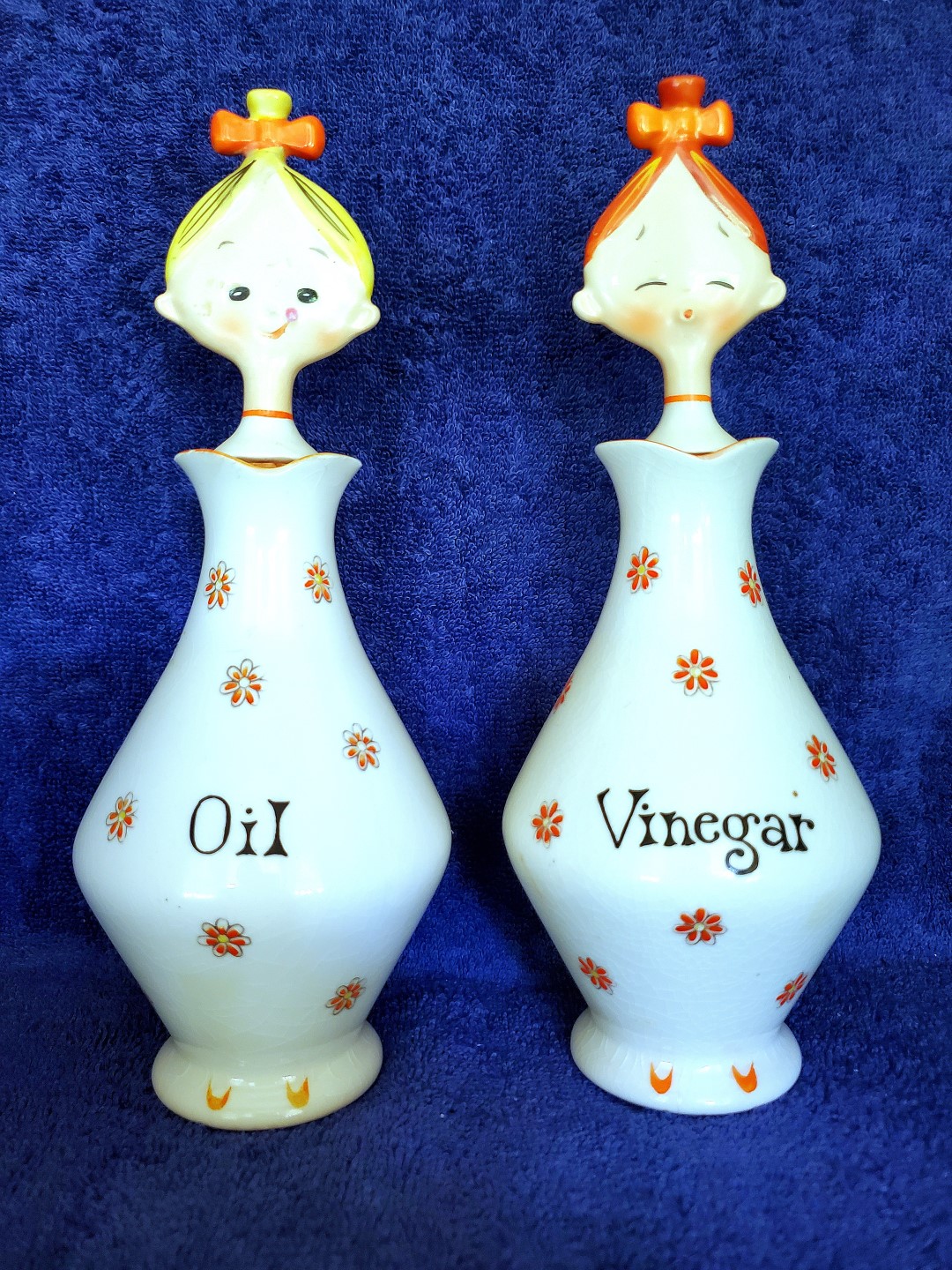
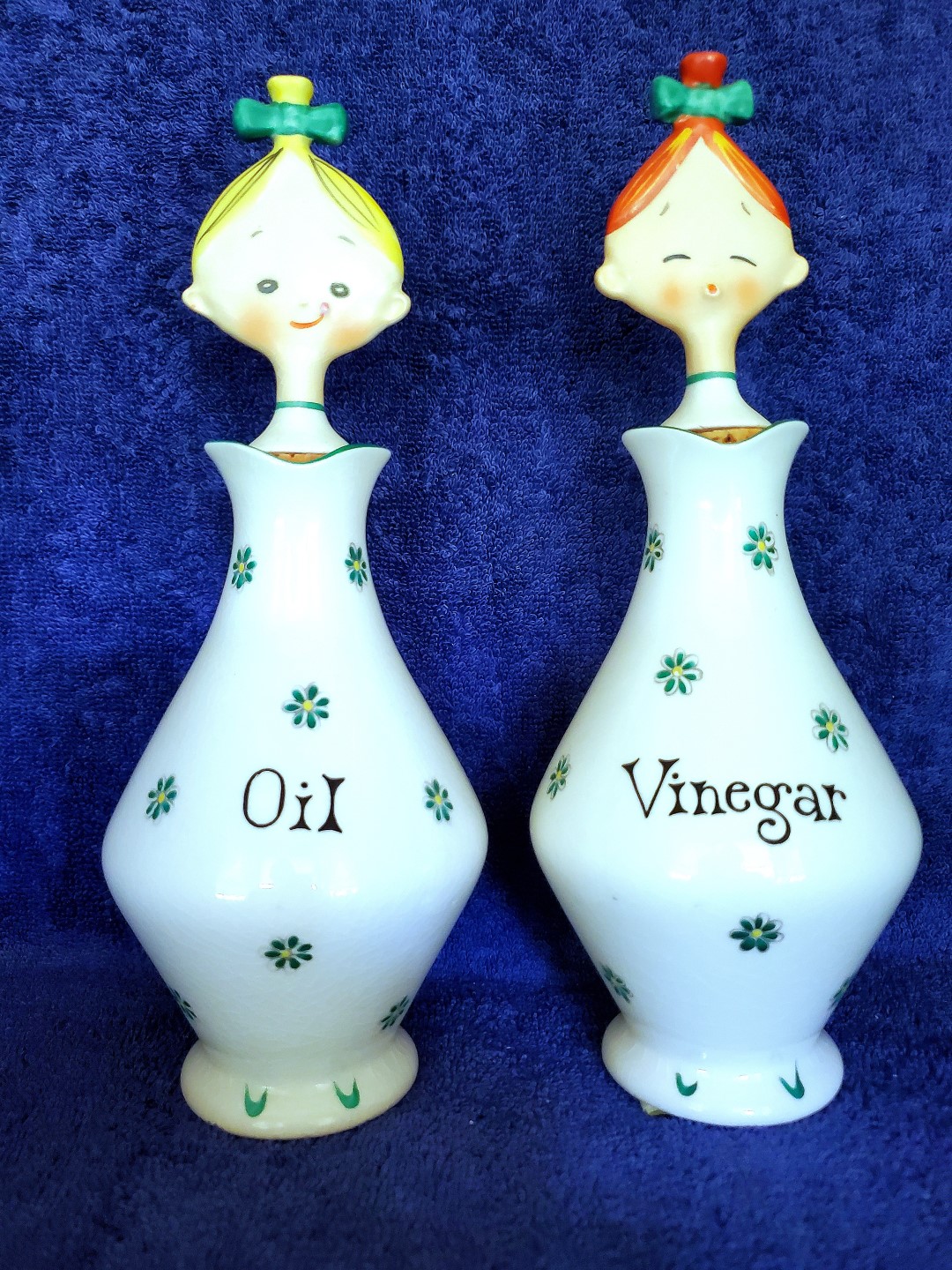
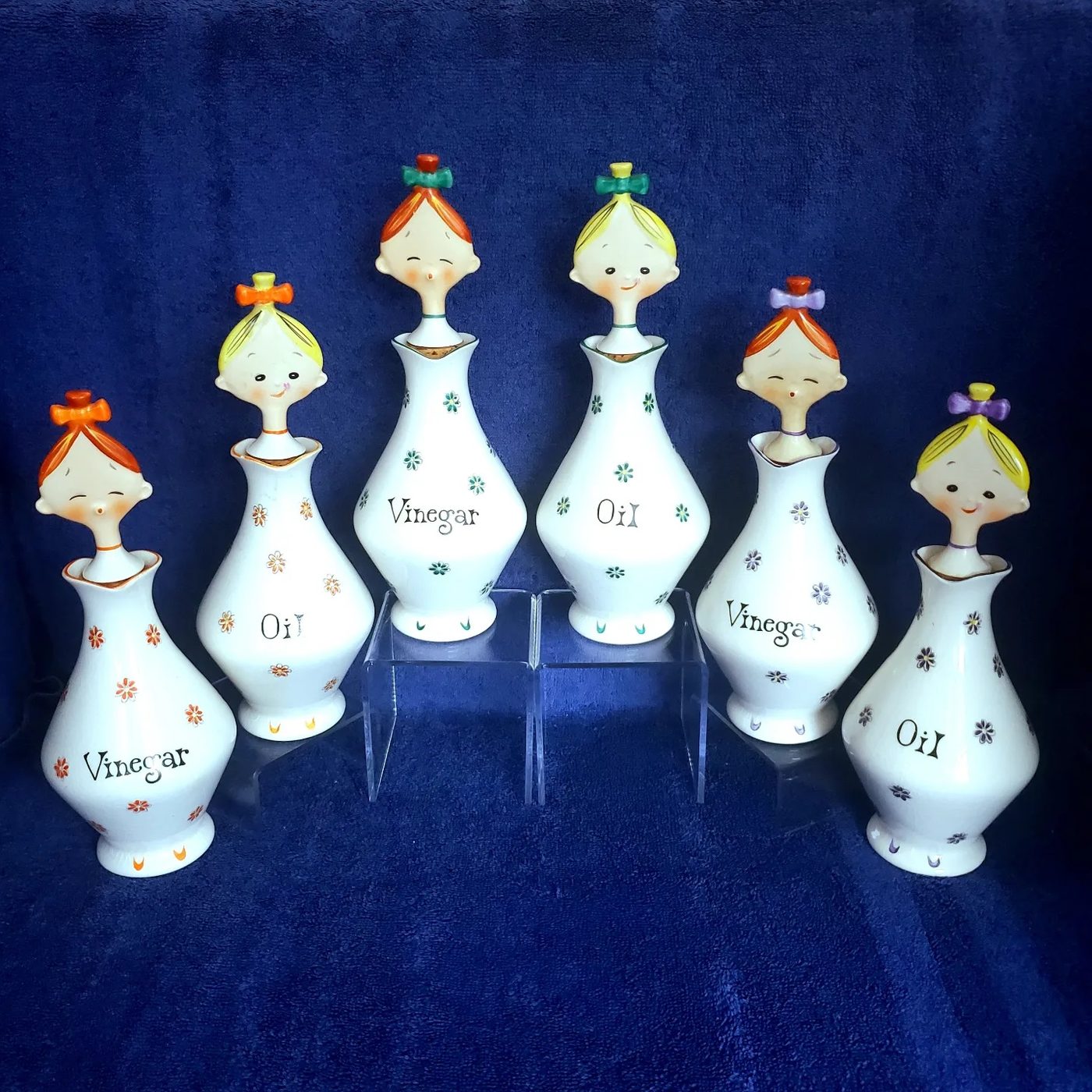
Four same-color Oil & Vinegar color variations are now documented: orange, green, purple, and pink. Complete orange, green, and purple sets are known. The pink variation is presently documented by a surviving Vinegar cruet base without its stopper or companion Oil cruet. Like the other colorways, the cruets use coordinated flowers, collar trim, and painted feet. These pieces stand taller than the condiment jars and are among the most desirable pieces in the Jolly Floral Girls line.
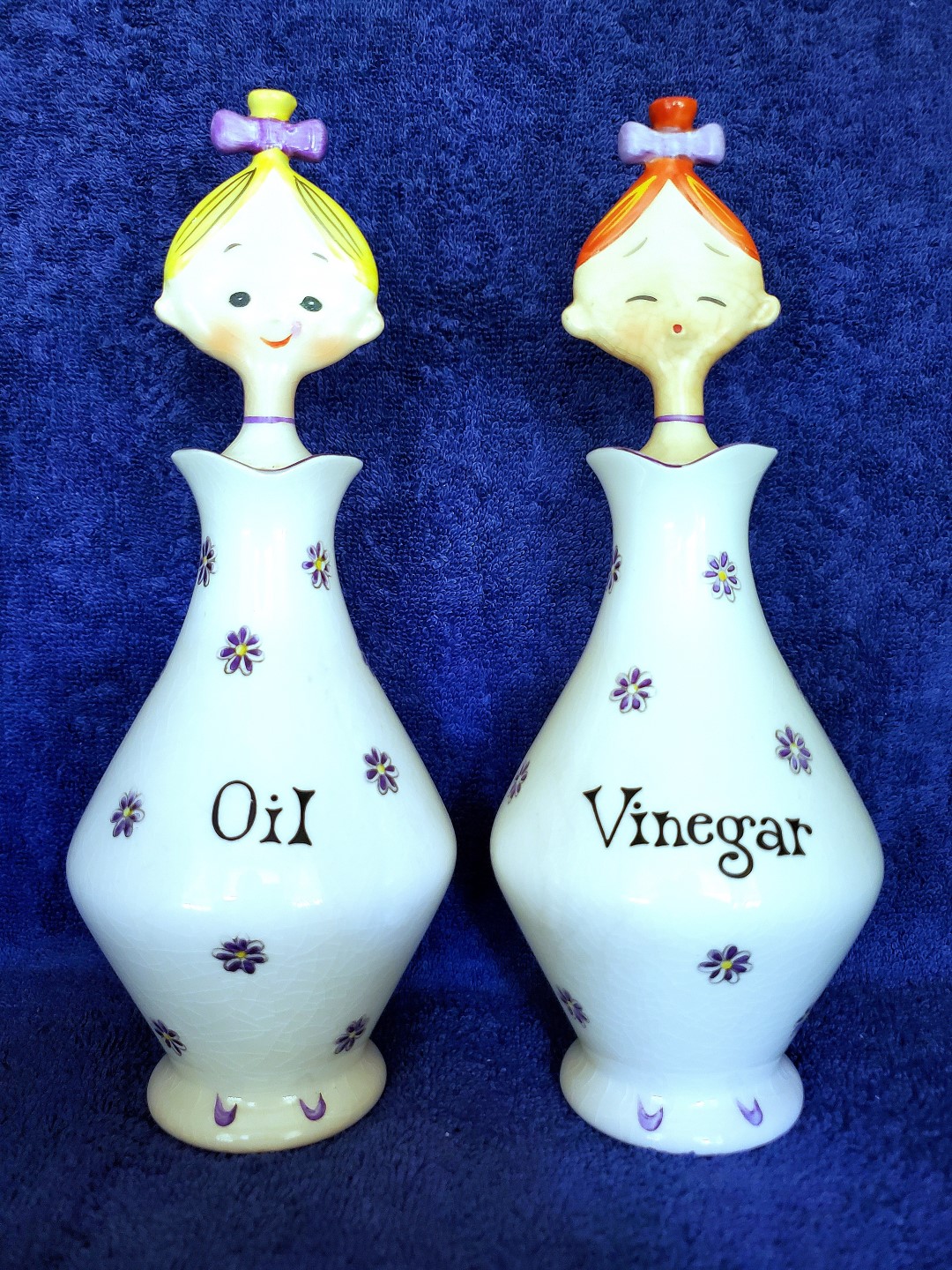
Research Note — Pink Oil & Vinegar Variant Confirmed
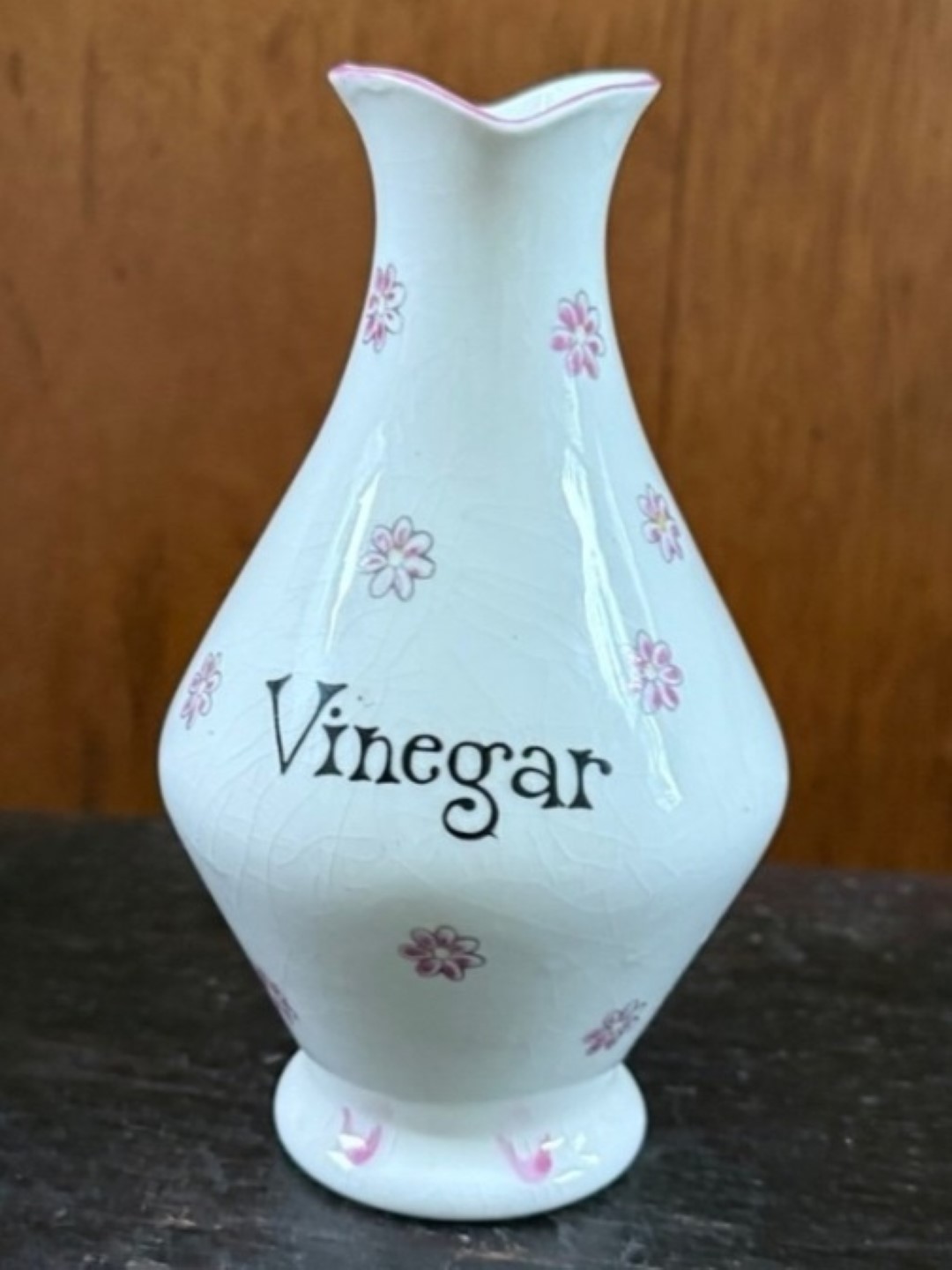
For roughly a decade, the author suspected that a pink Oil & Vinegar set existed. Four same-color Salt & Pepper variants were already known—orange, green, purple, and pink—while complete Oil & Vinegar sets had been documented only in orange, green, and purple. The close match between those two color programs strongly suggested that pink was the missing fourth Oil & Vinegar variation.
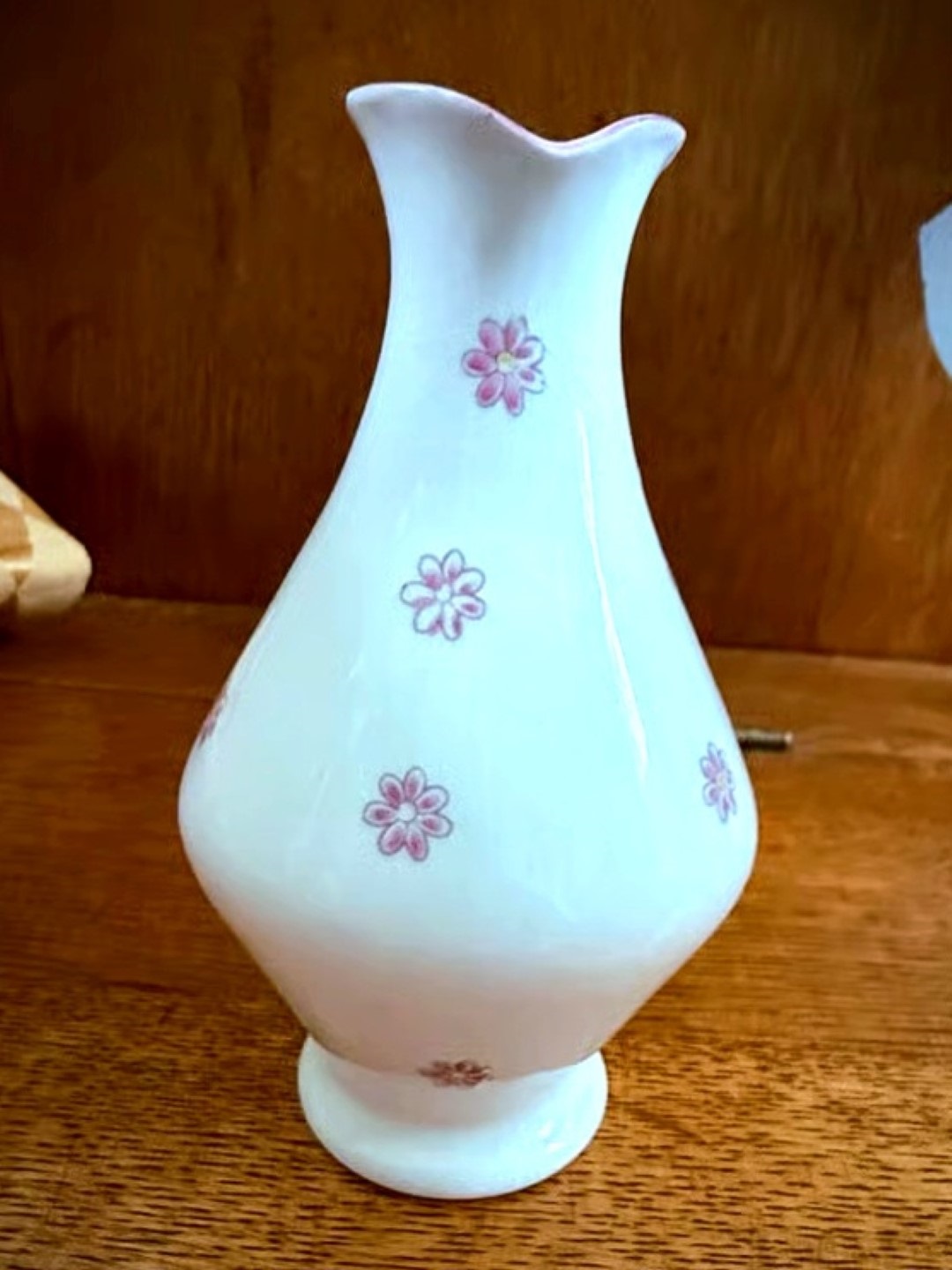
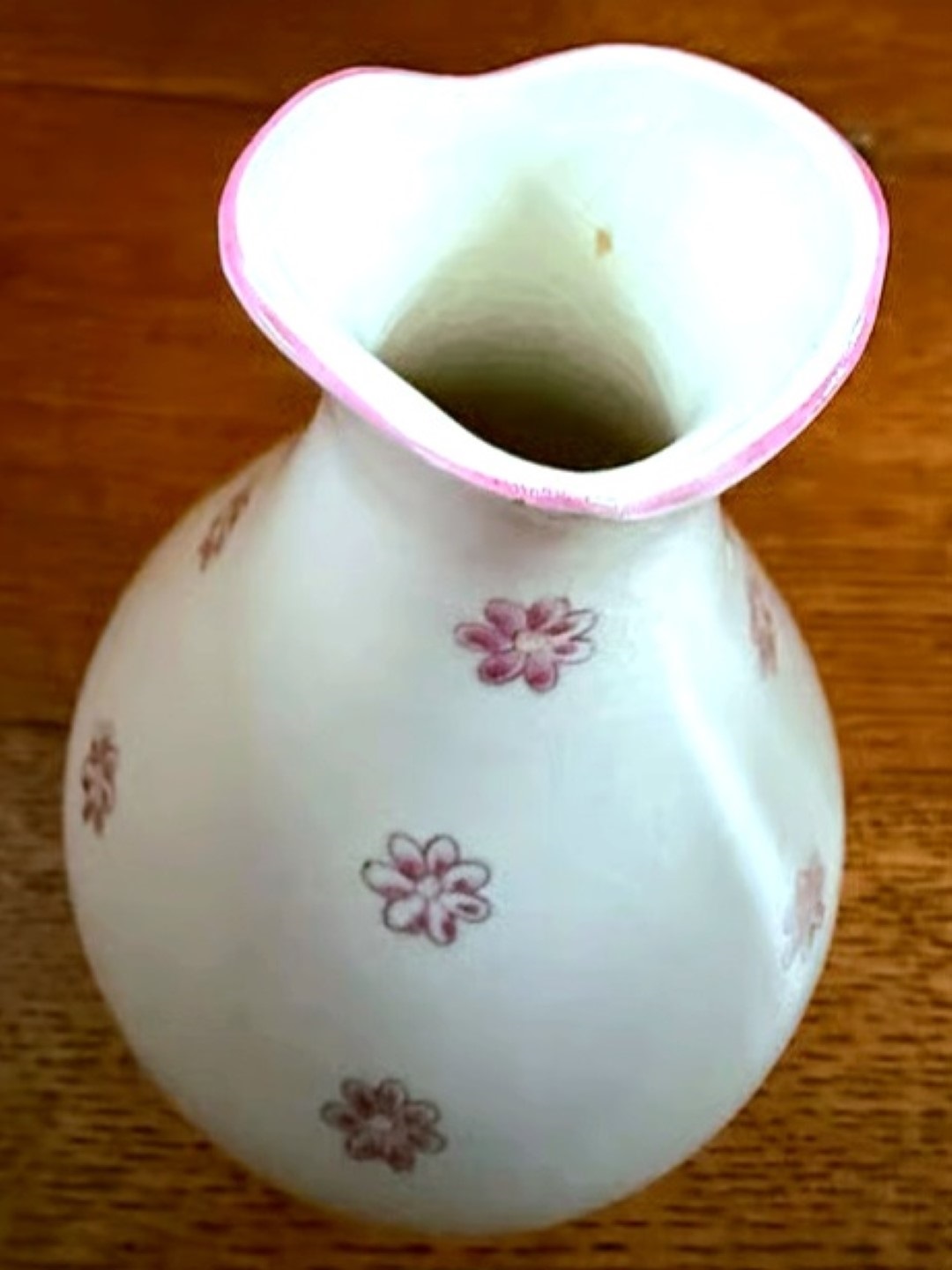
In August 2026, the author located a surviving pink Vinegar cruet base. Although its stopper and companion Oil cruet are missing, the base retains the coordinated pink flowers, pink-painted feet, and pink pinstriping around the flared collar. This surviving example confirms the long-suspected fourth colorway and establishes that pink Oil & Vinegar sets were produced. A complete pink set has not yet been documented in the Archive.
Research & Discoveries
Frequent Misidentifications
Jolly Floral Girls are frequently misidentified in online listings as Holt Howard or Lipper & Mann products. They are not Holt Howard creations, and no credible evidence has been found linking this line to Lipper & Mann. No catalogs, foil labels, advertisements, original packaging, or other contemporary documentation have been identified that associate these pieces with either company. While both Jolly Floral Girls and Lipper & Mann's Flower Girls incorporate floral decoration into their designs, the two lines are otherwise distinct in sculpting, construction, and overall appearance. The continued appearance of these incorrect attributions appears to result largely from sellers repeating information copied from earlier online listings rather than from documented historical sources.
Original Packaging: What It Does and Does Not Tell Us
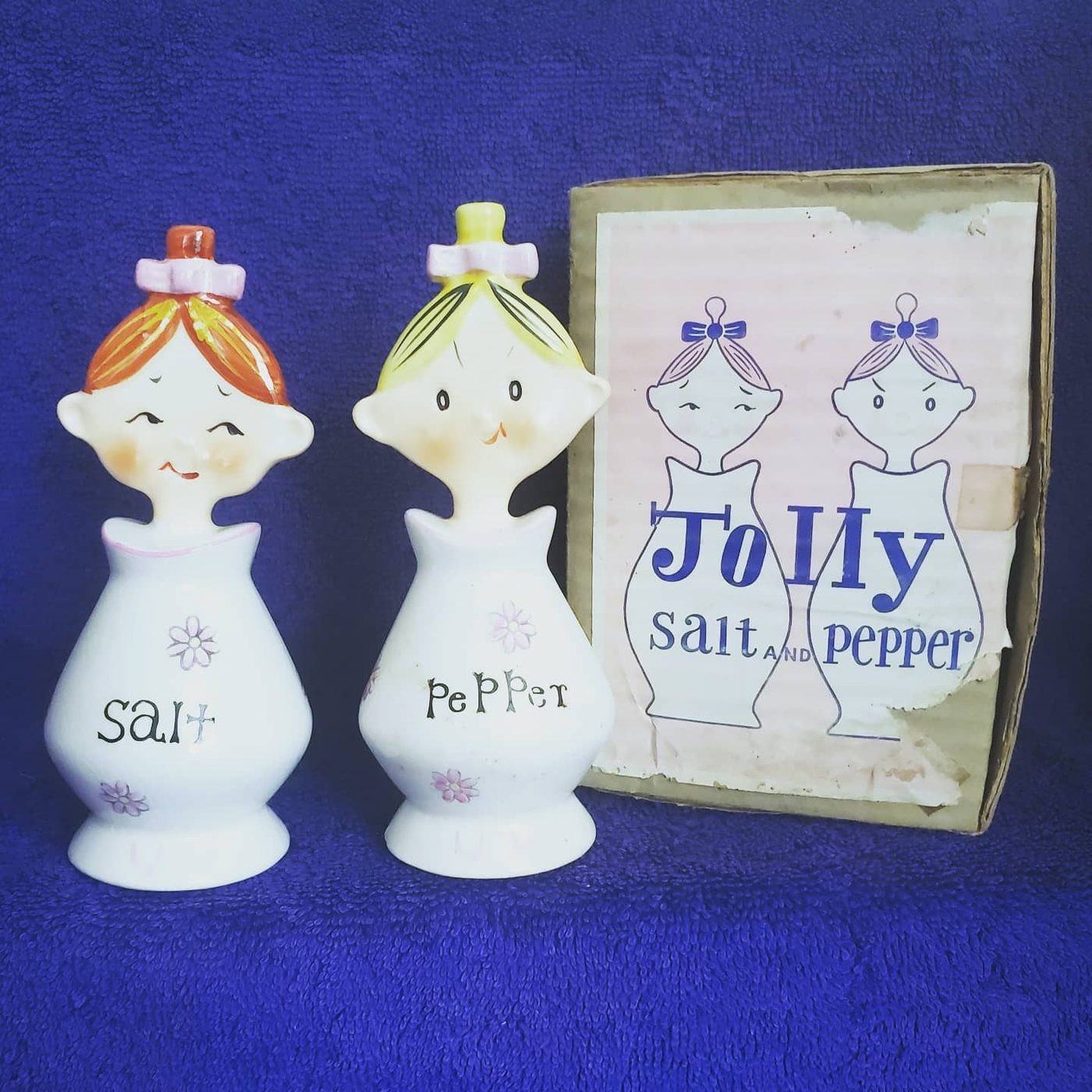
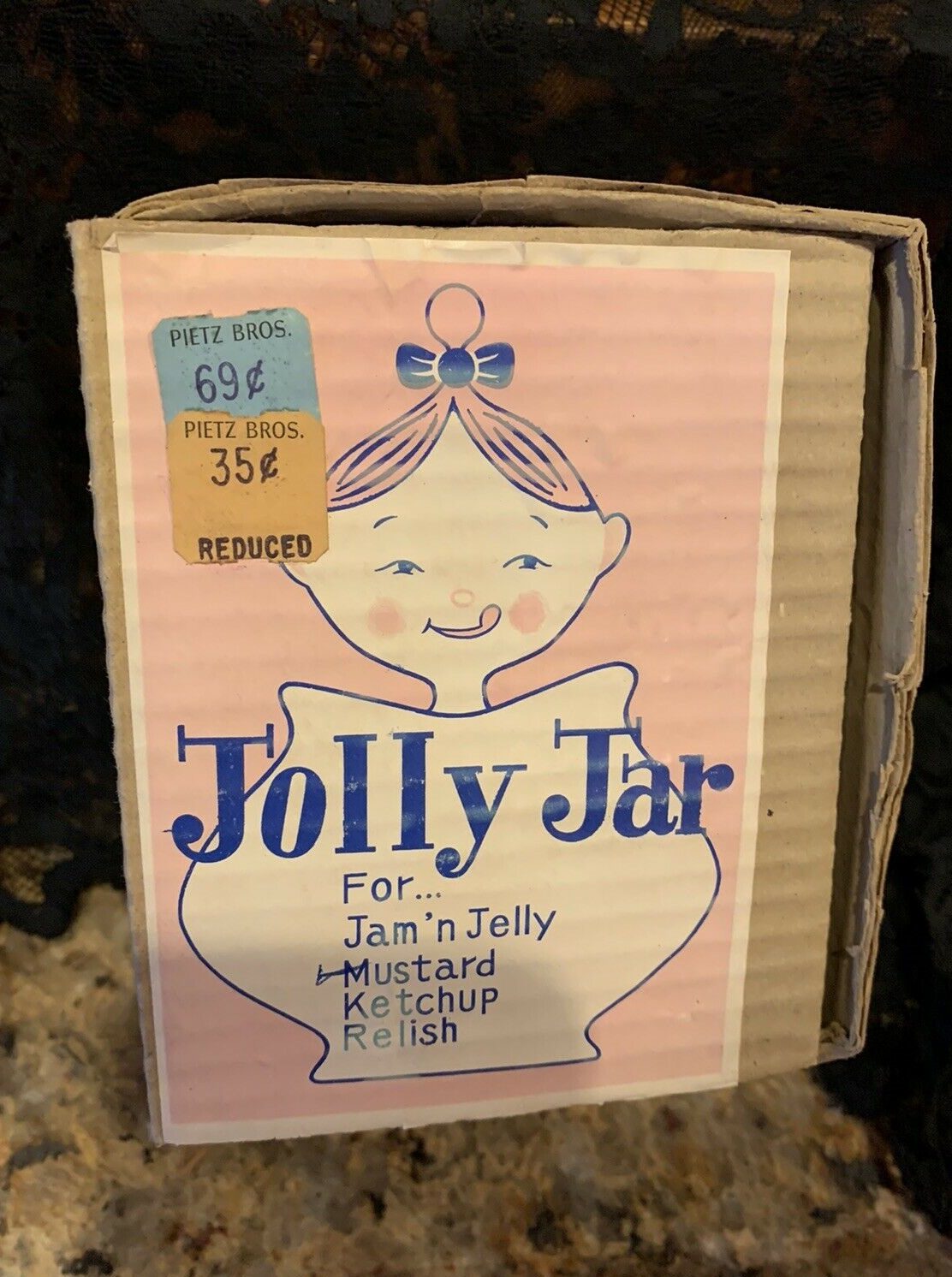
Original packaging has been documented for Jolly Floral Girls pieces, including Salt & Pepper boxes. The packaging confirms the use of the Jolly name, but it does not identify a manufacturer, distributor, or importer. Even the import sticker on surviving packaging provides only a generic Japan designation. This makes the packaging useful for confirming the product name, but not for establishing the company responsible for importation.
Was Quality Products the Importer?
Walter Dworkin treated the maker or importer of the Jolly Floral Girls as unidentified. That remains technically correct: no catalog, advertisement, invoice, or company record has yet surfaced that conclusively names the importer. However, a group of related Japanese novelty shaker sets provides a compelling body of circumstantial evidence pointing toward a Quality Product / Quality Products connection.
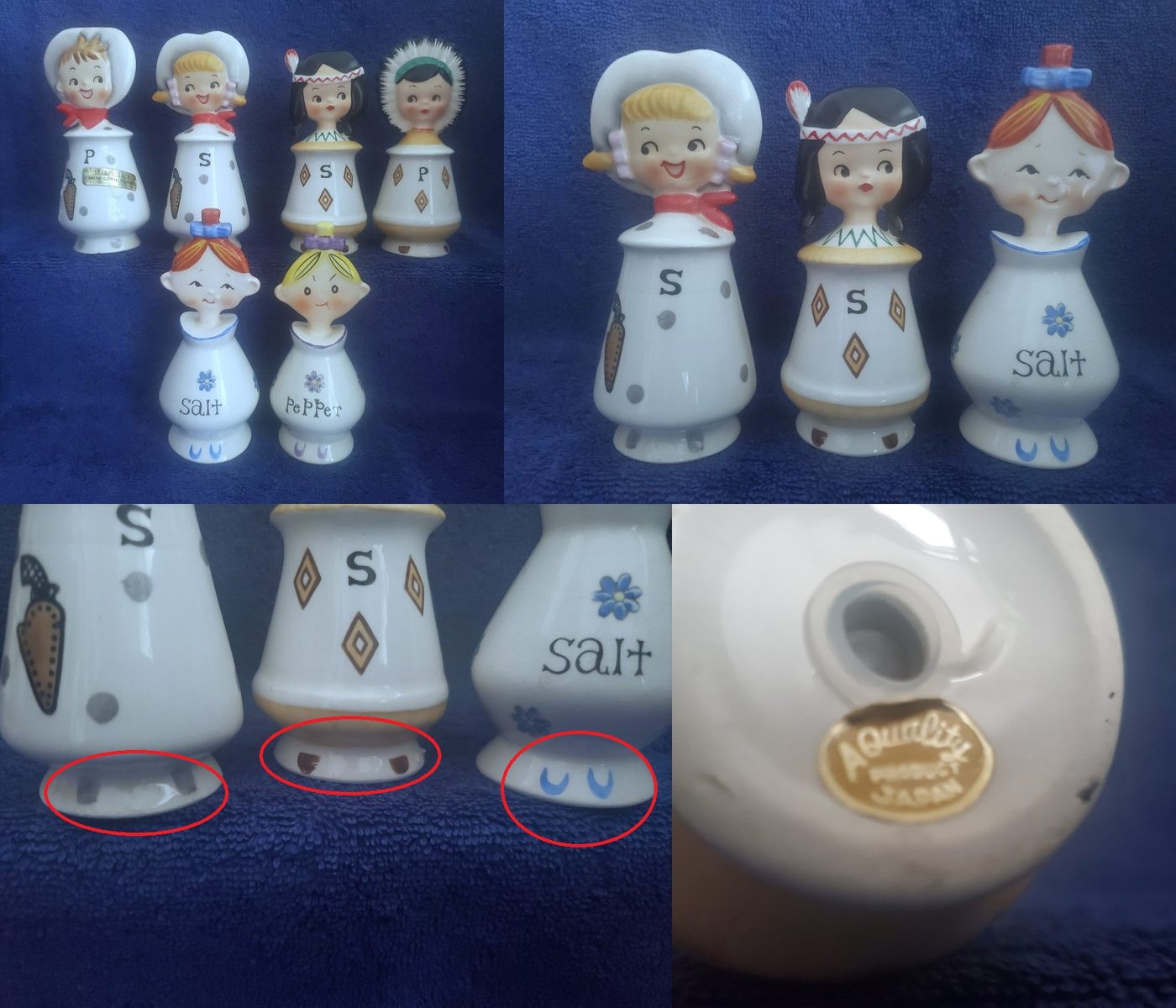
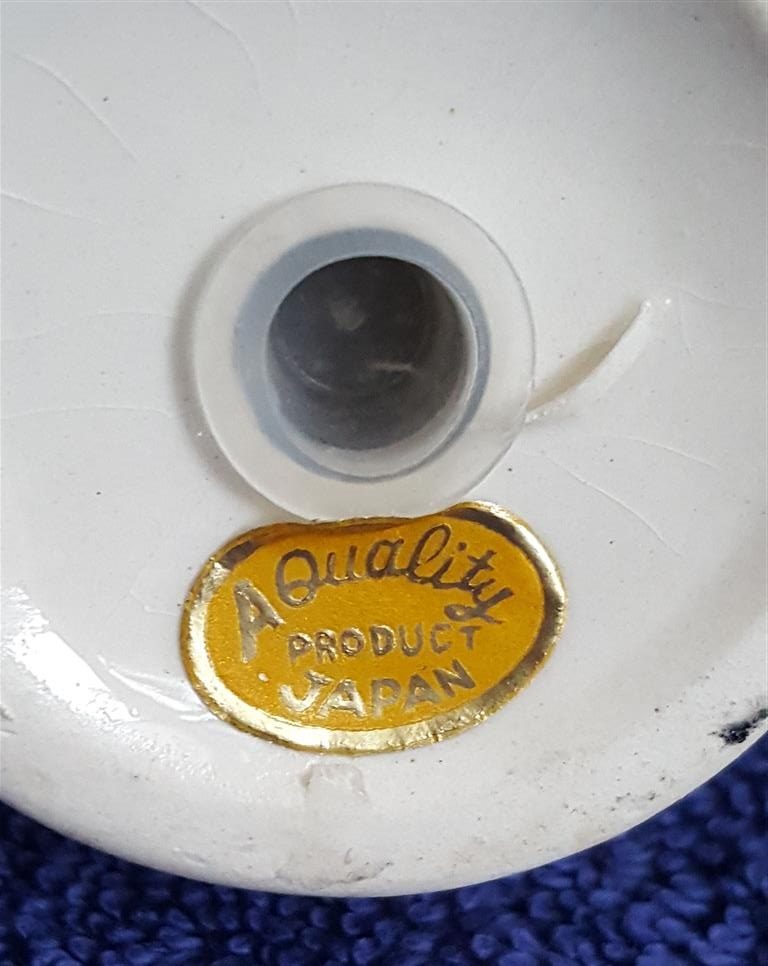
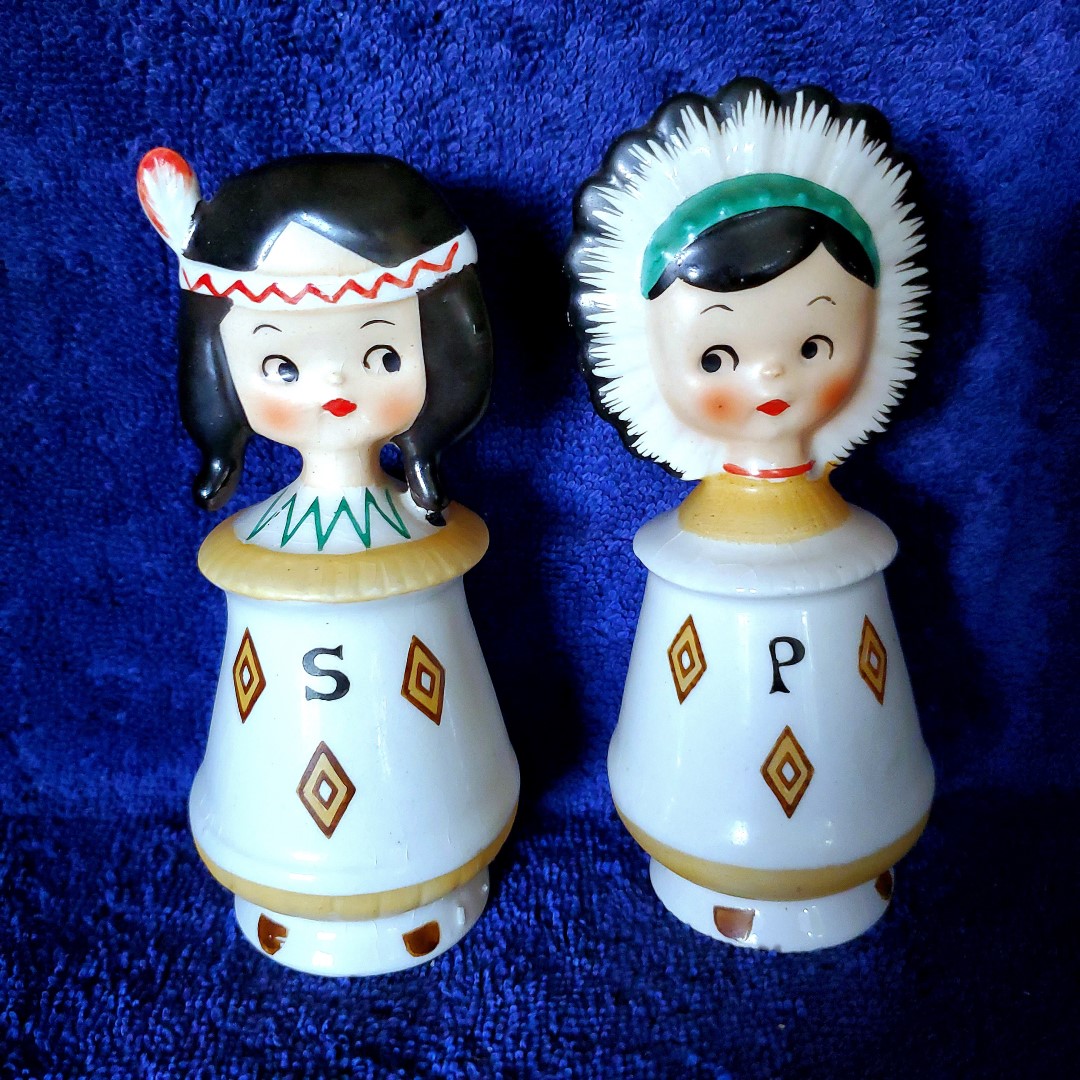
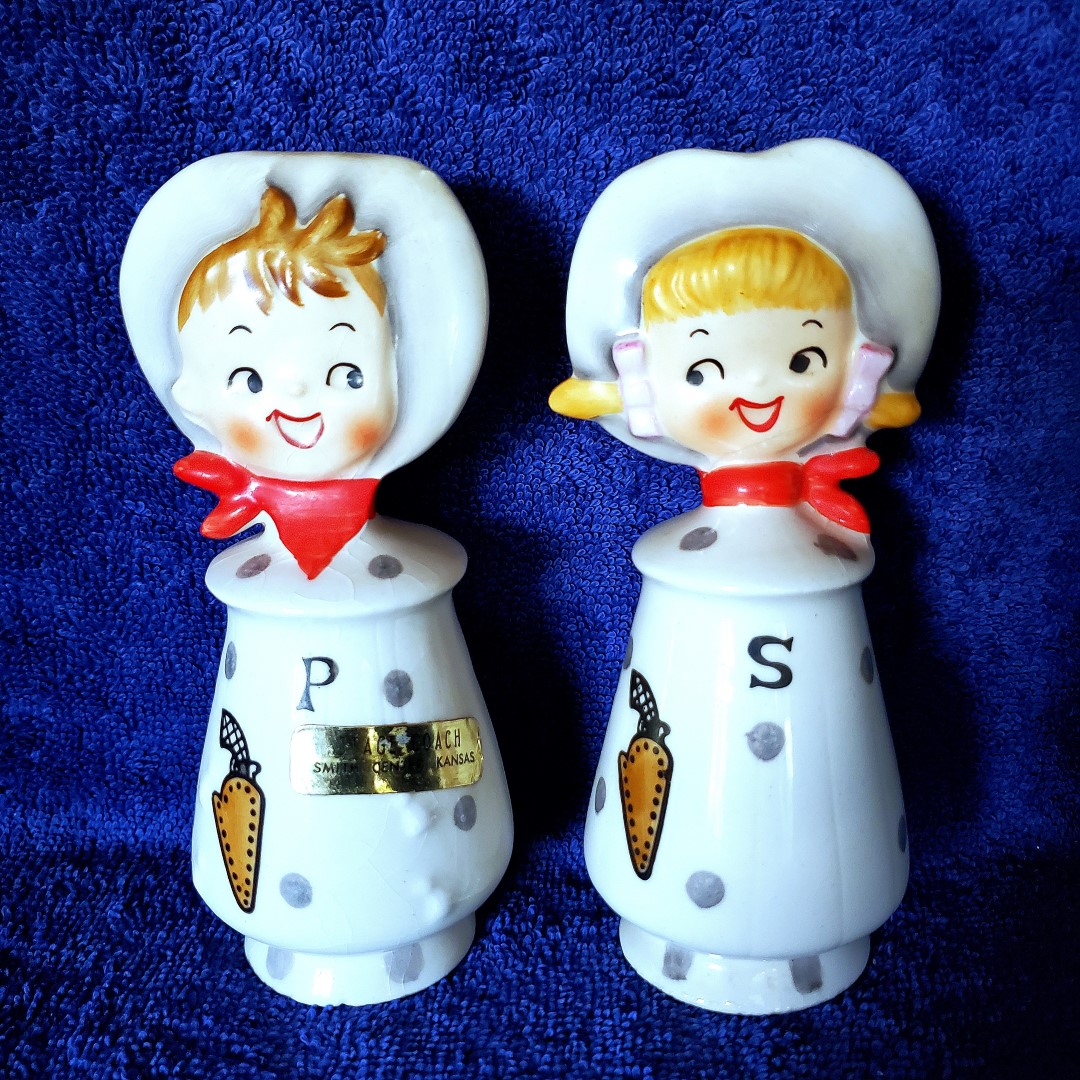
The key evidence comes from related figural Salt & Pepper sets that retain Quality Product foil labels. These include Native American children and Cowboy/Cowgirl shaker sets with similar construction, small painted feet, comparable ceramic bodies, and the same general manufacturing language seen in the Jolly Floral Girls shakers. The evidence does not prove the attribution by itself, but it gives us a documented anchor point for comparison.
Taken together, the documented Quality Product label, the related novelty forms, the shared painted-foot treatment, and the close family resemblance in manufacture make Quality Products the most convincing currently available attribution. Until a catalog or company record emerges, this should be understood as a strong research hypothesis rather than a final documented conclusion.
Why the Jolly Floral Girls Matter
The Jolly Floral Girls show how much can still be learned from close observation, comparison, and accumulated collector evidence, even when a manufacturer or importer name has not yet been conclusively documented. The line is charming on its own terms, but it is also historically important because it demonstrates how much mid-century Japanese novelty ware remains only partially understood.
The pieces shown here preserve both the known facts and the current state of the research: the American jars, Australian market variants, Salt & Pepper color programs, Oil & Vinegar sets, frequent misidentifications, and the strongest available evidence for a Quality Products attribution. Perhaps a catalog page, invoice, or advertisement will eventually settle the question. Until then, the Jolly Floral Girls remain one of the most interesting open mysteries in this section of the Archive.