M-G Dolly Girls
Polka-dot skirted girls from Menschik-Goldman, the competitor whose Pixieware-inspired ceramics became part of Holt Howard legal history.
Introduction
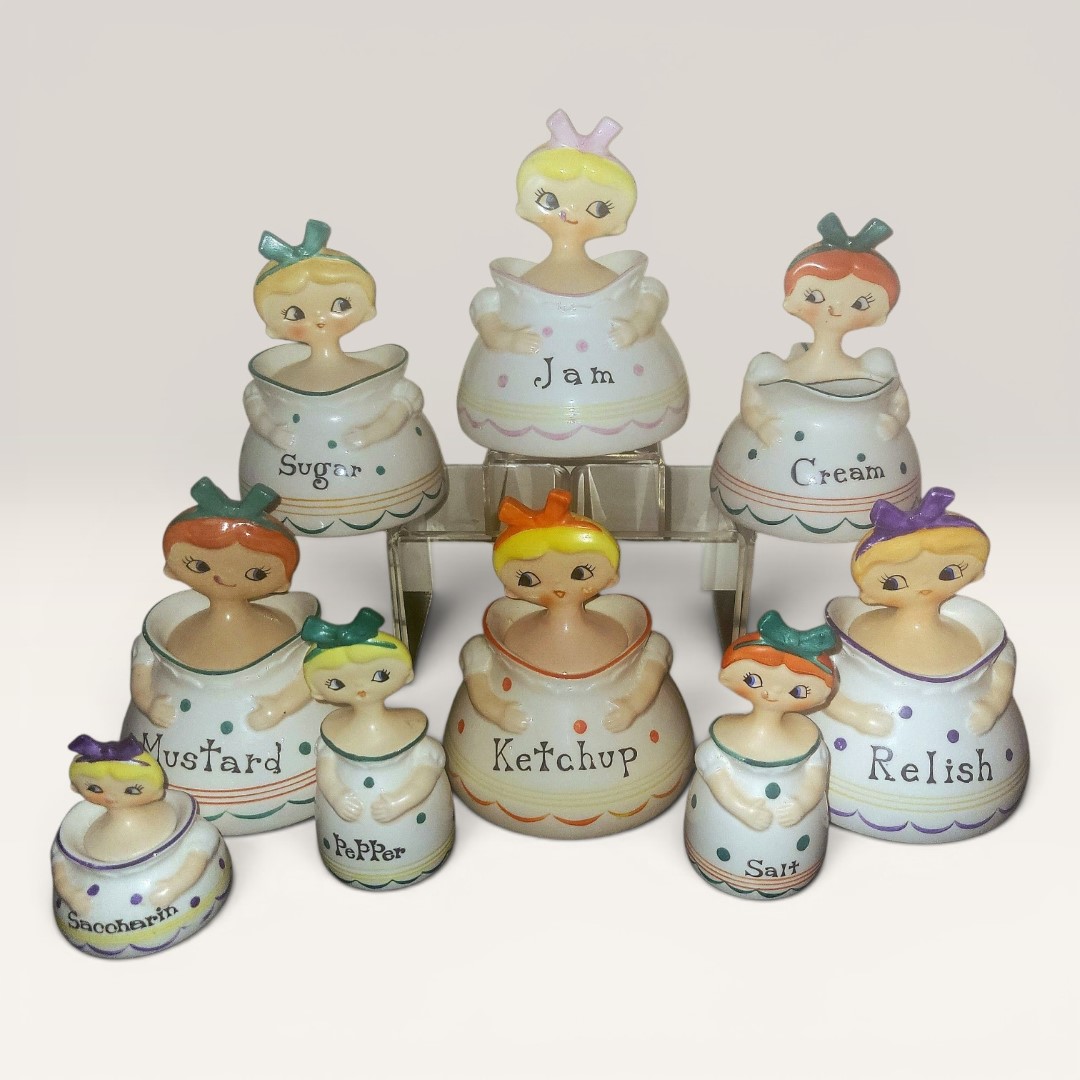
The M-G Dolly Girls were produced by Menschik-Goldman, Inc., a Japanese novelty importer whose surviving ceramics are best known today for whimsical kitchen containers, Christmas items, salt and pepper shakers, and related mid-century giftware. Walter Dworkin initially discussed the group as M-G pieces, and later documented the line name after original packaging surfaced identifying the series as Dolly.
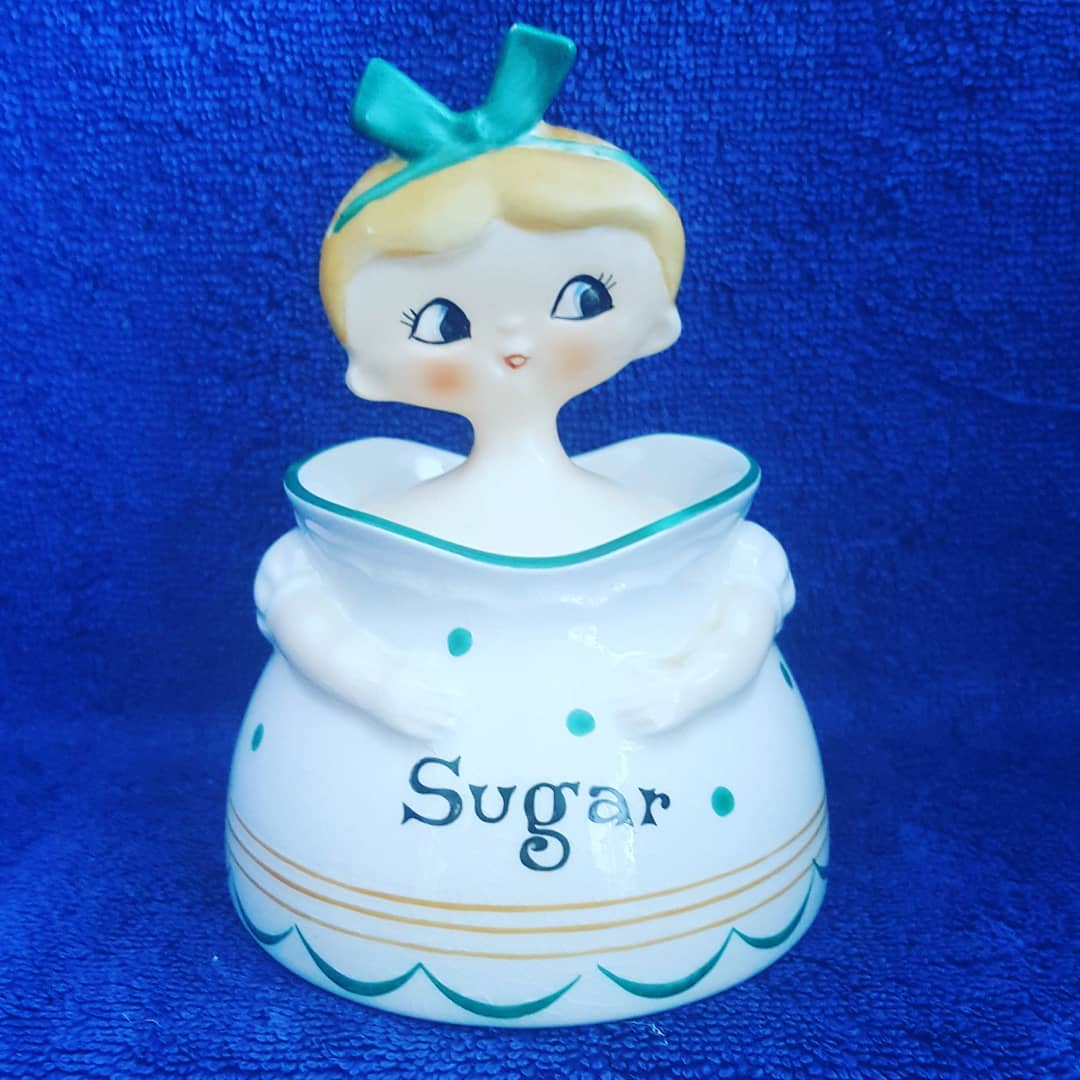
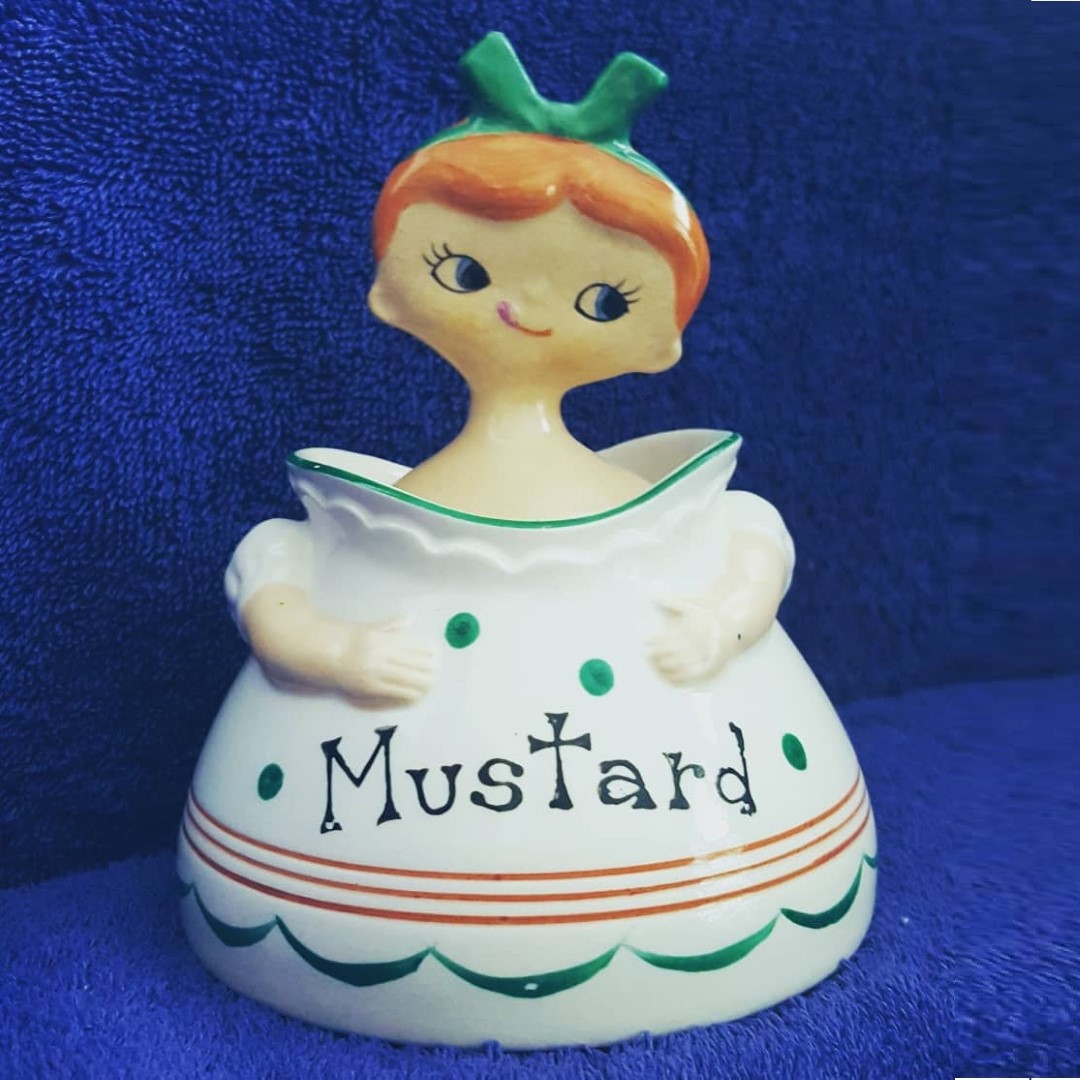
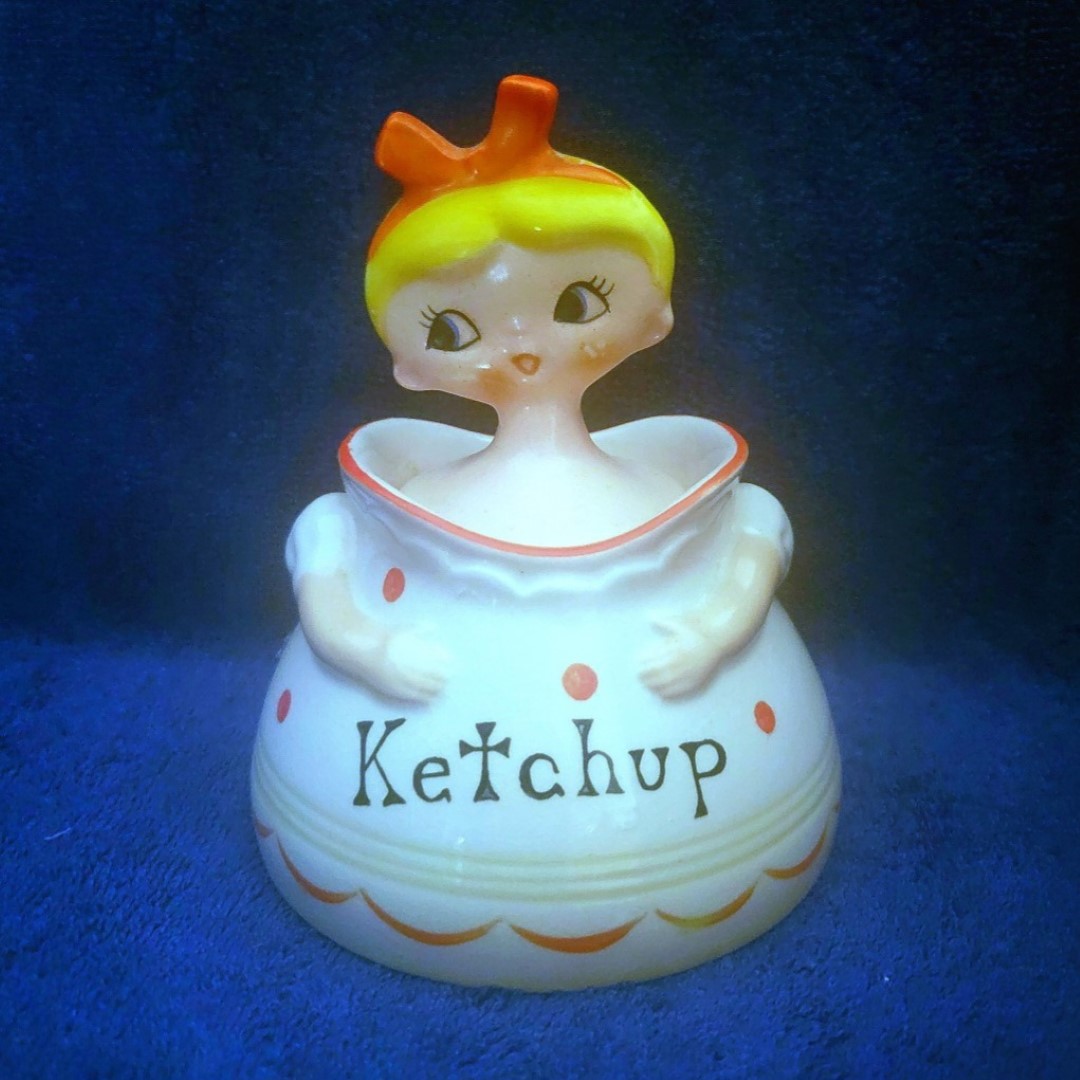
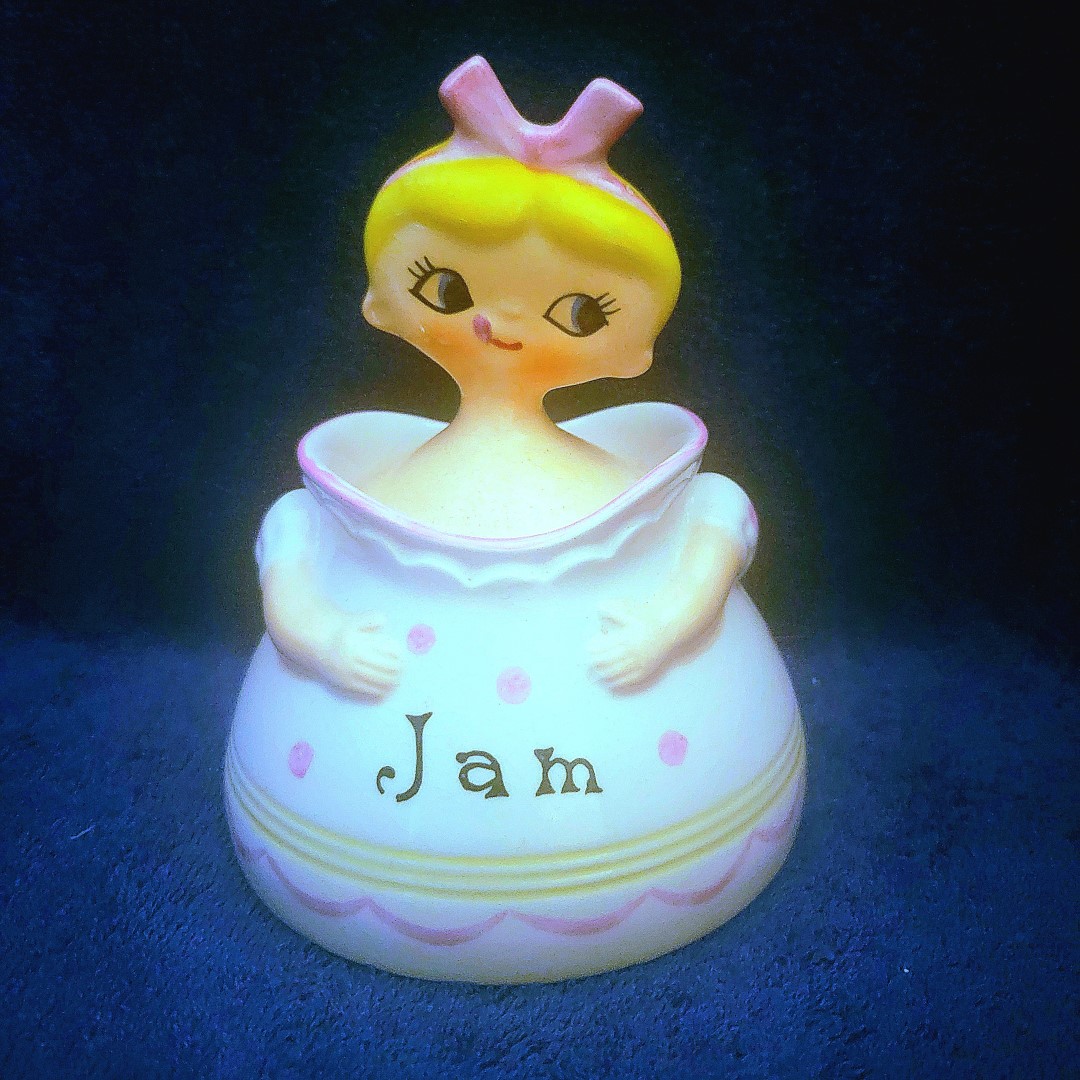
The Dolly Girls are immediately recognizable by their rounded skirt-shaped bodies, large eyes, bows in their hair, and polka-dot decoration. Their color system is unusually consistent: the bow color matches the polka dots on the dress and the collar ring around the jar opening, while the hair color generally matches the three horizontal stripes around the lower edge of the dress.
The Jam jar has 13 polka dots, a count typical of the larger pieces in the line. The smaller Salt and Pepper set and Saccharin jar follow the same decorative vocabulary at reduced scale.
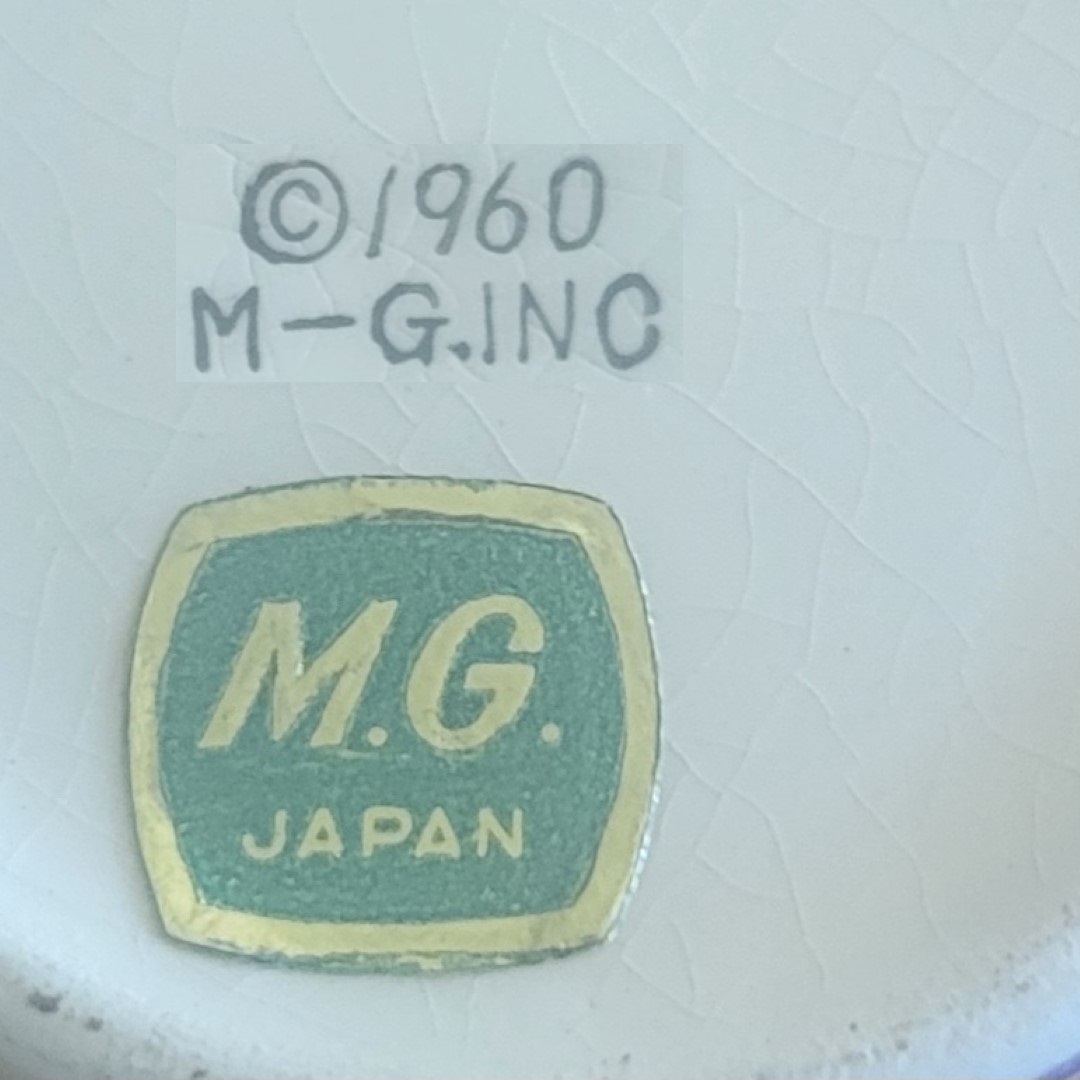
The line was copyrighted in 1960. Some pieces are marked with a copyright notation, while others retain only the green and silver foil sticker reading M.G. Japan. As with many Japanese novelty ceramics of the period, stickers were easily lost, making surviving marked examples especially useful for identification.
Documented Name and Markings
Identification Note
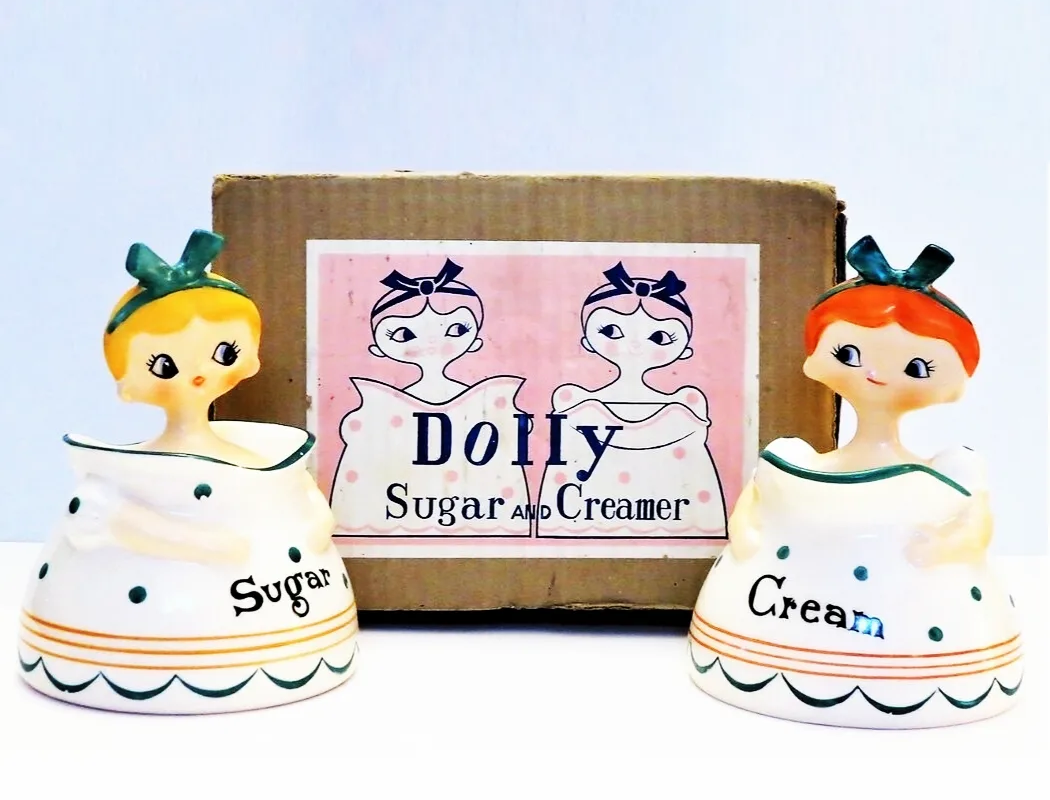
Original packaging and surviving marked examples confirm the attribution to Menschik-Goldman. The boxed Sugar and Creamer set identifies the line as Dolly, while marked ceramics may show either the M.G. Japan foil label or a © 1960 M-G Inc. marking.
Historical Note: Holt Howard v. Menschik-Goldman
In 1959, Holt Howard sued Menschik-Goldman, alleging that M-G had imported and sold ceramic containers that copied large and substantial parts of the newly introduced Pixieware line. The lawsuit is an unusually direct piece of evidence showing that Holt Howard itself viewed Menschik-Goldman as a significant competitor.
The surviving court record also reveals an ironic complication: Holt Howard's copyright claim was undermined by evidence that some of the earliest Pixieware ceramics manufactured in Japan and shipped into the United States may not have carried the copyright notice required under the law then in effect. Responsibility for that apparent notice problem cannot be determined from the surviving records. Given the known division of duties within Holt Howard, the issue likely arose somewhere within the company's business, production, import, or legal processes rather than the product design itself, but the historical record does not identify where the breakdown occurred.
Cream and Sugar
Cream Crock
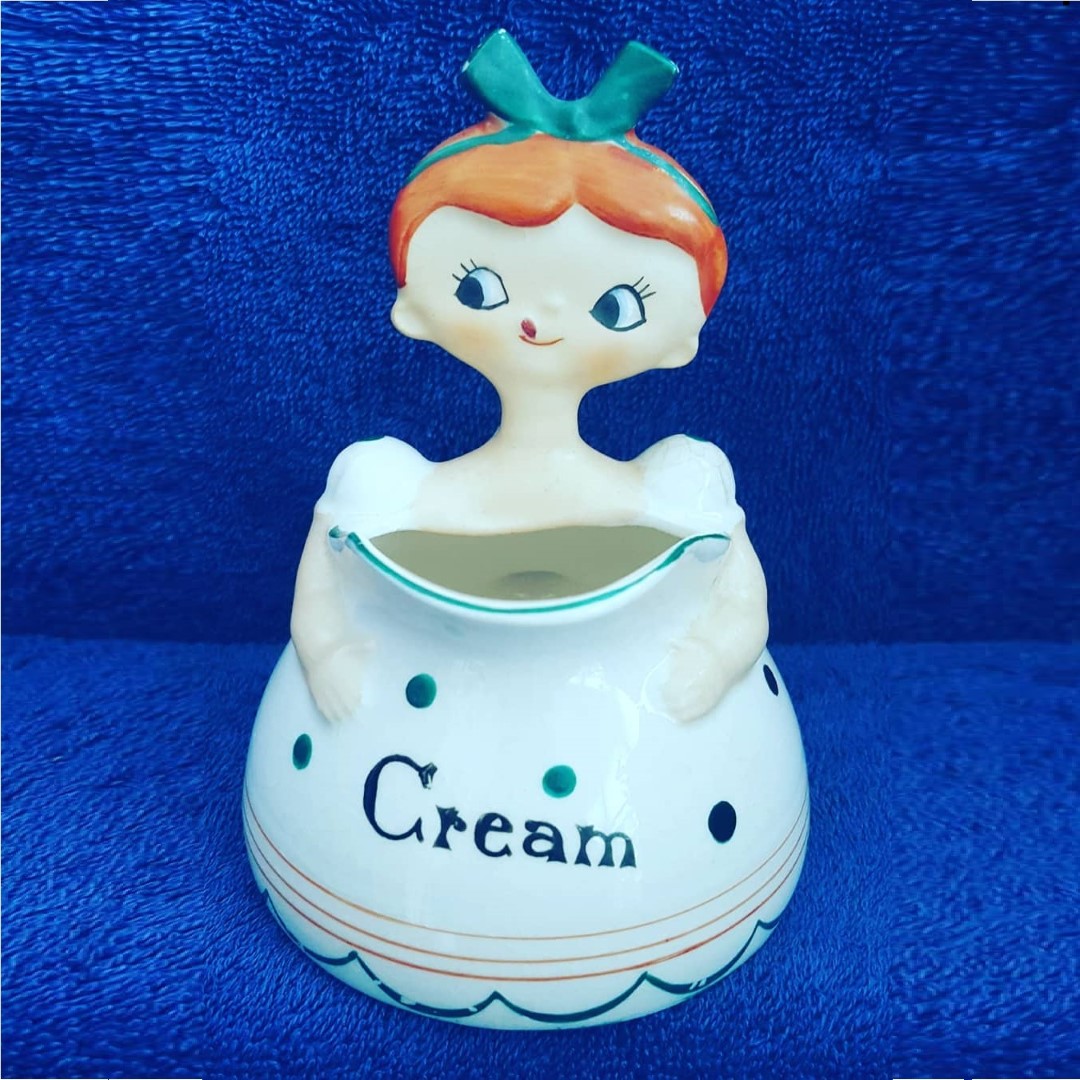
The Cream Crock was sold as part of the boxed Dolly Sugar and Creamer set. It has a rear pouring handle built into the back of the dress and was designed to hold cream or milk at the table.
Sugar Jar
The Sugar Jar is the companion to Cream. It uses a character-head lid and includes a built-in spoon for serving sugar.
Condiment Jars
Mustard
Mustard is one of the core condiment jars in the Dolly Girls line. She is visually paired with Ketchup: one girl licks her lips while the other smiles with an open mouth. Mustard uses a spreader-type utensil rather than a standard spoon.
Ketchup
Ketchup is the companion to Mustard and uses the same general form and utensil type. Her orange bow, orange polka dots, and orange collar ring distinguish her from the green Mustard jar.
Jam
Jam uses the pink color scheme and a standard spoon. Walter's first edition refers to this piece as Jam 'n Jelly, while the second edition simplifies the name to Jam.
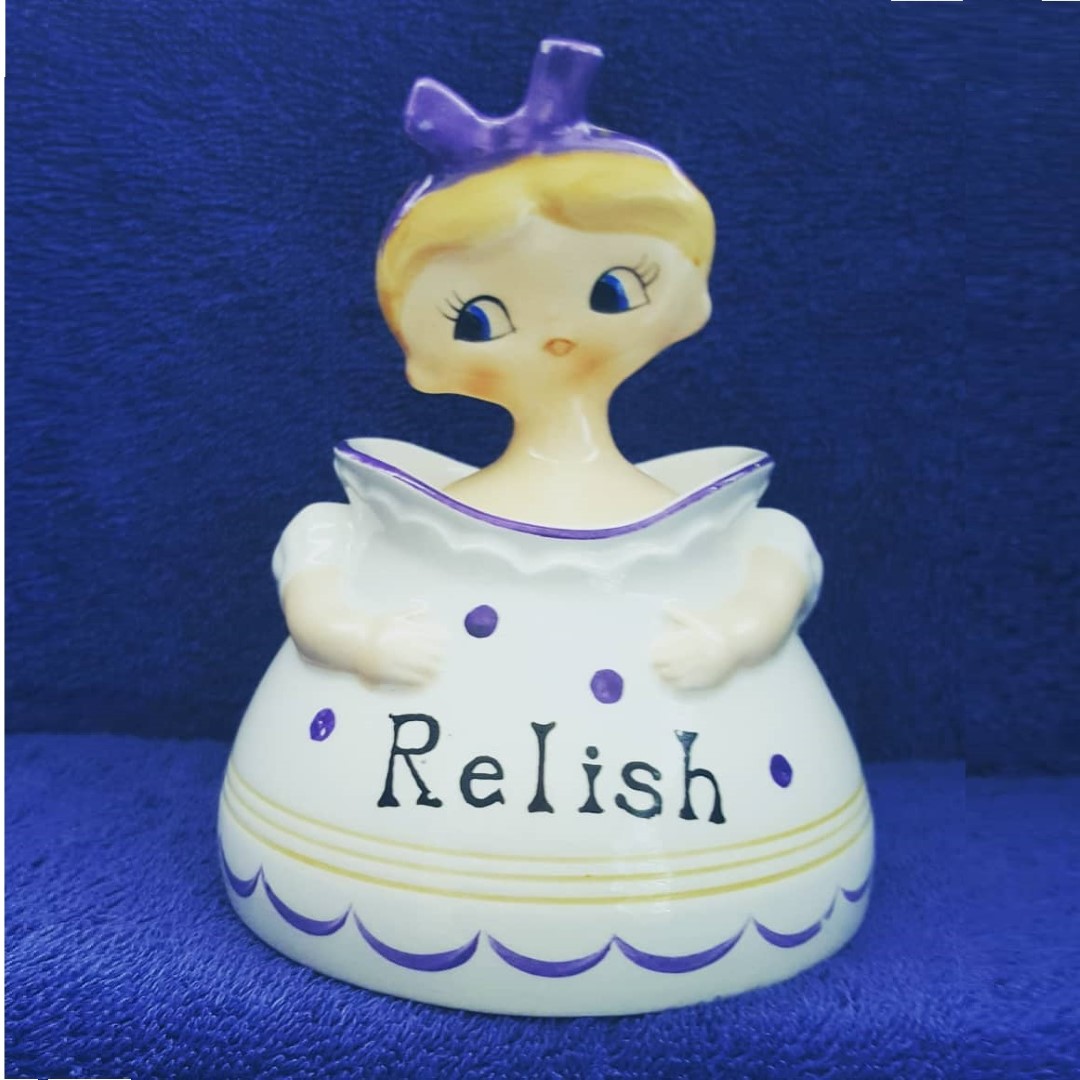
Relish
Relish introduces the purple color scheme into the larger condiment jars. Like Jam, it uses a standard spoon rather than a spreader.
Salt, Pepper, and Saccharin
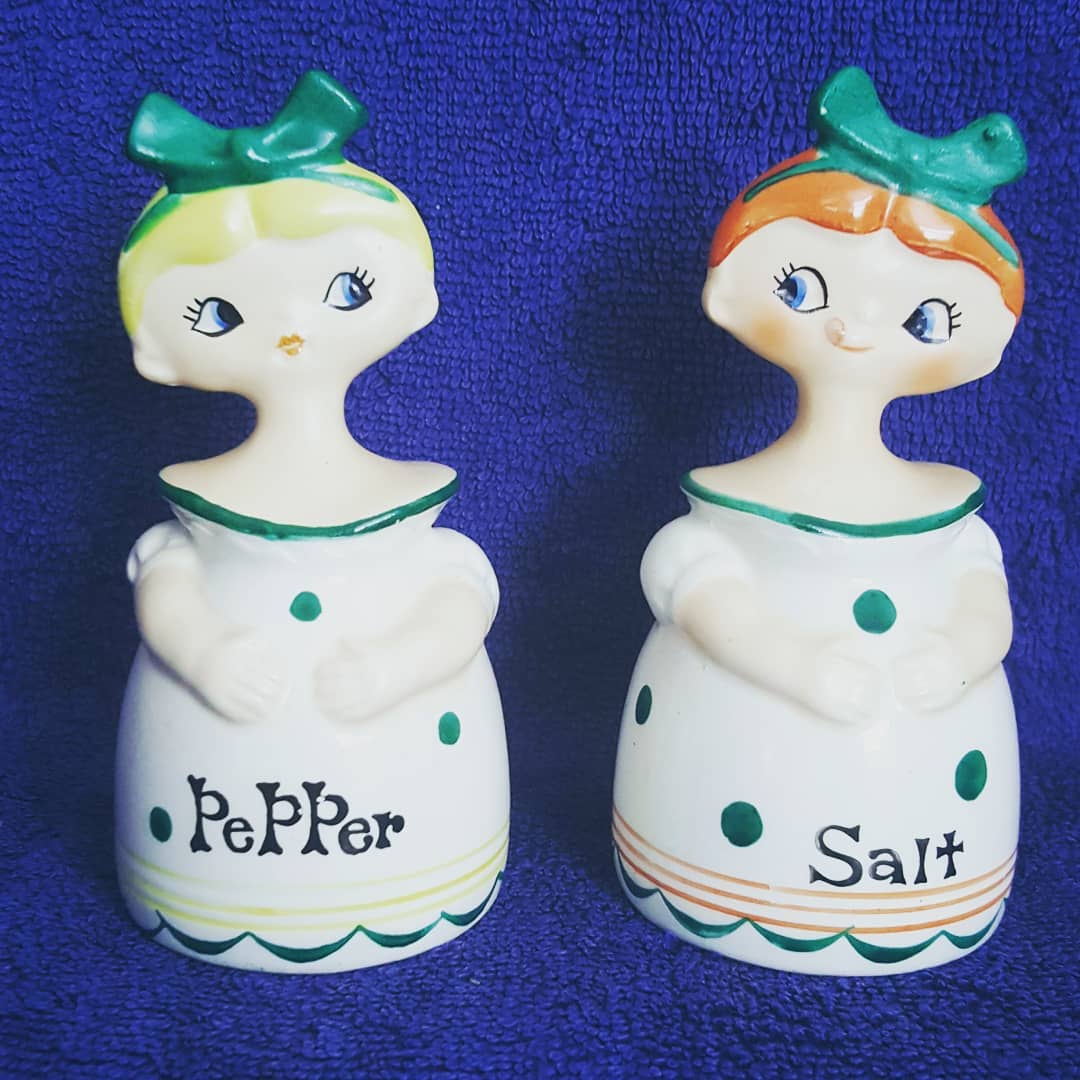
Salt & Pepper
The Salt and Pepper set repeats the paired-expression idea seen elsewhere in the line. The pair faces inward when displayed together, and the hole patterns distinguish the two shakers.
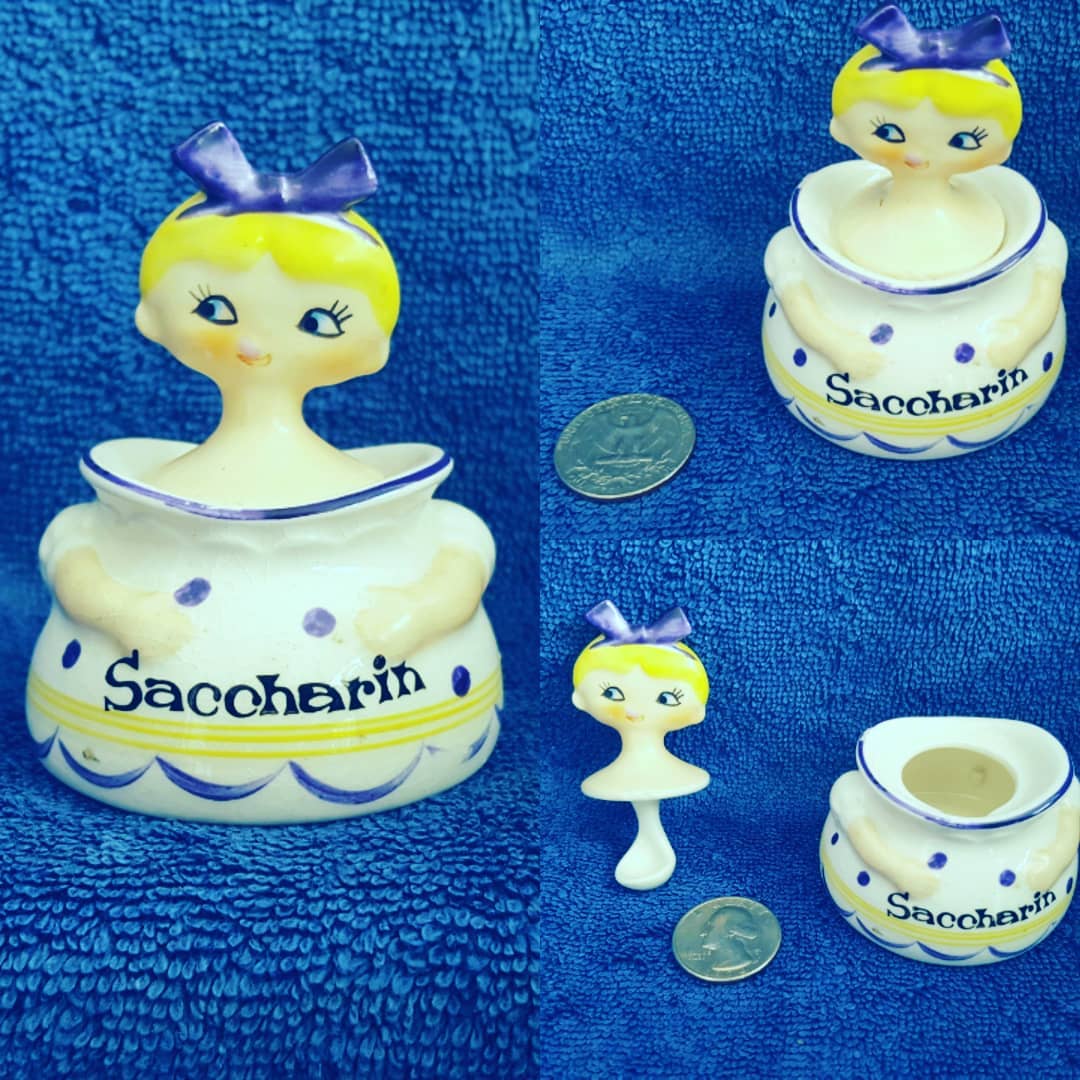
Saccharin
Saccharin is the miniature of the Dolly Girls family. Despite its small size, it preserves the same basic character design and includes a tiny built-in spoon for dispensing saccharin.
Match Girls
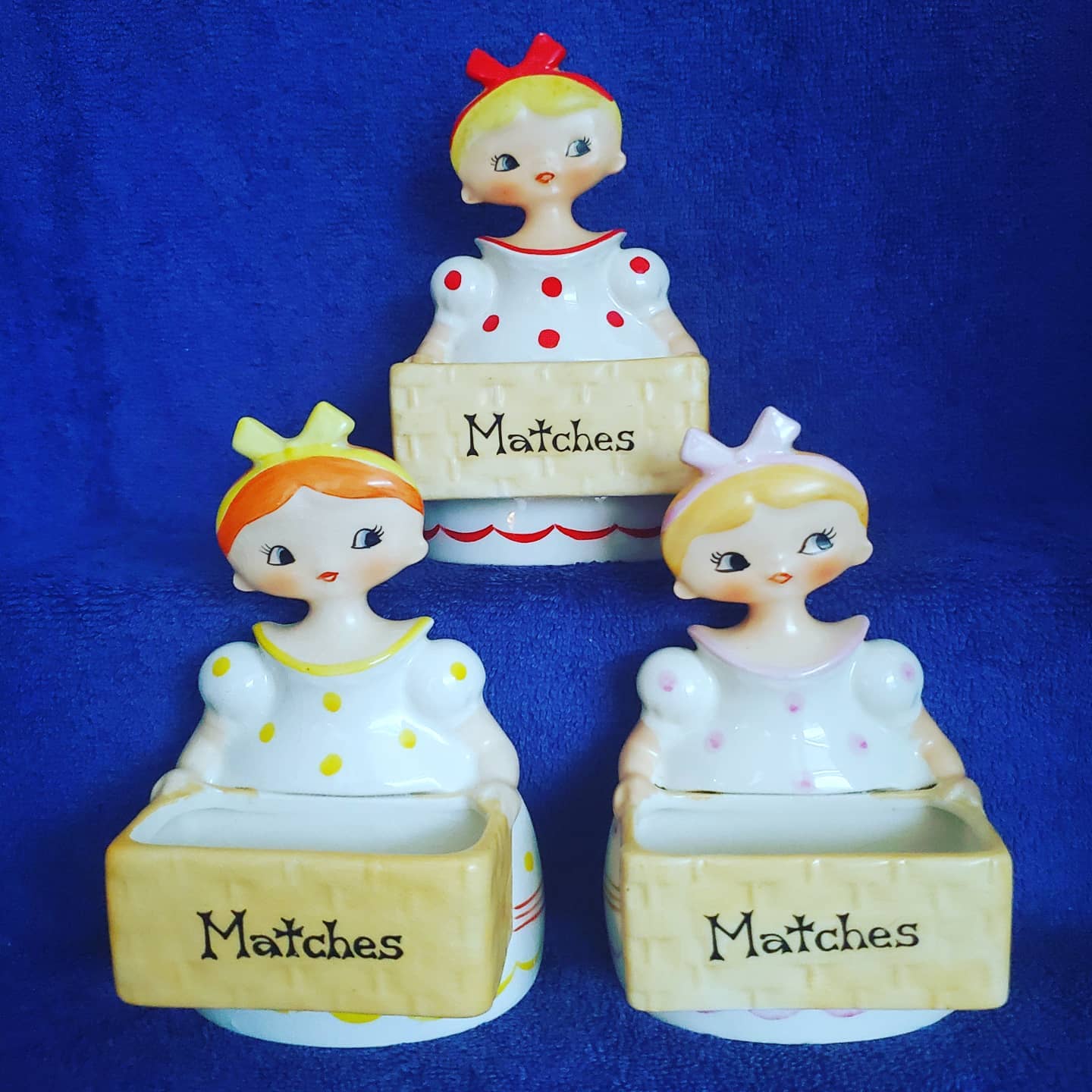
The Match Girls are taller than the other Dolly Girls and were designed to hold wooden kitchen matches. Unlike the condiment jars, each Match Girl carries a rectangular matchbox holder across the front of her dress.
Walter's first edition documented the Match Holder and noted a lavender color scheme. By the second edition, the red, pink/lavender, and yellow variations were all documented, completing the currently known trio.
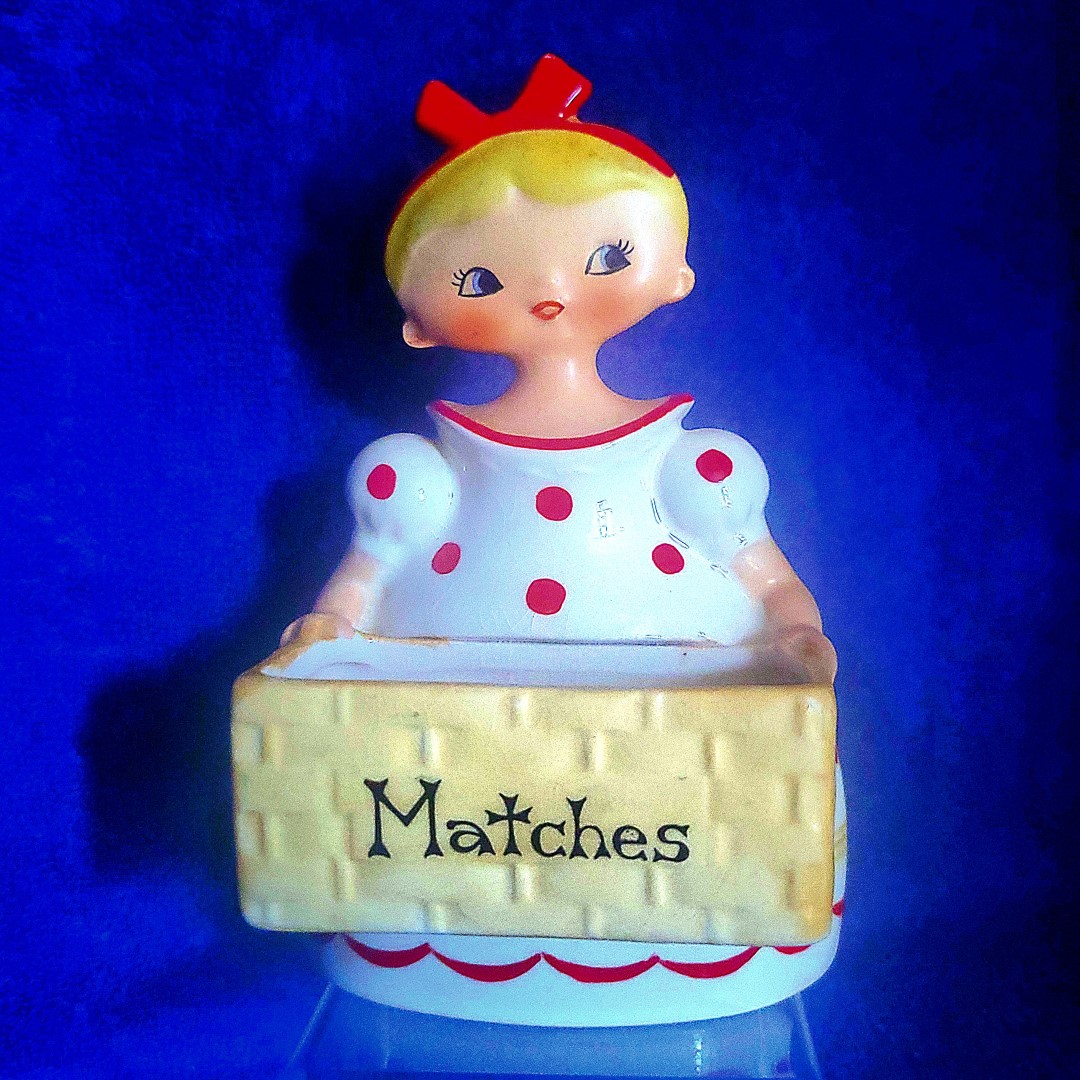
Red Match Girl
The red Match Girl is one of the three known Match Holder variations. Like the other Match Girls, she was designed to hold wooden kitchen matches in the rectangular holder across the front of her dress.
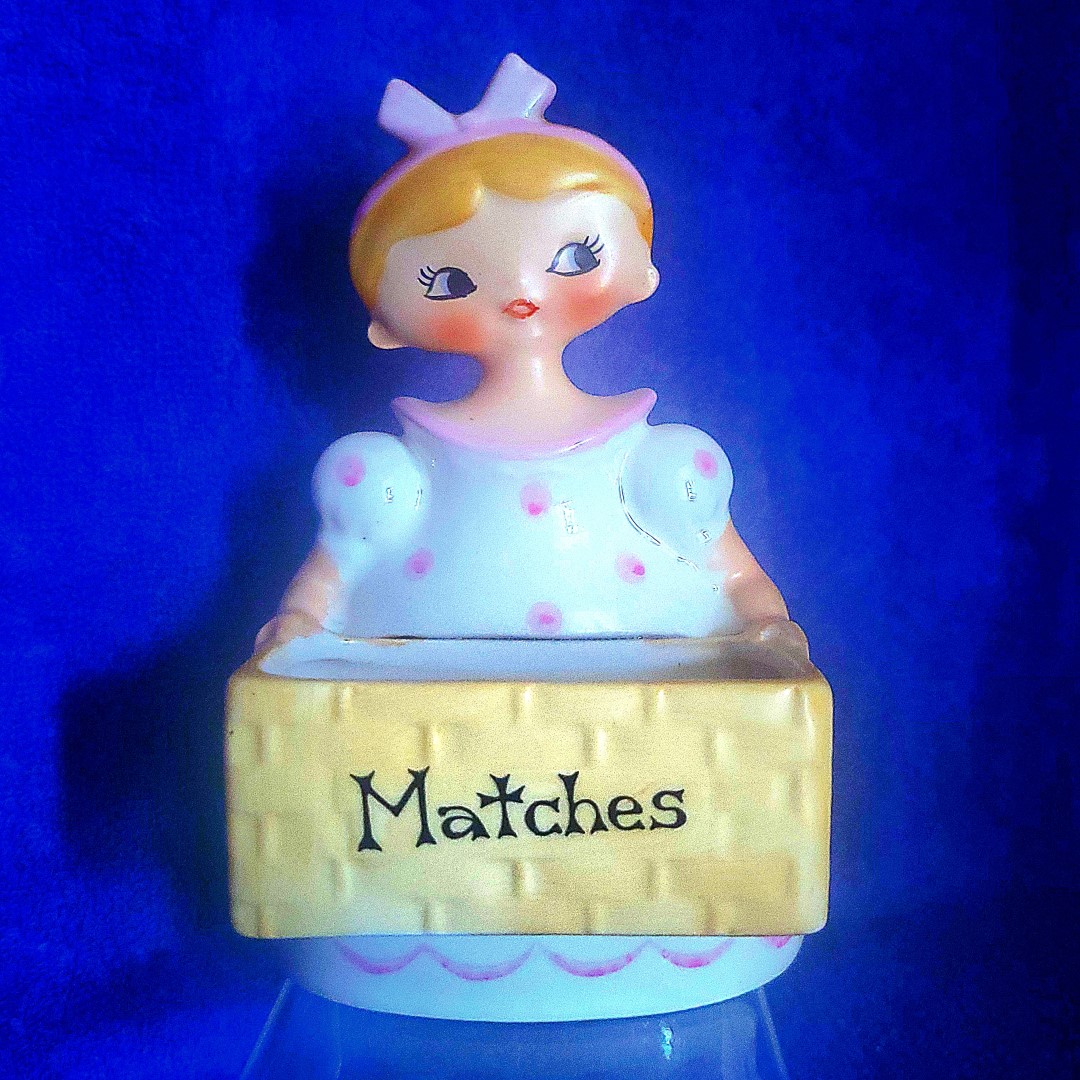
Pink Match Girl
The pink Match Girl is the second documented Match Holder variation from earlier collector references. This colorway is best described as lavender/pink.
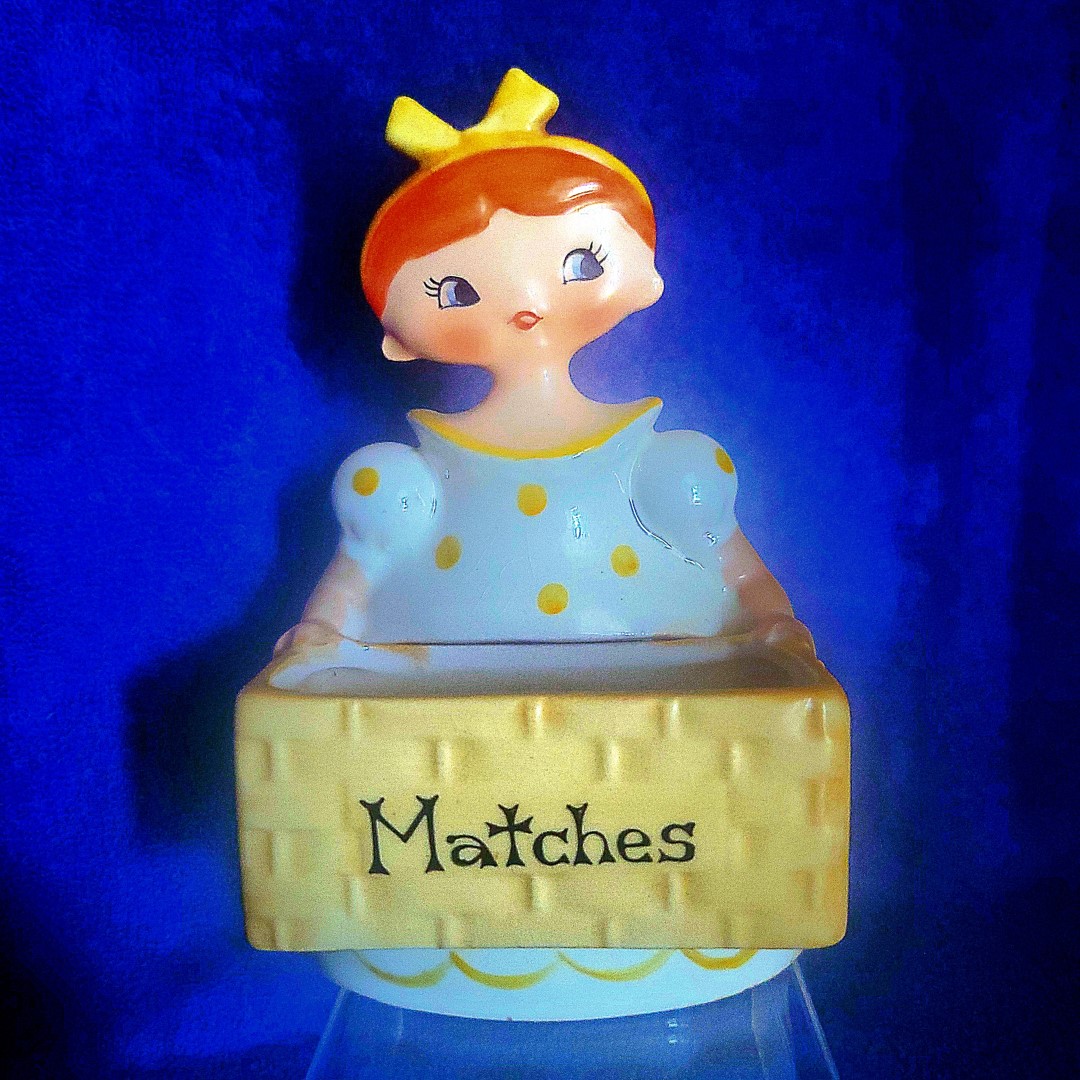
Yellow Match Girl
The yellow Match Girl completes the currently known Match Holder trio. This variation was documented later than the red and pink/lavender examples and is an important addition to the known Dolly Girls line.
Research & Discoveries: The Third Match Girl
Early collector references documented the Match Holder as a single novelty piece with a later note regarding a lavender version. Walter's second edition documented three Match Girl variations, including the yellow polka-dot version. The confirmation of the yellow version is a useful reminder that even well-known mid-century novelty lines can continue to reveal additional variations decades after publication of the first collector references.
An Undocumented Dolly Girl Variant
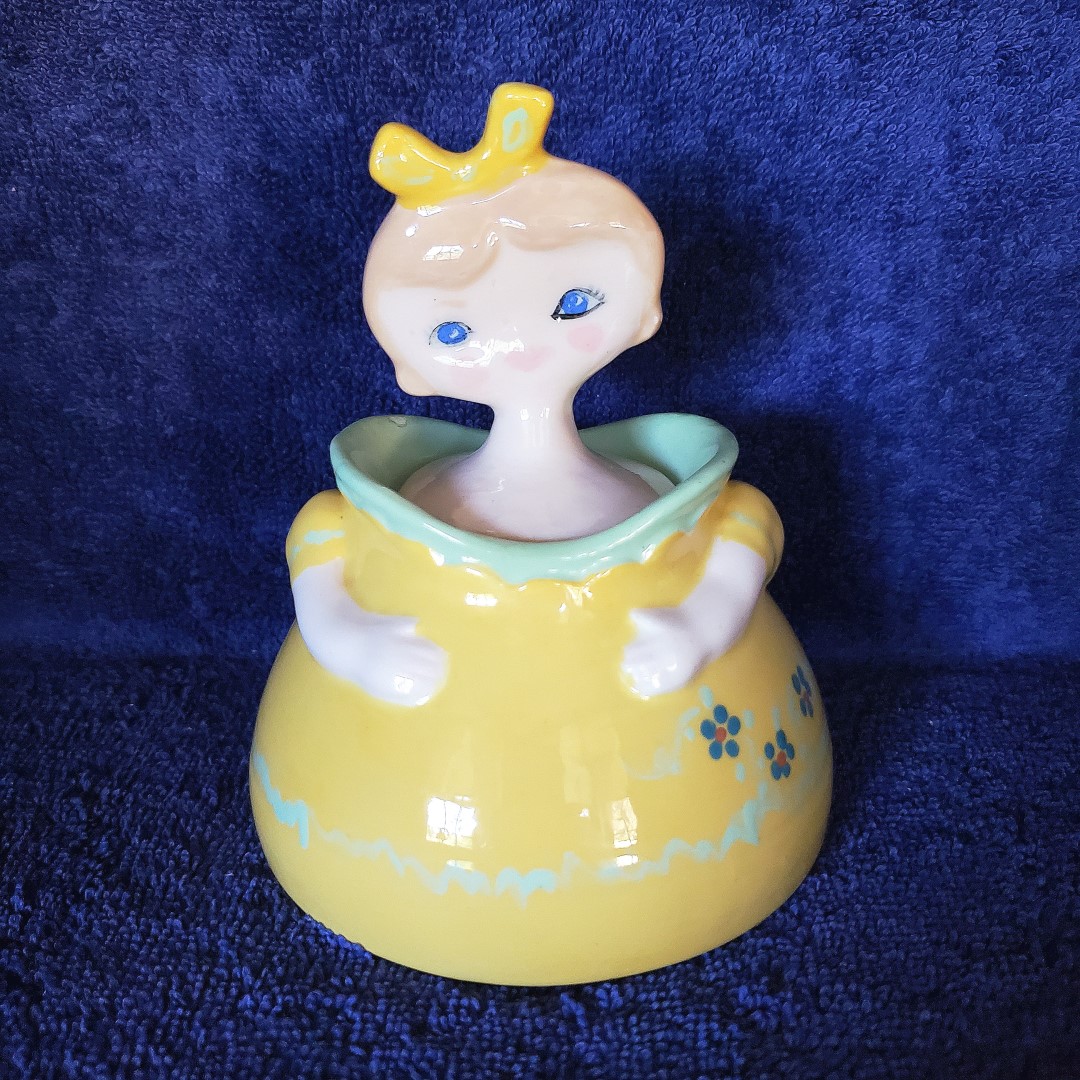
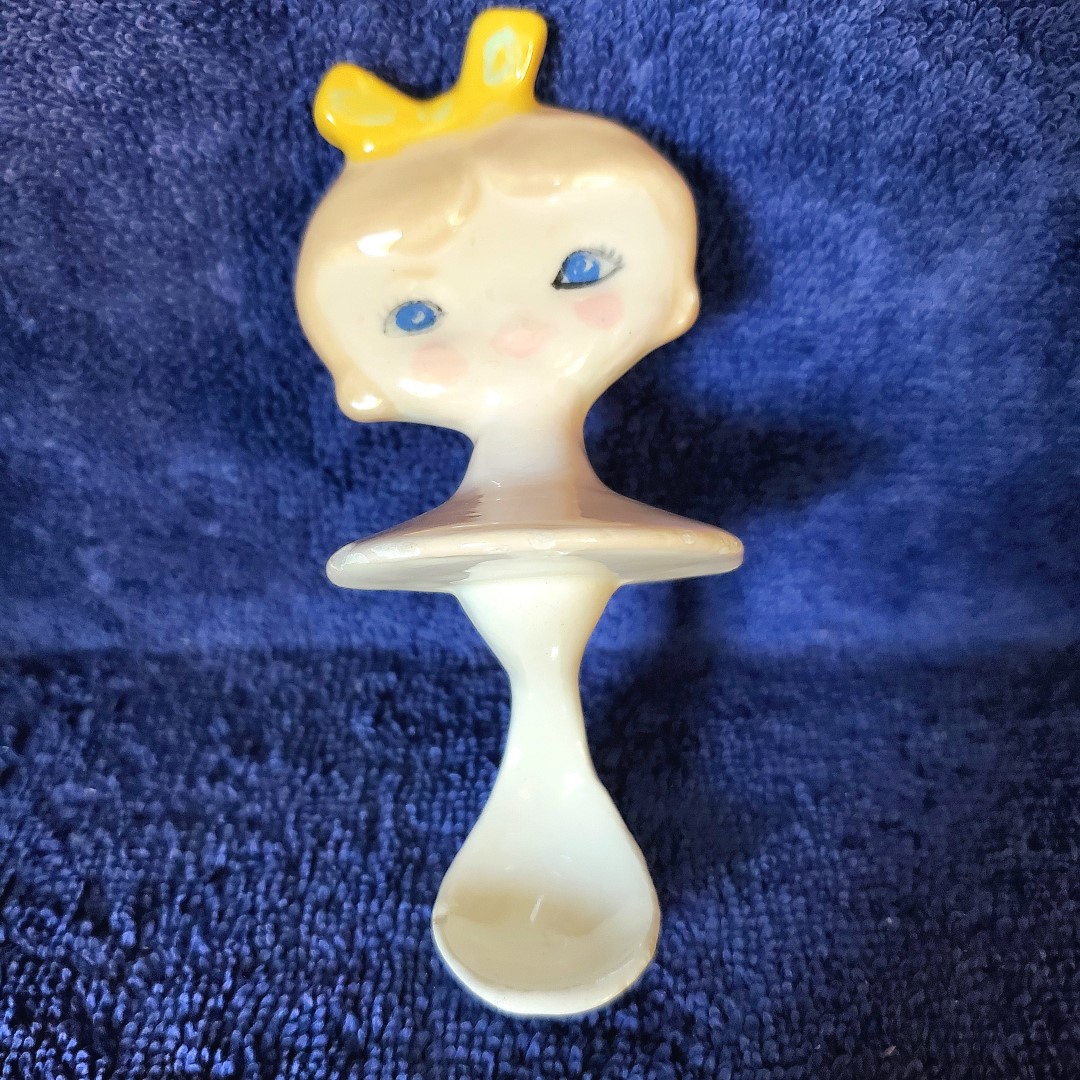
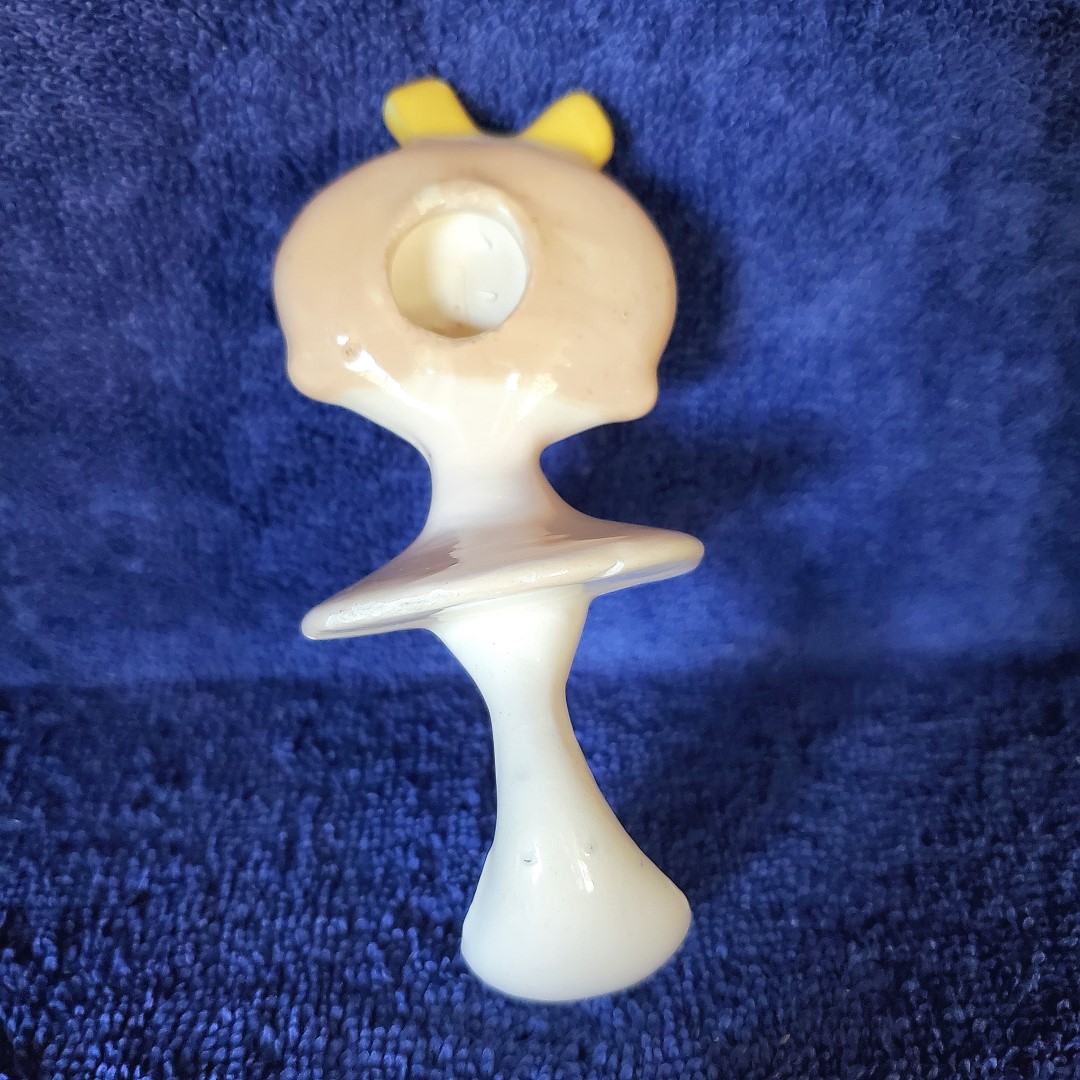
This unusual jar closely follows the general mold used for the documented M-G Dolly Girl kitchen containers but differs in several important respects. Rather than the familiar polka-dot decoration, it features a solid yellow body with small floral decorations beneath the glaze. The lid also has a circular opening in the back of the head that is absent on documented M-G Dolly Girl examples.
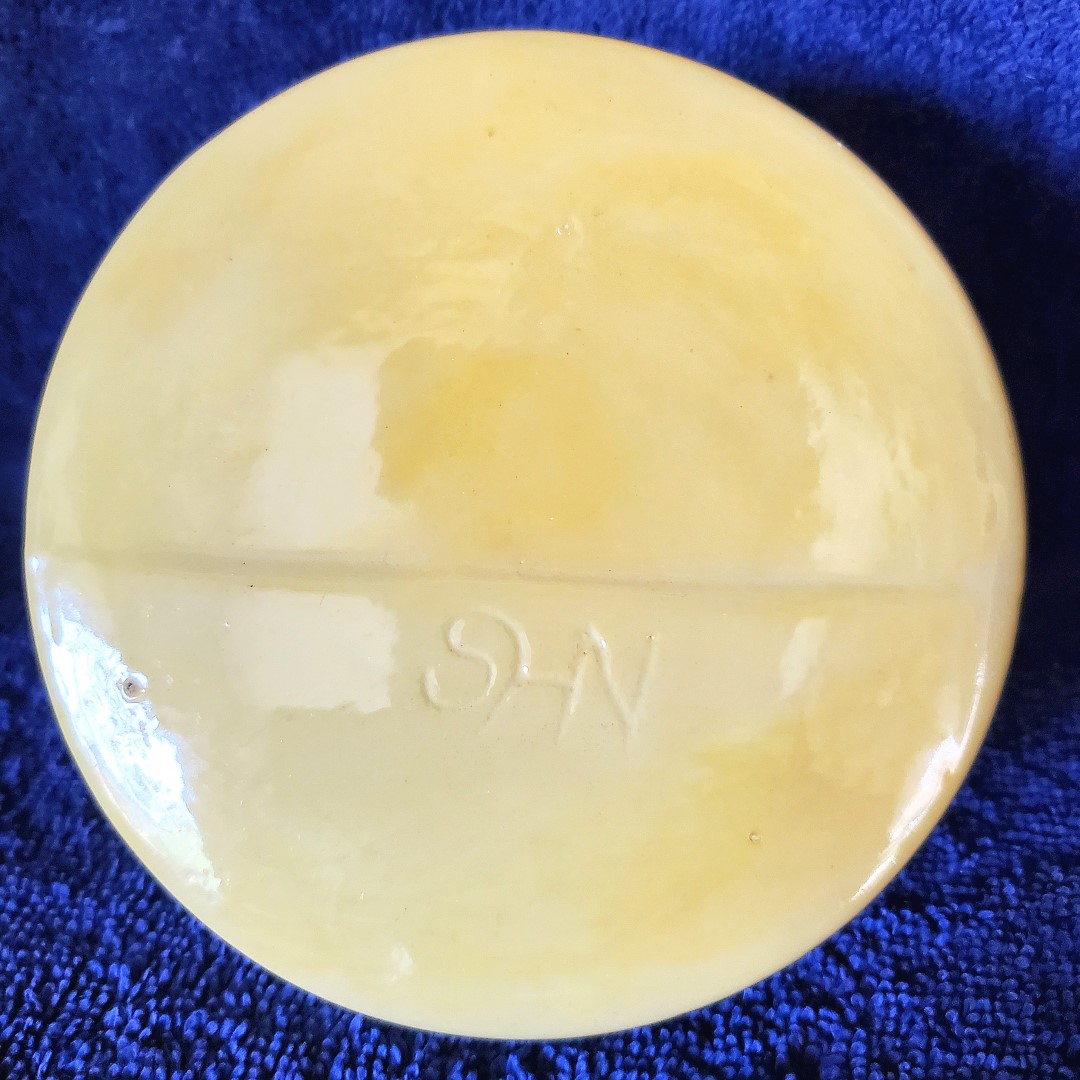
The base carries an impressed mark, but its orientation and meaning remain uncertain. It may represent a manufacturer's mark, mold designation, or some other production identifier, but no documented M-G examples with this mark are presently known.
At present, it is impossible to determine whether this represents an undocumented factory variation, a related manufacturer's production using the same or a similar mold, or a later reproduction made from an original mold. Until additional examples surface, its origin should be regarded as unresolved.
Conclusion
The M-G Dolly Girls occupy a special place in this section of the Archive. They are attractive, clearly coordinated, well documented through both markings and original packaging, and directly connected to Holt Howard history through the 1959 litigation. Whether viewed as charming competitors, Pixieware-adjacent novelties, or evidence of how quickly successful mid-century designs inspired imitation, the Dolly Girls remain among the most memorable ceramic lines produced by Menschik-Goldman.