Norcrest Girl Jars
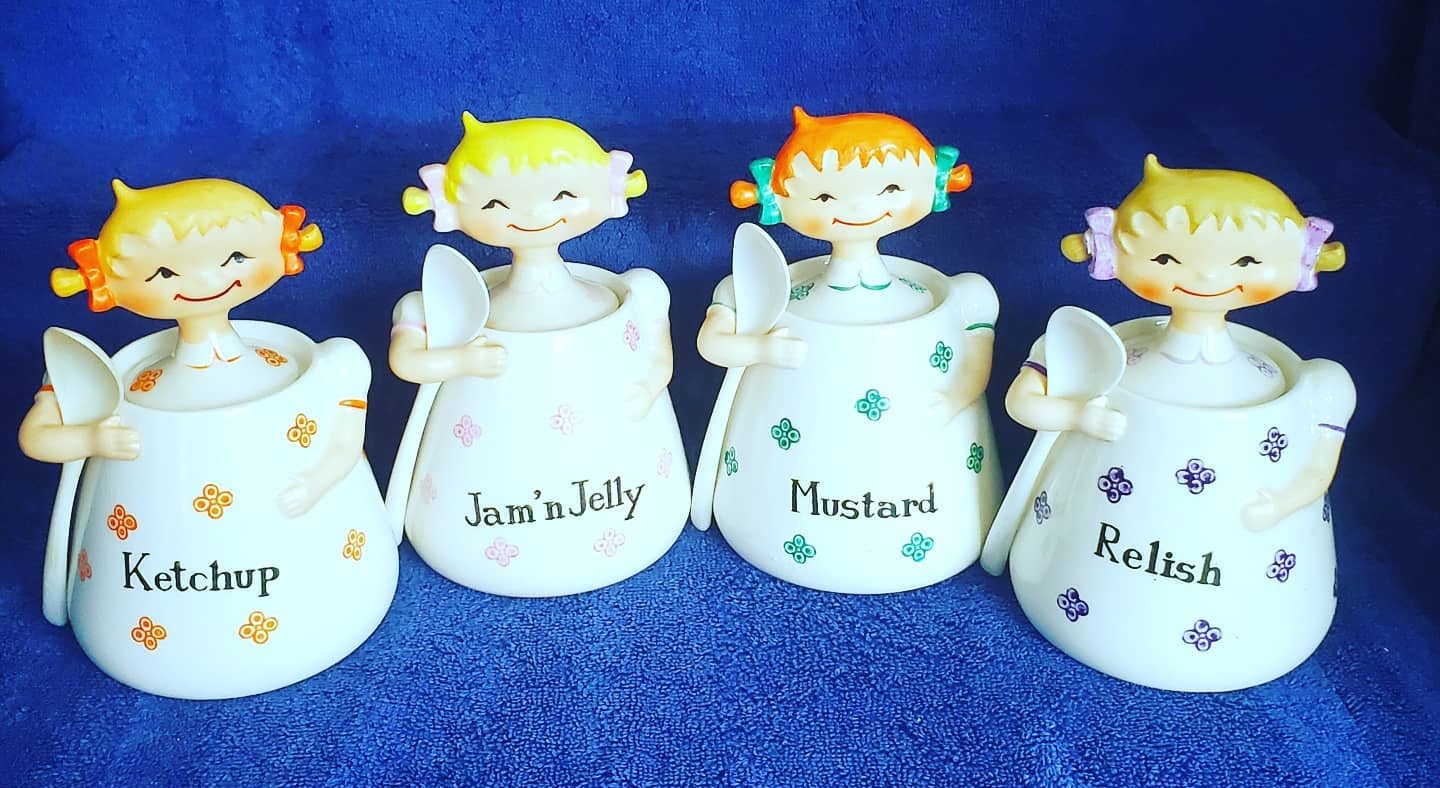
A cheerful quartet of Norcrest condiment jars whose spoon-holding design, matching ribbons, and daisy-like flowers set them apart from other mid-century “girl jar” lines.
Introduction
The Norcrest China Company grew out of the Japanese-import giftware business established by Hide Naito in Portland, Oregon. Norcrest became a postwar importer and distributor of novelty ceramics in the United States and Canada, while later research traces the business back to H. Naito Gifts, opened in Portland in 1921. The Norcrest China Company name emerged after World War II and became associated with a wide range of mid-century novelty ceramics.
The Norcrest girl jars are among the most appealing of the competitor and look-alike lines included in this section of the Archive. Their wide smiling faces, side ribbons, daisy-like flowers, and spoon-holding pose make them immediately distinguishable from the M-G Dolly Girls, Jolly Floral Girls, Lipper & Mann Flower Girls, and other related lines.
Walter’s first edition illustrated the Ketchup, Mustard, and Relish jars and noted that reliable sources claimed a fourth sister, Jam ’n Jelly. By the second edition, Jam ’n Jelly was fully documented and illustrated, completing the known Norcrest set of four condiment jars.
Company Background
WorthPoint’s Norcrest history describes the company as one of the major mid-century American ceramic giftware brands, known for bathroom plaques, head vases, figurines, holiday décor, and other whimsical ceramic items. The business traces to Japanese-American businessman Hide Naito, whose Portland gift shop sold Japanese-imported porcelain and novelty goods before the company eventually developed into Norcrest China Company.
Norcrest merchandise was distributed widely through Woolworths, drug stores, and specialty retailers. The company remained active for decades before closing in 2004, and its ceramics remain popular with mid-century pottery collectors.
Design and Identification
Identification Note
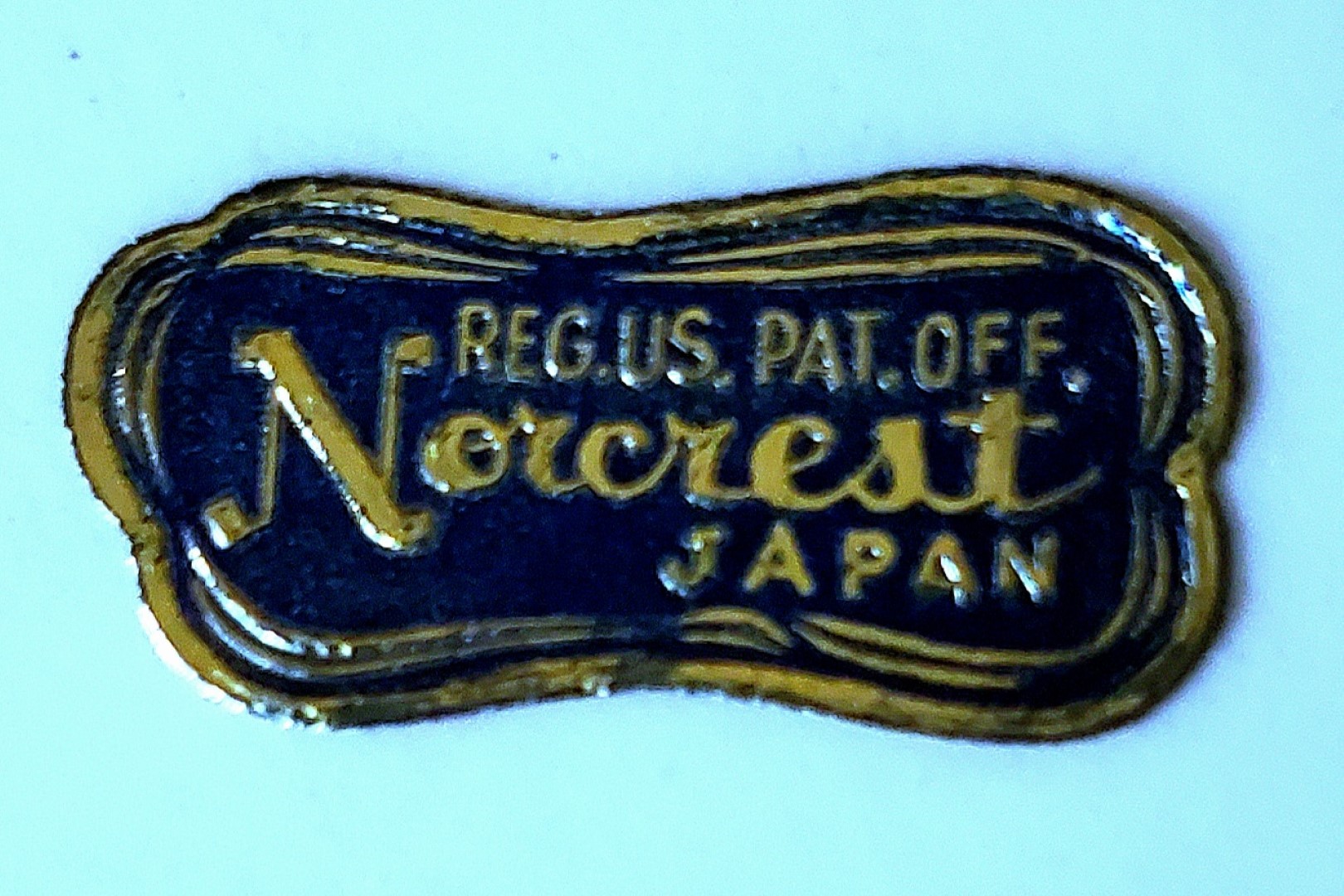
These jars are not signed in the ceramic body, but the known numbers are J-487 for Jam ’n Jelly, J-488 for Relish, J-489 for Mustard, and J-490 for Ketchup. The documented Norcrest foil sticker is green and gold and reads: “Reg. US Pat. Off. Norcrest Japan.”
Each jar stands 5¾ inches tall. Each base is decorated with seventeen daisy-like flowers, and two additional flowers appear on the lid at either side of the girl’s neck. The girls do not have spoons attached to their lids. Instead, each lid has a special oval opening in the back for a separate 4½ inch plastic spoon, which is held by the girl’s raised right arm.
The Four Norcrest Girl Jars
Jam ’n Jelly
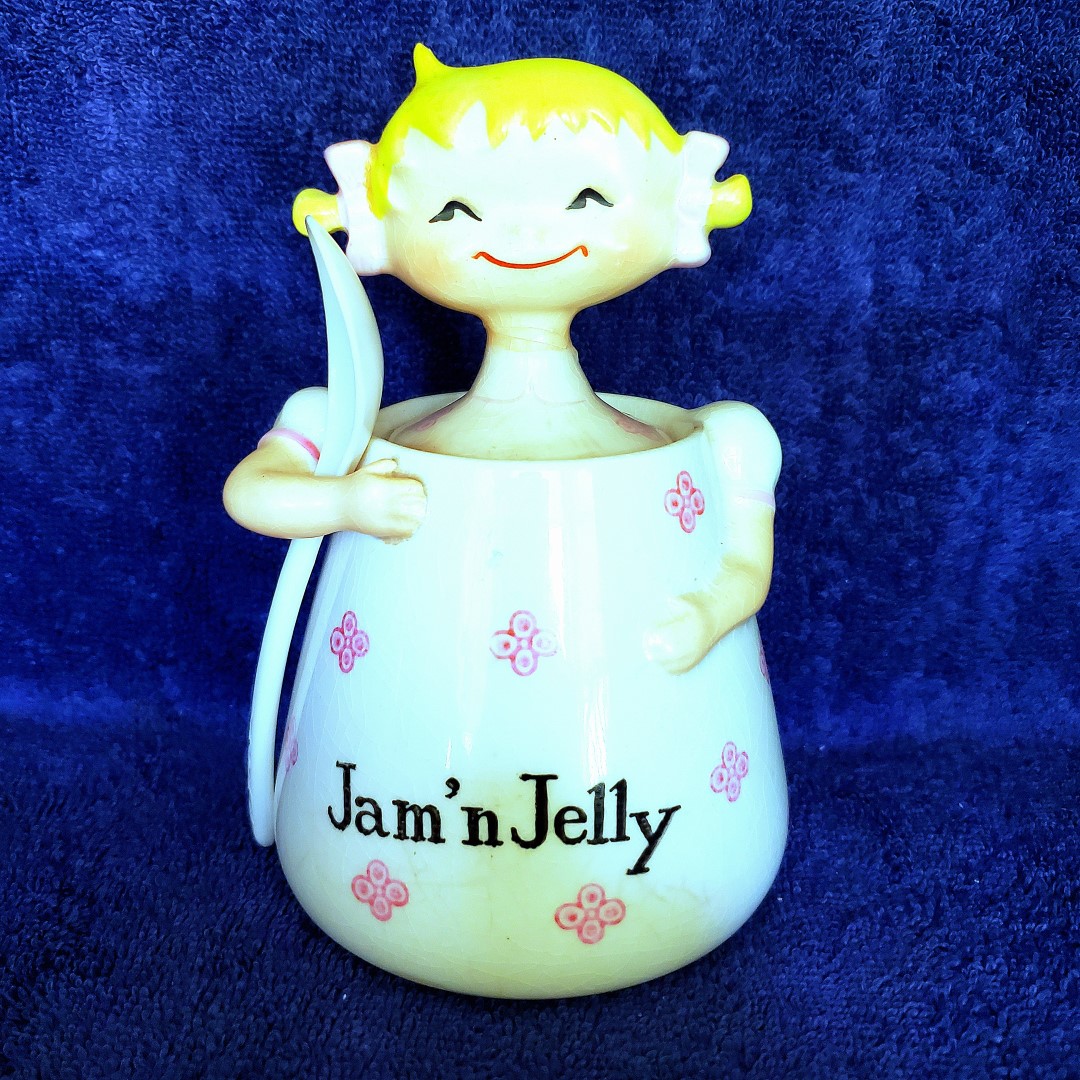
The Jam ’n Jelly jar completes the Norcrest girl jar set. Walter’s first edition reported the fourth sister as a reliable-source claim; by the second edition, Jam ’n Jelly was documented and illustrated as part of the Norcrest group.
Ketchup
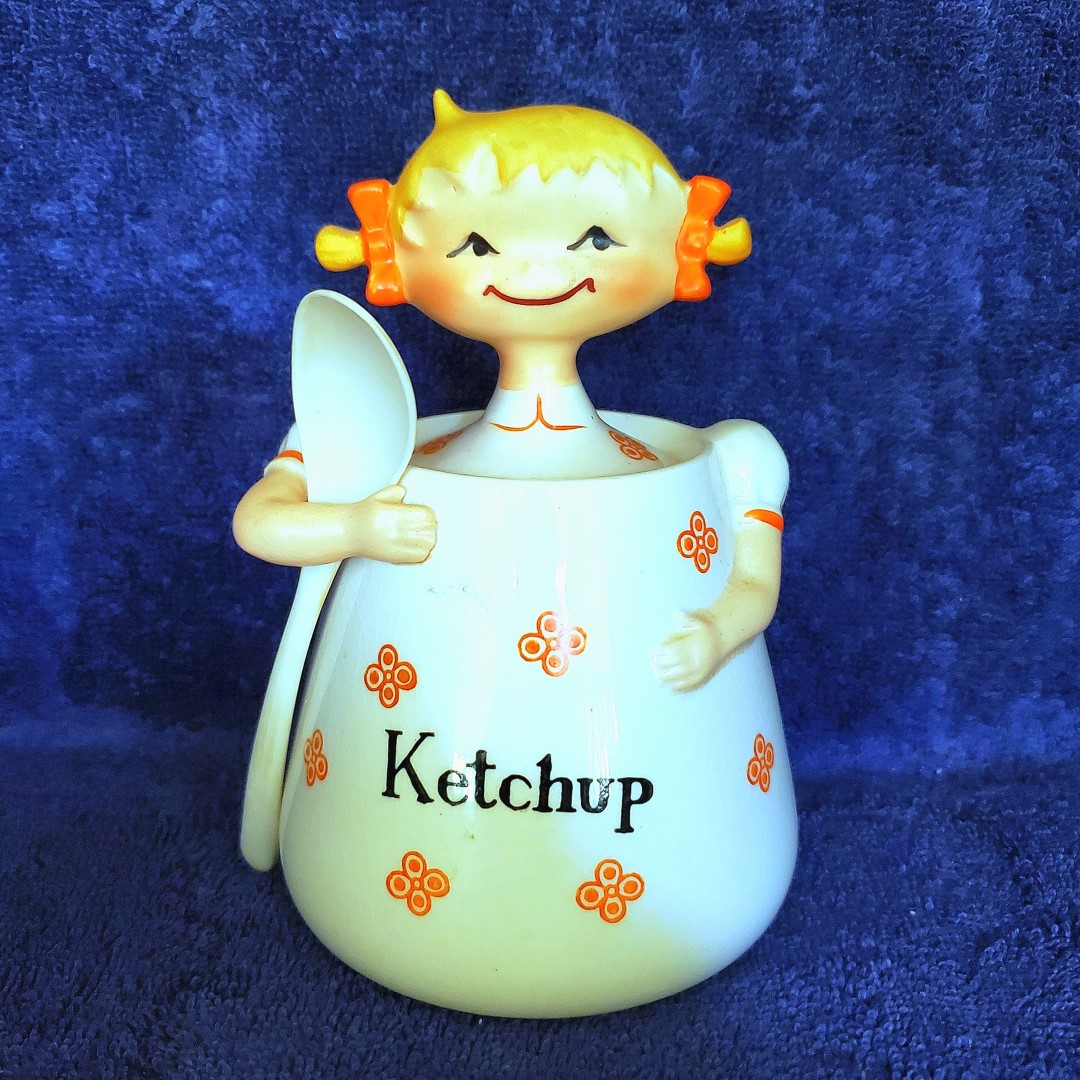
Ketchup is one of the three core Norcrest jars documented from the line’s earlier known group. The jar uses the same body form as Mustard and Relish, with the color of the ribbons matching the daisy-like flowers on the dress.
Mustard
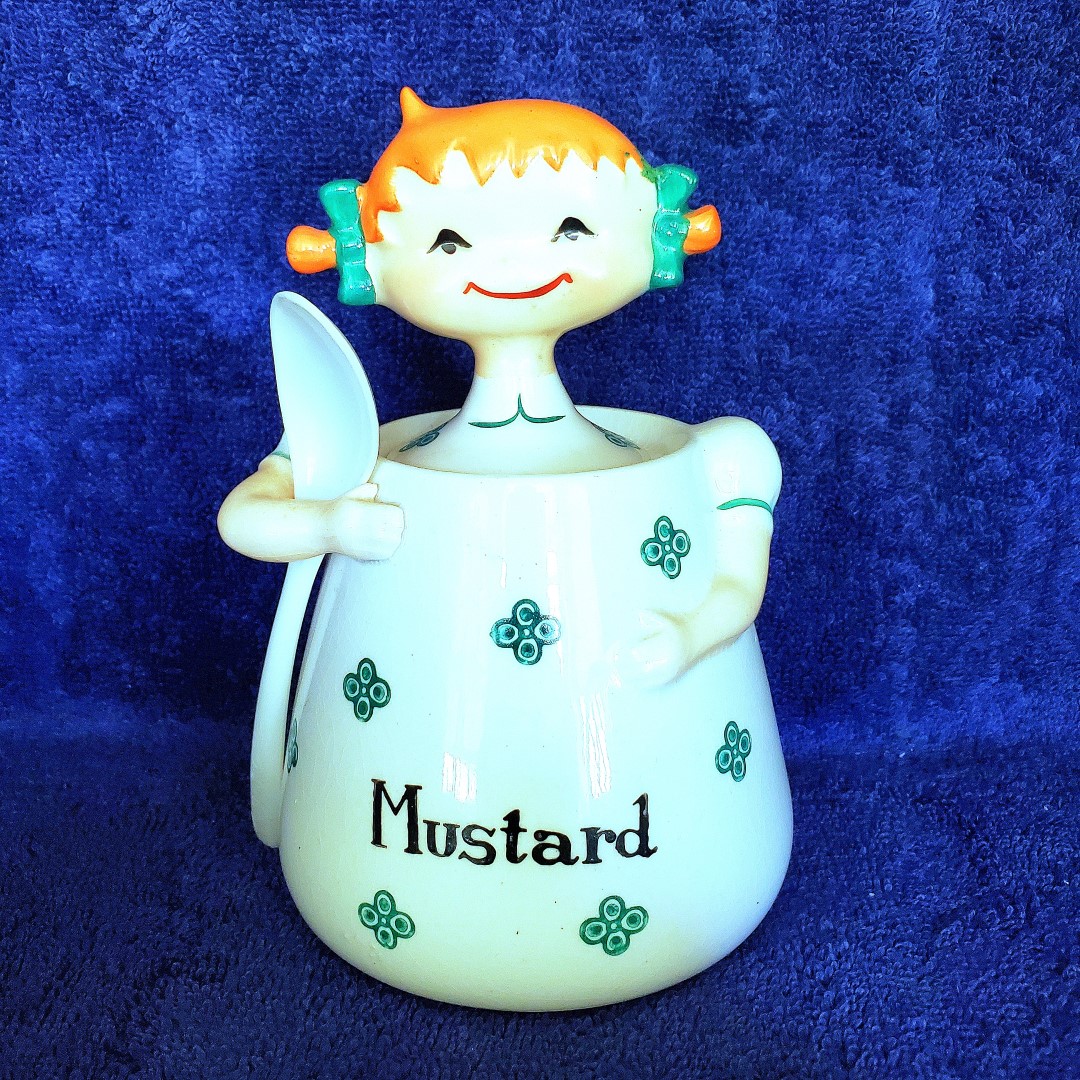
Mustard is the green-accented member of the core Norcrest trio. Like the others, she has no spoon permanently attached to the lid; the spoon is held separately in the raised right hand and inserted through the back of the lid.
Relish
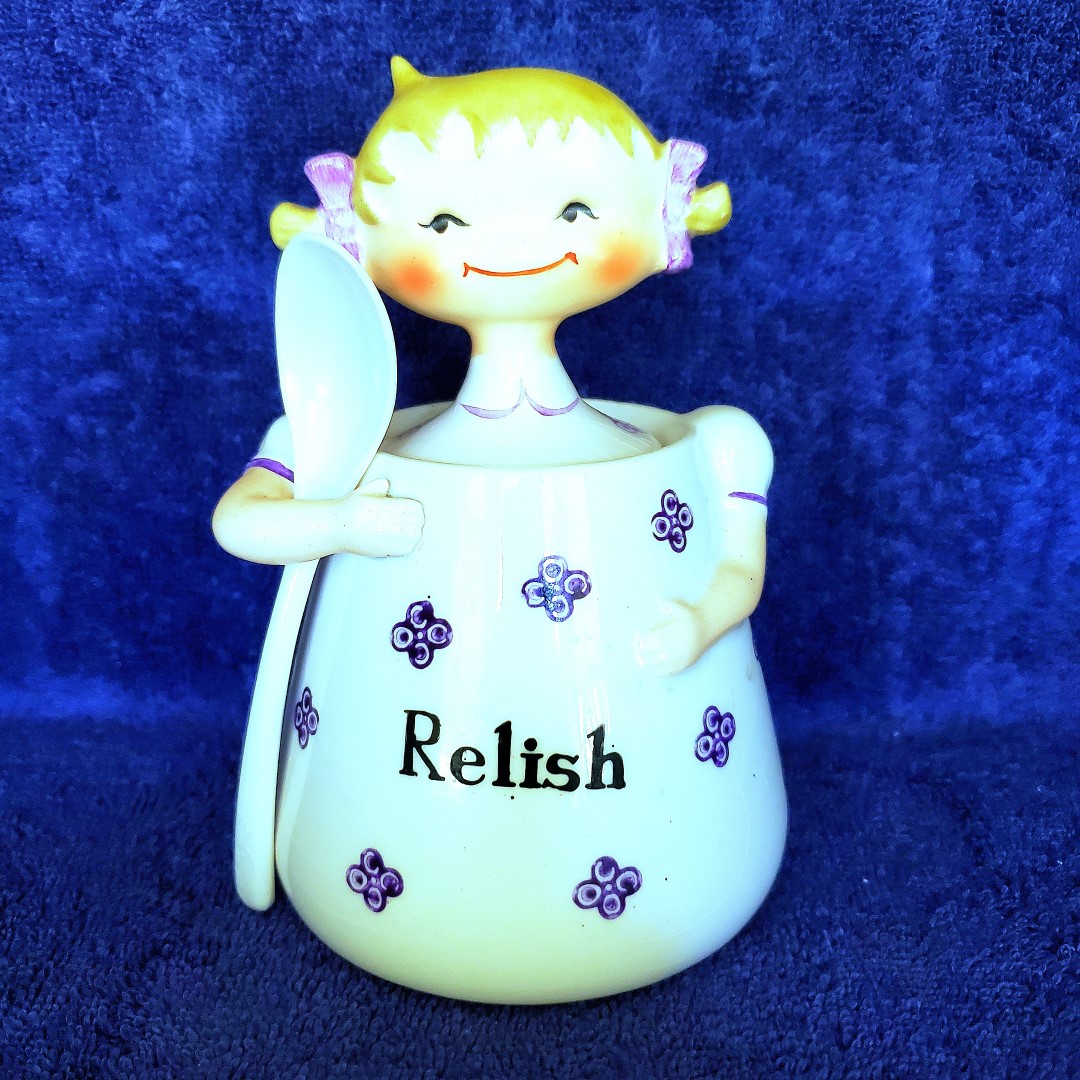
Relish is the purple-accented member of the original documented Norcrest trio. The purple ribbons and flowers make it the easiest of the three core jars to distinguish visually at a glance.
Walter’s Look-Alike Note
Look-Alike Jam ’n Jelly
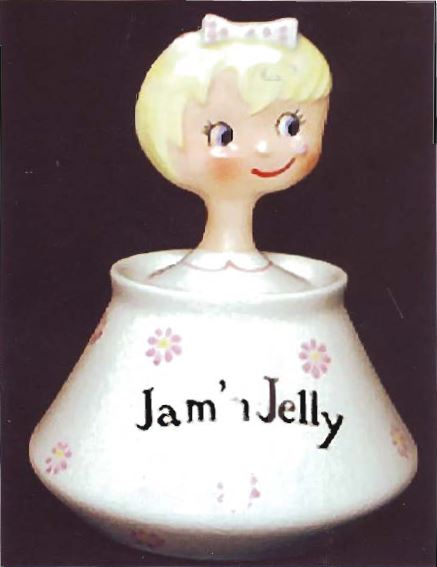
Walter’s second edition also illustrates a “Look-Alike” Jam ’n Jelly jar that closely resembles the Norcrest girls but is not marked. Because that piece is specifically presented as a look-alike rather than a confirmed Norcrest jar, it is not included here as part of the four-piece Norcrest set.
Conclusion
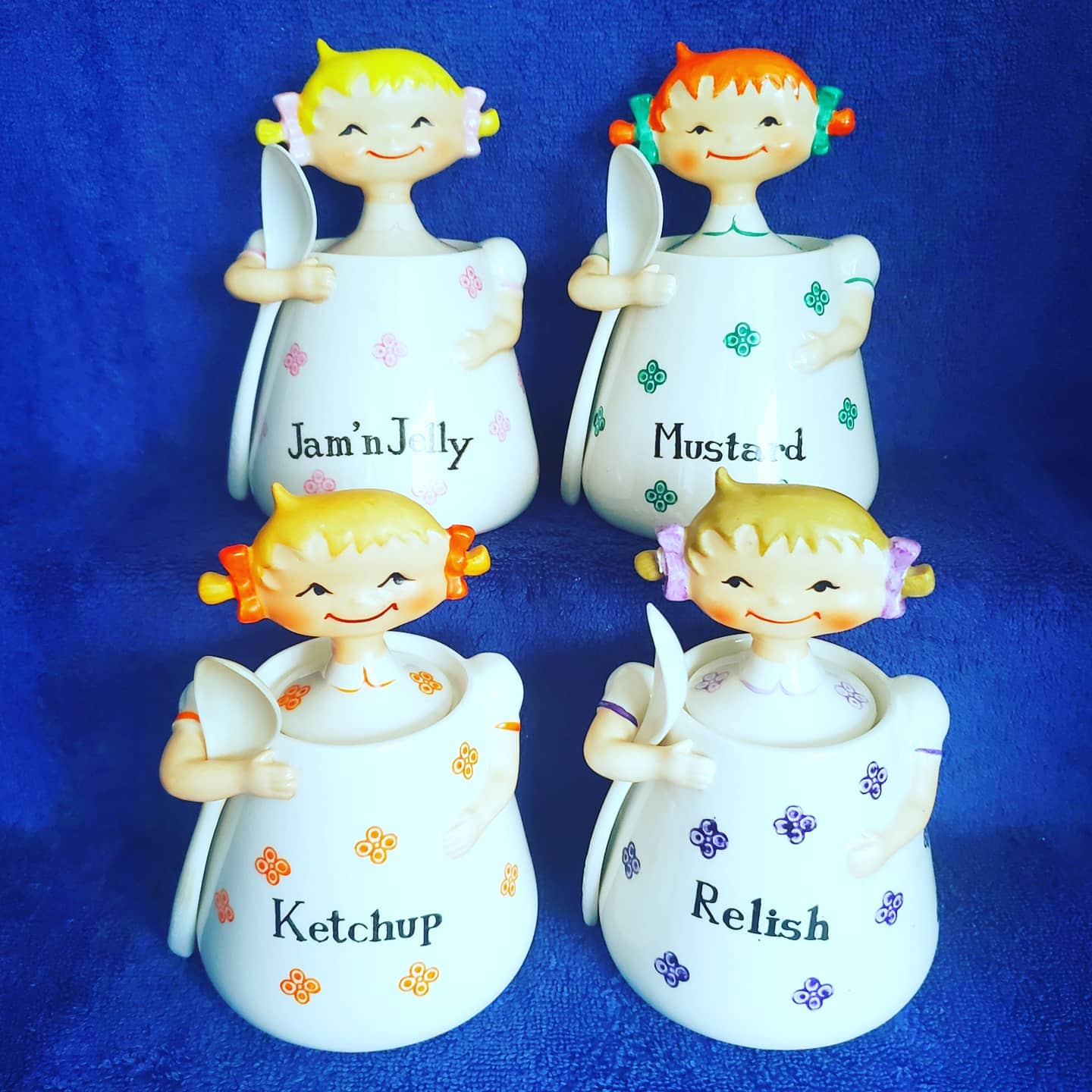
The Norcrest girl jars are a compact but memorable line. With only four confirmed jars, consistent numbering, documented Norcrest stickers, and a distinctive spoon-holding design, they make one of the cleaner and easier-to-define groups in the broader world of mid-century competitor and knockoff jars. They also show how broadly the “girl jar” concept spread beyond Holt Howard, with each company giving the idea its own personality and construction details.