Betson Fruit-Head Jars
A cheerful group of full-headed Japanese condiment jars with built-in spoons, coordinated fruit colors, and one especially memorable grumpy Mustard.
Introduction
The Betson jars are different from the floral-base girl jars that dominate much of this section. Instead of character lids placed on floral or polka-dot skirt bases, these jars use full fruit heads and simpler cylindrical bodies with two buttons and a colored lower band. They were contemporaries of Pixieware and the many similar condiment jars competing for attention on store shelves during the late 1950s and early 1960s.
Unlike the uniformly cheerful Norcrest Girl jars, the Betson series gives each condiment or fruit its own distinct personality. The most memorable example is the Mustard jar, whose comically disgruntled expression makes it one of the most whimsical designs in the series.
The known Betson condiment group includes three Jam ’n Jelly jars, Marmalade, Ketchup, and Mustard. The large number of jam-related jars is unusual and may reflect Betson’s attempt to adapt the same basic form to several fruit identities.
Company History
Available seller and collector references indicate that J.B. Betson’s China was founded in 1924 and operated until its dissolution in 1986. Based in New York with offices in Tokyo, the company imported and distributed Japanese ceramics and giftware for the American market and is best known for its hand-painted porcelain, decorative china, figurines, tea sets, and other giftware.
Rather than manufacturing its own ceramics, Betson appears to have sourced products from multiple independent Japanese workshops, helping explain why similar forms are sometimes found with different decorator marks or labels. The company enjoyed its greatest prominence during the postwar decades of the 1950s and 1960s, when Japanese imports became increasingly popular in American homes.
Identifying Marks
Identification Note
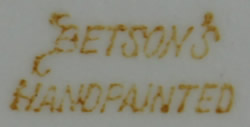
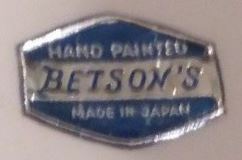
The Betson condiment jars are not consistently signed. Some examples are ink-stamped “Japan,” others have a blue and white rectangular paper sticker reading “Japan,” and at least one example surfaced with a blue paper sticker identifying Betson. Separate Betson porcelain and giftware pieces also show hand-painted Betson’s marks and foil labels, examples of which are illustrated above.
The Betson Condiment Jars
Jam ’n Jelly — Pear
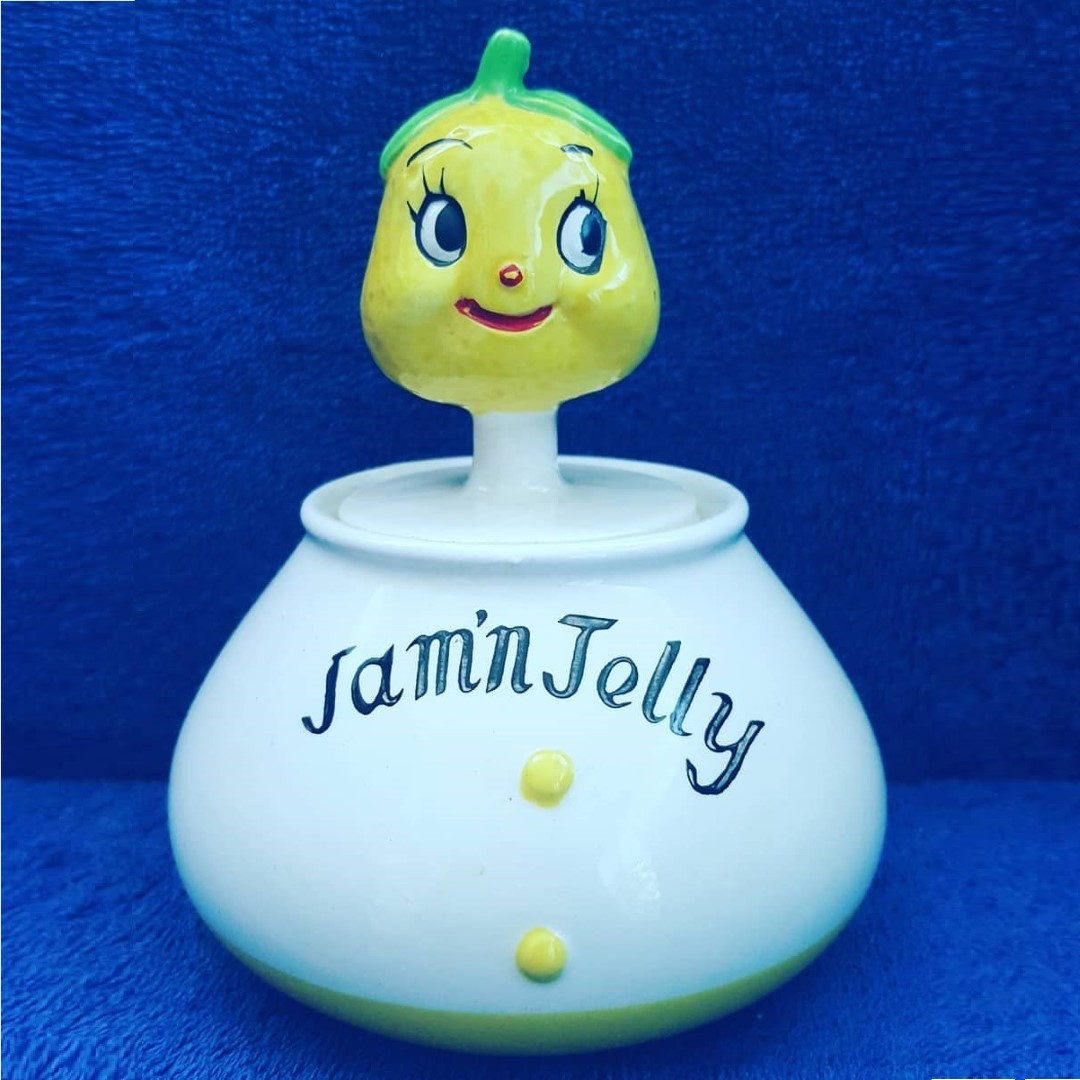
One of two similarly colored Jam ’n Jelly jars in the known Betson group, this example reads most clearly as a pear. The elongated yellow-green fruit head and small green top give the jar one of the most successful fruit-character designs in the series.
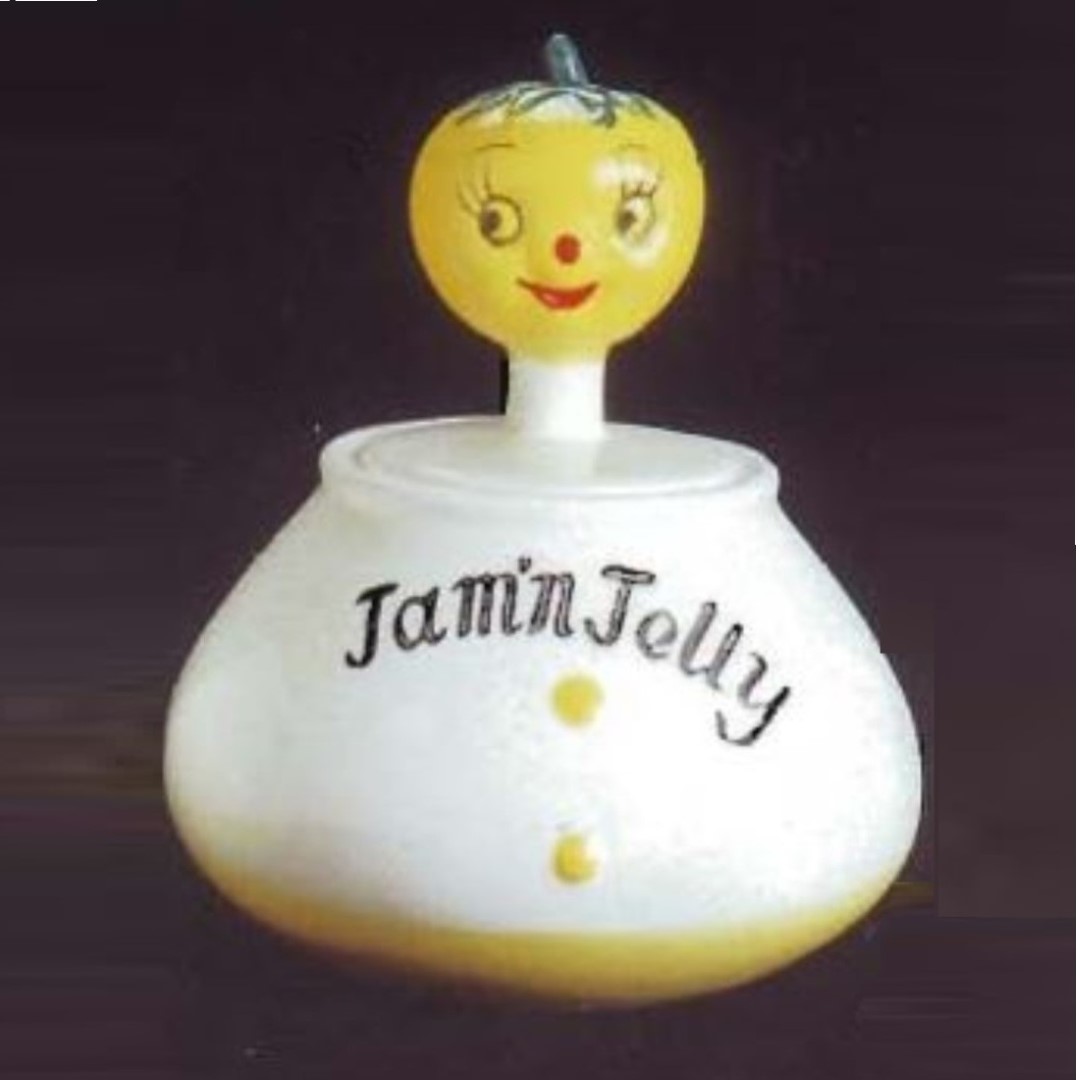
Photograph reproduced from Walter Dworkin’s The Second Edition Price Guide to Holt-Howard Collectibles and Related Ceramicware of the 50s and 60s (2007). The archivist does not presently own this example.
Jam ’n Jelly — Yellow Apple
This companion Jam ’n Jelly jar appears to represent a yellow apple. At first glance it can be confused with the pear version, but the rounder head shape distinguishes it from the more elongated pear form.
Photograph reproduced from Walter Dworkin’s The Second Edition Price Guide to Holt-Howard Collectibles and Related Ceramicware of the 50s and 60s (2007). The archivist does not presently own this example.
Jam ’n Jelly — Strawberry
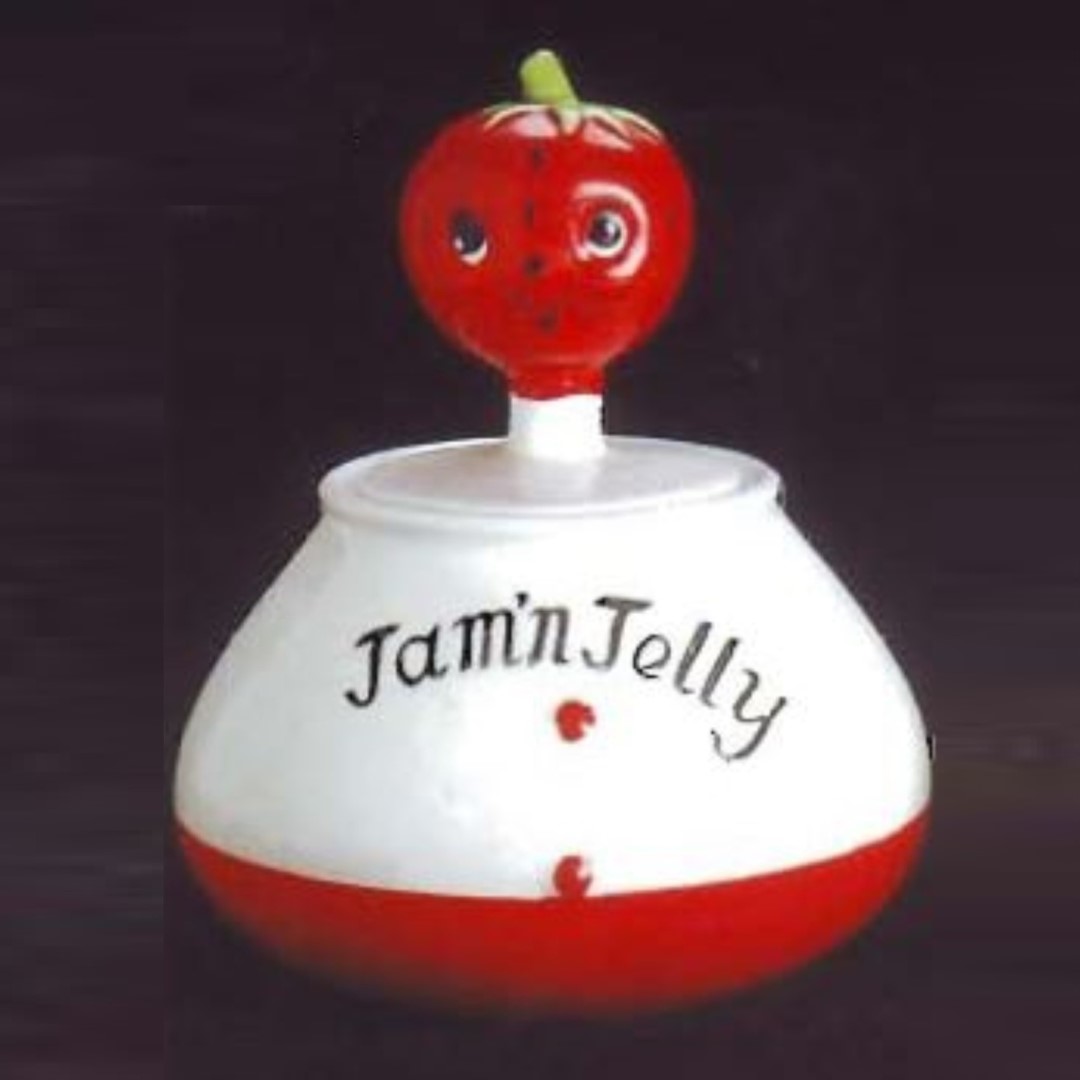
The Strawberry Jam ’n Jelly jar is the third known jam jar in the Betson series. Its red fruit head with small seed-like dots distinguishes it from the otherwise similar Ketchup jar, which has green leaves at the top.
Marmalade
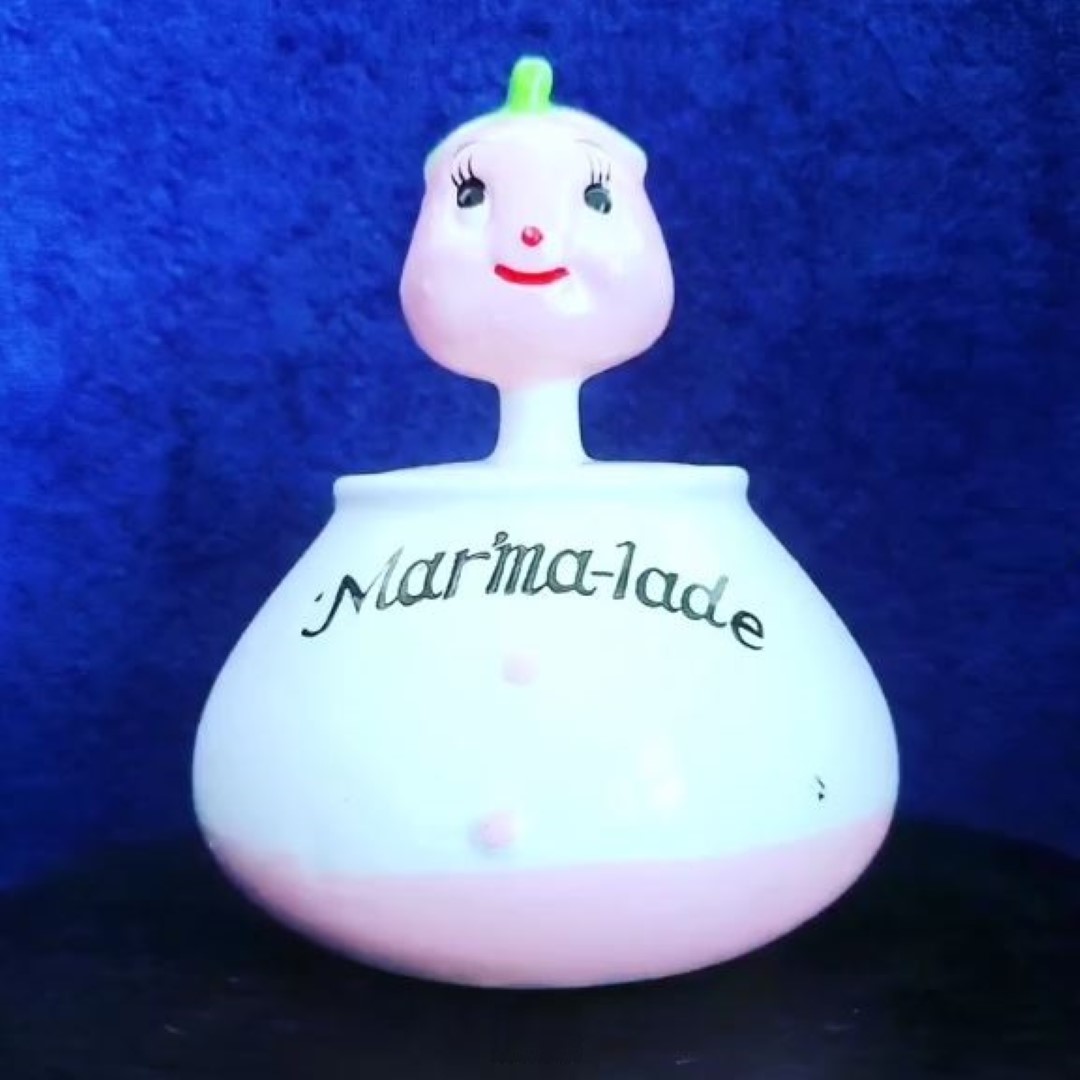
This is a grape-colored Marmalade jar. Visually, it resembles the elongated fruit-head vocabulary used on the pear Jam ’n Jelly jar, but the pink-to-grape coloring makes it a distinct member of the line.
Ketchup
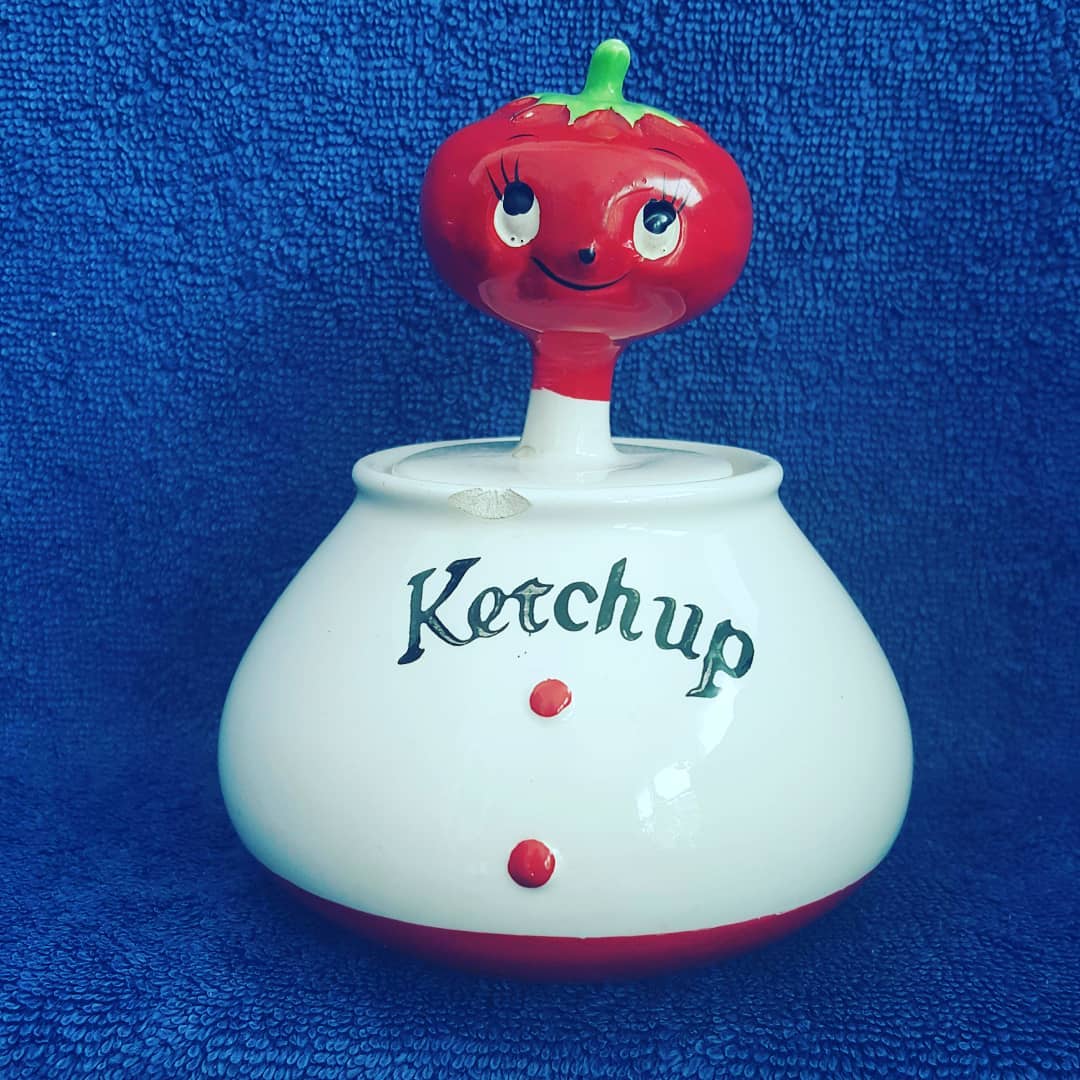
Ketchup is the tomato-headed member of the Betson family. Its red head and green leaves make the fruit identity clear, and the smiling expression keeps it consistent with the generally cheerful tone of the set.
Mustard
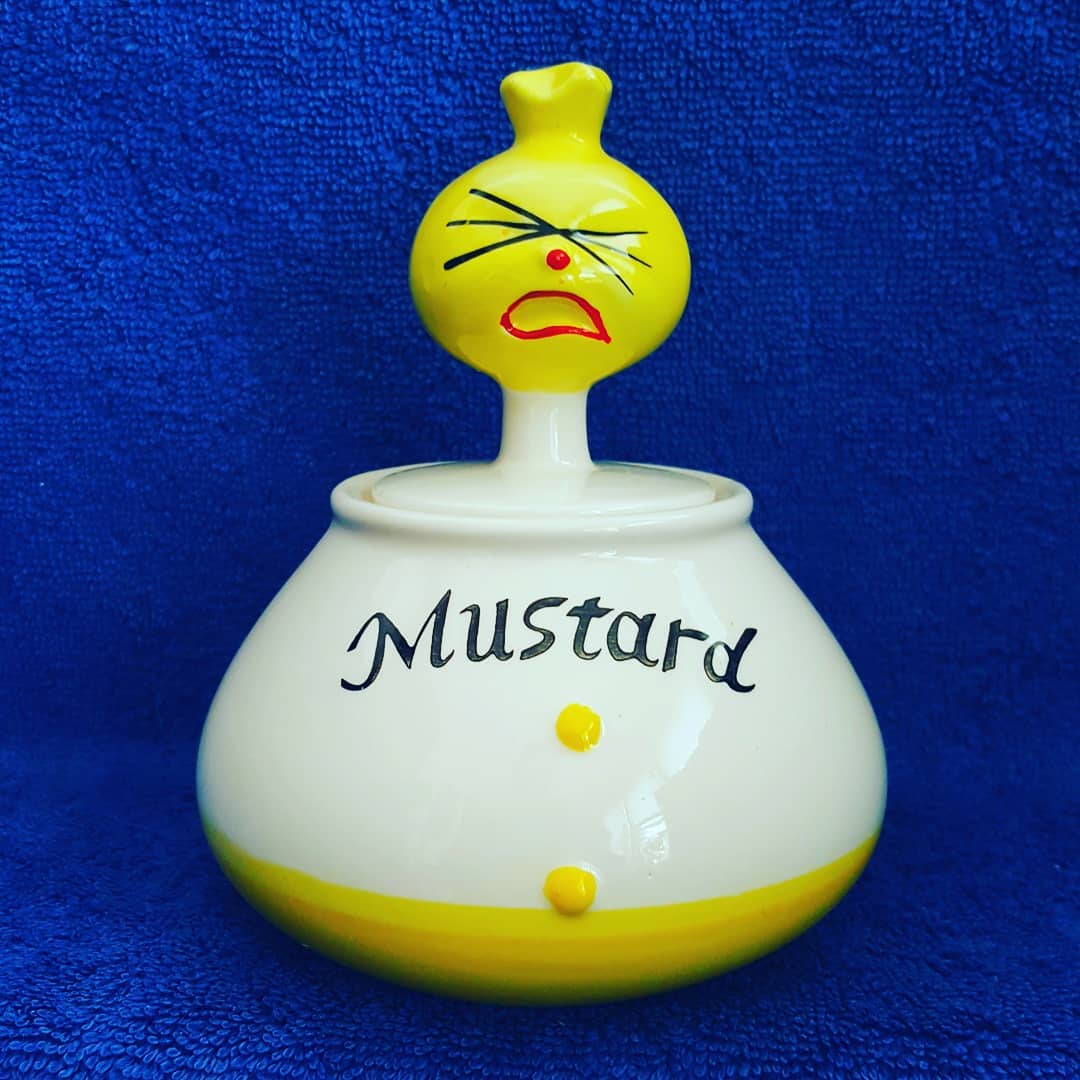
The Mustard jar is the standout character in the group. Unlike the generally cheerful Betson jars, Mustard has a comically disgruntled expression, making it one of the most whimsical designs in the series.
Research & Discoveries
Three Jam ’n Jelly Jars
One of the curiosities of the Betson group is the presence of three separate Jam ’n Jelly jars. The known group includes distinct pear and yellow apple Jam ’n Jelly versions, along with a separate Strawberry Jam jar. The repetition may seem excessive at first glance, but the jars make more sense when read as different fruit characters built from a shared design vocabulary.
Conclusion
The Betson jars form one of the more unusual groups in this section of the Archive. They are not girl jars in the same sense as the Norcrest, M-G, or Jolly Floral lines, but they clearly belong to the broader mid-century world of Japanese novelty condiment jars that developed around the same retail moment as Pixieware. Their fruit-head designs, built-in spoons, and highly individual expressions give the set a personality all its own — especially the wonderfully cranky Mustard jar.