Napco Plaid-Base Condiment Jars
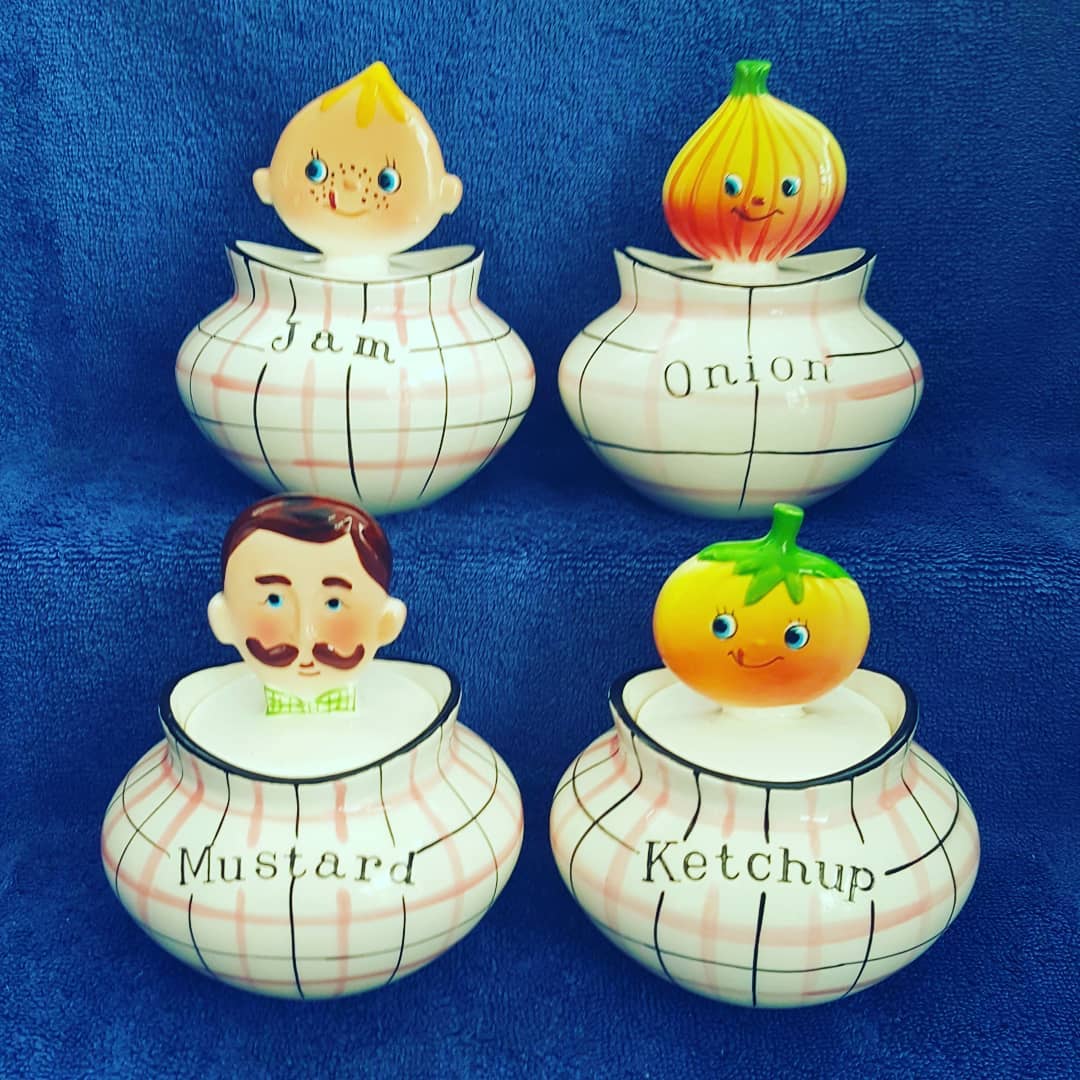
Four Napco novelty condiment jars with charcoal-and-pink plaid bases, built-in spoons, and expressive character heads.
Introduction
Napco’s plaid-base condiment jars form a small but memorable group within the larger world of Japanese novelty condiment jars. The jars are easily identified by their rounded charcoal-and-pink plaid bases, built-in spoons, and character-head lids.
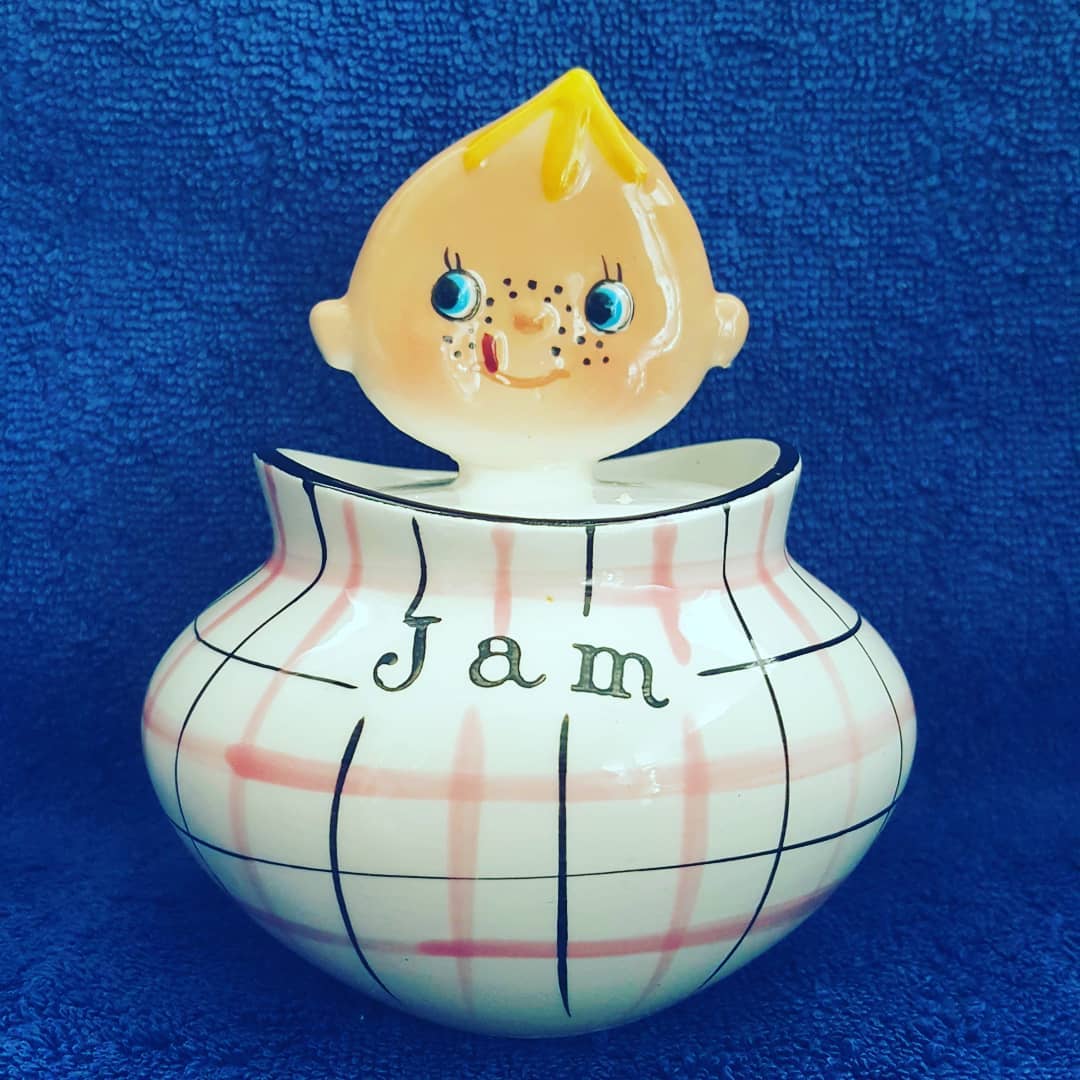
The group includes Baby Jam, Ketchup, Human Head Mustard, and Onion. Ketchup and Onion use vegetable heads, Baby Jam uses a baby head, and Mustard uses a human male head — an unusual choice that interrupts the otherwise vegetable-heavy theme.
Company History
Napco stands for National Potteries Company of Cleveland, Ohio. The family-owned novelty ceramics company began in the late 1930s and operated as both an importer and distributor. The company sold a wide variety of Japanese-made novelty ceramics, including figural items, salt and pepper shakers, planters, banks, liquor decanters, and holiday-related products.
Napco was especially well known for its extensive Christmas product lines, but its broader catalog reached well beyond holiday ceramics. Like many mid-century importers, Napco helped bring a steady stream of playful Japanese novelty ceramics into American homes during the postwar period, including kitchen and condiment pieces such as the jars shown here.
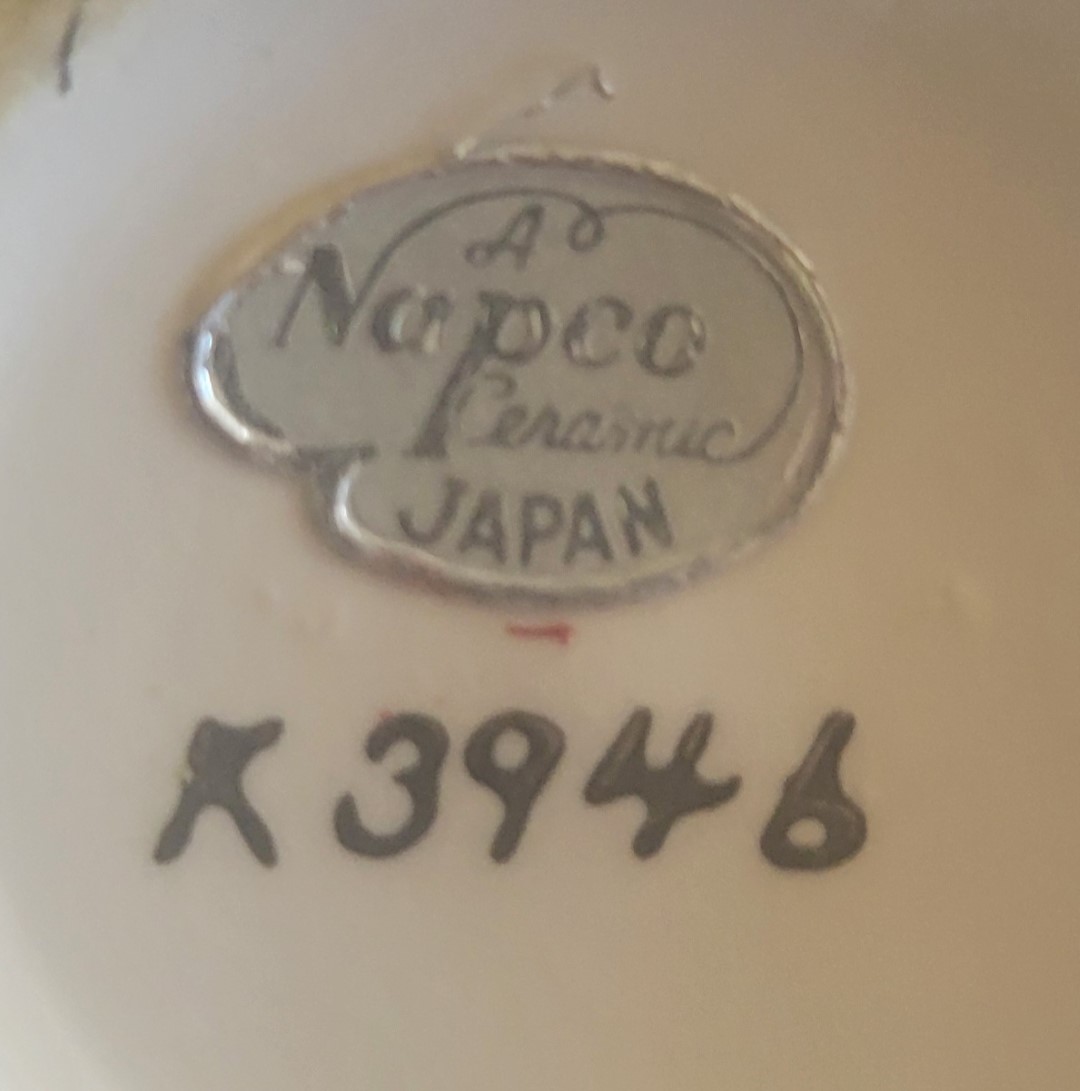
Napco usually identified its products with alpha-numeric product numbers and a silver foil sticker shaped like an artist’s palette reading “National Potteries Co. Cleveland / Made in Japan.” Other Napco-related marks include an “N” within a circle, a copyright “c” within a circle, and marks that combine the Napco name with copyright-style stamping on the base of a ceramic piece.
The company history also intersects with Inarco. In 1960, a relative of the Napco family started a separate company called Inarco. Napco and Inarco produced separate novelty ceramic lines for decades before merging in 1991 to handle the same product lines under a new company called LBK, headquartered in Jacksonville, Florida. That connection is useful for collectors because Napco and Inarco pieces are often found in the same collecting circles, even though they began as separate but related companies.
Identification Notes
Product Numbers
The Ketchup is numbered K3948, Onion K3949, and Human Head Mustard K3947. The second edition identifies the Baby Jam jar as Napco but does not list the number in the text; the archivist’s example retains the silver Napco foil label and base number K-3946.
The use of the letter “K” in these numbers is documented on the jars, but its meaning is not presently known.
The Four Napco Plaid-Base Jars
Baby Jam Jar
The Baby Jam jar is one of Napco’s plaid-base condiment jars. The archivist’s example retains the silver Napco foil label and the base number, confirming it as a Napco piece.
Ketchup
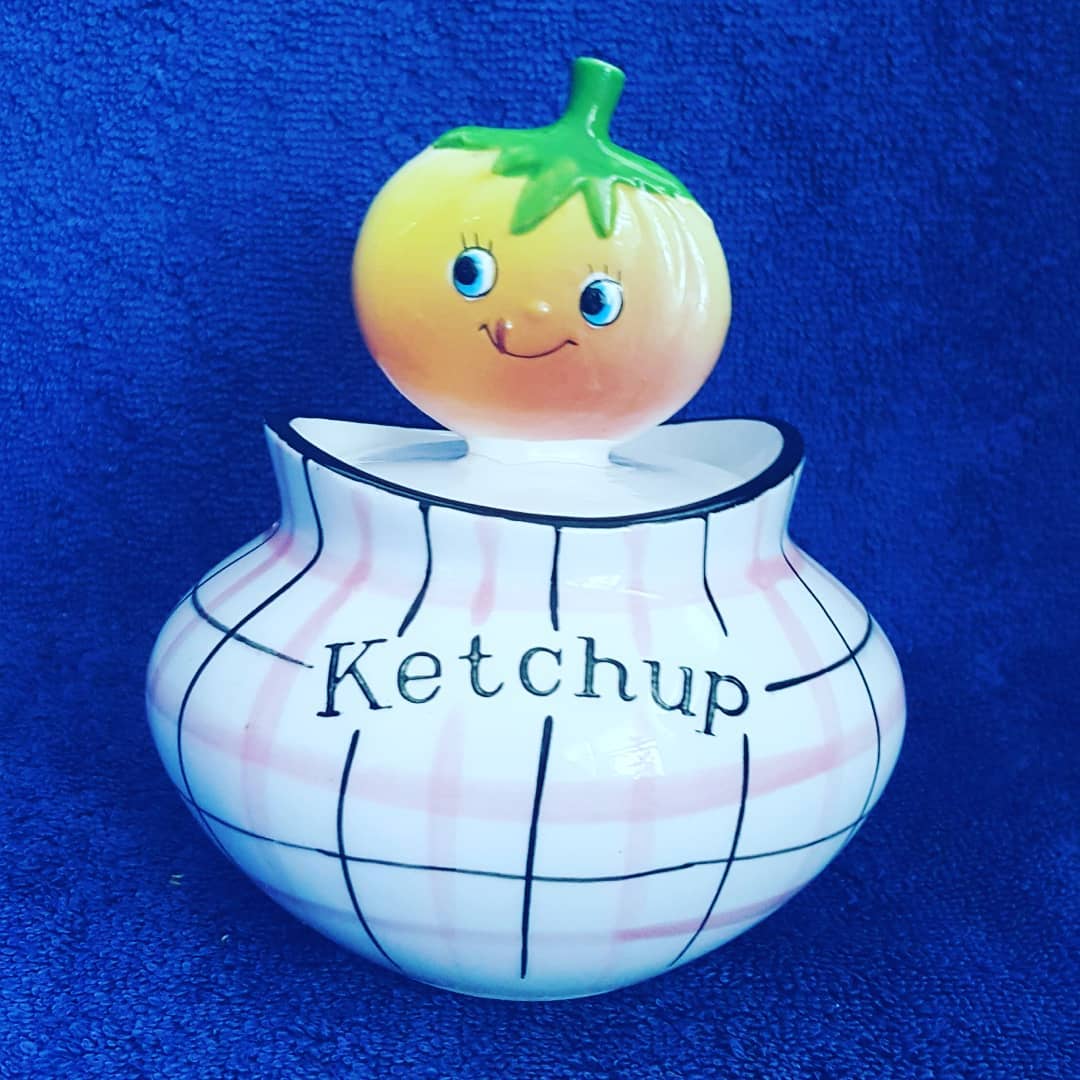
Ketchup uses the same plaid-striped body form as Onion and Mustard, but with a tomato head lid. The smiling tomato head makes the identity clear even before the label is read.
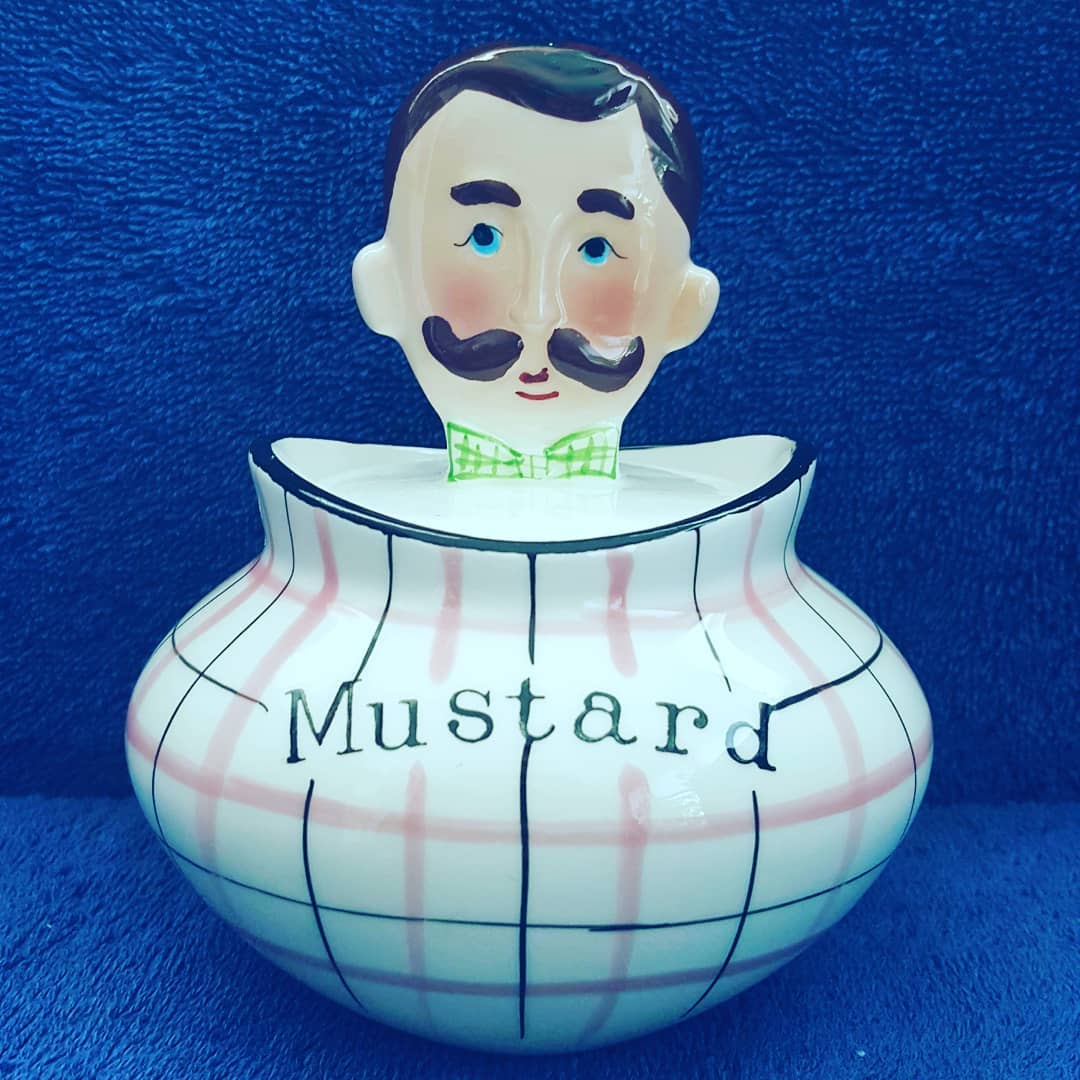
Human Head Mustard
The Human Head Mustard is the oddball of the group. The human head seems surprising among the vegetable heads, but the same head has turned up repeatedly on confirmed Mustard examples.
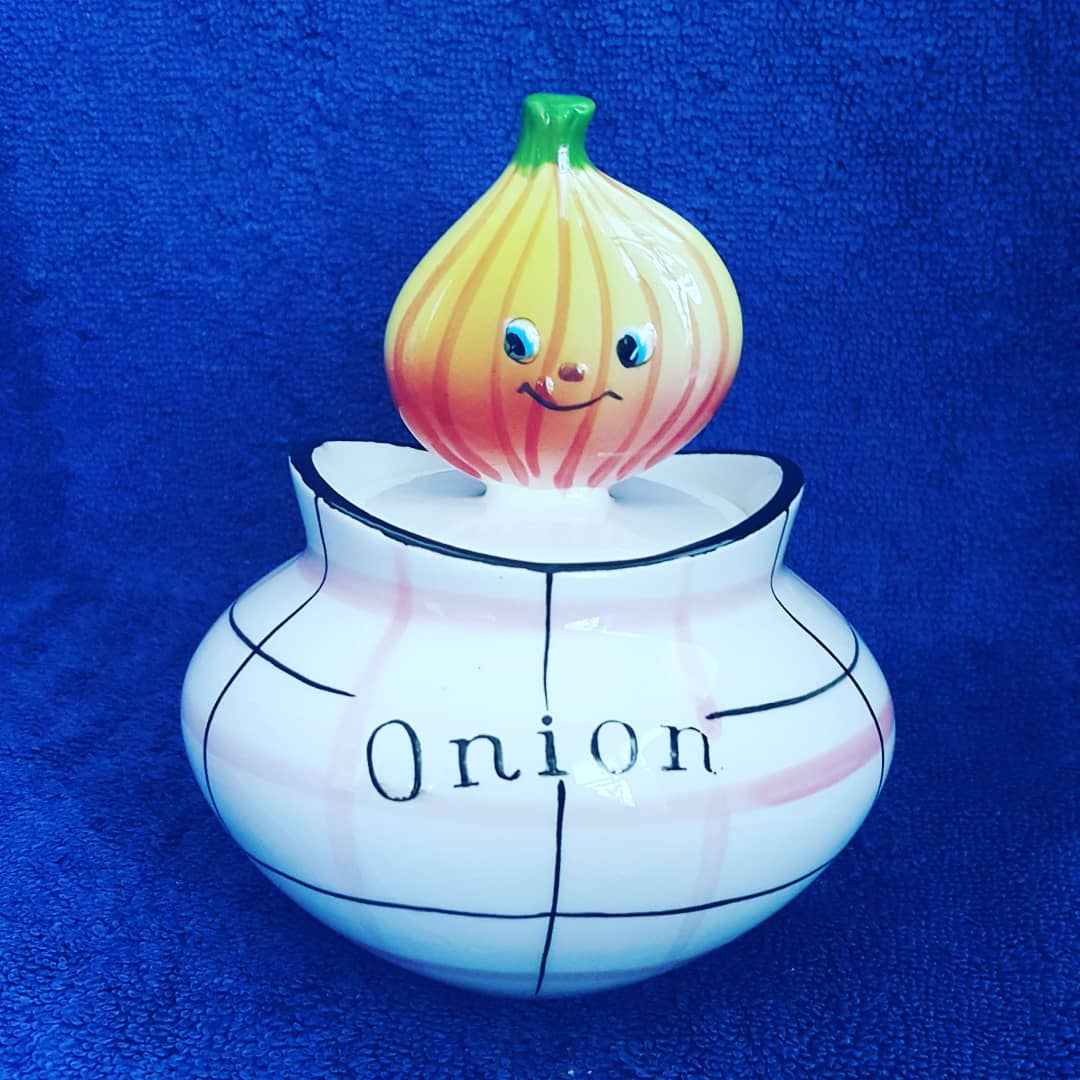
Onion
The Onion jar is one of the clearest vegetable designs in the group, with a fluted onion head and green stem. It pairs especially well with Ketchup because both use the same rounded plaid body form and vegetable-head vocabulary.
Research & Discoveries
The Human Head Mustard
Walter’s first edition notes that the Human Head Mustard seemed at first like a possible mismatch because it interrupts the vegetable-head pattern established by Ketchup and Onion. However, the same human head has appeared repeatedly on Mustard examples, confirming that the pairing is intentional rather than accidental.
Conclusion
The Napco plaid-base jars are a compact and easy-to-identify group. Their rounded plaid bodies, built-in spoons, and alpha-numeric base numbers make them clearer to document than many anonymous Japanese novelty condiment jars. At the same time, the mix of vegetable, baby, and human heads gives the group a quirky personality that keeps it firmly within the playful spirit of mid-century ceramic novelty design.