Swirl Girls
An unmarked Japanese condiment series with swirling painted stripes, two distinct lid styles, and several important guide-book corrections.
Introduction
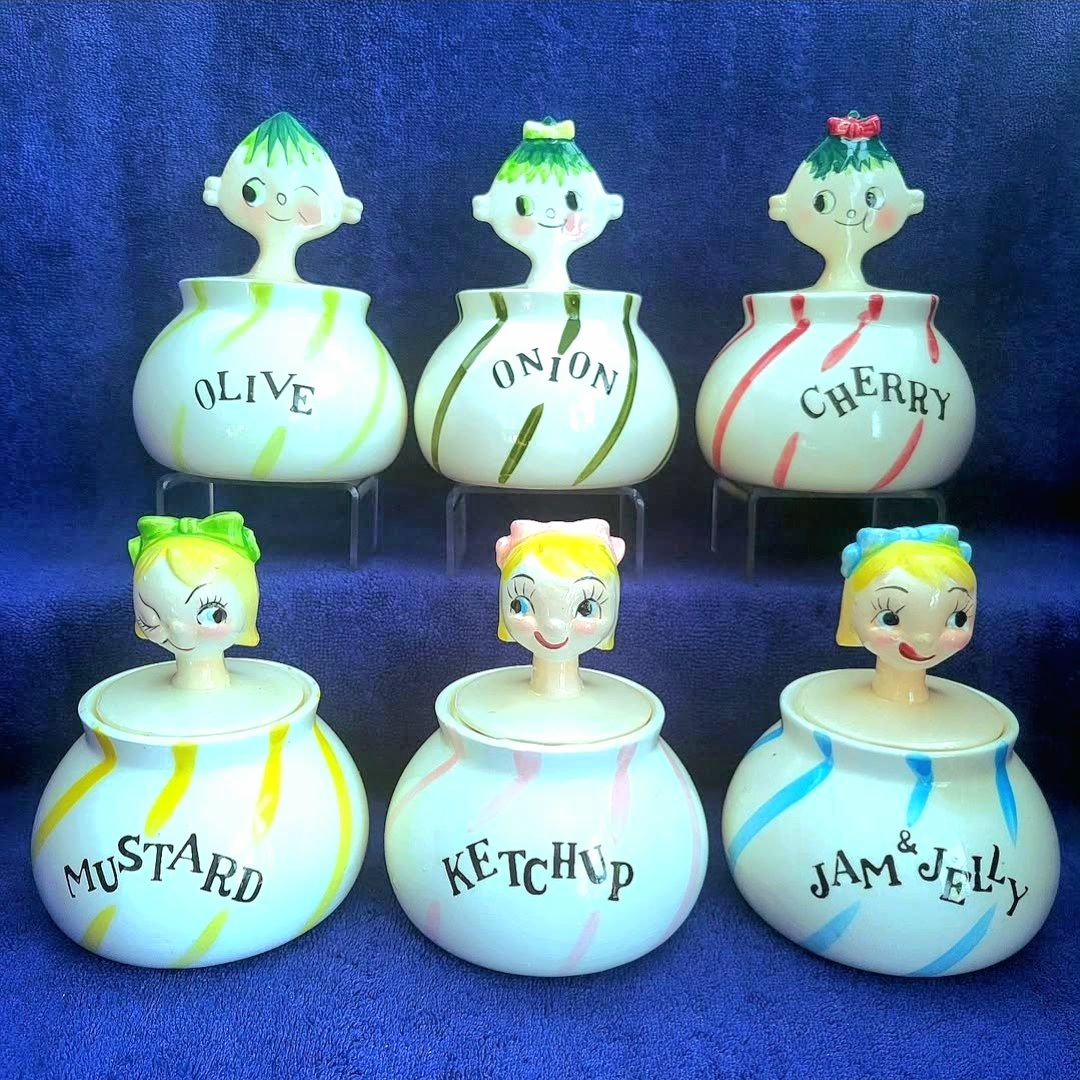
The Swirl Girls are an unidentified Japanese novelty condiment series known from surviving examples. The line is instantly recognizable by its clean white bulbous jar bodies, bold black serif lettering, and eight diagonal swirled stripes painted around each base.
The series is unusual because it combines two different sculptural lid styles. The three primary condiment jars — Jam & Jelly, Ketchup, and Mustard — appear to use round-headed girl lids. The specialty condiment jars — Cherry, Onion, and Olive — use flat-headed pixie-style lids, with Olive identified as the Swirl Boy.
The manufacturer remains unknown. The jars are unmarked except for Japan on the bottom, but the consistency of the body forms, lettering, stripe treatment, and built-in spoon construction makes the group easy to recognize.
Research Discovery — Correcting the Guide Illustrations
Incorrect Lids in the Published Guide
During photography for the published guide, incorrect lids were used, resulting in the Ketchup and Cherry jars being illustrated with incorrect tops. Comparison of multiple surviving original examples now makes it possible to reconstruct the factory-correct configuration of all six known jars.
Ketchup
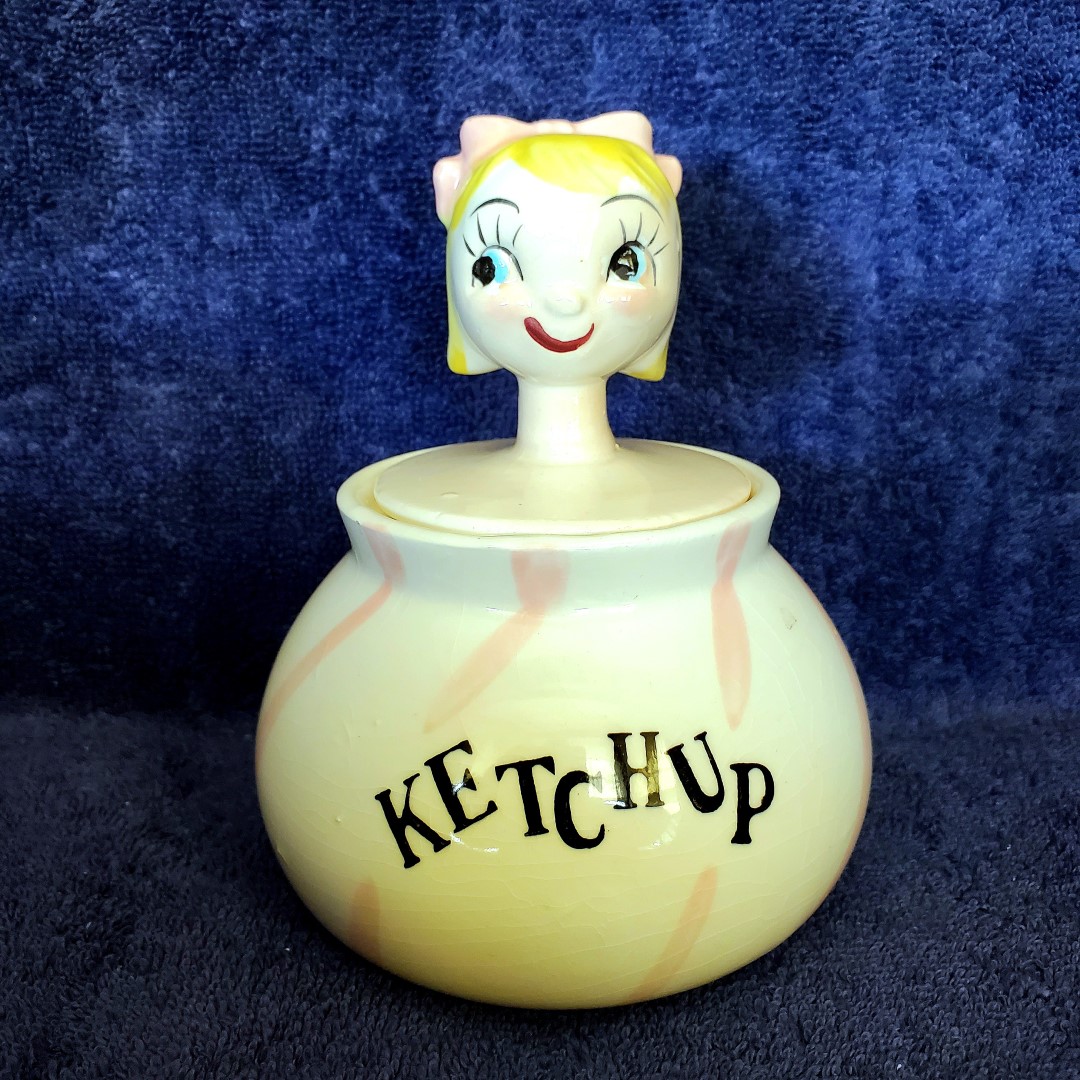
The published guide illustrates the Ketchup jar with the flat-headed Cherry lid on it. The correct lid is the round-headed girl with a pink hair bow, matching the jar’s pink swirled stripes.
Cherry
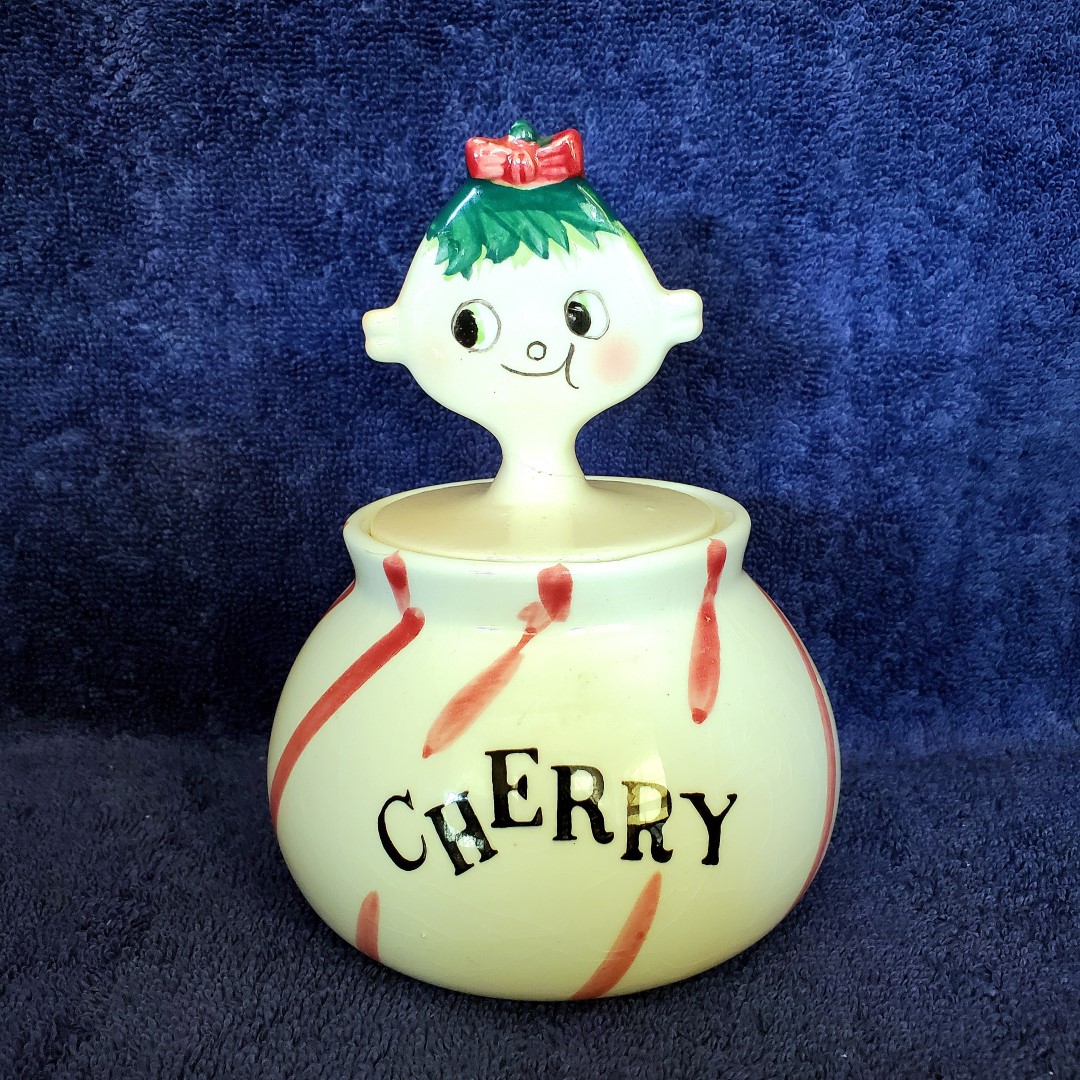
The published guide illustrates the Cherry jar with an Onion lid. The correct Cherry lid is the flat-headed pixie with green leaves and a bright red bow decorating her hair.
This corrected arrangement also follows the broader design pattern seen in many Japanese condiment lines of the period, with the three primary table condiments — Jam & Jelly, Ketchup, and Mustard — sharing one head style, while the specialty condiments — Cherry, Onion, and Olive — share the other.
Design Characteristics
Every jar in the Swirl Girls group uses the same basic body construction: a white rounded base, eight swirled diagonal stripes, bold black condiment lettering, and a built-in ceramic spoon attached beneath the lid. The construction of the jars and built-in spoons is identical across both the flat-headed and round-headed examples.
The round-headed jars have smoother, more traditional girl heads without protruding ears. The flat-headed jars have pixie-type hairdos and ears. Together, the two head styles create one of the more unusual visual divisions among the Japanese condiment knockoff lines.
The Six Known Jars
Jam & Jelly
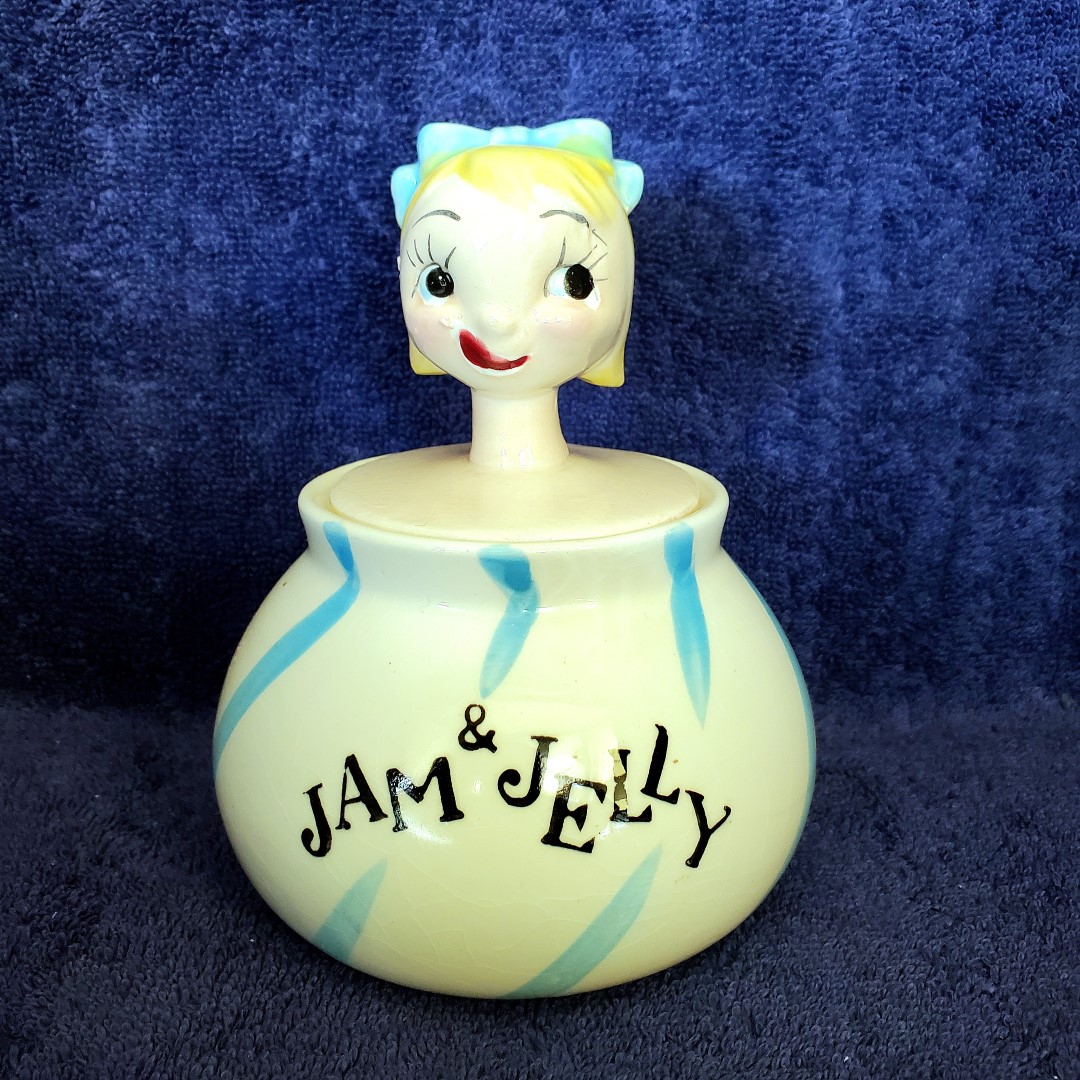
Jam & Jelly belongs to the round-headed group. The correct lid is the blond round-headed girl with a blue bow, matching the blue swirled stripes on the jar body. The round blond Jam & Jelly face bears a strong resemblance to Lefton’s Lil’ Sugar and Sweetie Syrup.
Ketchup
Ketchup is one of the key corrected examples in this series. The published guide shows Ketchup with a flat-headed pixie lid, but the correct factory configuration is a round-headed girl with a pink bow, matching the pink swirled stripes on the base.
Mustard
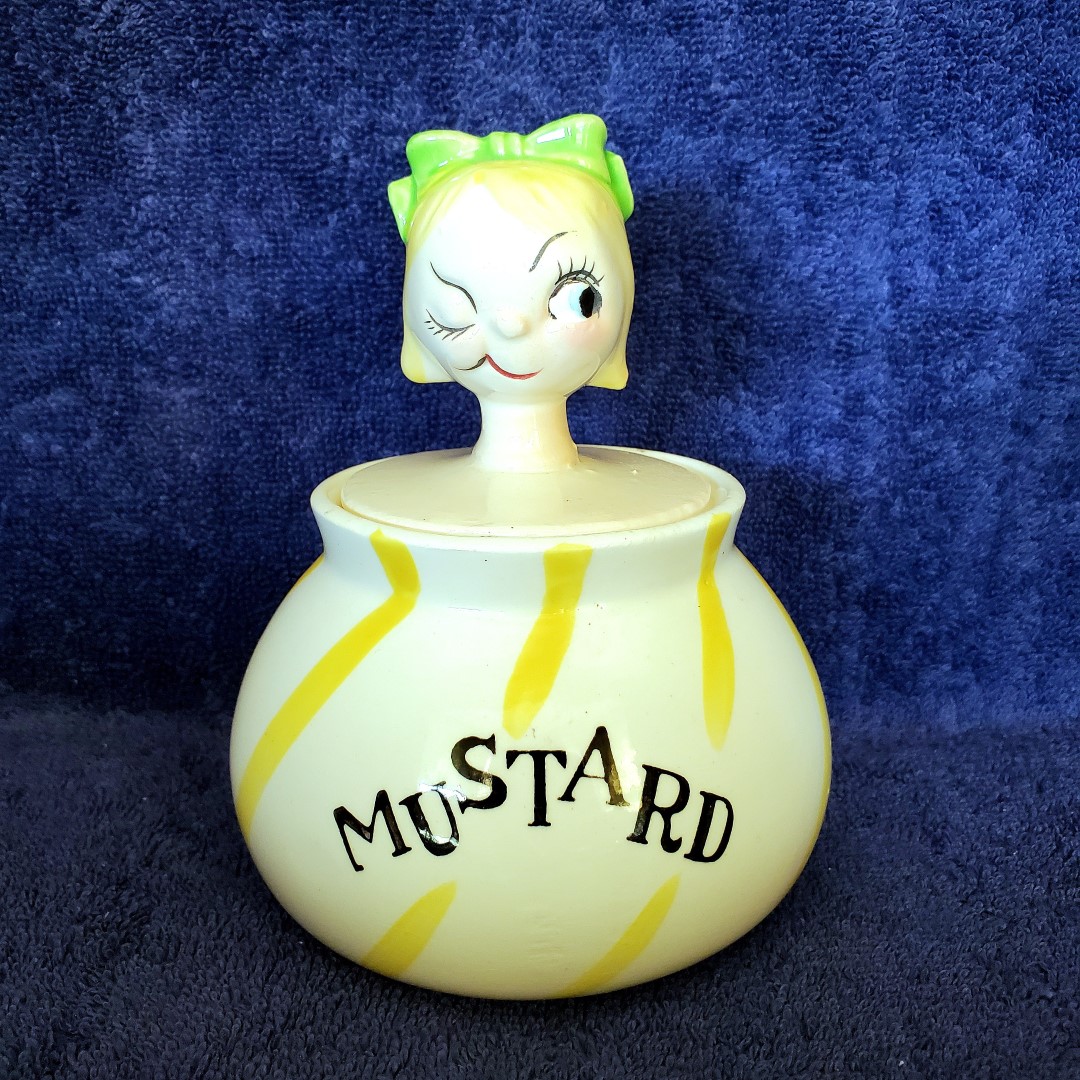
Mustard completes the three primary condiment jars and also belongs to the round-headed group. Its yellow swirled stripes coordinate with the yellow-accented lid, and the face has a playful winking expression.
Cherry
Cherry is the second major corrected example. The published guide illustrates the Cherry jar with an Onion lid, but the correct Cherry lid is the flat-headed pixie with green leaves and a bright red bow decorating the hair, matching the red swirled stripes on the jar.
Onion
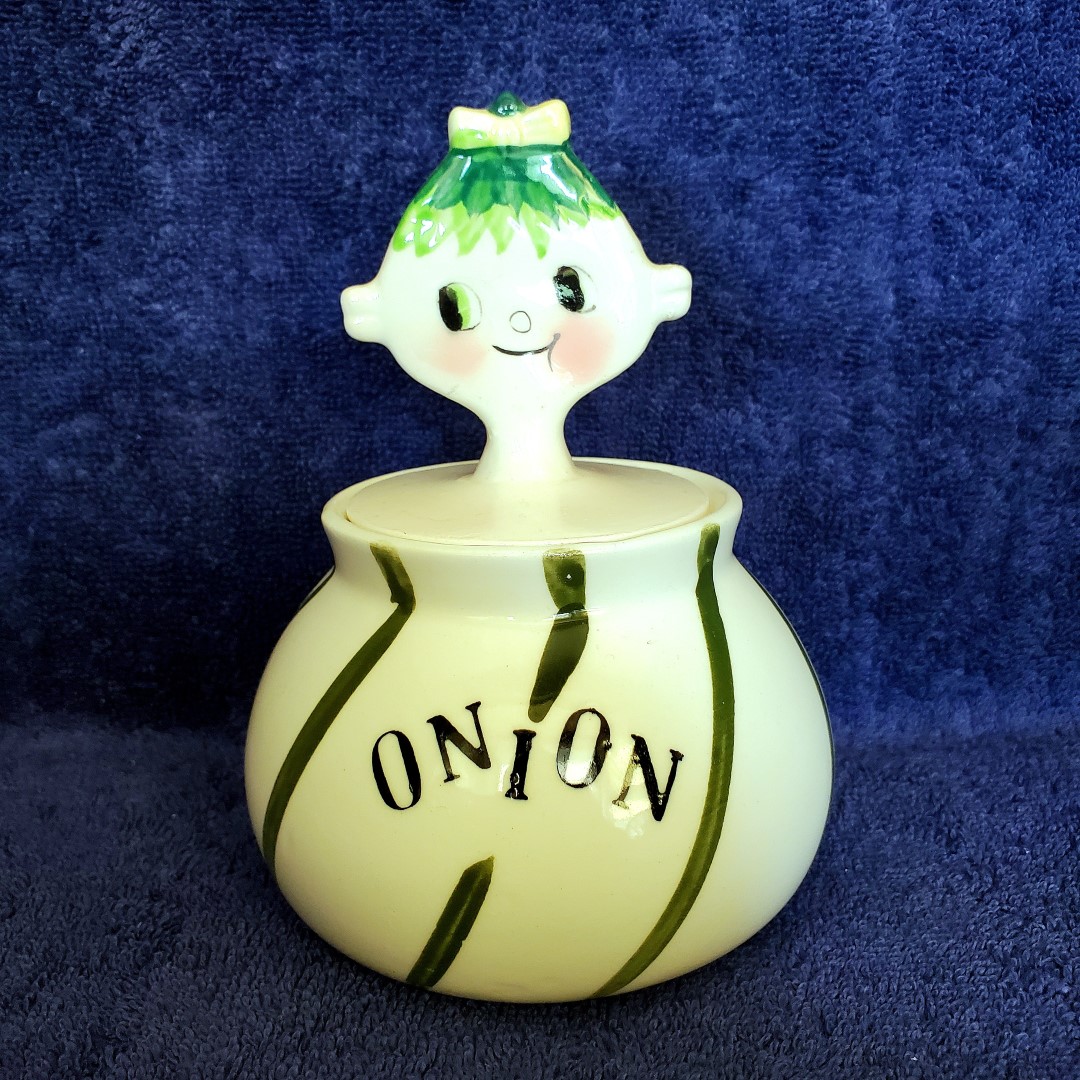
Onion belongs to the flat-headed specialty-condiment group. Its dark olive-green swirled stripes coordinate with the green onion-like hair treatment, and the head style matches the flat pixie form used on Cherry and Olive.
Olive
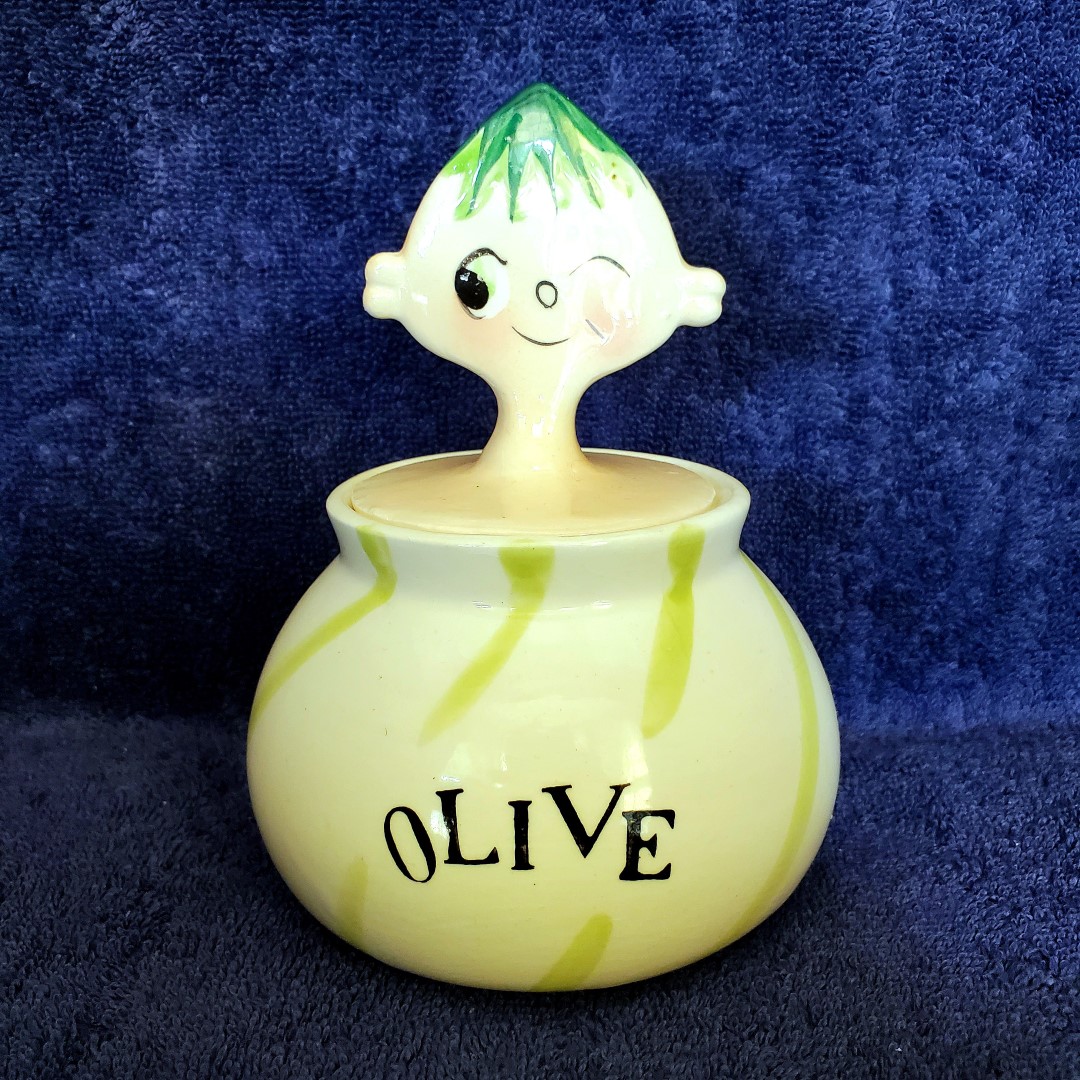
The second edition adds Olive to the series and identifies it as a Swirl Boy. Structurally, it shares the same jar construction, swirled body decoration, and spoon arrangement as the rest of the group. Its light green stripes and flat-headed pixie-style lid place it with the specialty condiment jars. The face is especially clever: one eye is closed while the open eye resembles an olive with its pit missing, the missing pit becoming the pupil of the eye.
Conclusion
The Swirl Girls are one of the most distinctive unidentified Japanese condiment jar lines. Their dramatic diagonal stripes and mixed head styles make them visually memorable, while the corrected lid identifications make them especially important from a research standpoint. The group also shows why continued collector documentation matters: even when a line has appeared in printed guides for decades, surviving examples can still clarify how the pieces were originally meant to be assembled.