Applejack
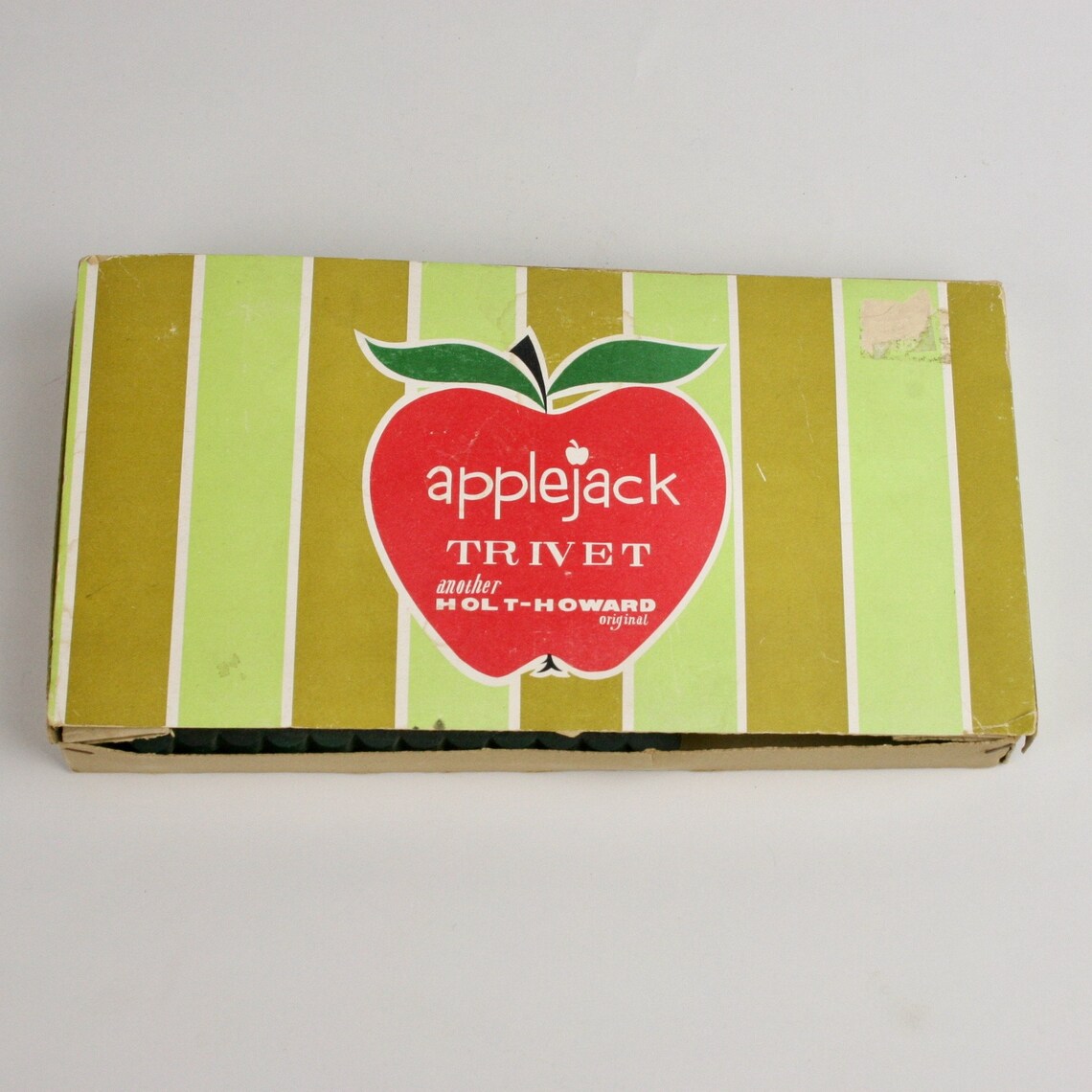
A sophisticated 1962 Holt Howard pattern that carried a stylized split-apple motif across coordinated ceramic, wood, tableware, and kitchen accessory pieces.
Introduction
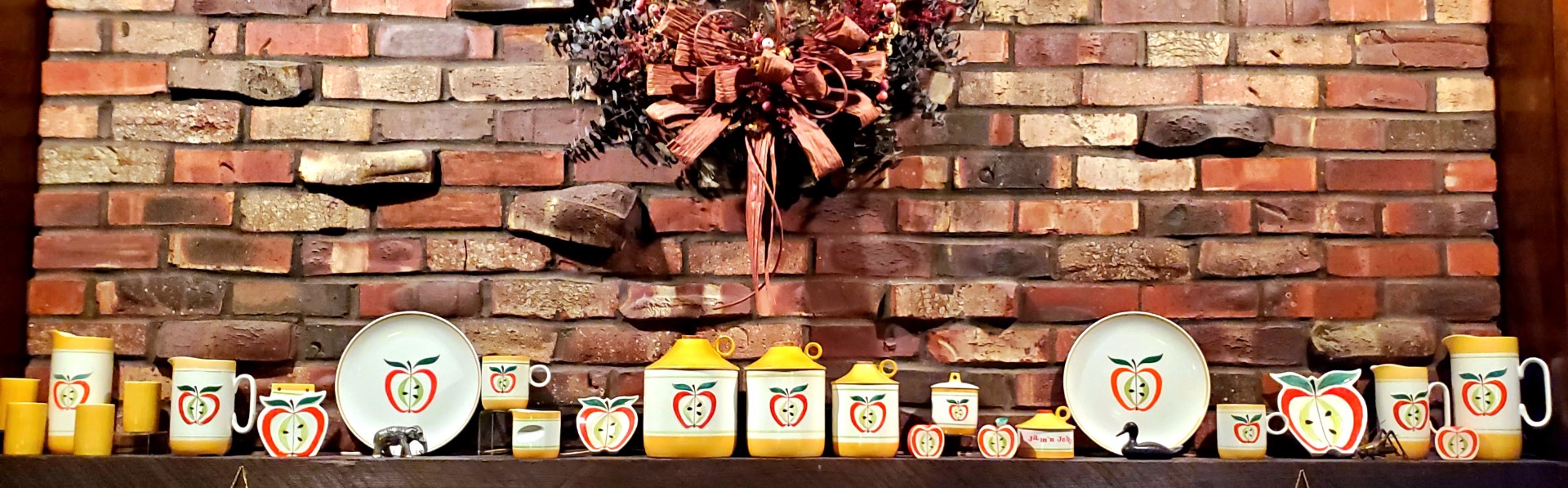
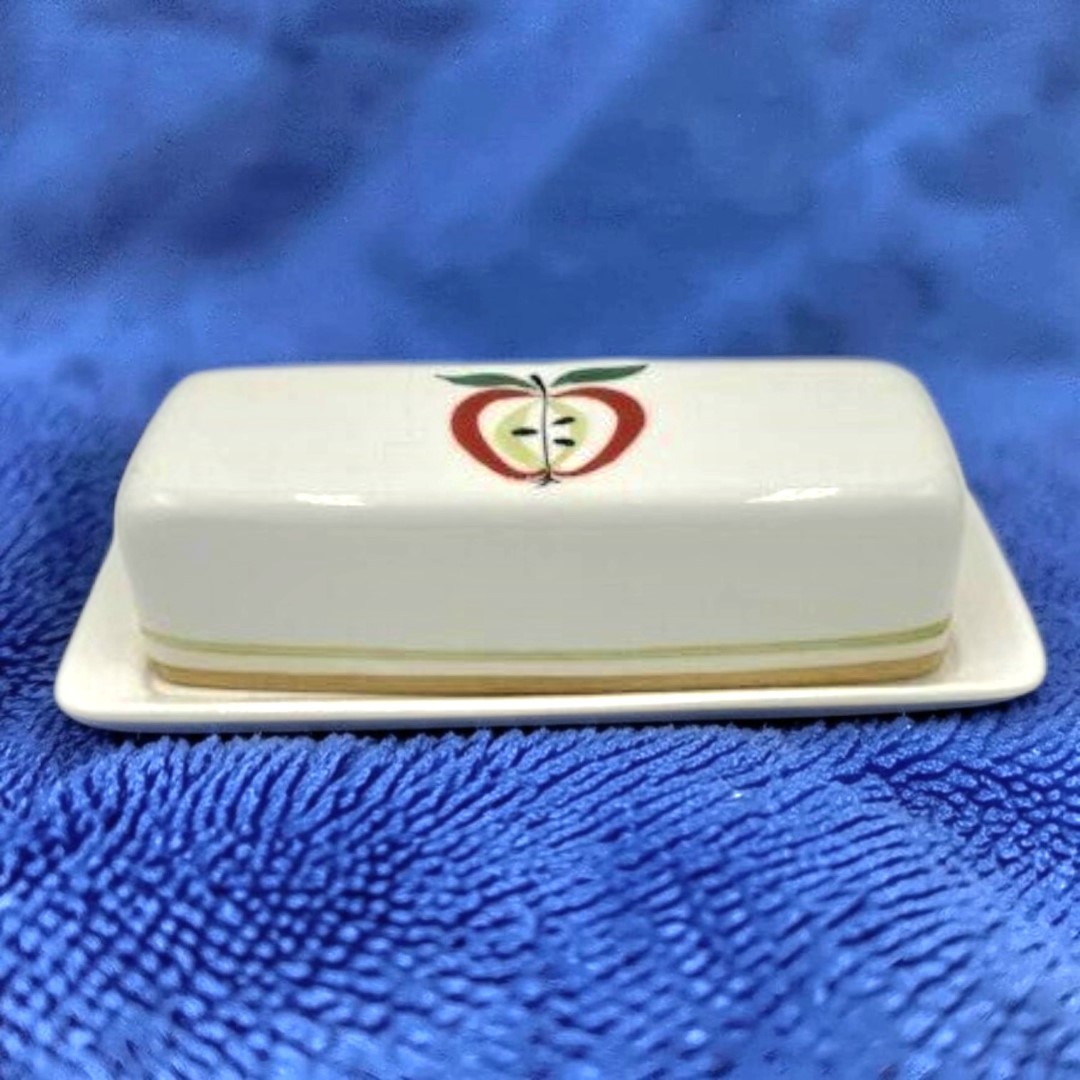
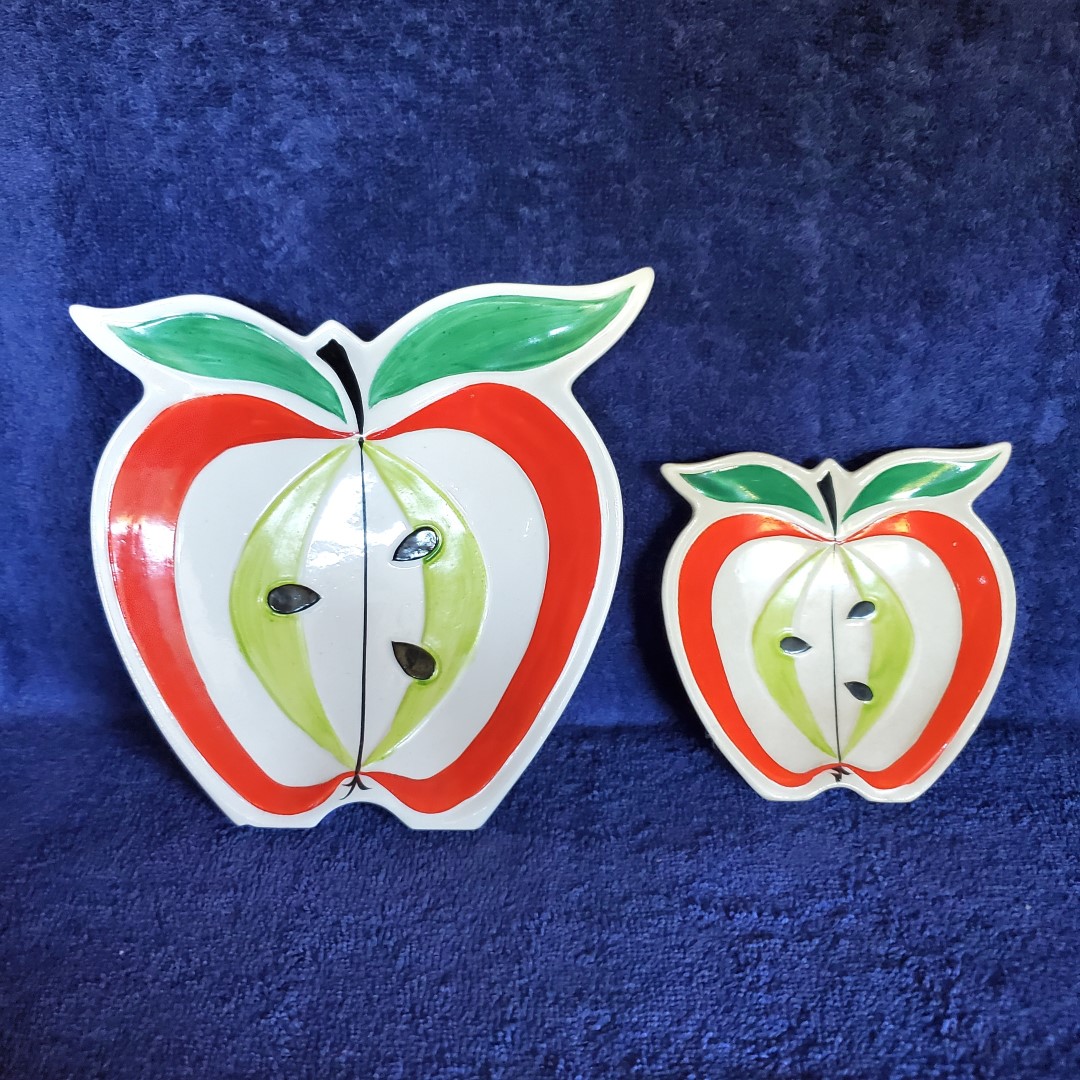
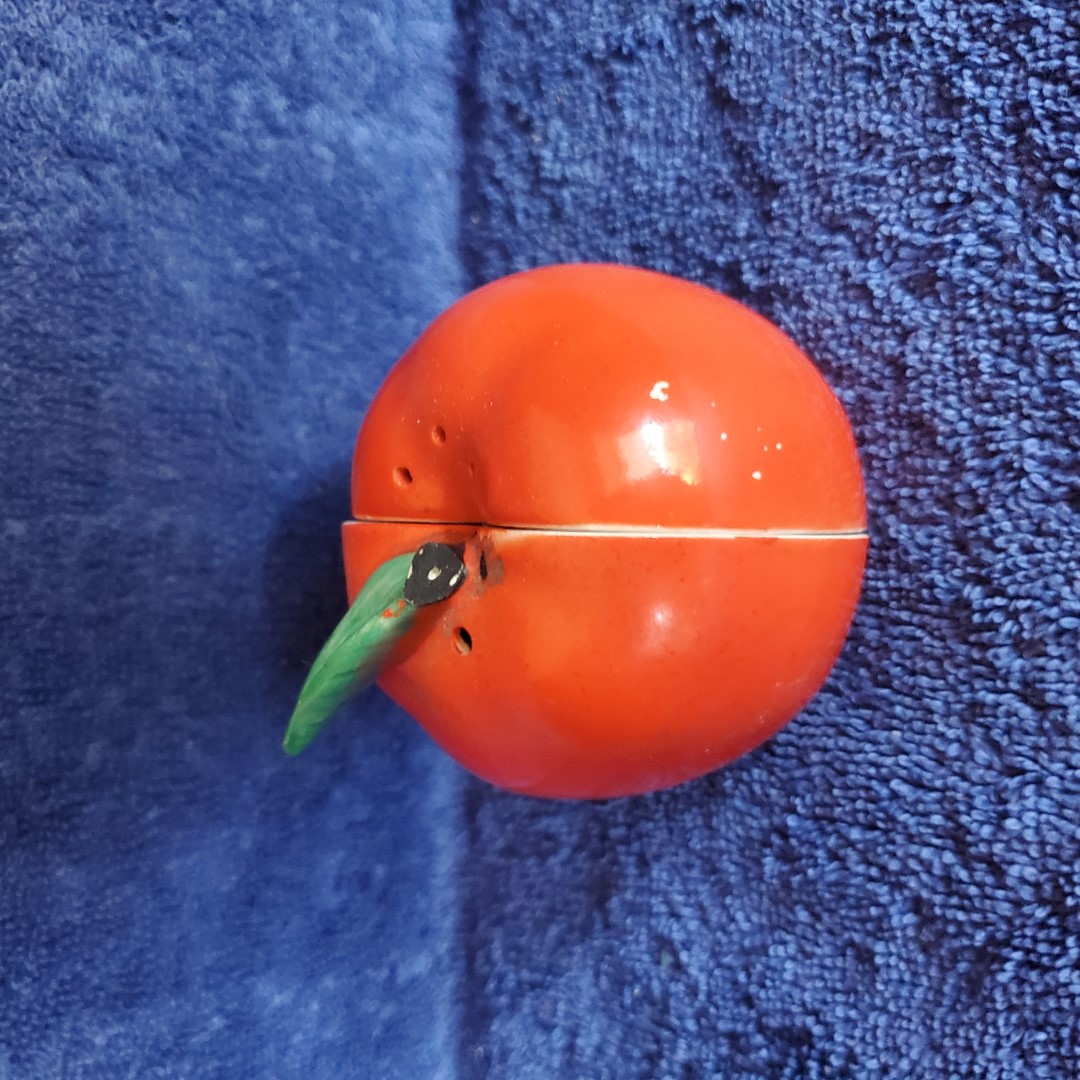
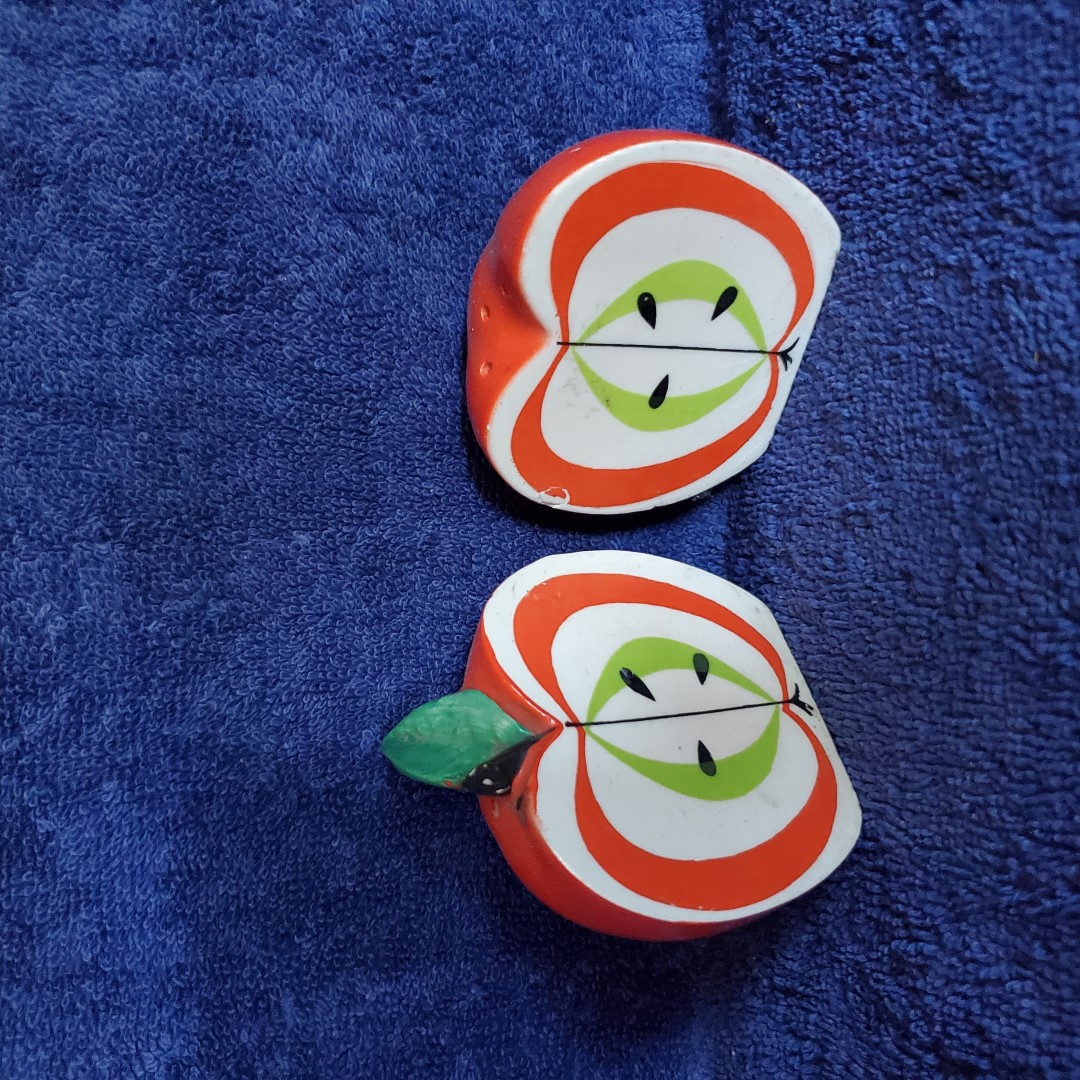
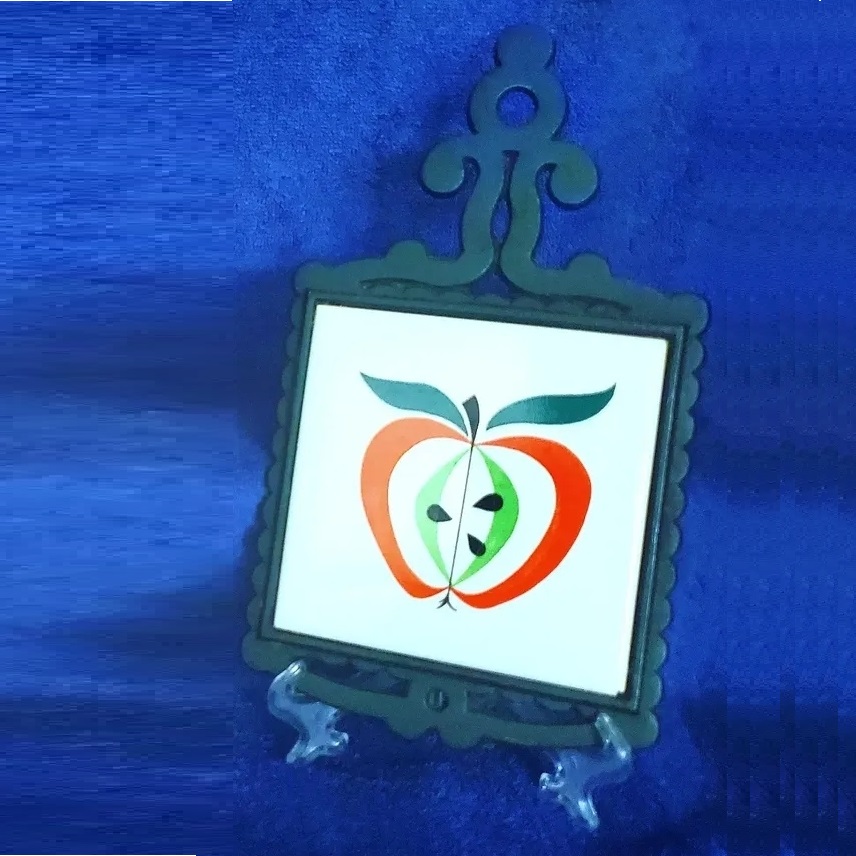
Applejack debuted in 1962 and represents a quieter, more sophisticated side of Holt Howard design. Rather than relying on the animated cartoon faces that defined many of the company's late-1950s novelty lines, Applejack uses a clean mid-century apple motif: red outline, pale green core, black seeds, and small green leaves.
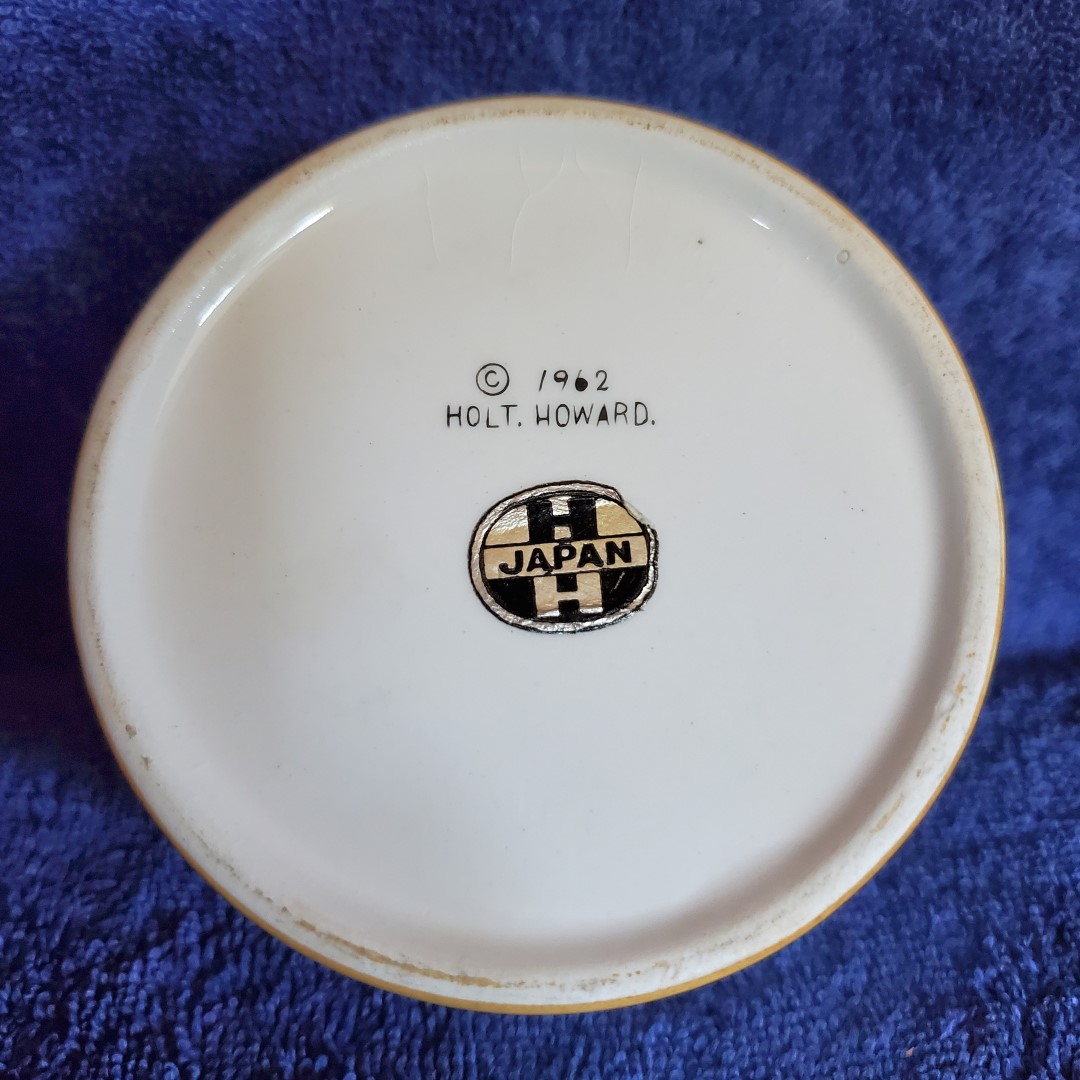
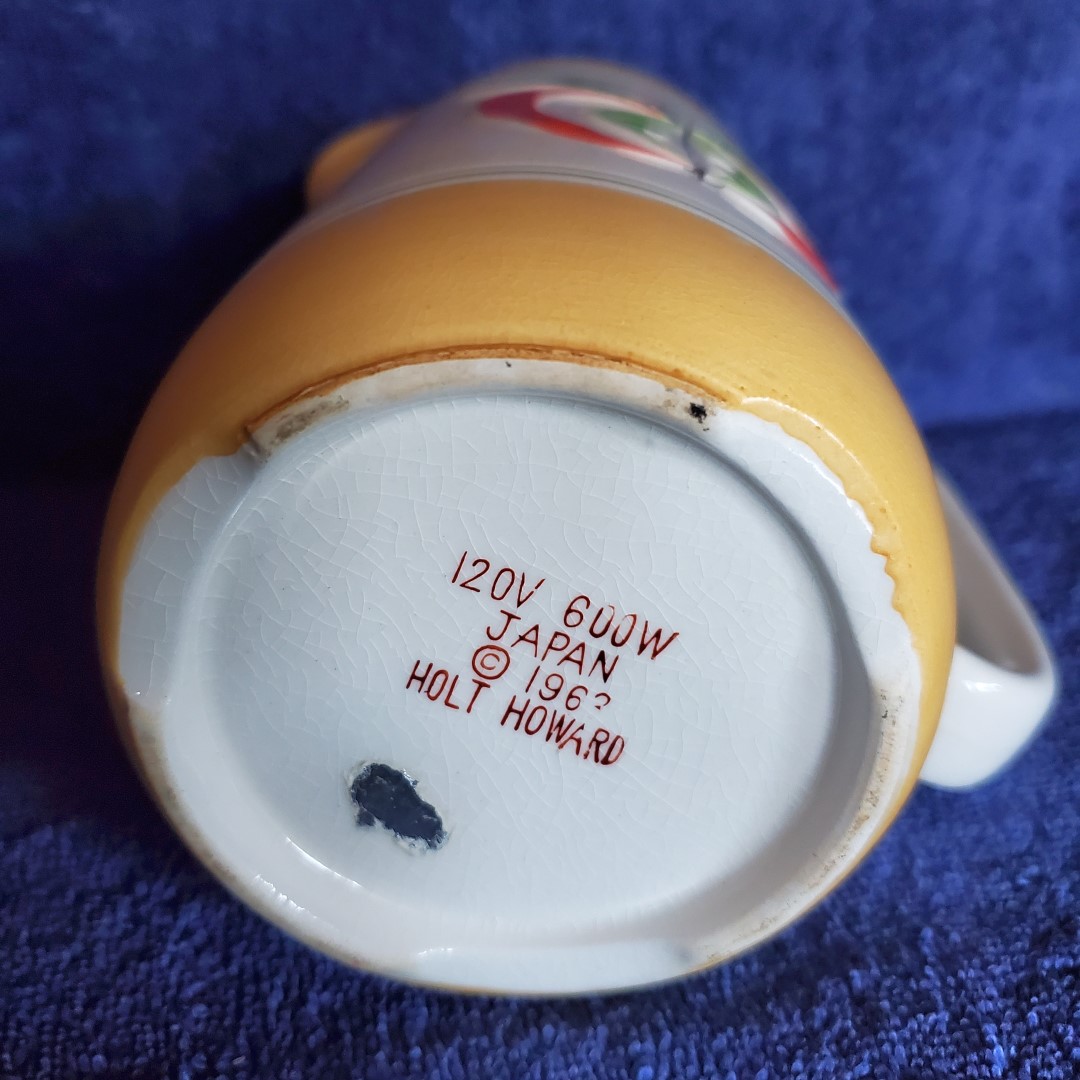
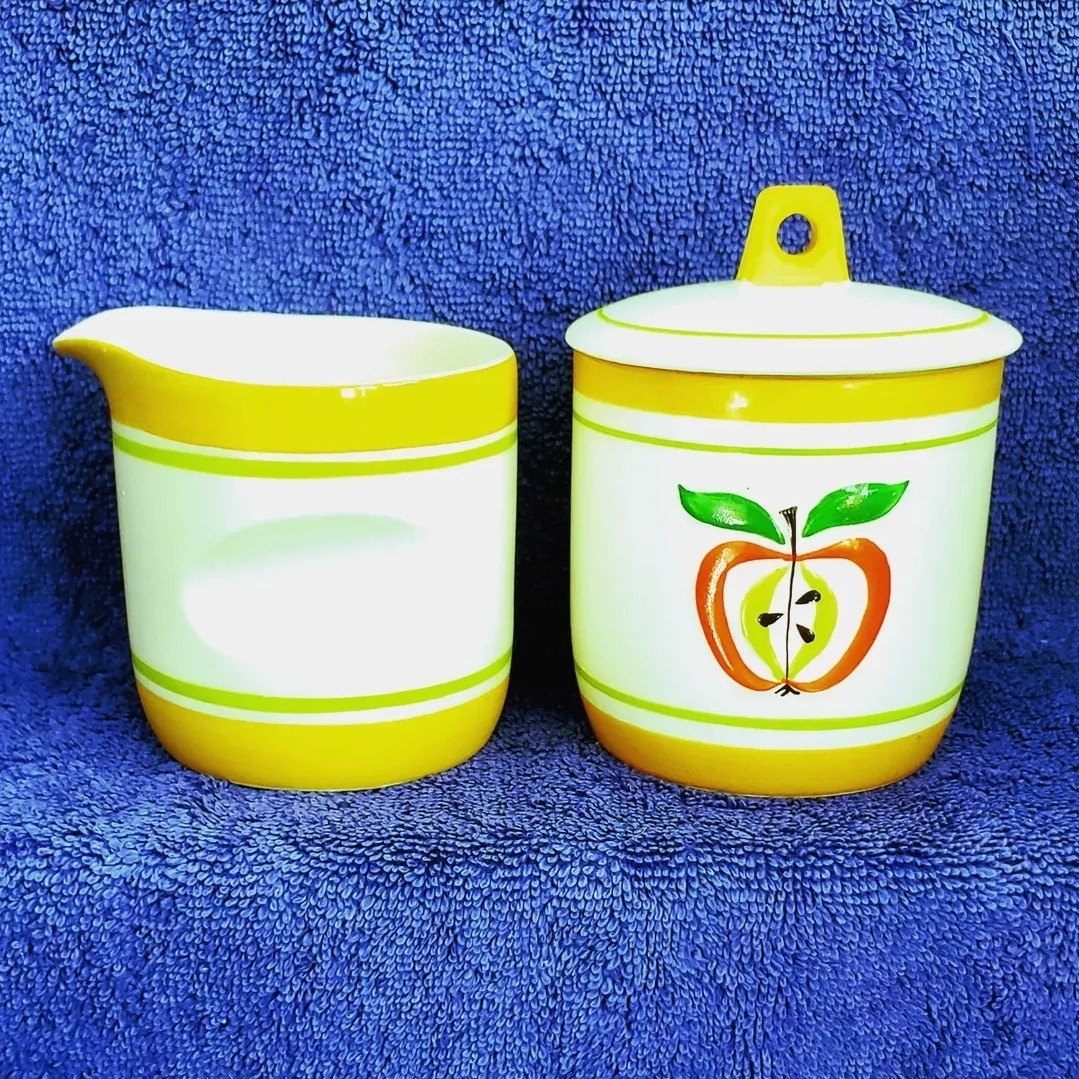
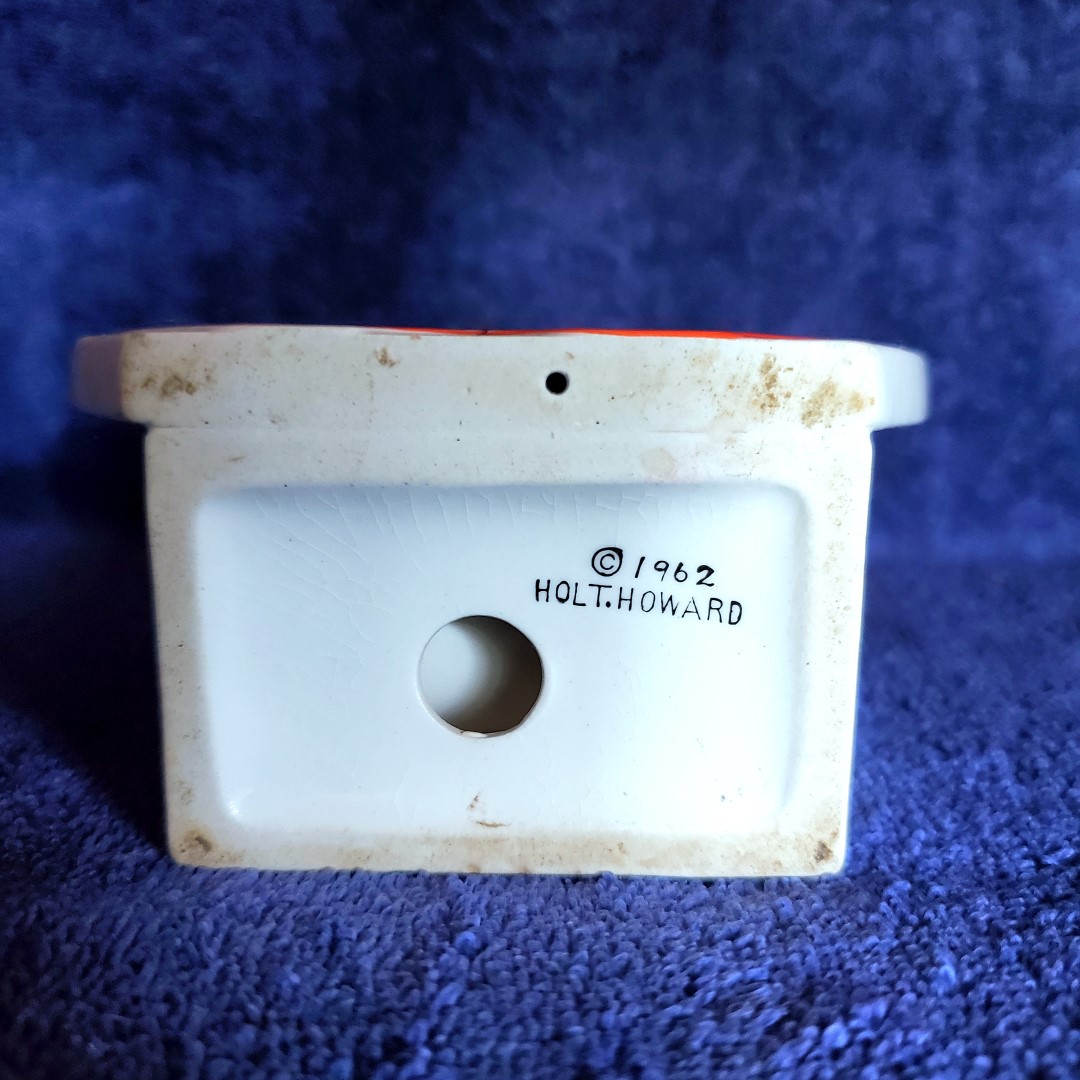
The pattern appears across a surprisingly broad group of objects, including ceramic canisters, tableware, beverage service pieces, wooden kitchen storage, serving accessories, and even an electric hot pot. Most ceramic pieces carry a pale green and warm yellow stripe treatment near the base, and many surviving examples are marked with a © 1962 Holt Howard backstamp.
Applejack is best understood not as a single novelty item, but as a coordinated kitchen and table pattern. The line could furnish a breakfast table, countertop, pantry shelf, and casual serving area while still maintaining a unified visual identity.
Period Catalog Documentation
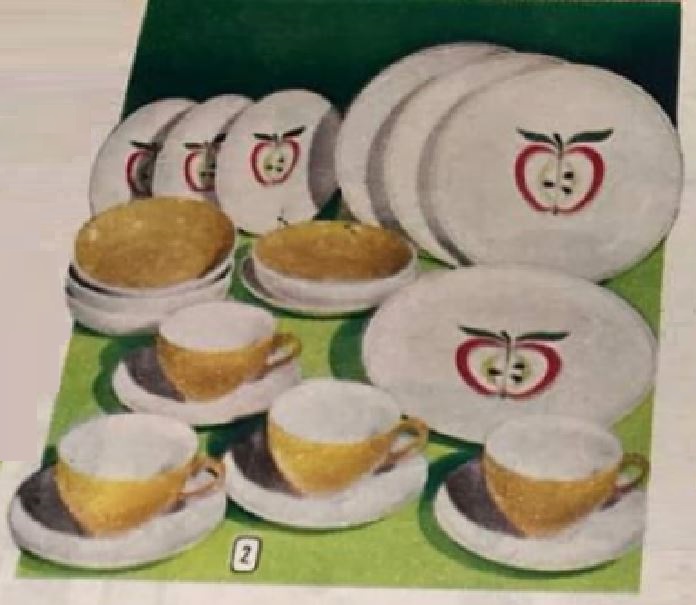
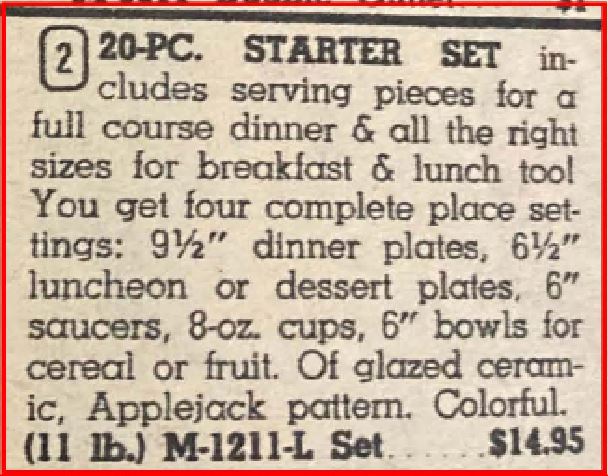
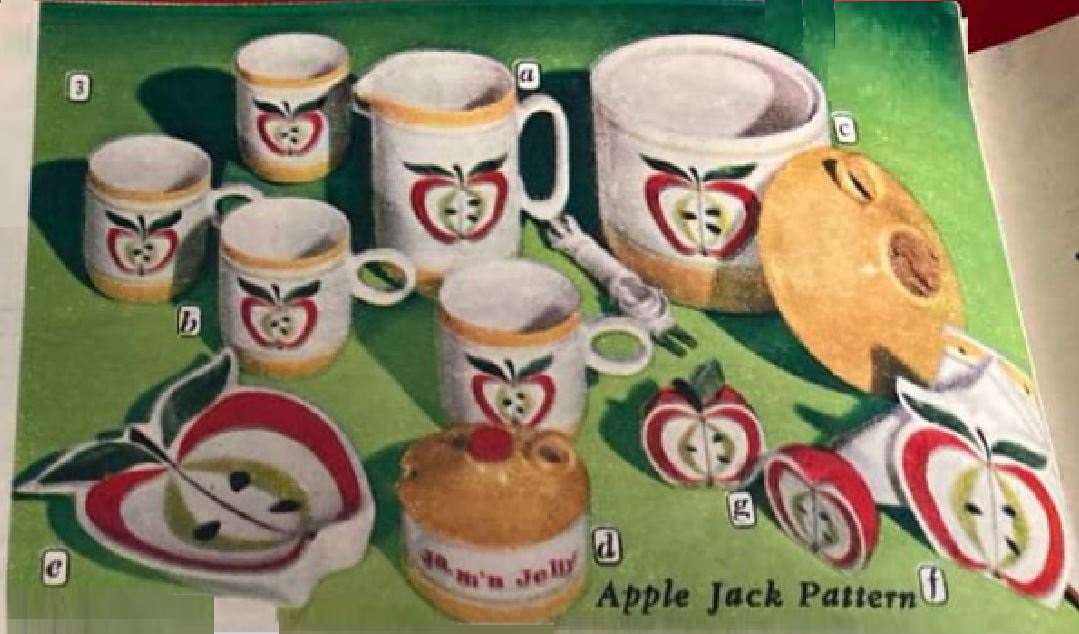
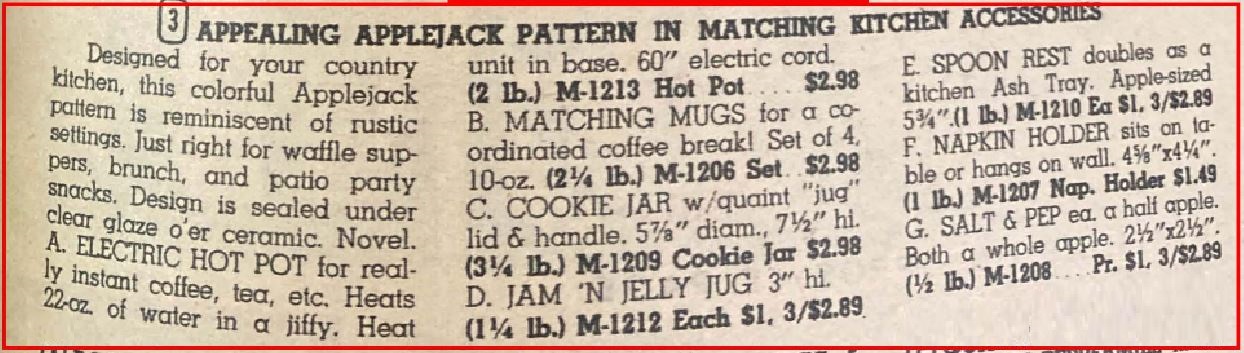
One of the few known period references to Applejack appears in a Helen Gallagher Foster House mail-order gift catalog from approximately 1962. Helen Gallagher Foster House was a Peoria, Illinois-based mail-order retailer that offered a wide assortment of gifts, housewares, novelties, and seasonal merchandise from many manufacturers. The catalog pages shown here document part of the Applejack line as it was offered by one retailer; they should not be understood as a complete Holt Howard checklist.
Ceramic Canisters & Storage
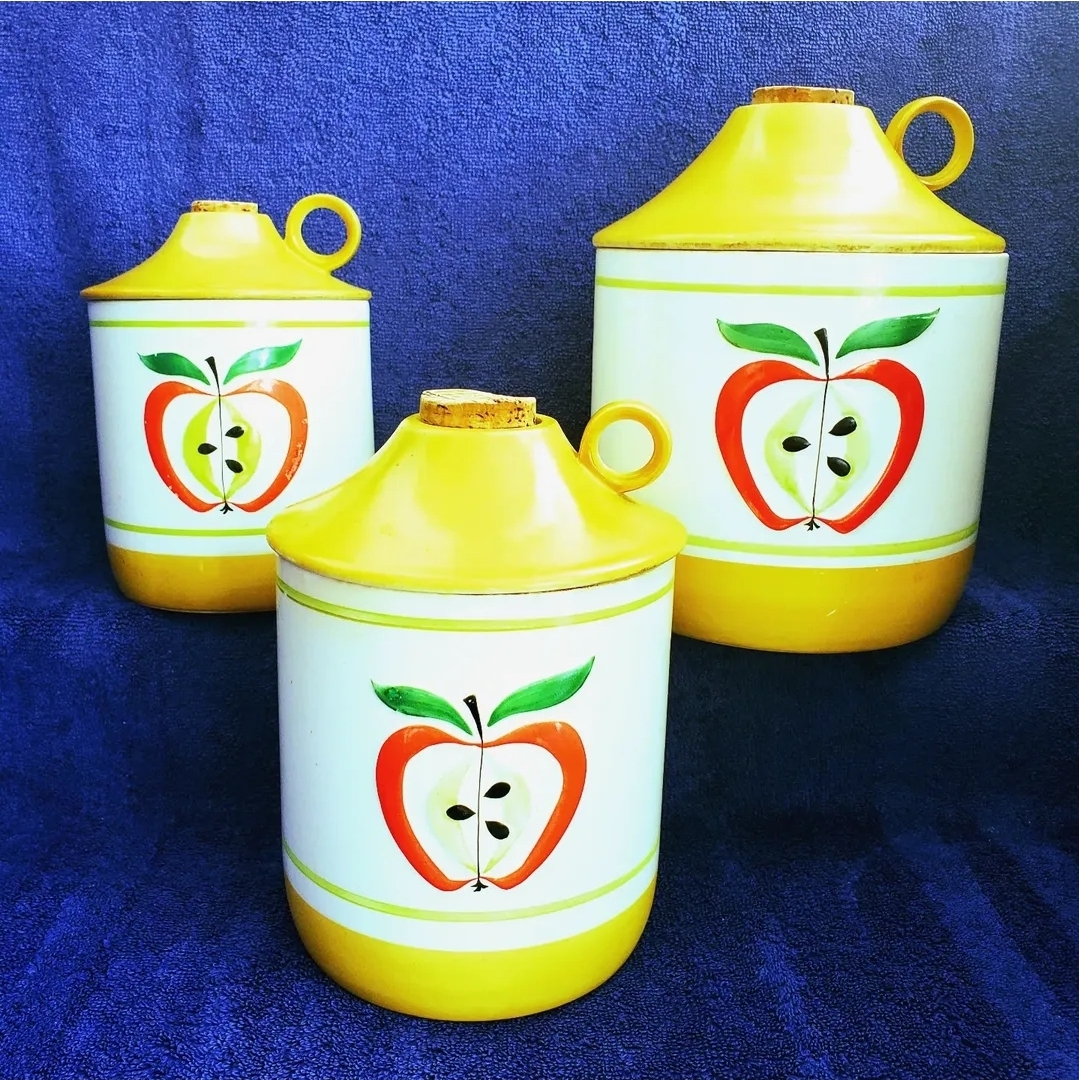
Three-Piece Ceramic Canister Set
The round ceramic canisters form one of the most recognizable Applejack groupings. The largest piece is commonly known as the cookie jar, a name supported by period Helen Gallagher Foster House catalog copy. The medium and small canisters match its form and decoration, creating a coordinated three-piece storage set.
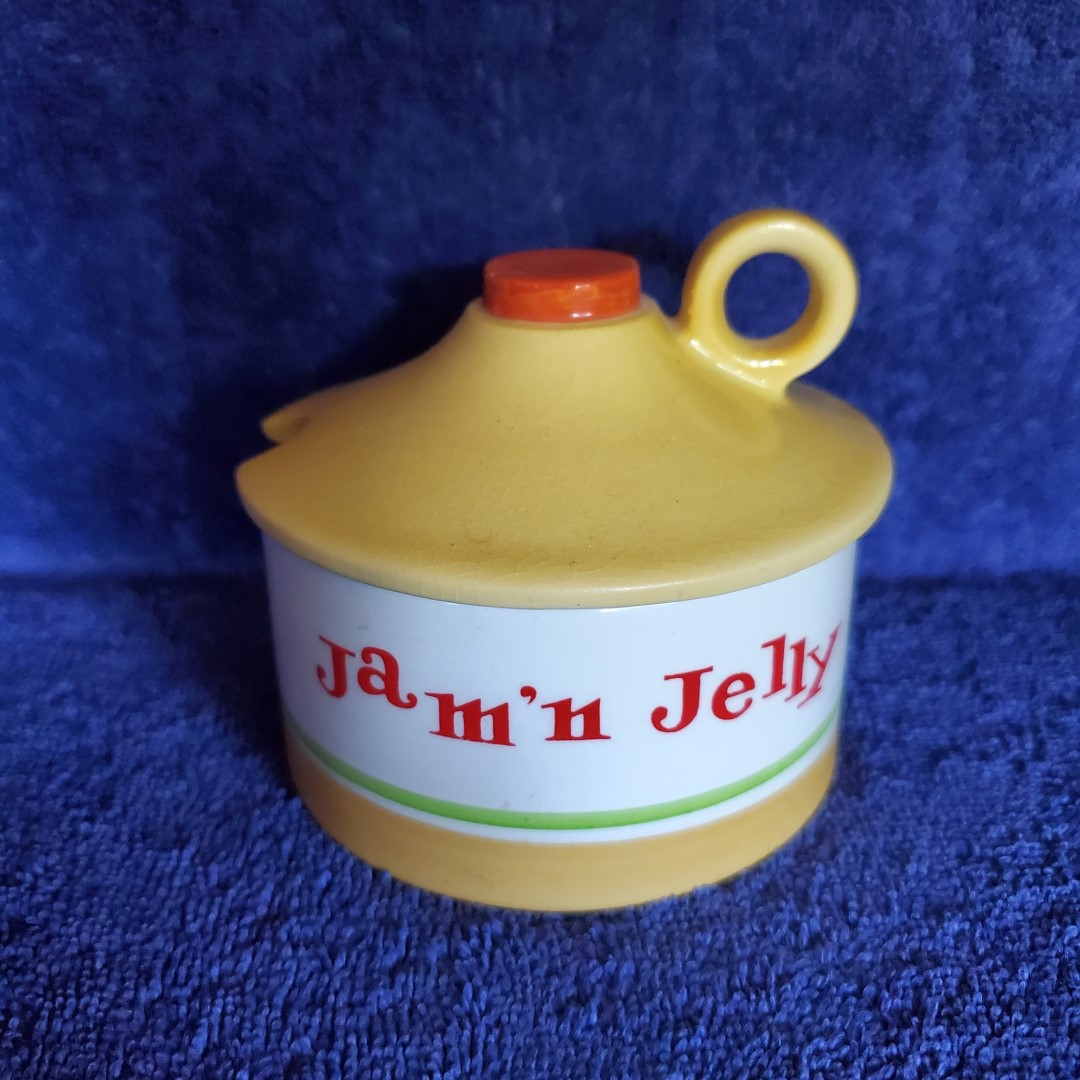
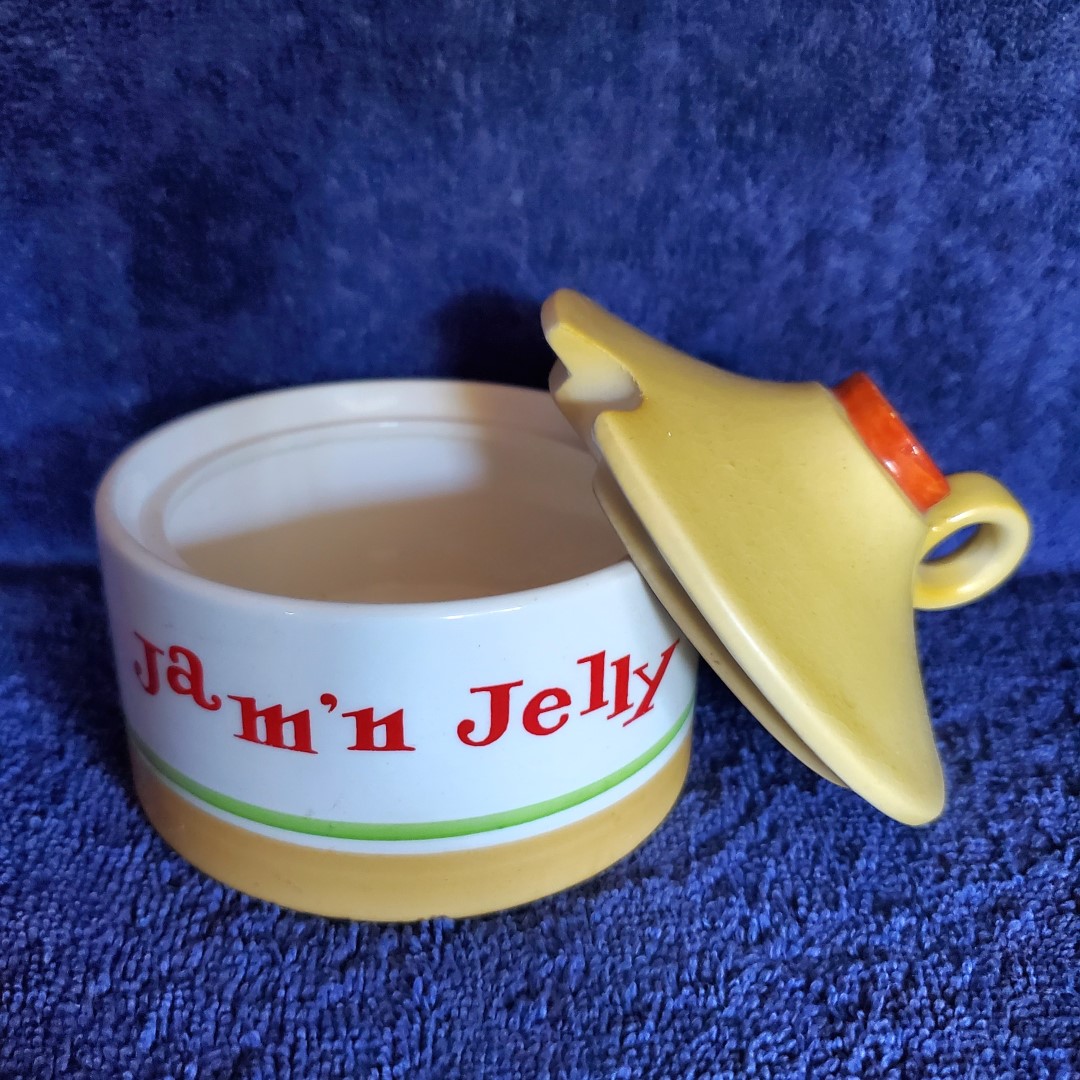
Jam 'n Jelly Jar
The Jam 'n Jelly jar is one of the smallest ceramic Applejack pieces and appears to be the only piece in the line that does not feature the apple motif on its body. Instead, its form and lettering connect it visually to the larger coordinated group.
Wooden Utility Pieces
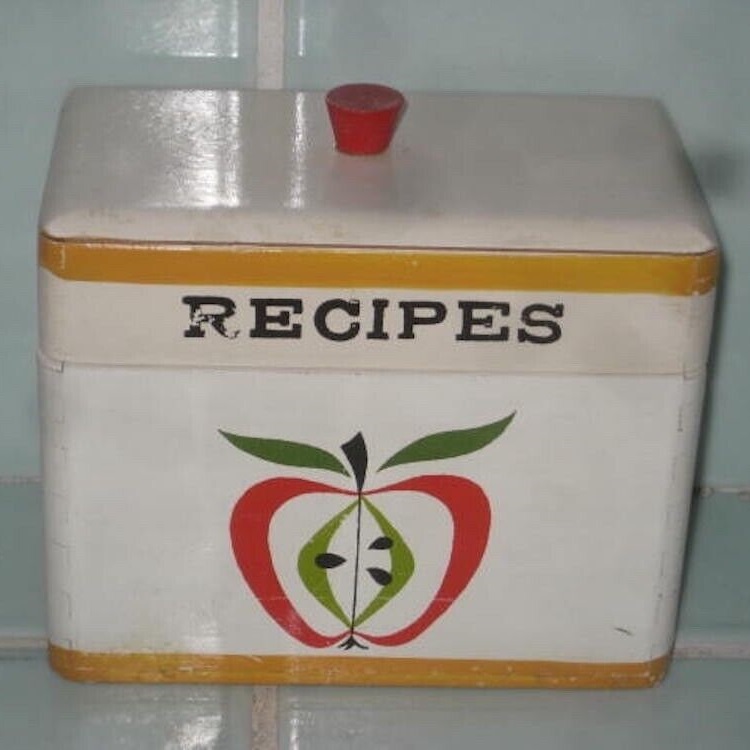
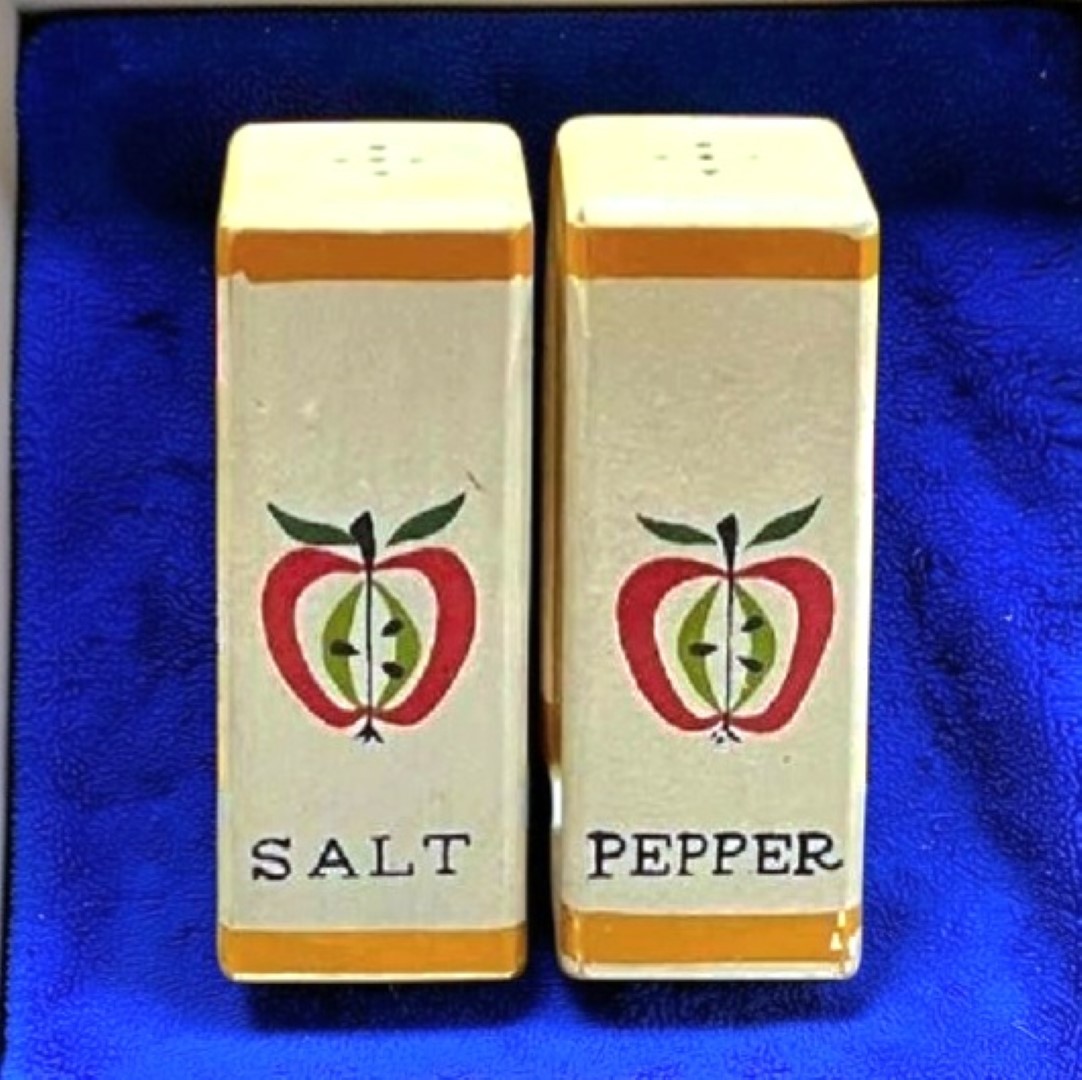
Wooden Canister Set
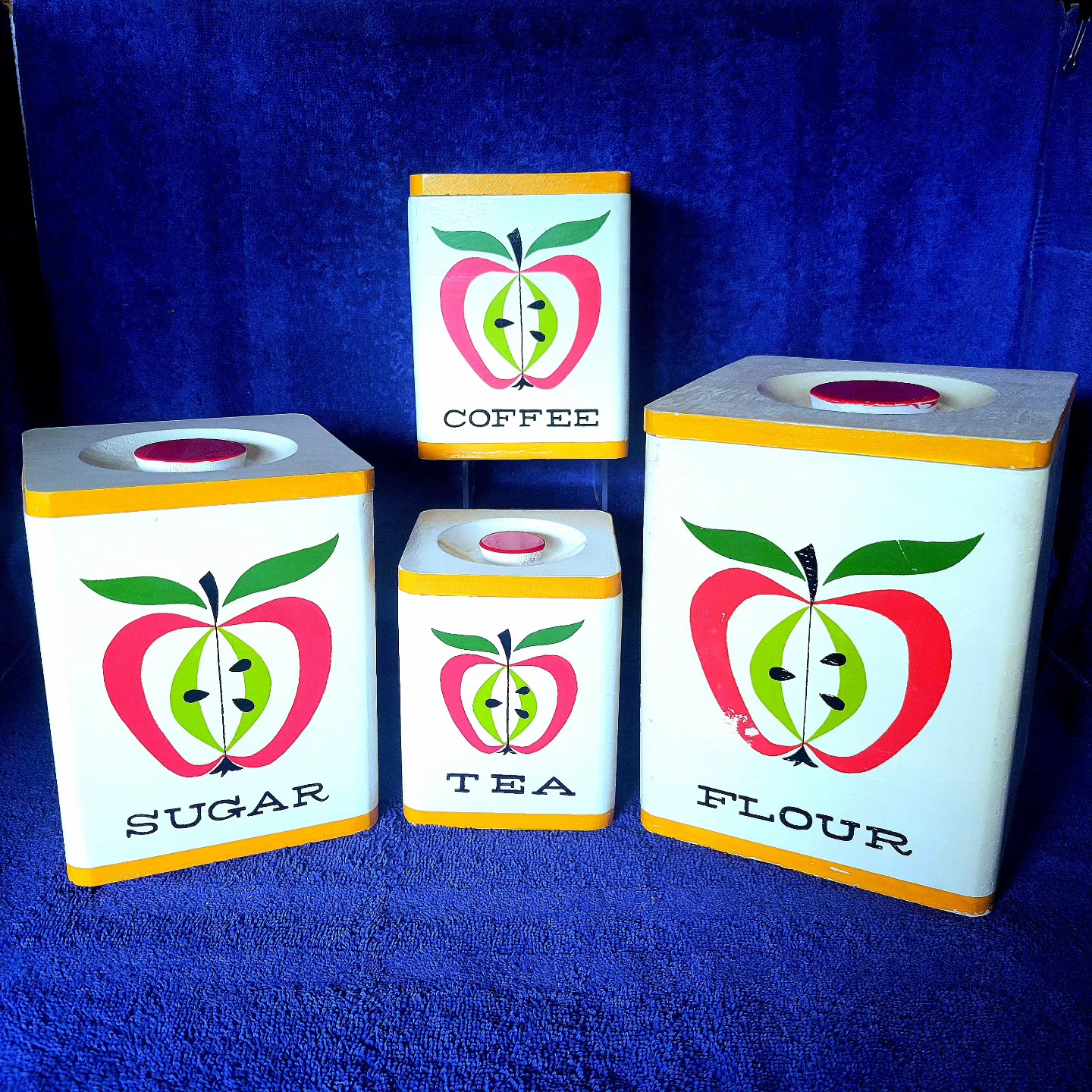
The wooden Applejack canisters extend the pattern into painted kitchen storage. Each piece uses a white body, yellow border treatment, and hand-painted apple motif, with labels for Flour, Sugar, Coffee, and Tea.
Beverage & Pitcher Service
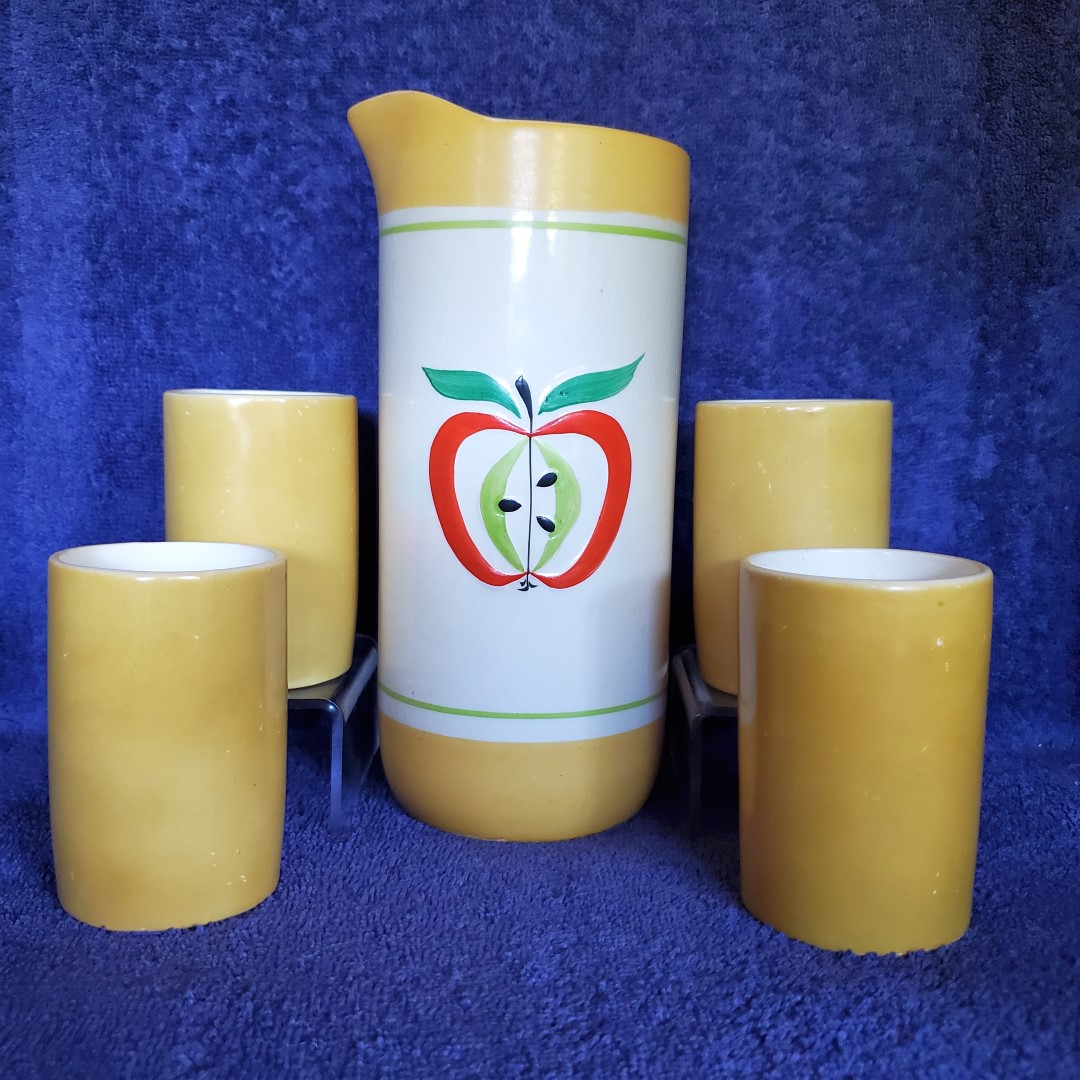
Juice Carafe & Glasses
The Applejack juice carafe and small glasses carry the pattern into breakfast and casual beverage service. The carafe repeats the apple motif on a tall narrow form, while the matching glasses echo the same decorative language at smaller scale.
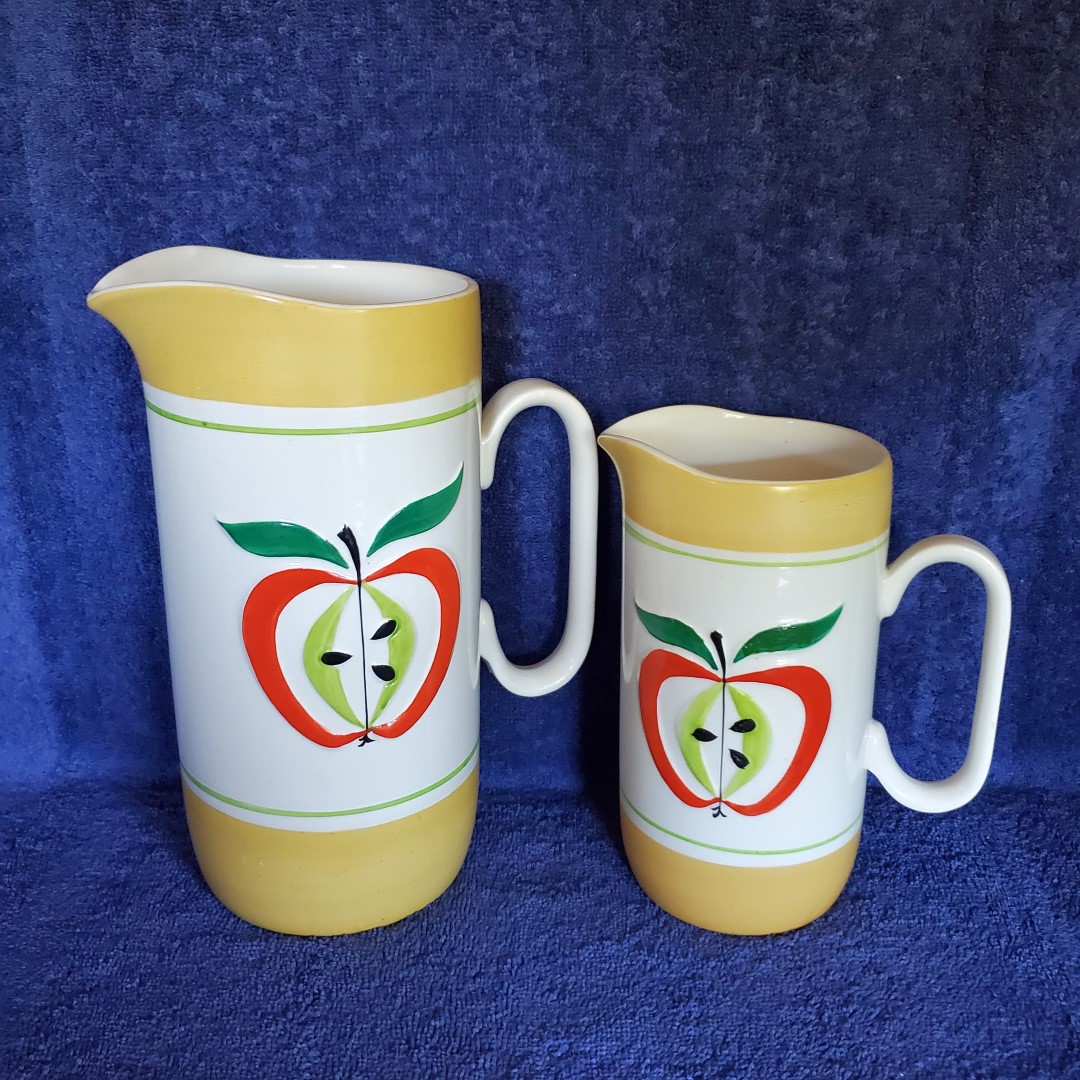
Handled Pitchers
Applejack includes two handled pitcher sizes, both using the split-apple motif and striped base treatment. Displayed together, they show how the same decoration was adapted across related serving forms.
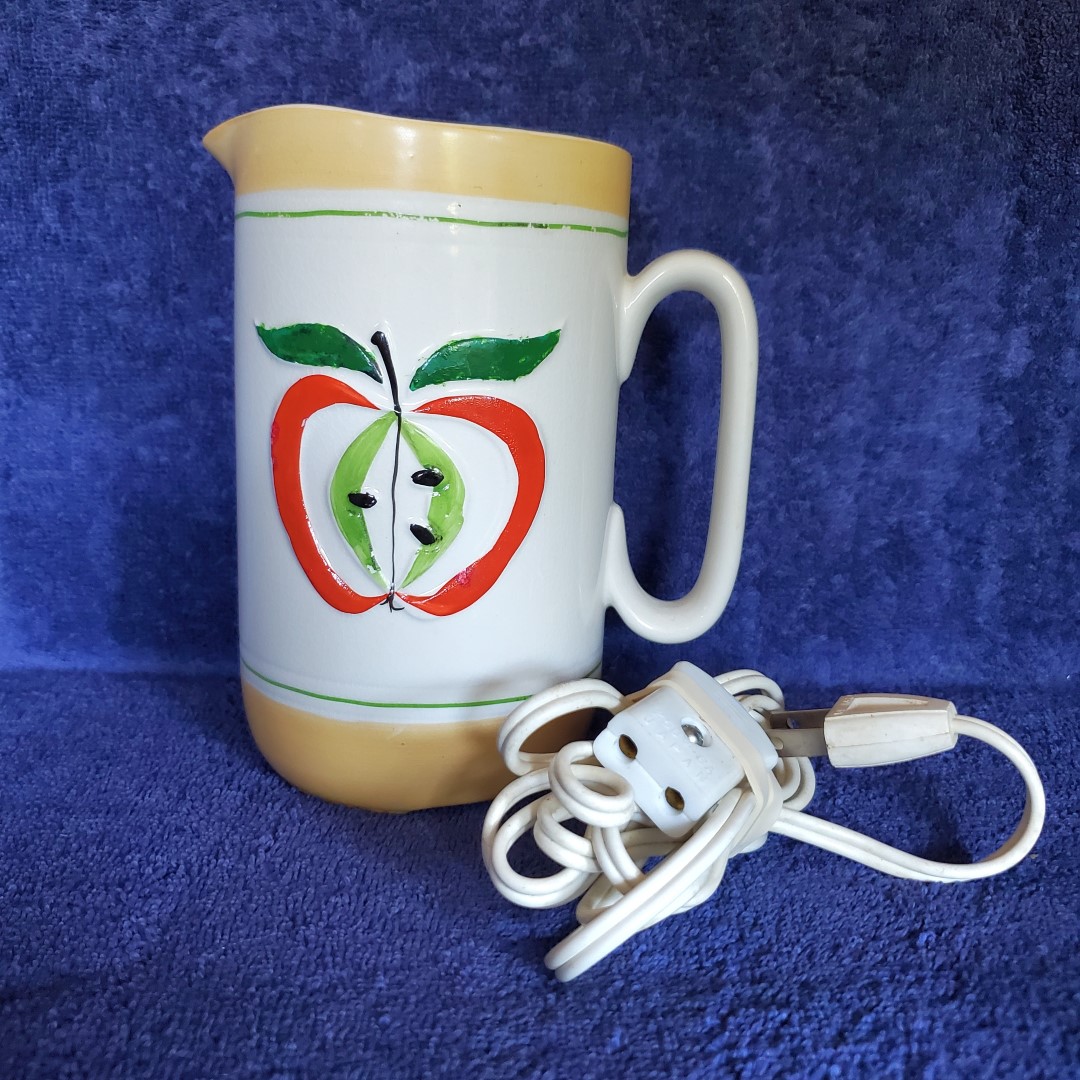
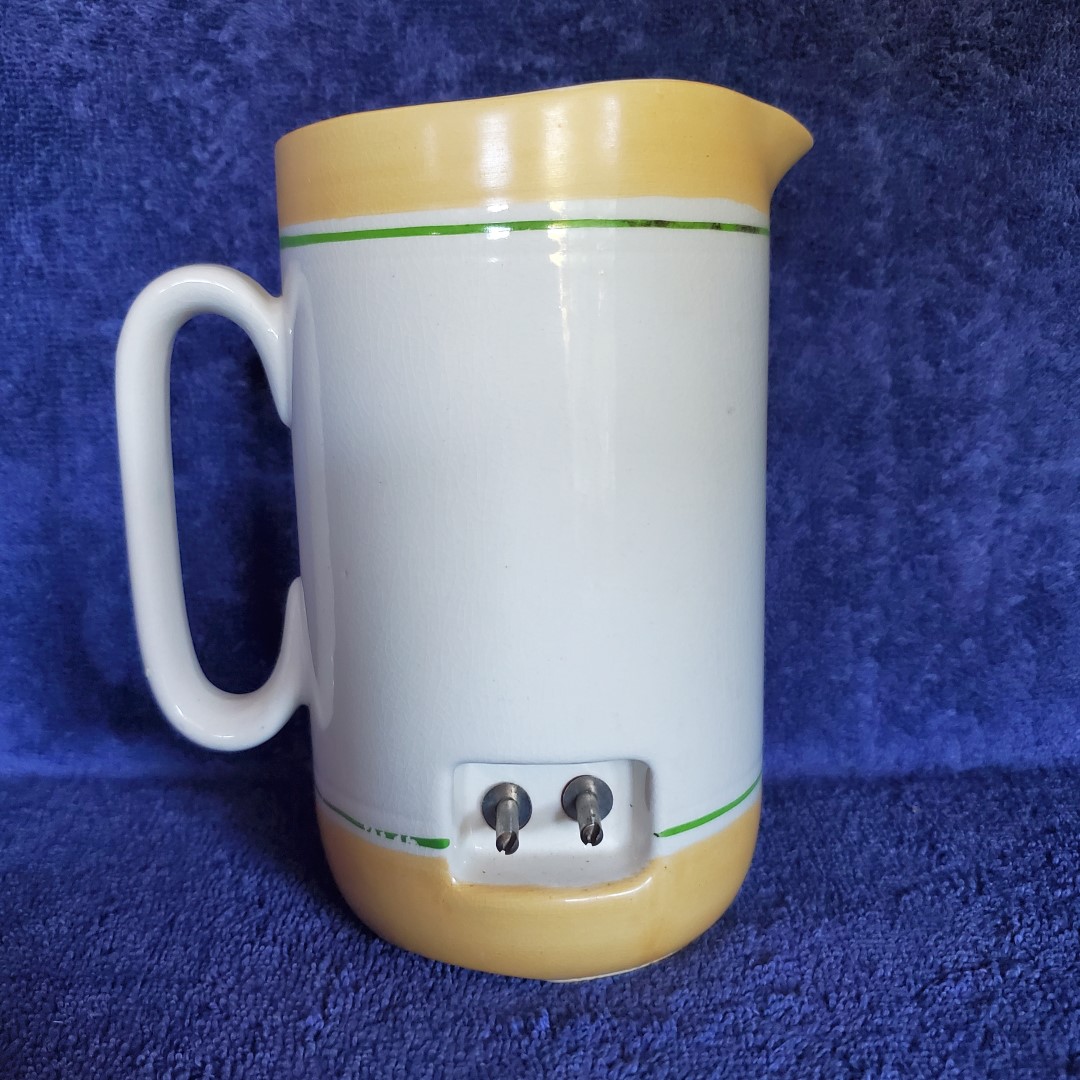
Electric Hot Pot
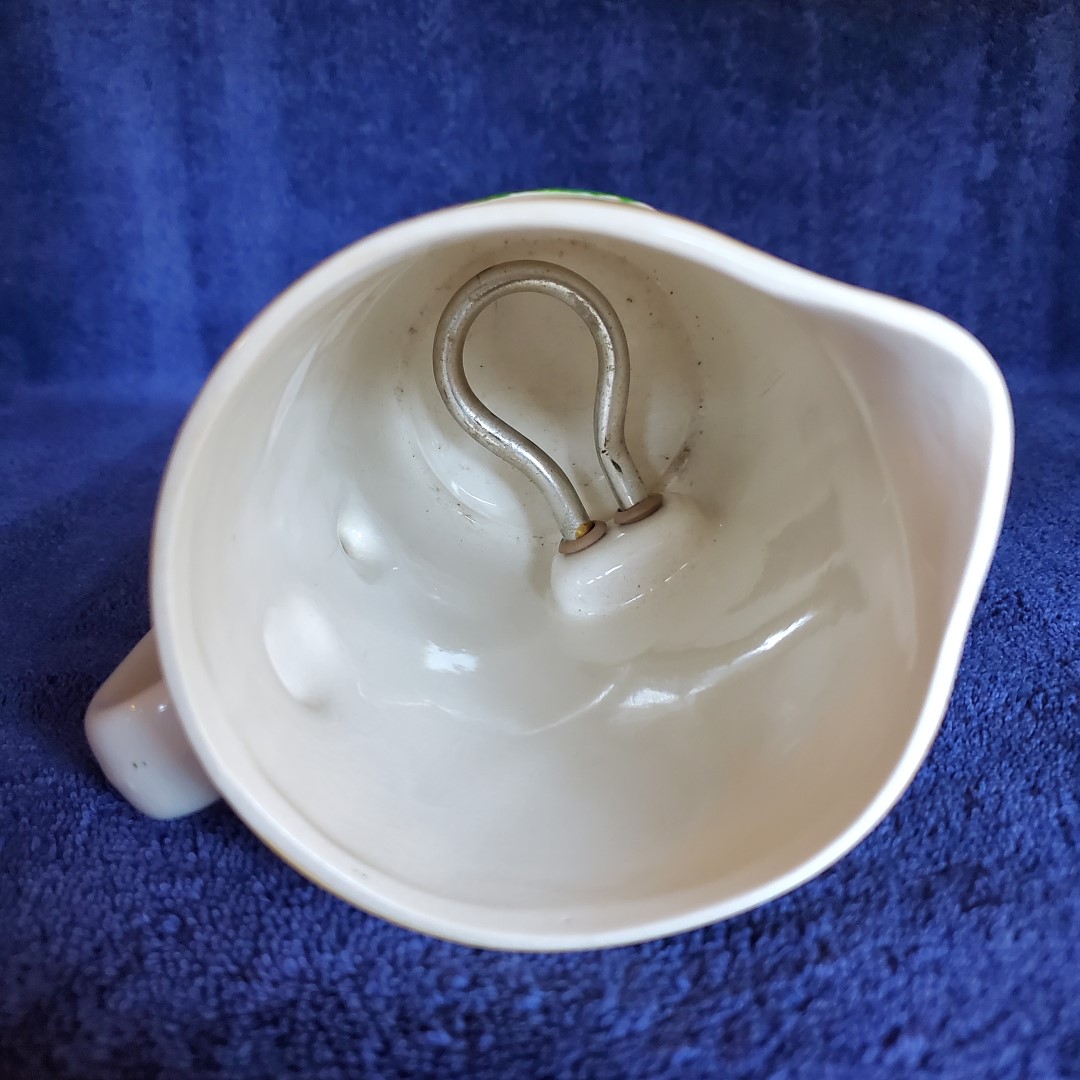
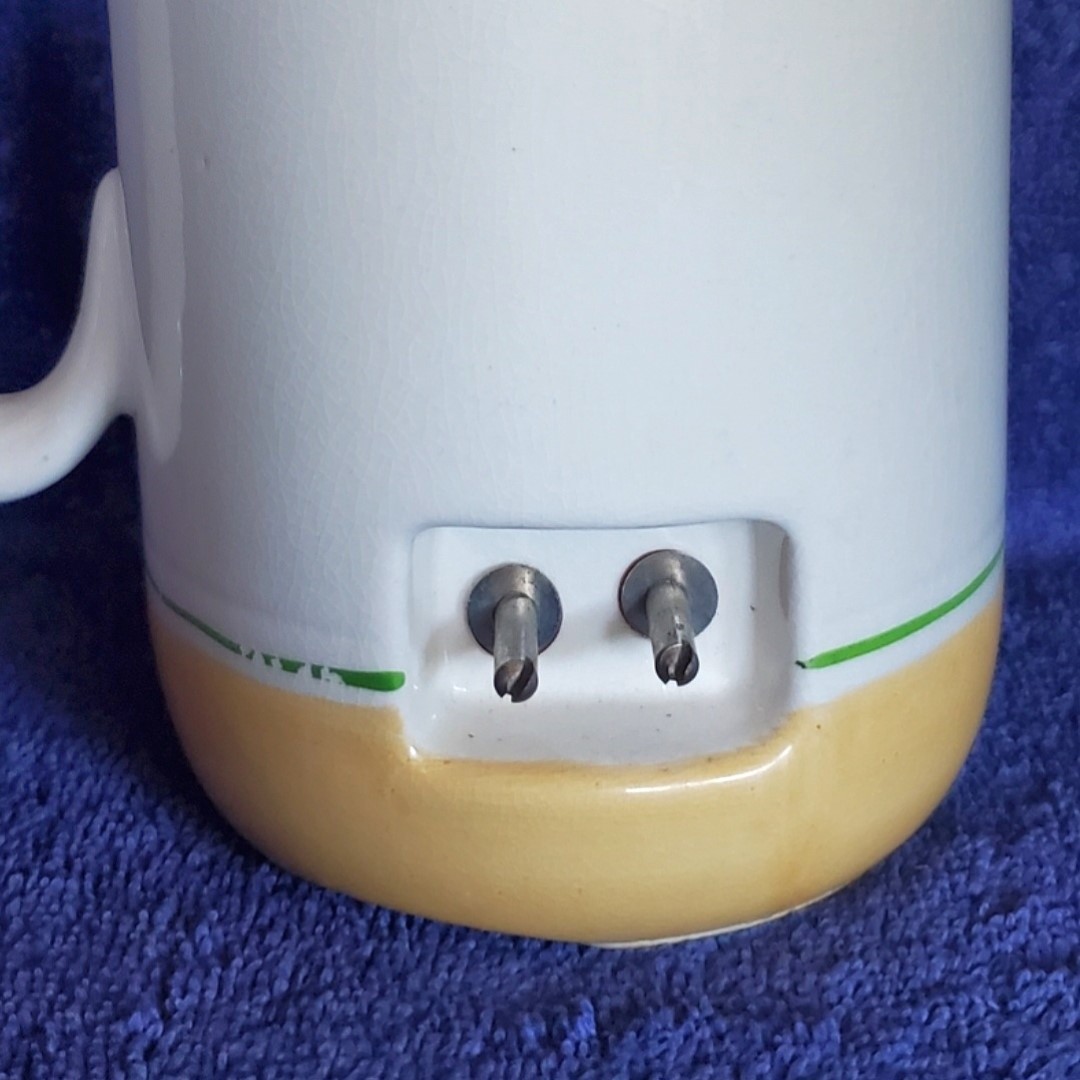
The plug-in electric hot pot is one of the most unusual Applejack pieces, combining Holt Howard's decorative ceramic styling with a functional small appliance form. Multiple views are useful because the piece is both a decorated serving vessel and an electrical object.
Coffee Mugs
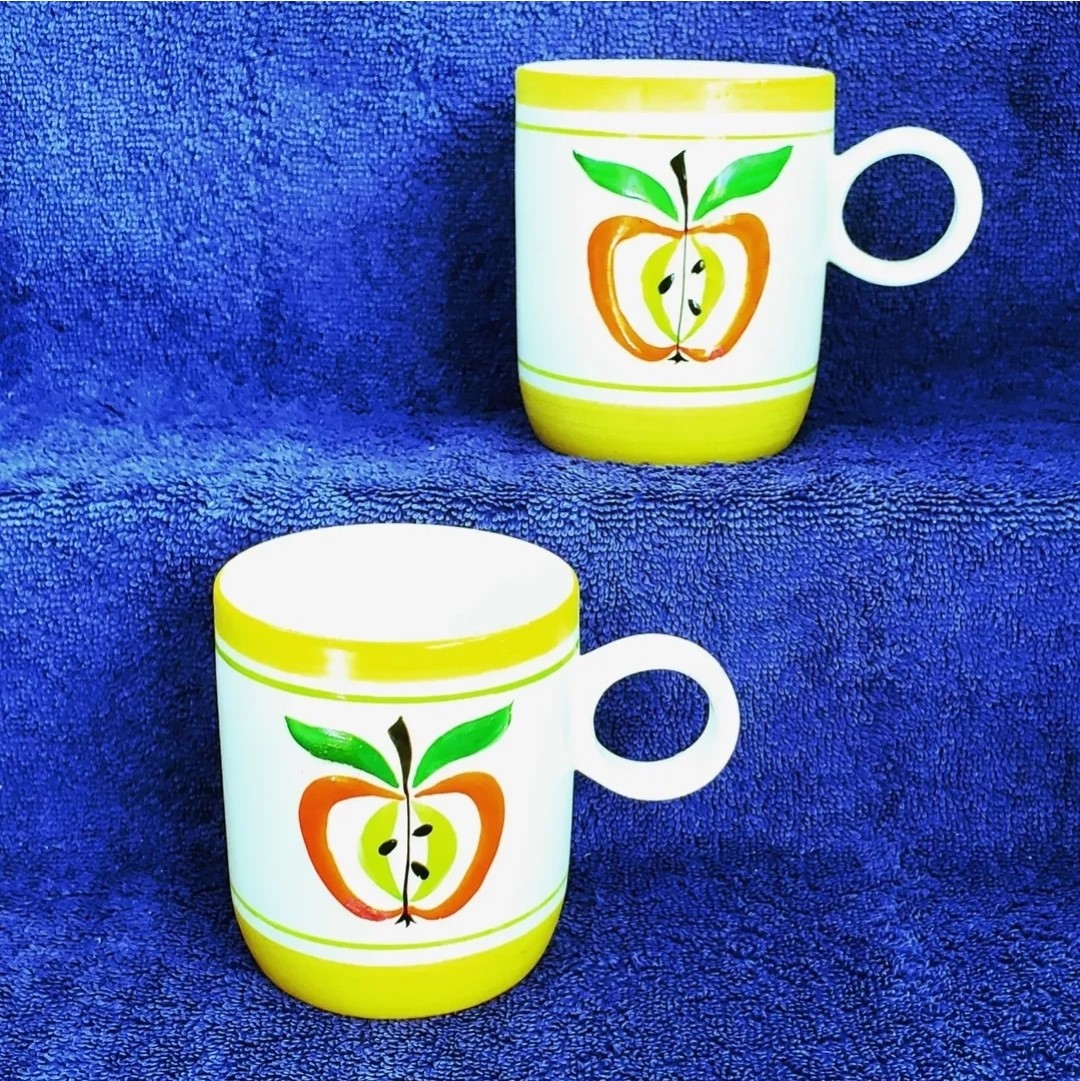
The Applejack mugs are compact ceramic drinking pieces decorated with the same red-and-green apple motif used throughout the line.
Mealtime Accessories & Tableware
Dinner Plates and Tableware
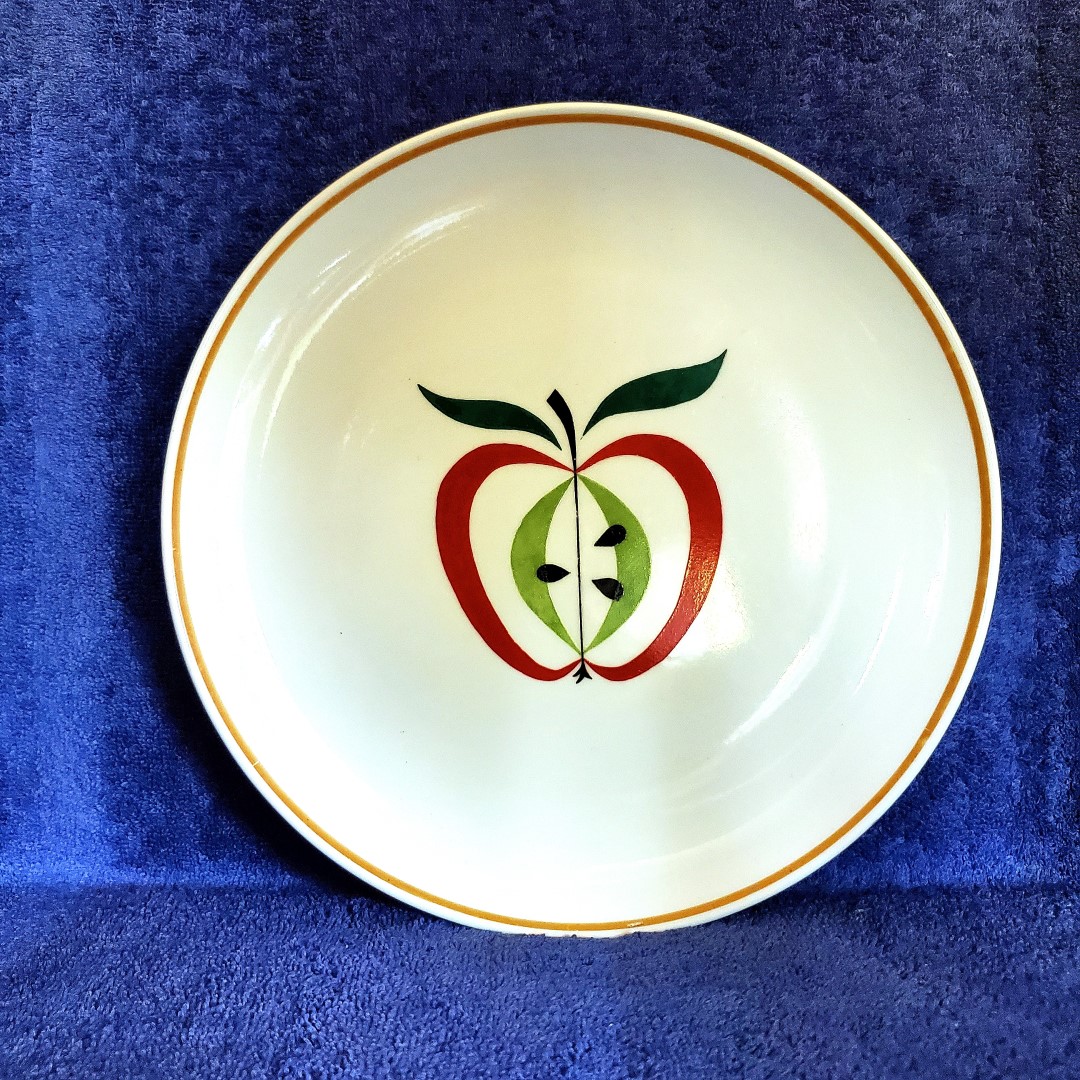
The dinner plate demonstrates how the Applejack motif was adapted to flat tableware. The Helen Gallagher Foster House 20-piece set also documents luncheon or dessert plates, cereal bowls, cups, and saucers as part of the table setting program.
Napkin Holder
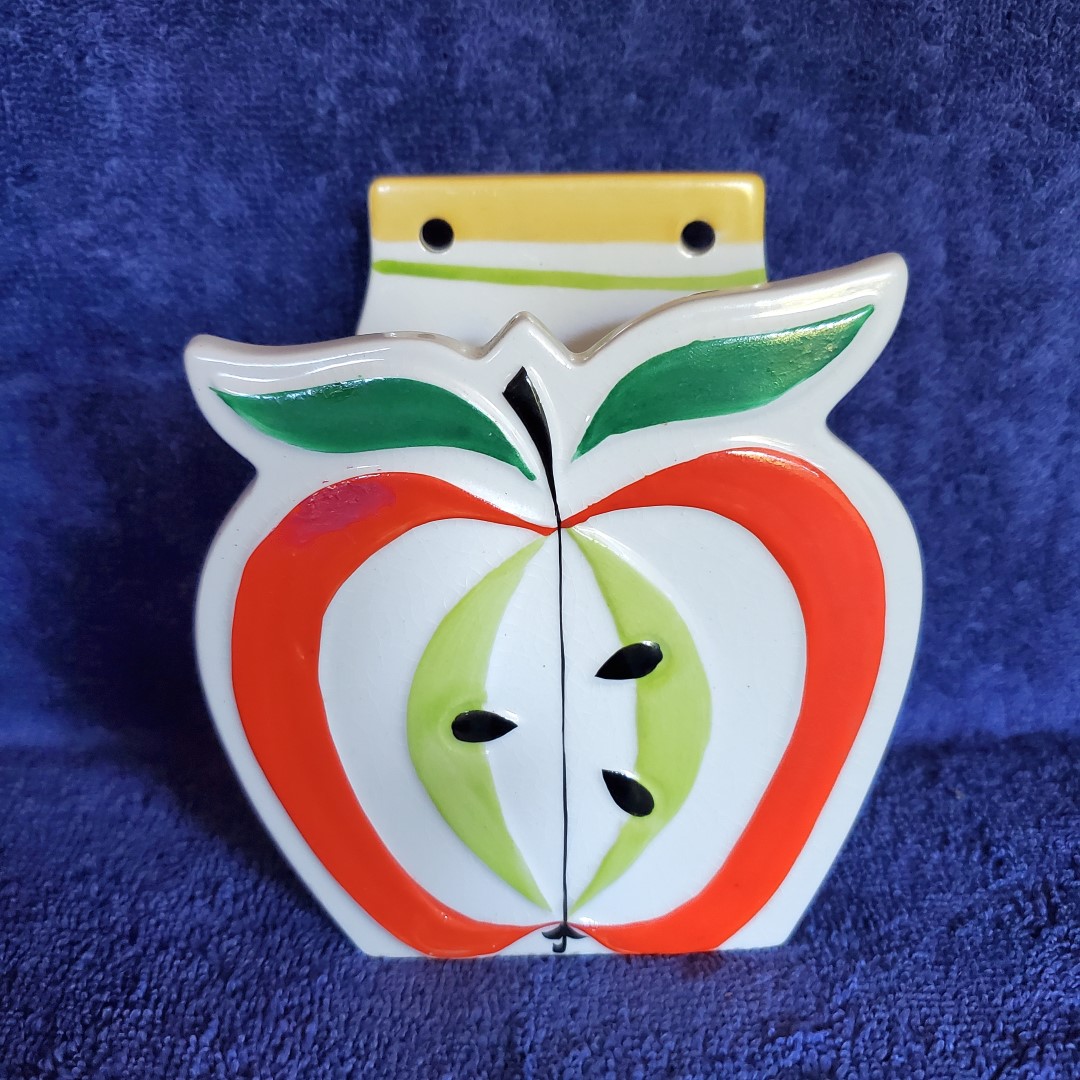
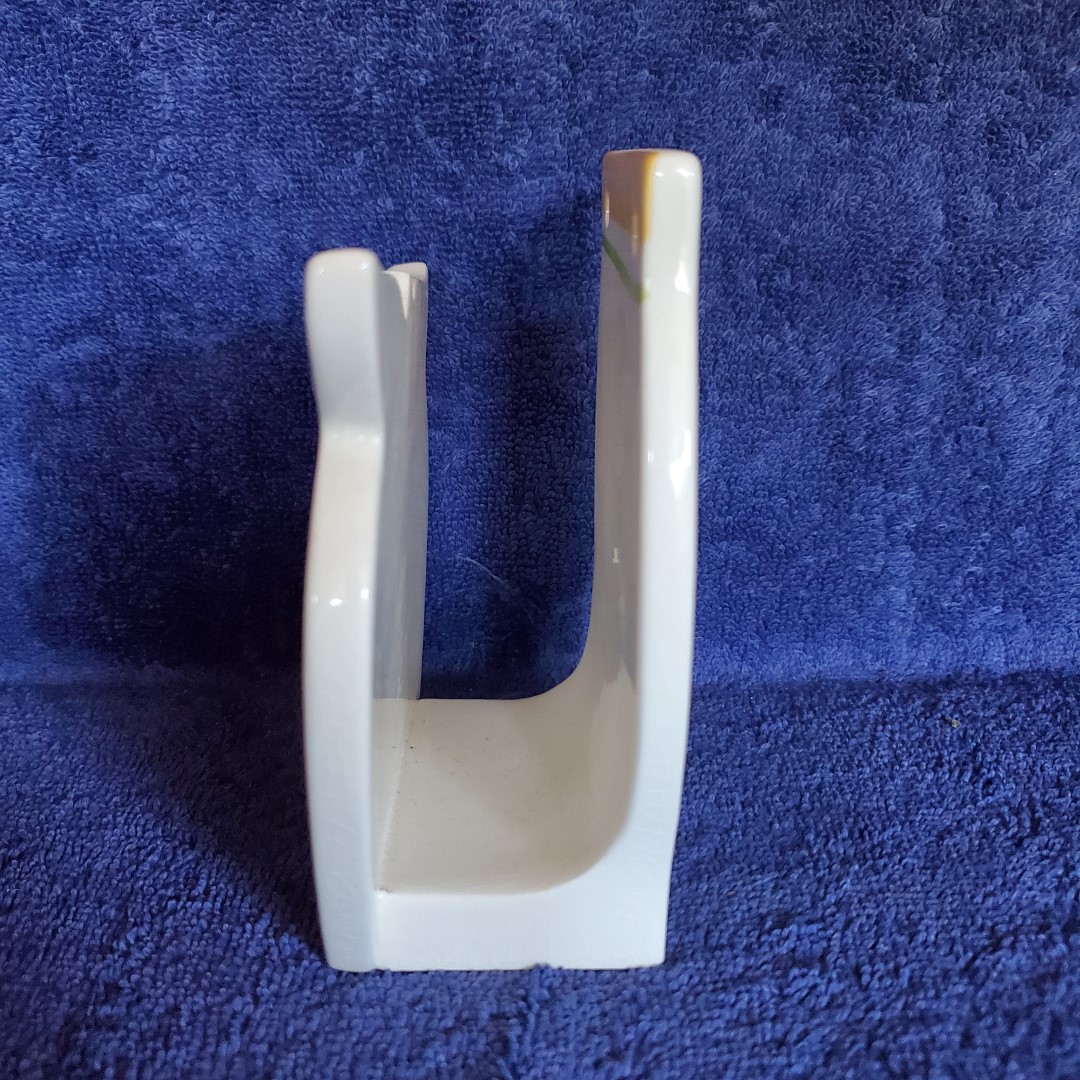
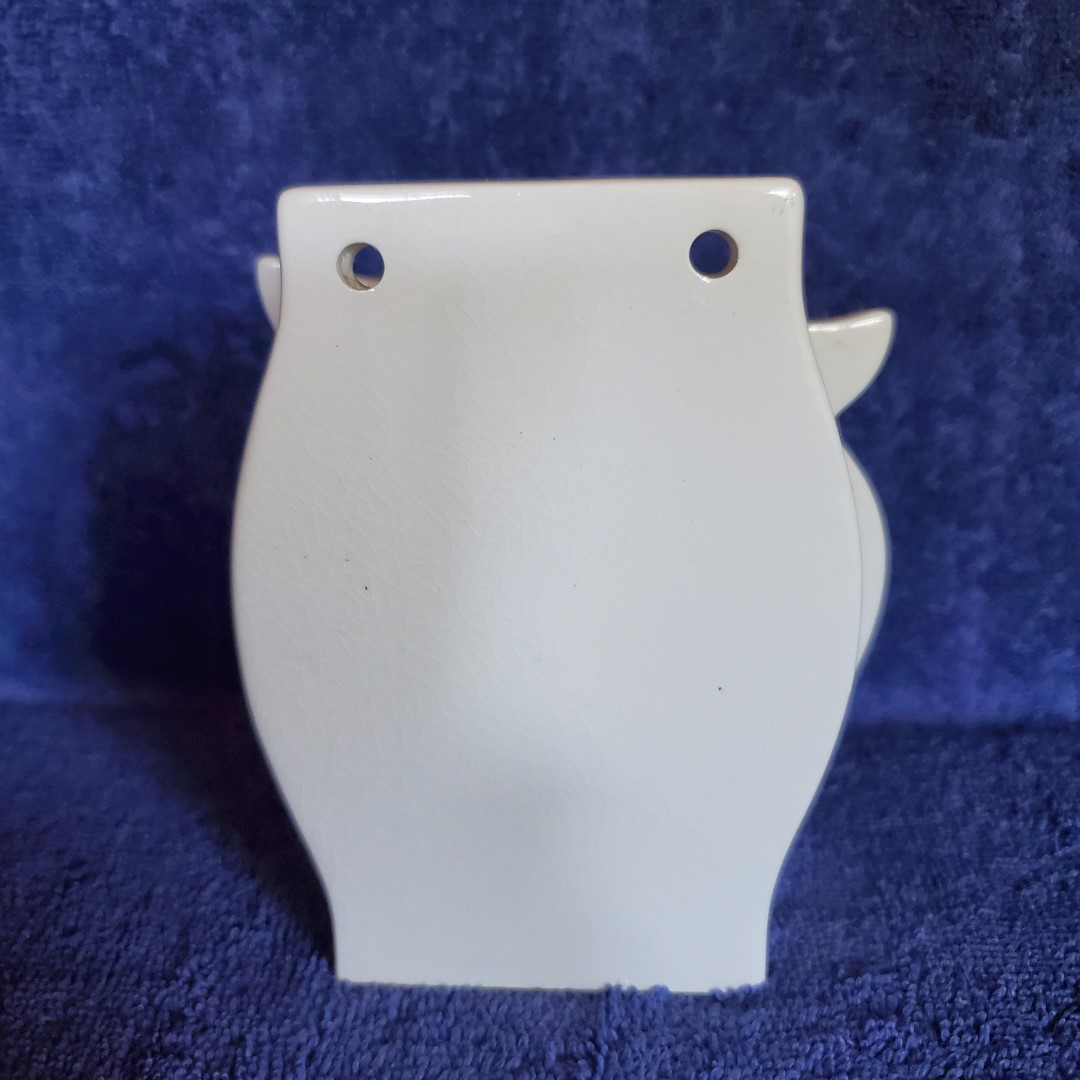
The napkin holder is one of the more dimensional Applejack accessory pieces. The side and rear views help show how the form is constructed, while the bottom view documents the marking.
Strawberry-Patterned Related Pieces
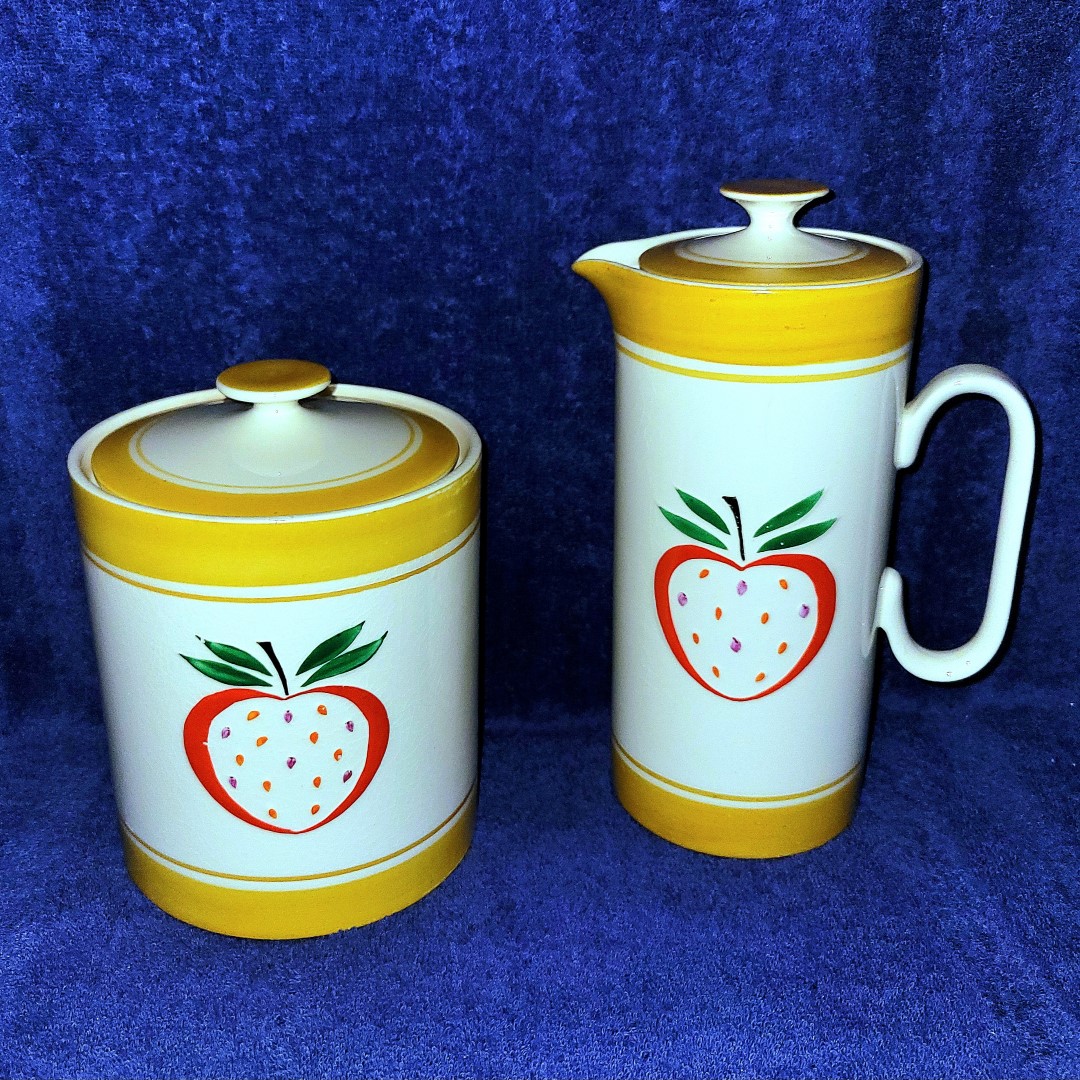
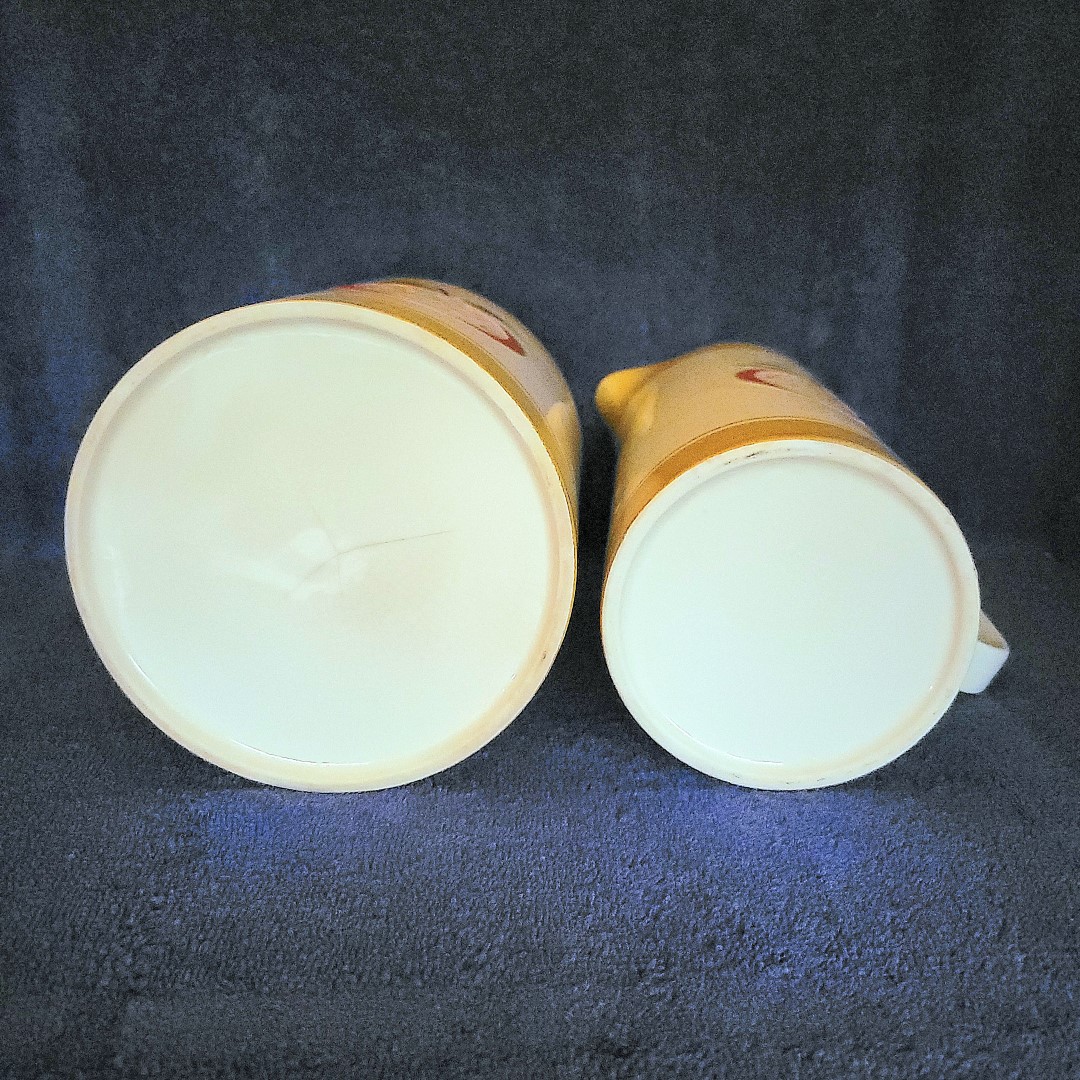
A small group of unusual strawberry-decorated ceramics appears closely related to Holt Howard's Applejack line. The presently documented examples include a covered cookie jar, a tall coffee server, and what appears to be a freestanding napkin holder. None is known to carry an Applejack name, and the cookie jar and coffee server are unmarked, yet their forms, proportions, decorative treatment, and overall design language strongly connect them to Holt Howard and to Applejack in particular.
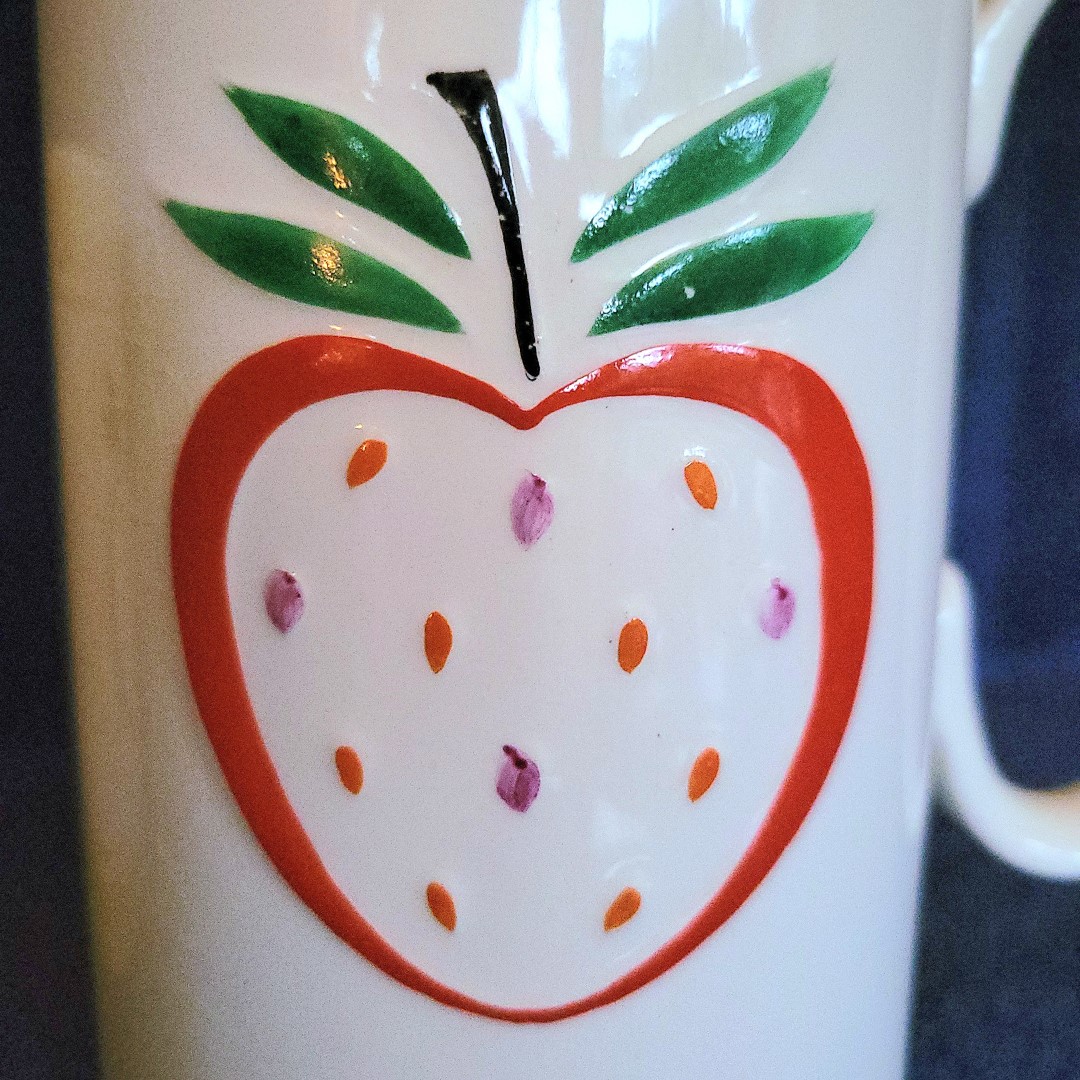
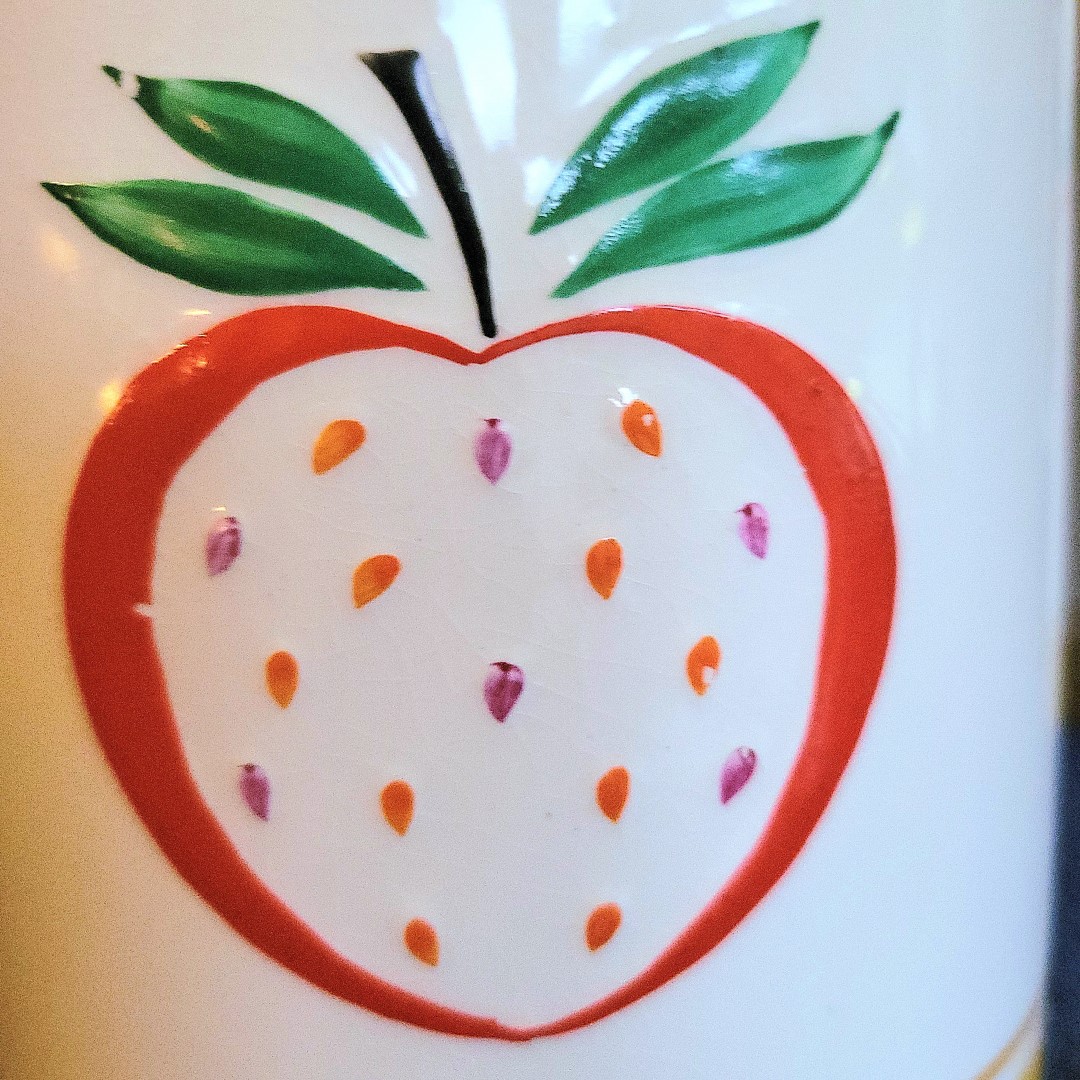
The cookie jar and coffee server use the same warm yellow banding seen throughout Applejack, but replace the familiar split-apple motif with a large stylized strawberry. On both pieces the strawberry is outlined in red, topped by a black stem and four green leaves, and filled with an intentional mixture of orange-red and purple seeds. The repetition of the same two-color seed treatment on both pieces is especially useful evidence that this was part of the original decoration rather than later repainting or restoration.
The third known form was described in a 2009 WorthPoint listing as a "wall pocket," but its upright, self-supporting form is more consistent with a napkin holder similar in concept to the documented Applejack napkin holder. Only a front view survives, so its construction cannot be confirmed, but the piece broadens the strawberry motif beyond the two covered vessels and suggests that it was conceived as part of a coordinated functional group rather than as an isolated novelty.
Taken together, the surviving pieces strongly suggest that the strawberry design represents a likely precursor or developmental offshoot of Applejack. Whether it came immediately before the 1962 Applejack pattern or developed alongside it is not presently known, but the shared forms and decorative vocabulary make a close relationship difficult to dismiss.
.jpg)
Final Thoughts
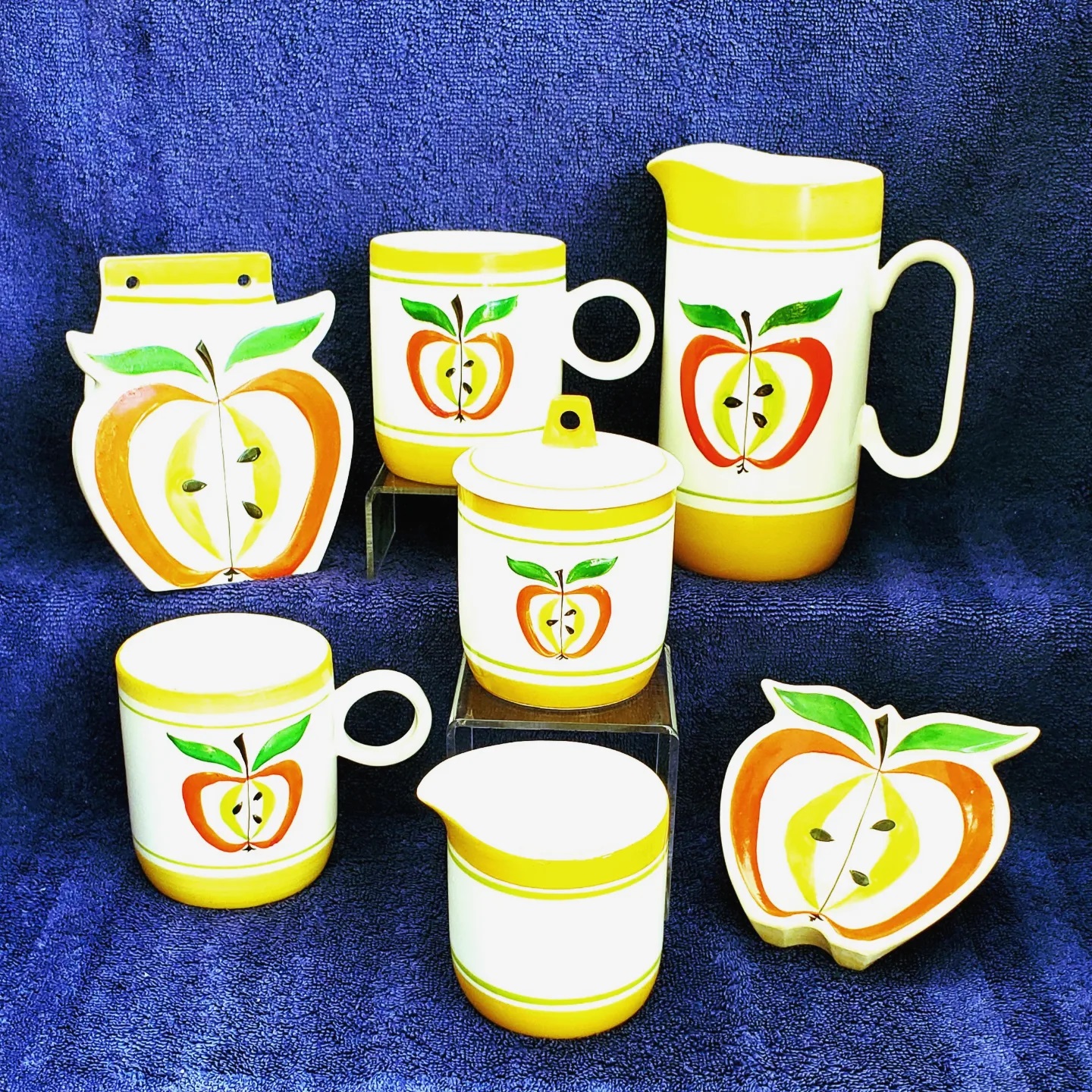
Applejack shows Holt Howard working in a more restrained and coordinated mode than many collectors associate with the company. Its wide range of ceramic, wood, tableware, and serving pieces suggests a fully developed kitchen and dining pattern rather than a small novelty group.
Period retailer documentation, surviving examples, and collector research together make it possible to reconstruct a line that has remained largely overlooked despite its breadth and strong design.