Coq Rouge Roosters
Kitchen Accessories and Specialty Pieces
Spoon Rest
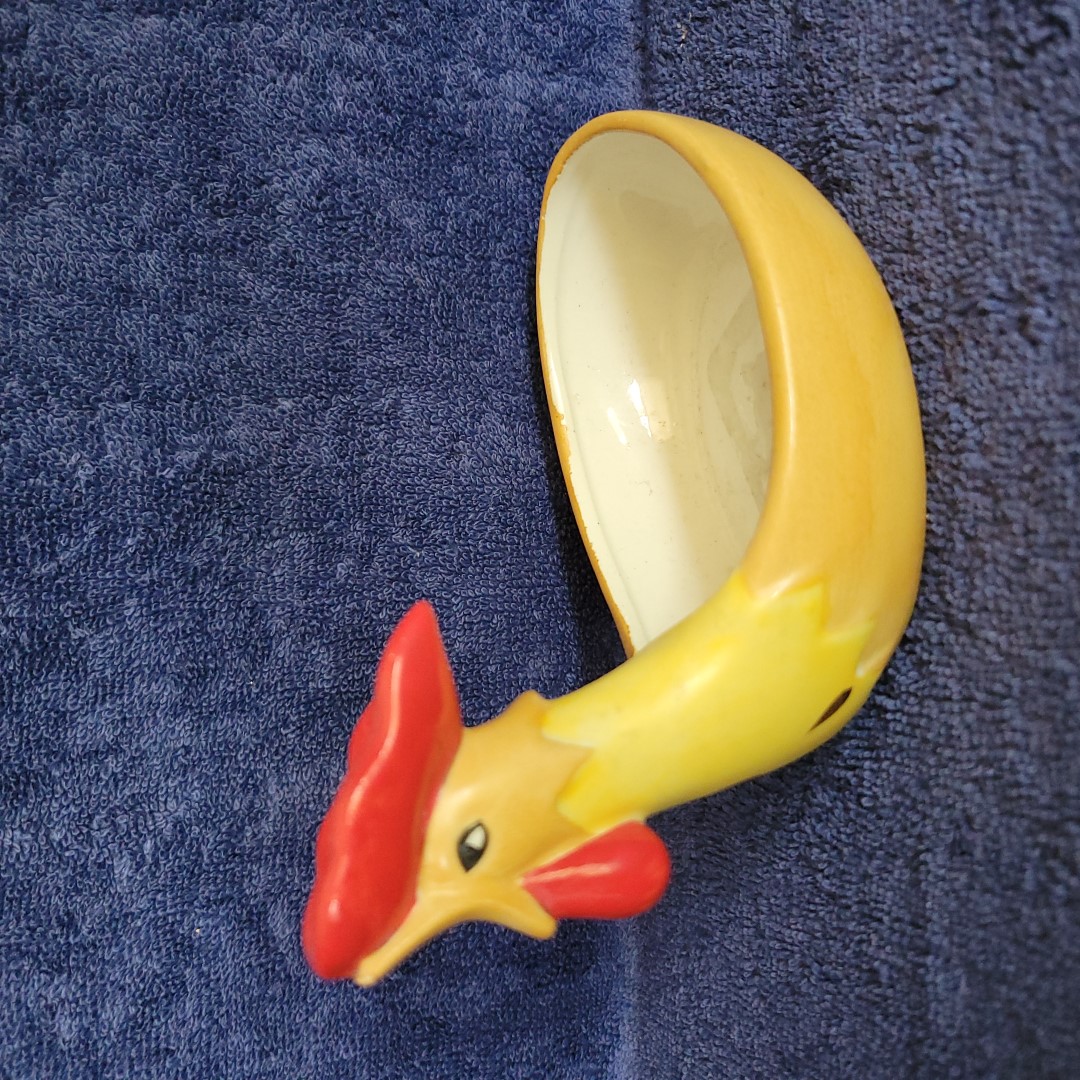
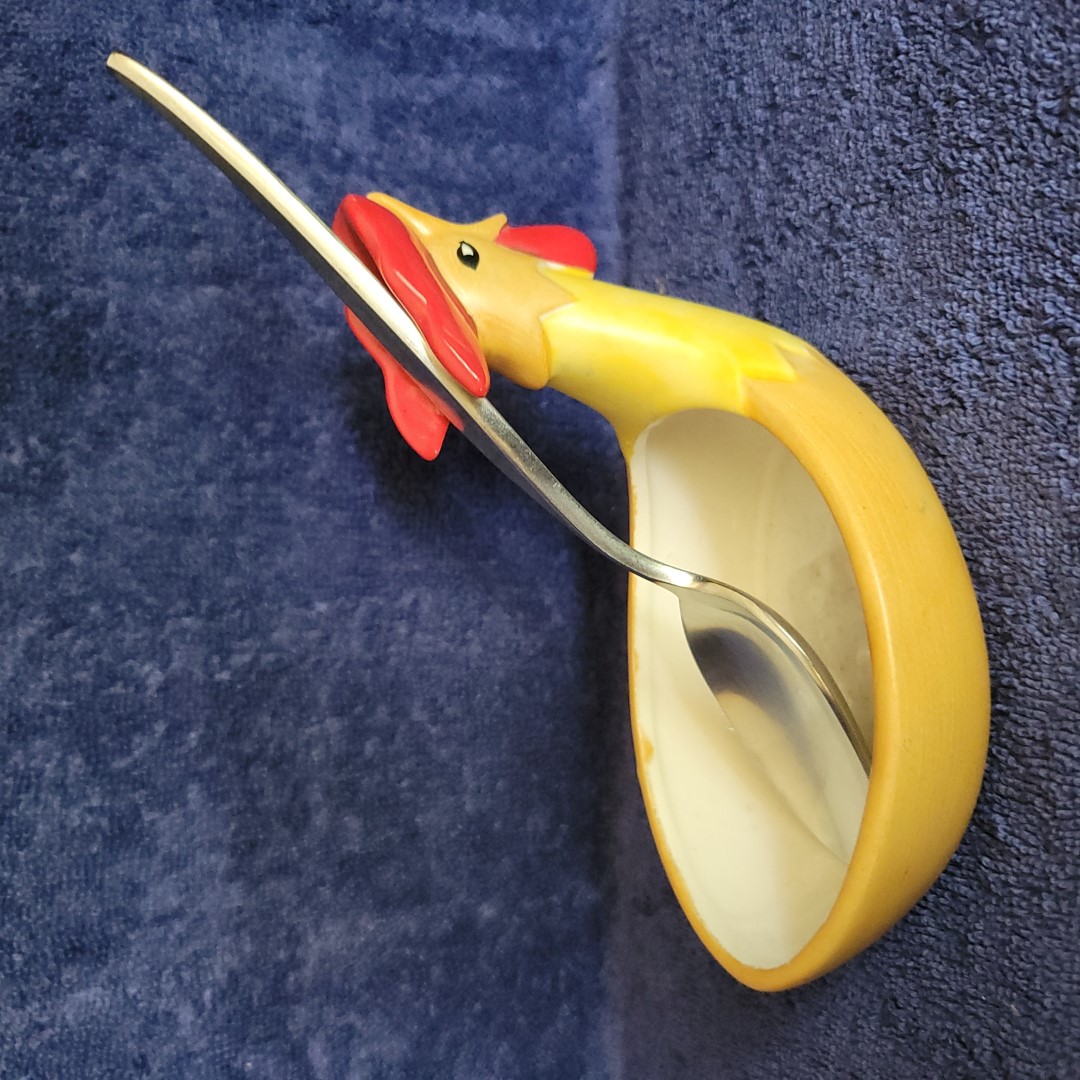
The Coq Rouge Spoon Rest is a figural rooster serving piece designed specifically to hold a cooking spoon between uses. The rooster’s body forms the shallow basin, while the top of the head is molded with a deliberate indentation that supports the spoon handle. The same functional feature appears on documented examples.
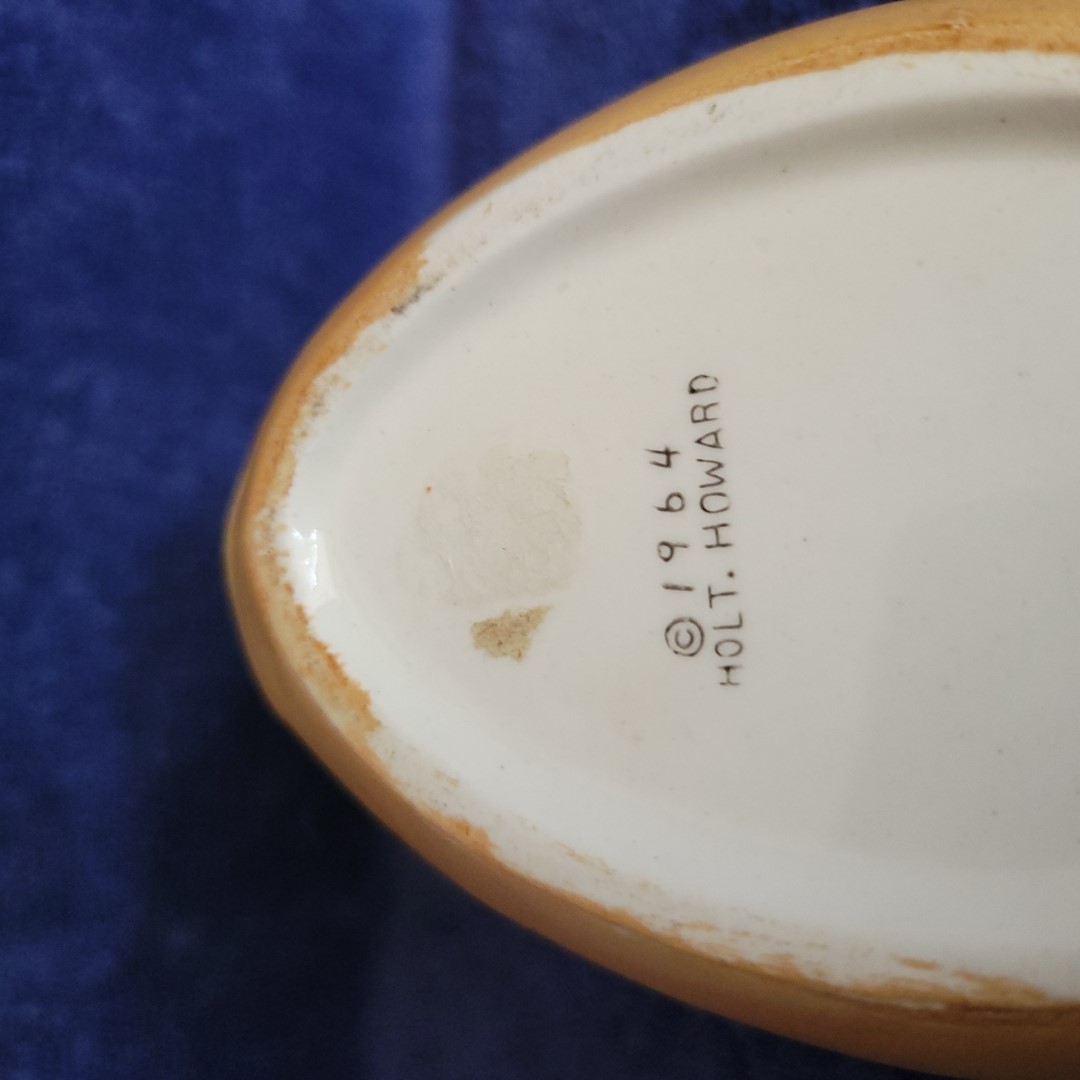
The archive example measures 5½ inches long, 3 inches wide, and 3½ inches high to the top of the rooster’s comb. It is backstamped © 1964 Holt Howard.
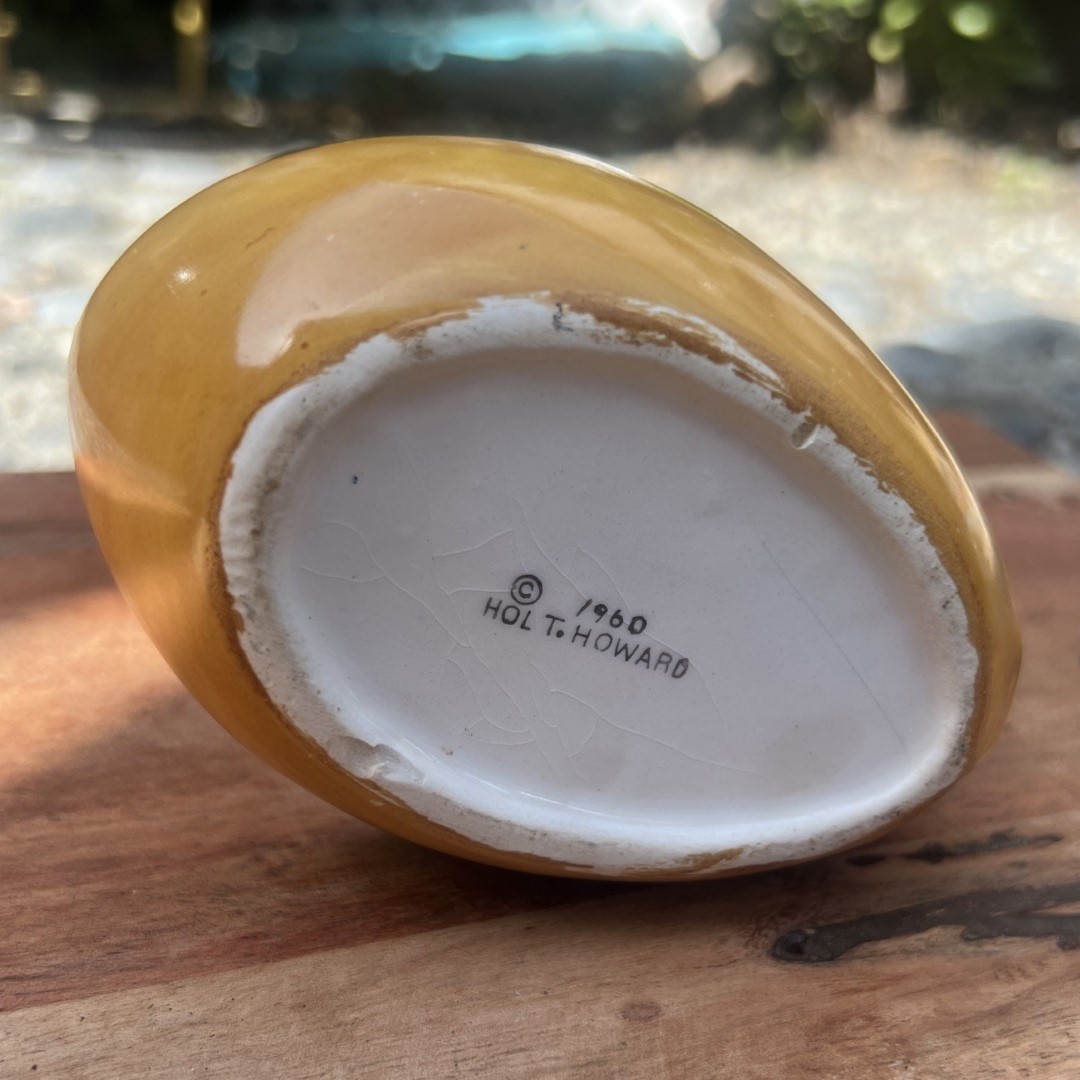
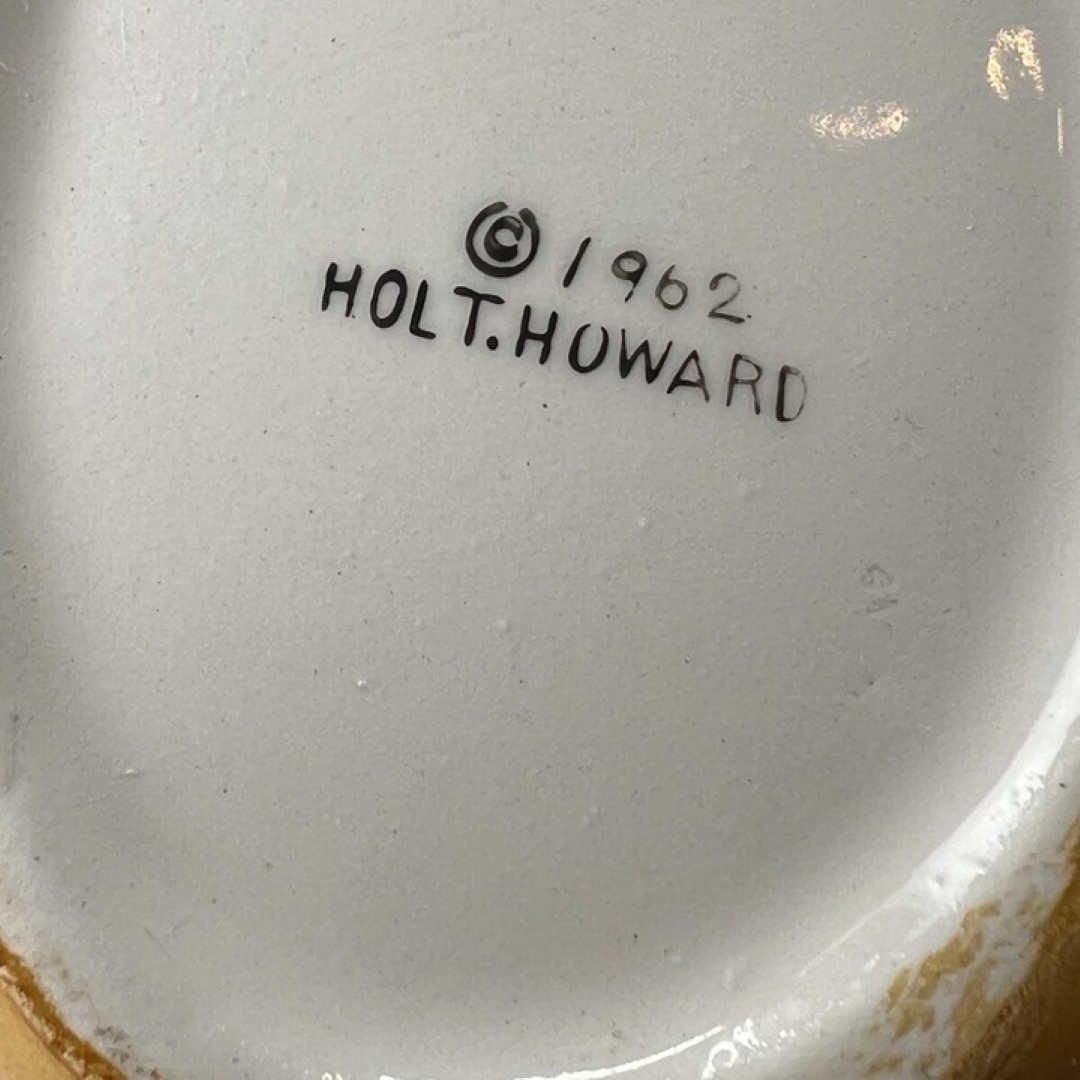
The standard collector guide lists the spoon rest as backstamped 1961, but surviving examples show that the form appeared across multiple copyright dates. A survey of current and past marketplace examples found spoon rests dated 1960, 1961, 1962, and 1964, with 1961 and 1964 examples appearing most frequently. The documented 1960 and 1962 backstamps shown here confirm that production was not limited to a single year.
Egg Cups
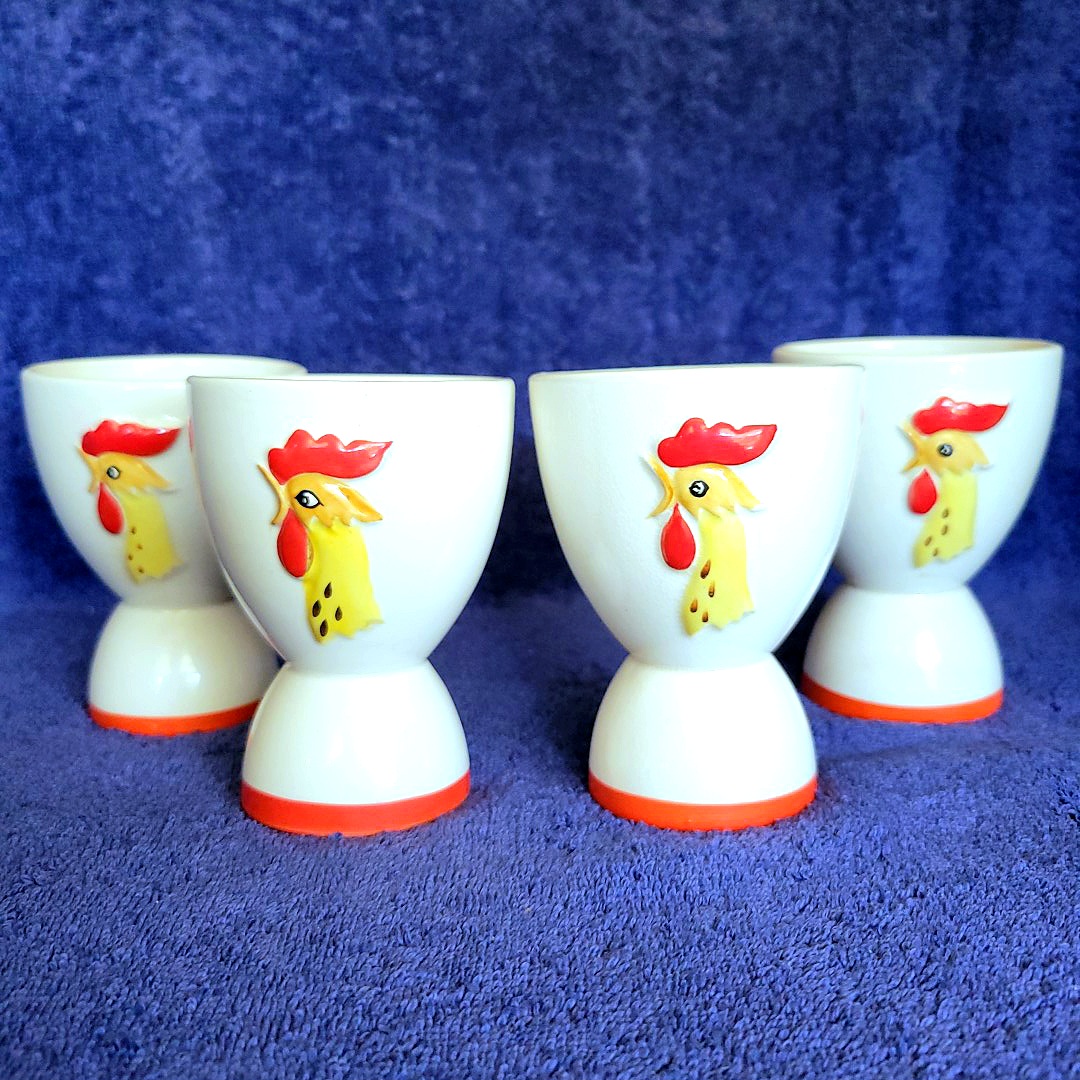
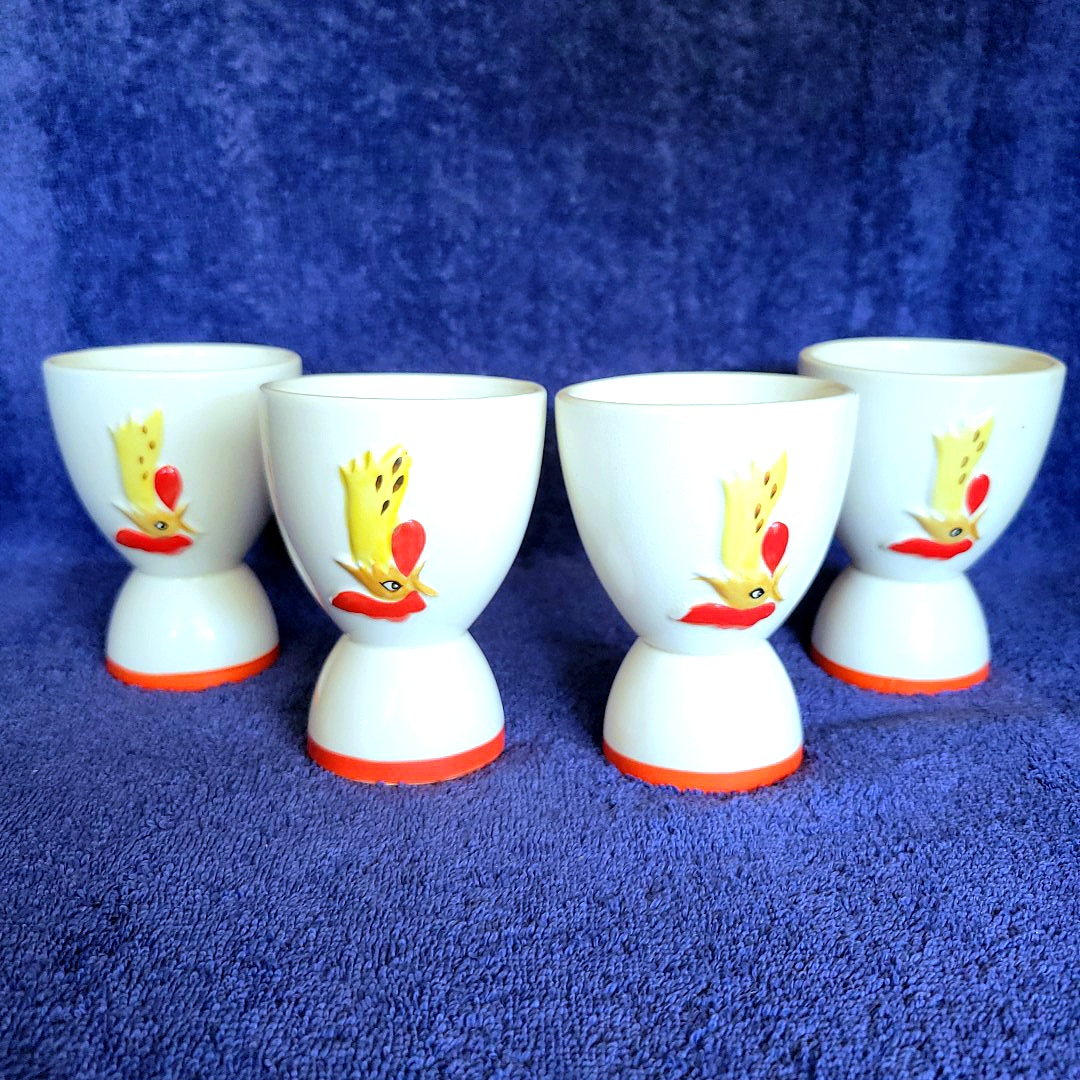
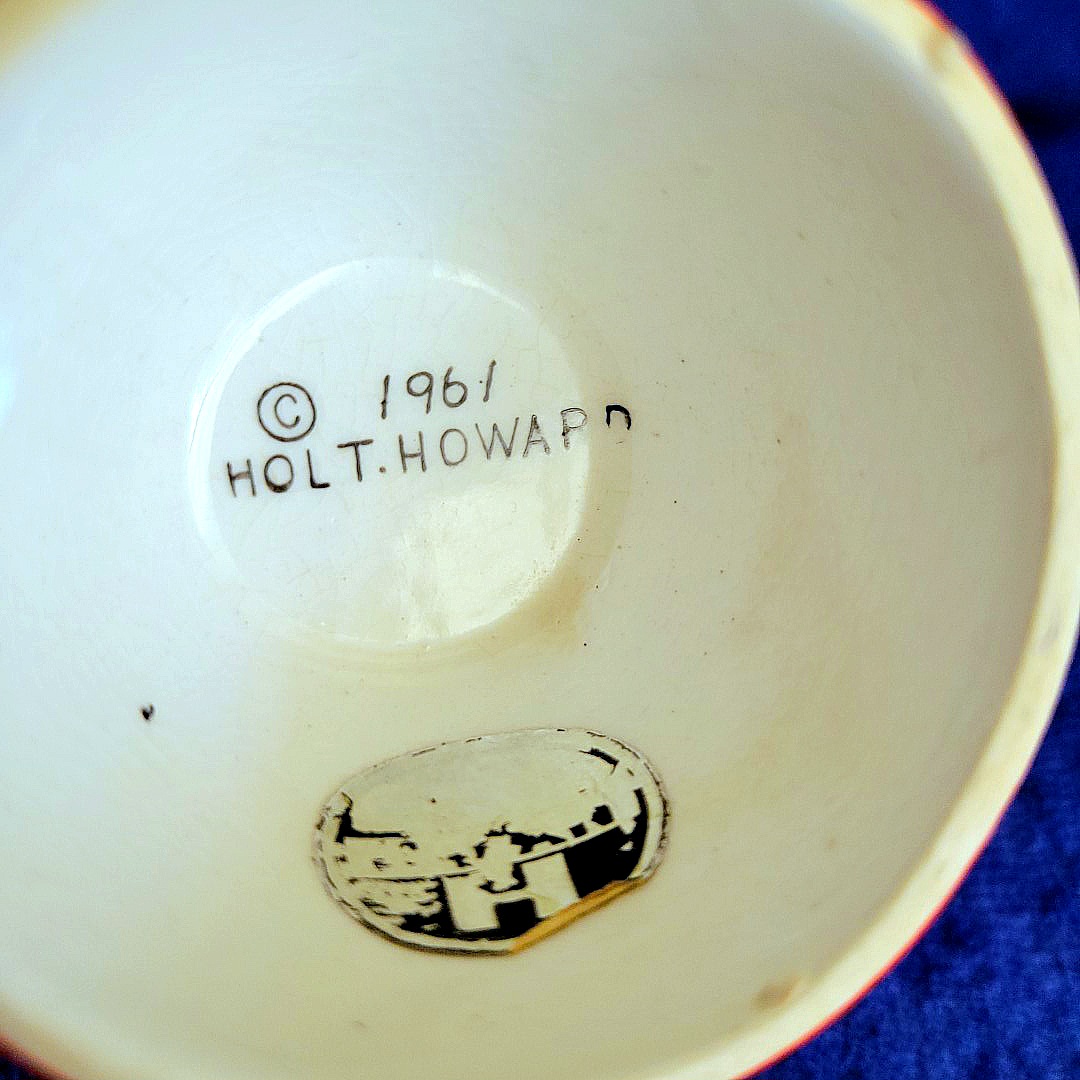
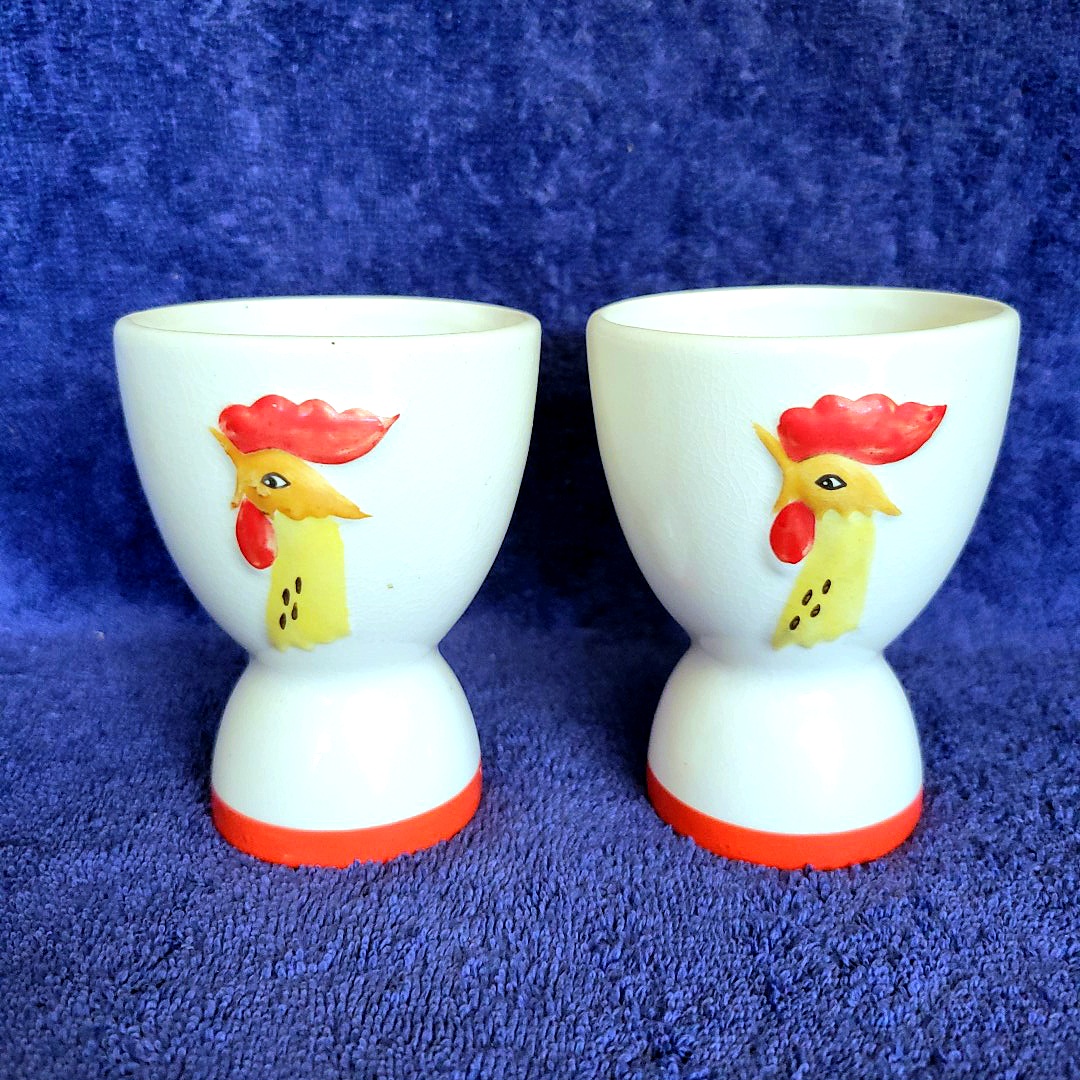
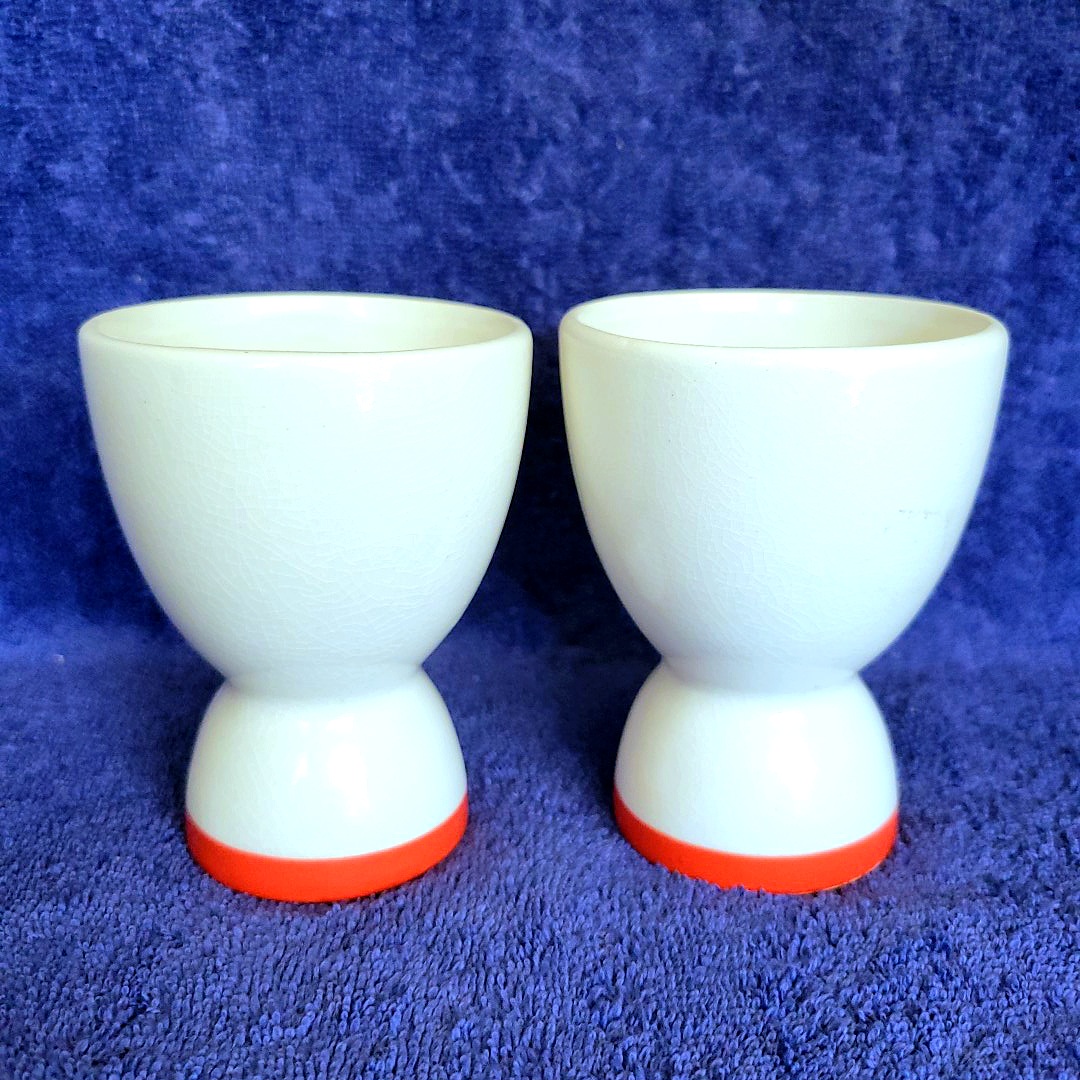
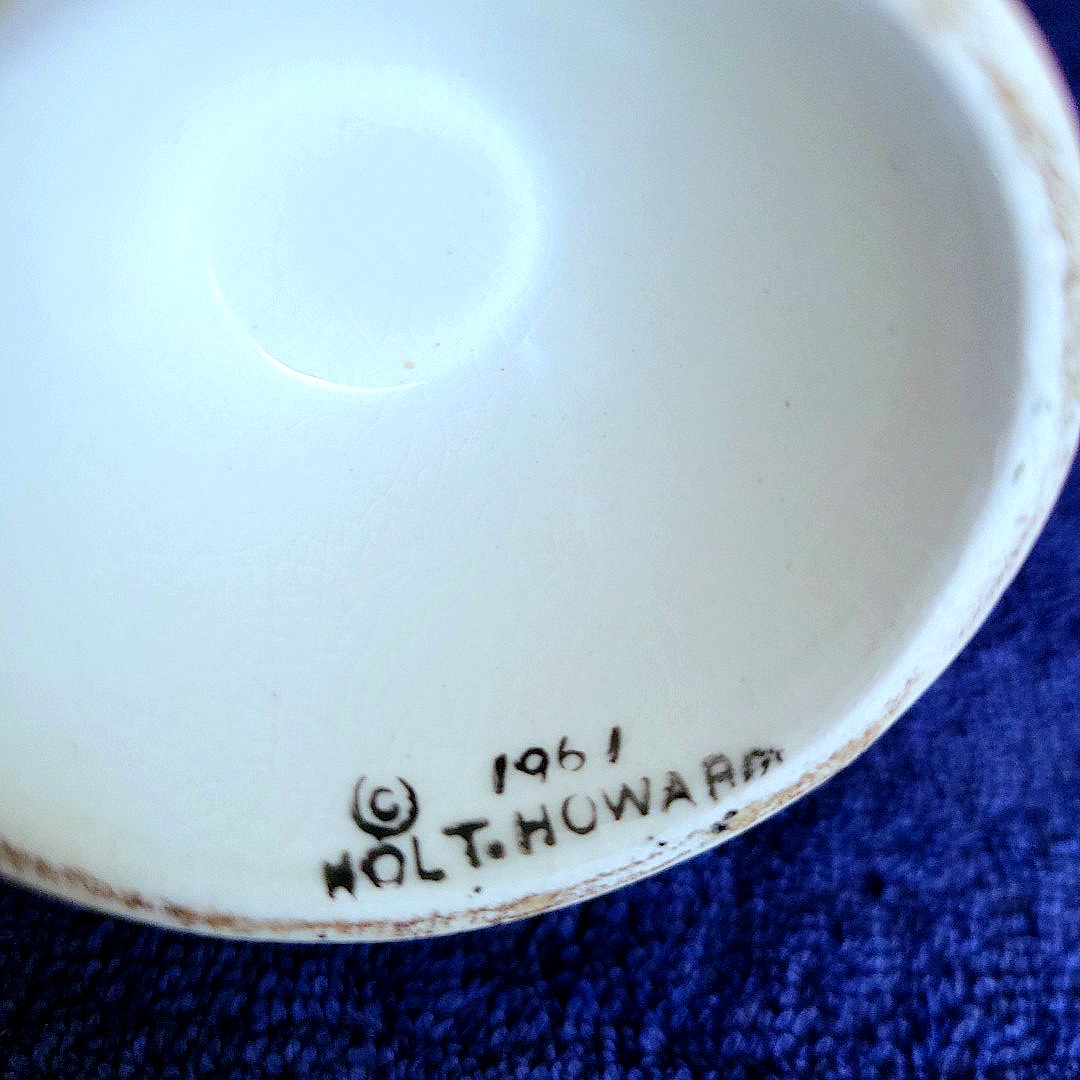
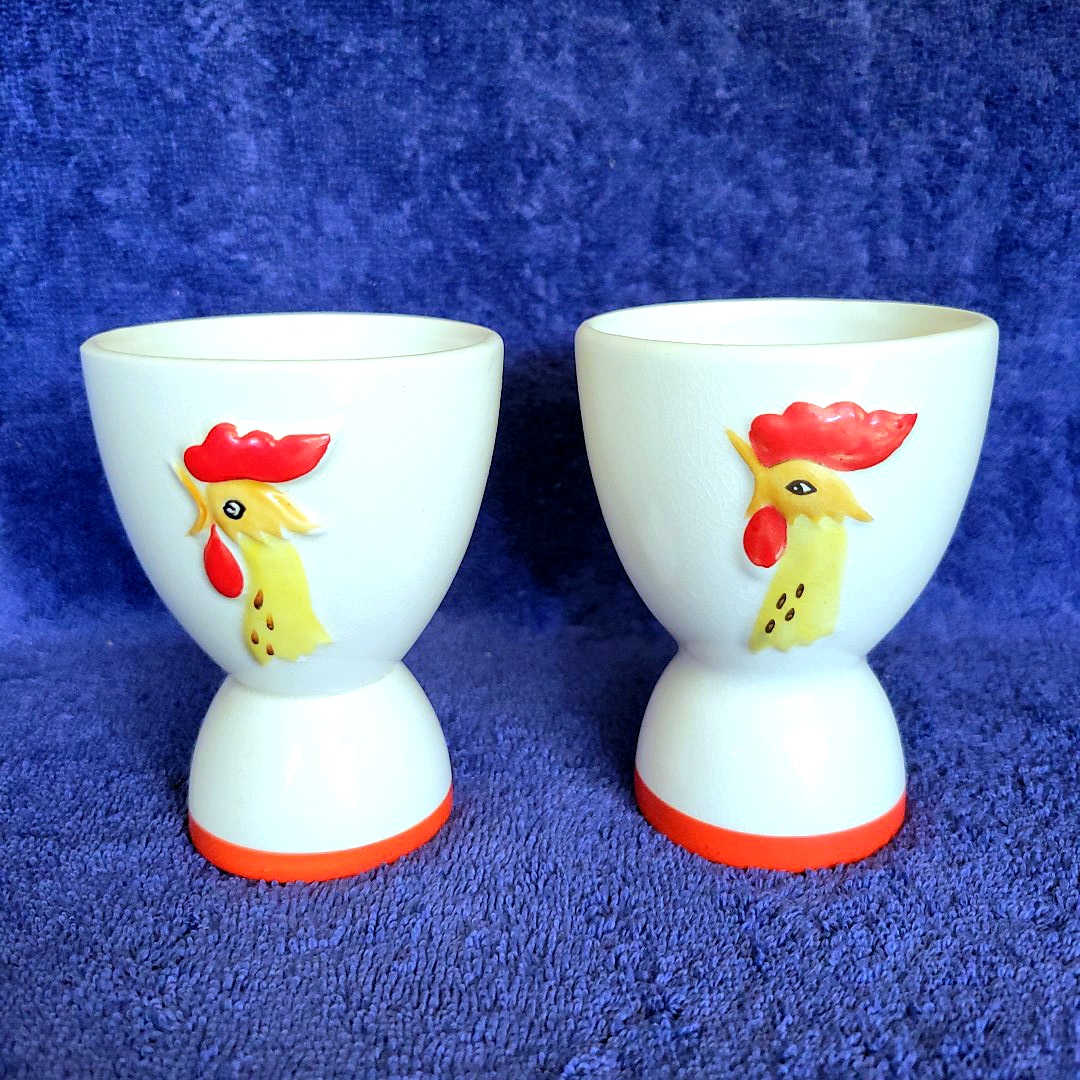
The Coq Rouge egg cup was produced in two closely related variants that are easy to mistake for the same form unless they are examined side by side. Six archive examples acquired together provide a particularly useful comparison: four are the smaller reversible version and two are the slightly larger single-sided version. All six are backstamped © 1961 Holt Howard.
The reversible variant measures approximately 3¾ inches high and 2⅝ inches in diameter. It carries a rooster-head motif on both sides, but the second rooster is applied upside down relative to the first. With the larger opening upright, one rooster appears normally oriented; flip the cup to use the smaller opening and the rooster on the opposite side becomes upright instead. The decoration therefore makes the cup visually reversible as well as physically usable from either end.
The single-sided variant is subtly but measurably larger at approximately 3⅞ inches high and 2¾ inches in diameter. It carries one upright rooster head on the front and no corresponding decoration on the reverse. Its rooster crest is also slightly larger and more substantial, and the red-orange stripe around the foot is somewhat thicker than on the reversible form.
The standard collector guide illustrates Coq Rouge egg cups in opposite orientations and describes two different sizes, but does not explain the reversible decoration or identify the subtle construction differences between the two surviving forms. The archive examples clarify the relationship: these are not merely the same egg cup turned upside down. They are two slightly different physical variants, separated by roughly ⅛ inch in both height and diameter, with different decoration schemes. The published 3¾-inch height corresponds closely to the smaller reversible version.
Electric Egg Boiler
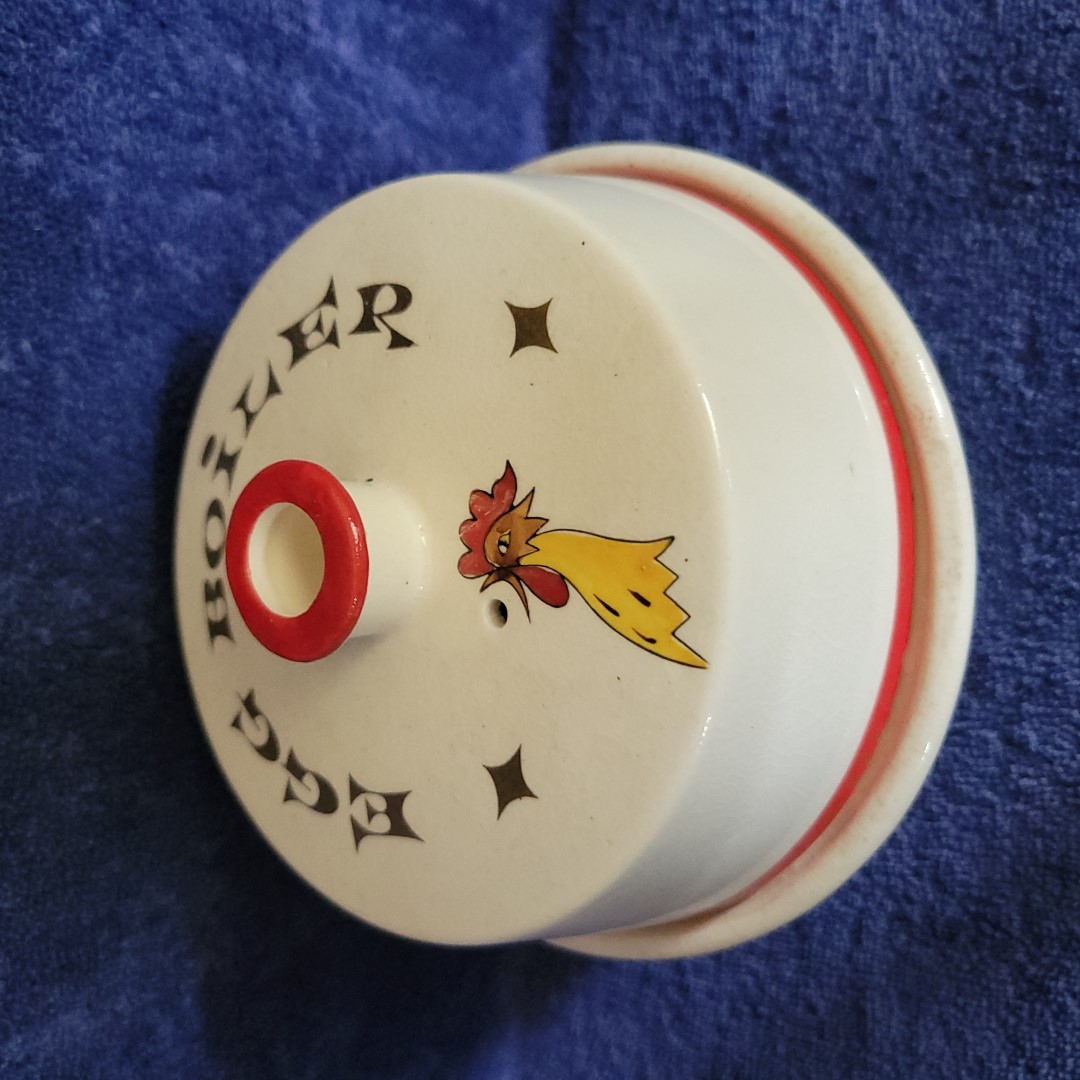
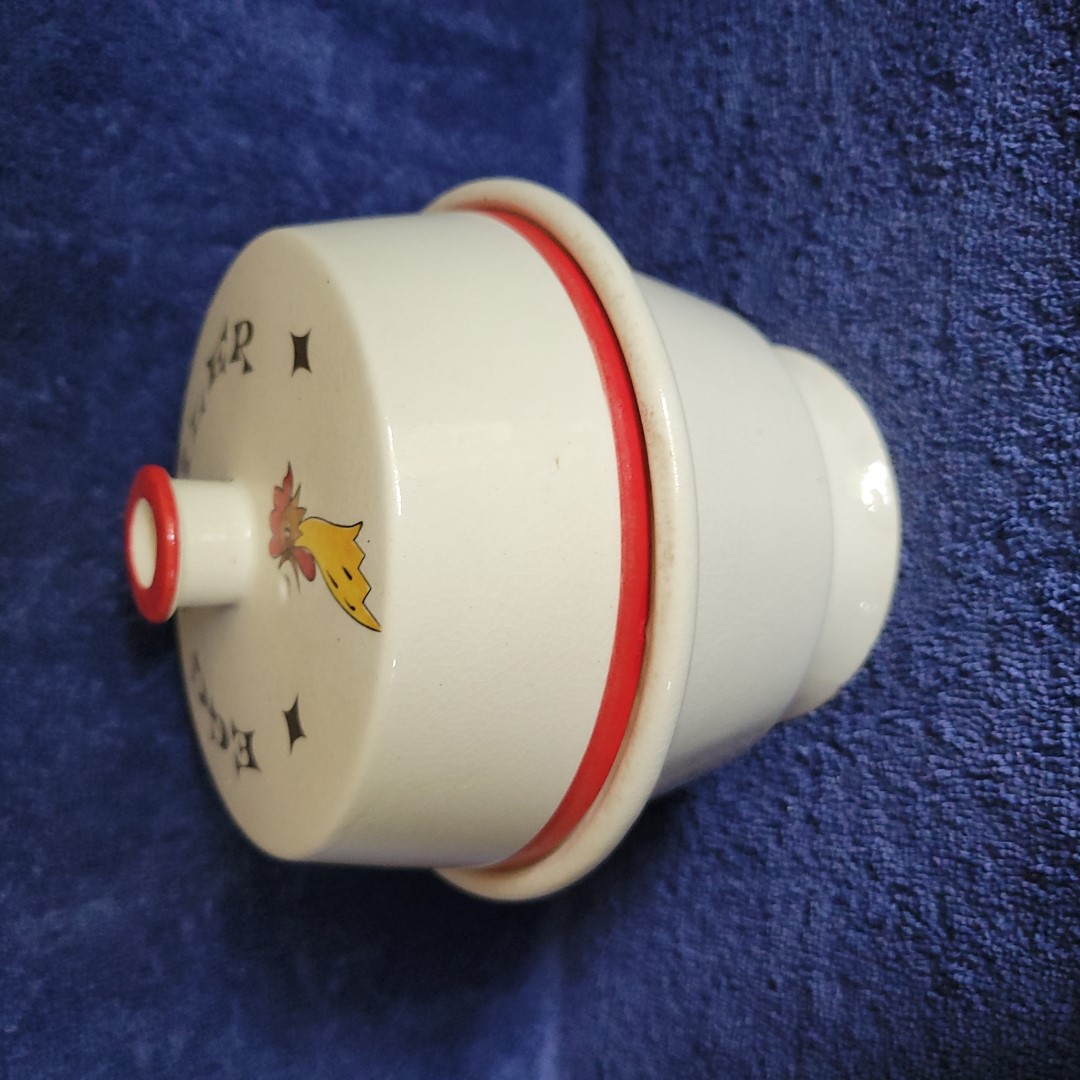
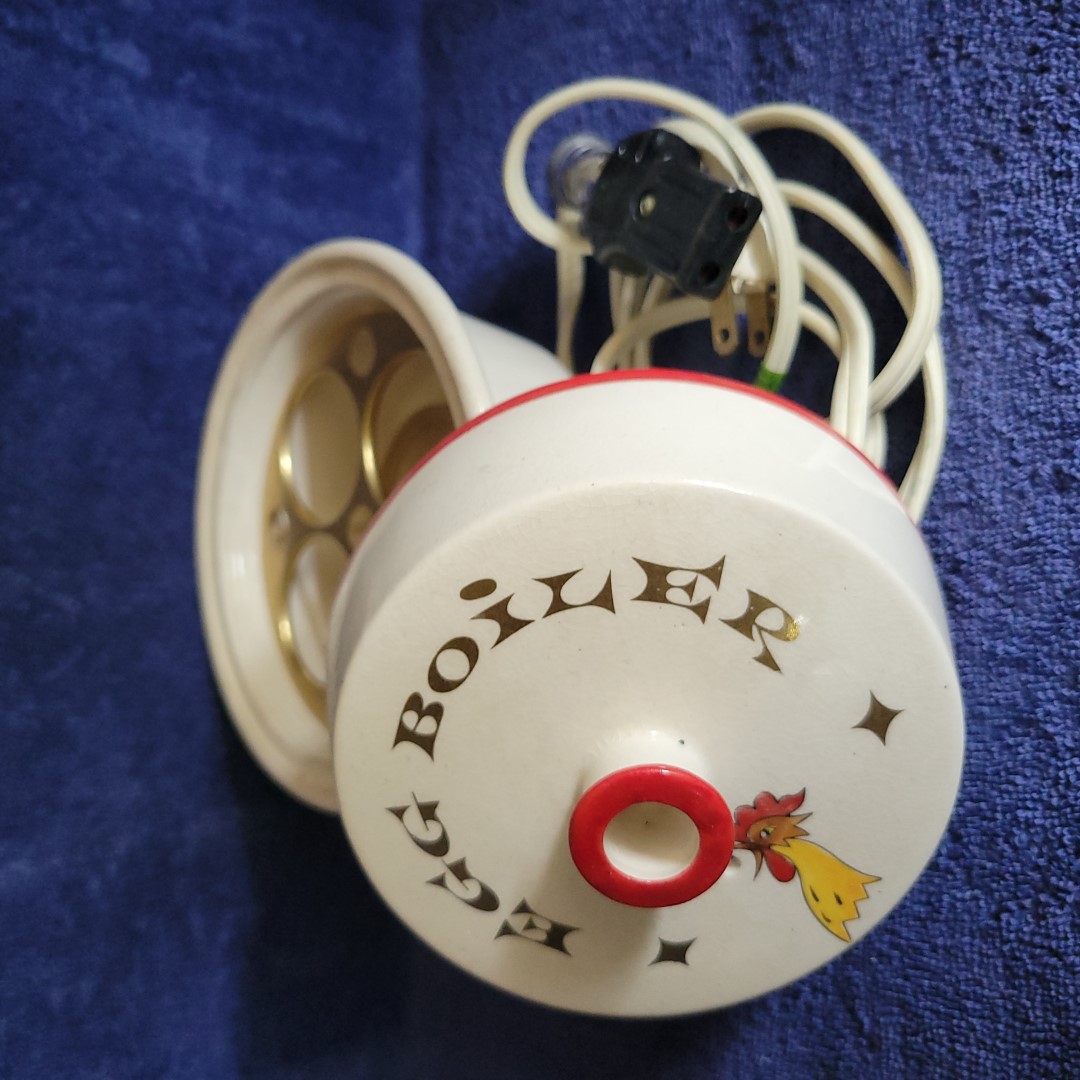
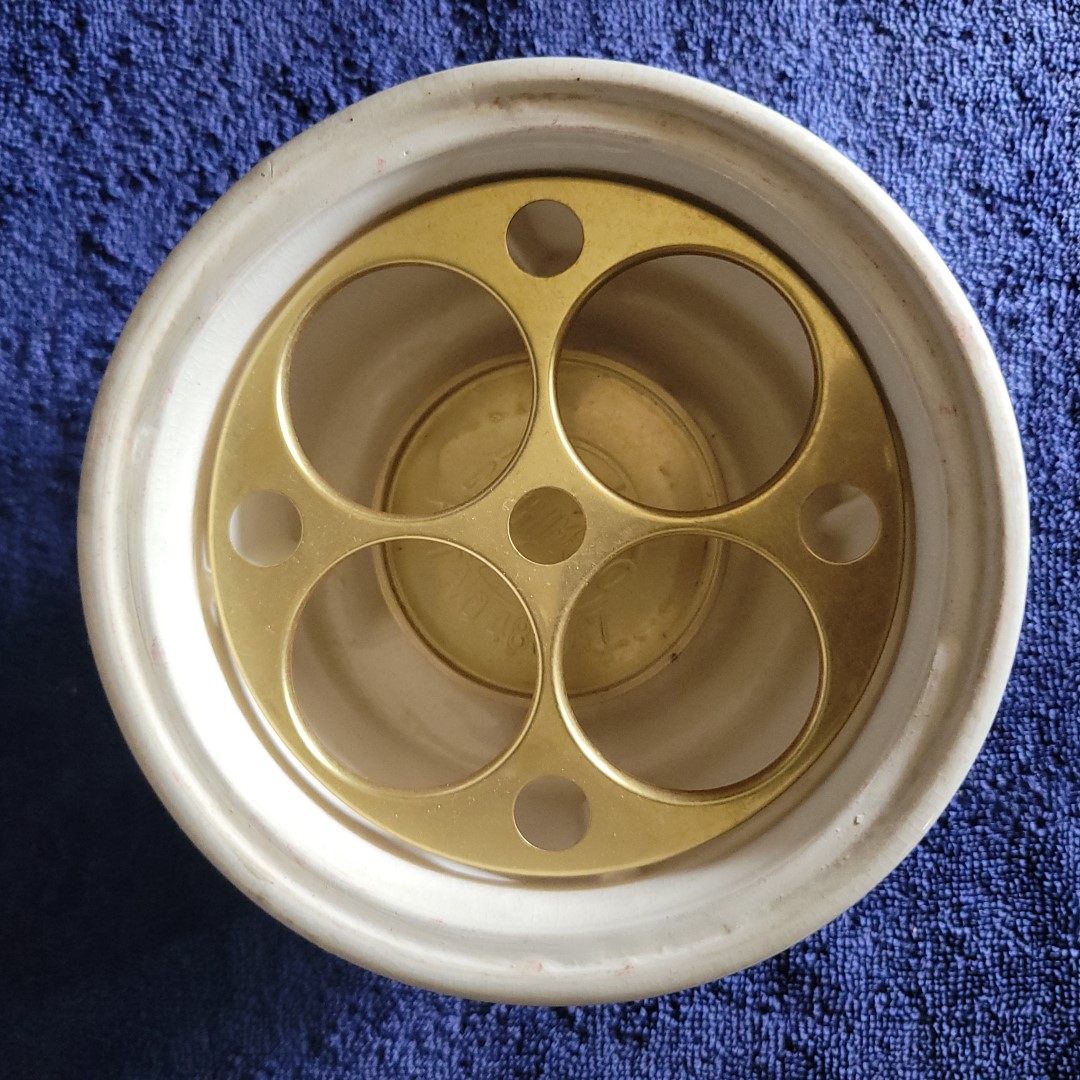
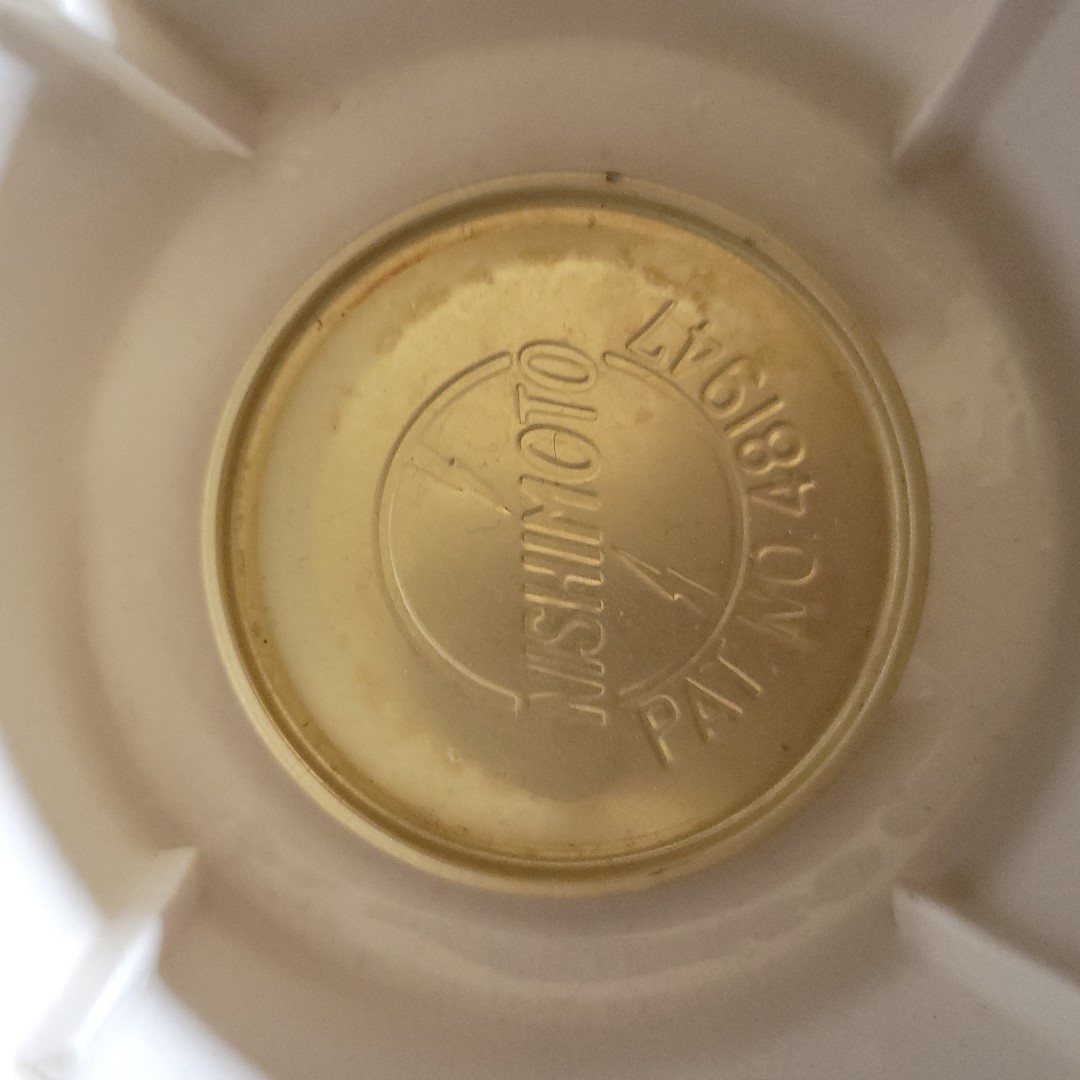
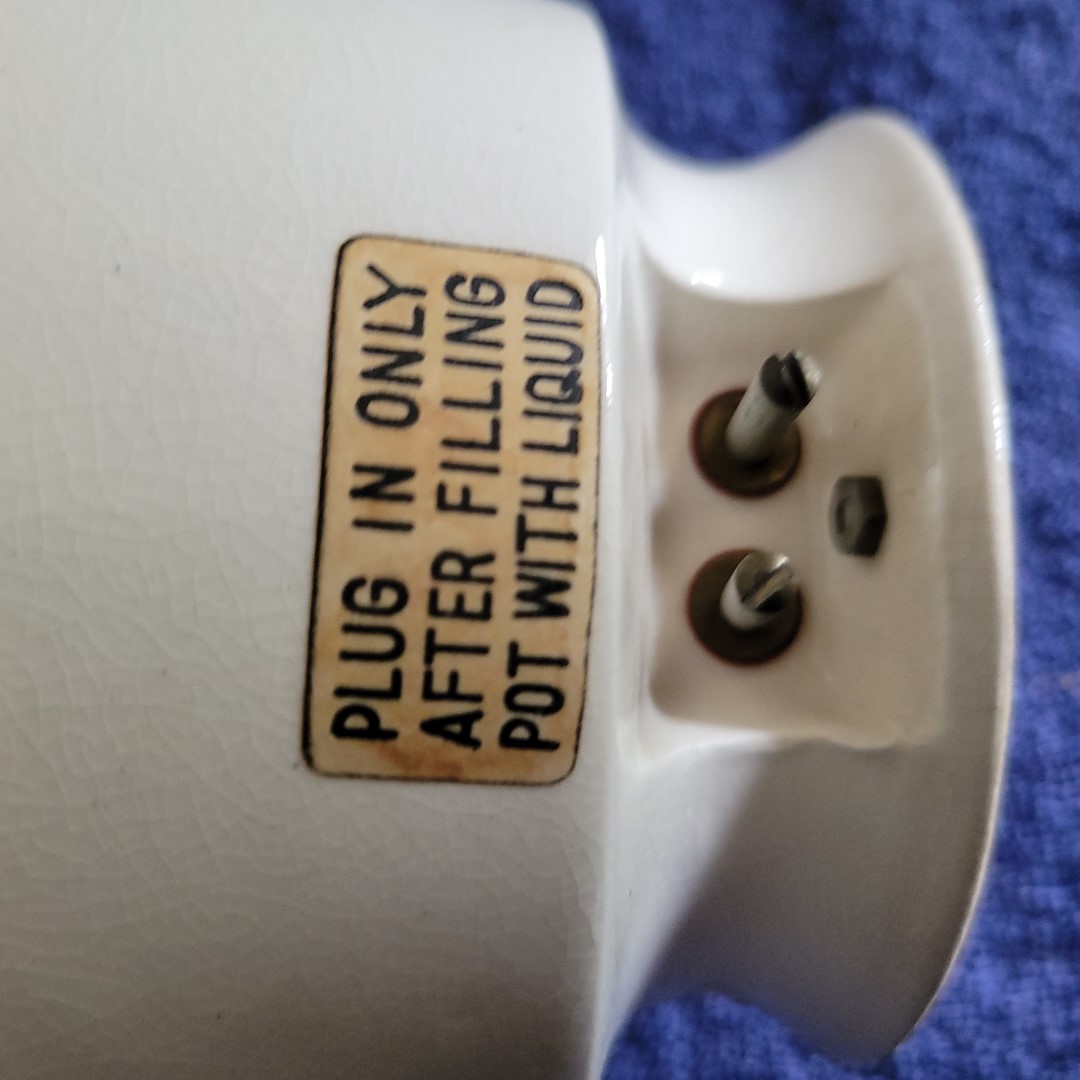
The Coq Rouge Electric Egg Boiler is a covered ceramic countertop appliance designed to cook four eggs at a time. Its round white body is topped by a fitted domed lid lettered “EGG BOILER” in black, with the rooster-head motif, black atomic-style accents, a red-orange band around the lower edge of the lid, and a raised vented knob. Inside, a removable metal plate with four circular openings holds the eggs above the heated reservoir.
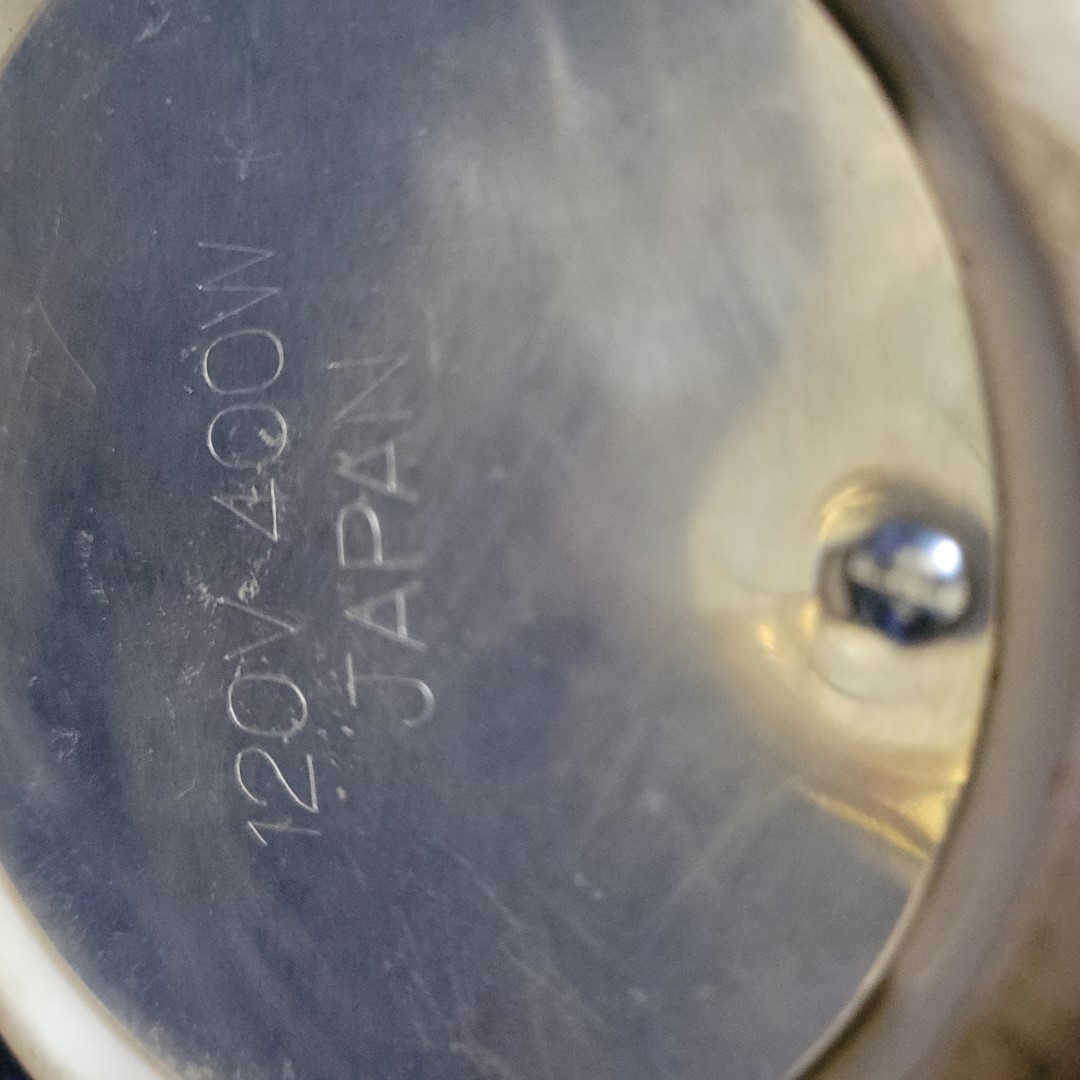
The second edition of the standard collector guide identifies the piece as an “Egg Broiler.” It gives its dimensions as approximately 5¼ inches high and 5 11/16 inches wide at the bottom, states that it cooks four eggs at a time, dates the piece to 1960, and reports the metal plate as marked 120V 500W.
The archive example shown here documents a different electrical rating. Its heating unit is stamped 120V 400W JAPAN, demonstrating that surviving examples were not necessarily fitted with the same wattage component reported in the guide. The interior metal component also carries a Washington Mfg. Inc. marking with patent information, while an original instruction label on the ceramic body warns, “PLUG IN ONLY AFTER FILLING POT WITH LIQUID.”
Cookie Jar
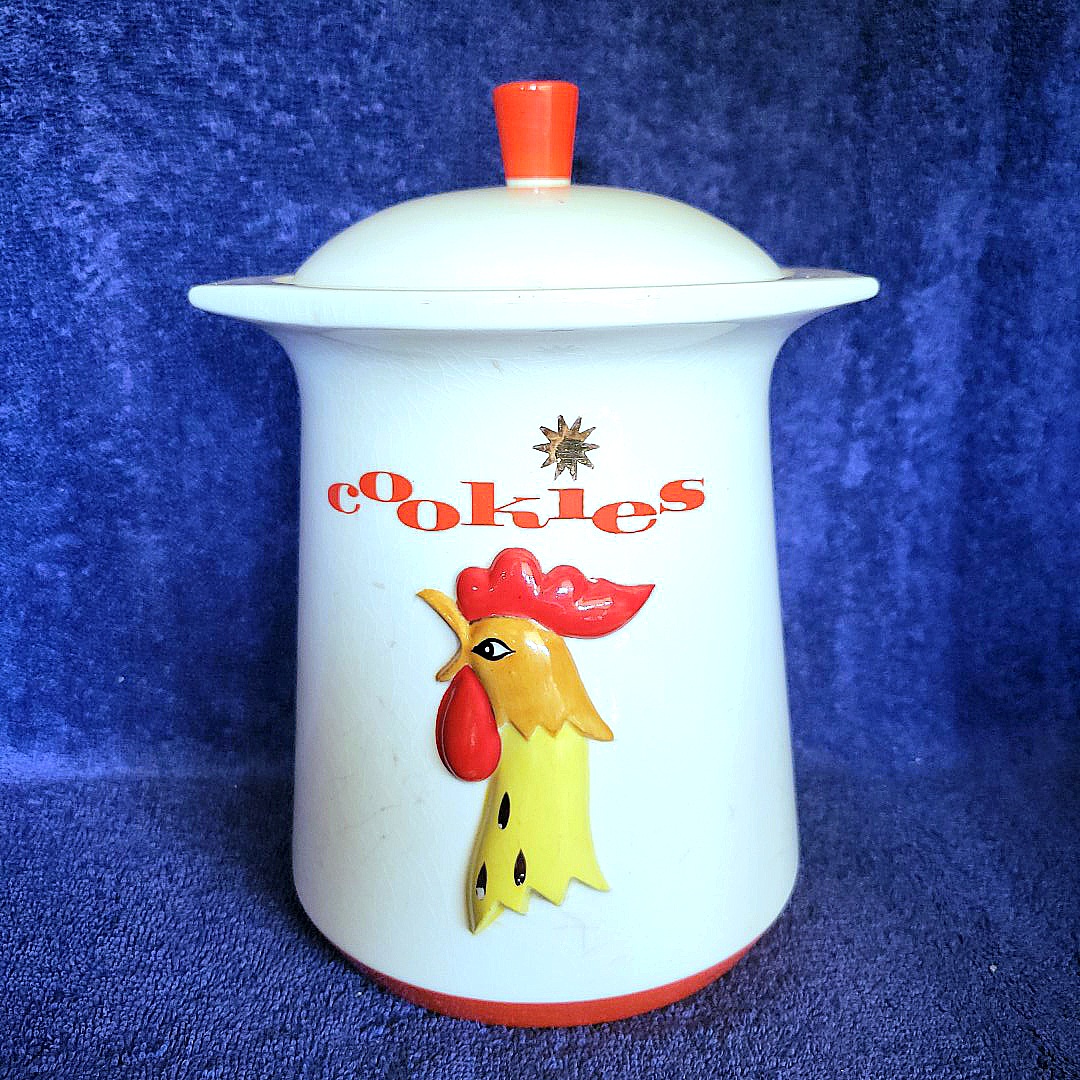
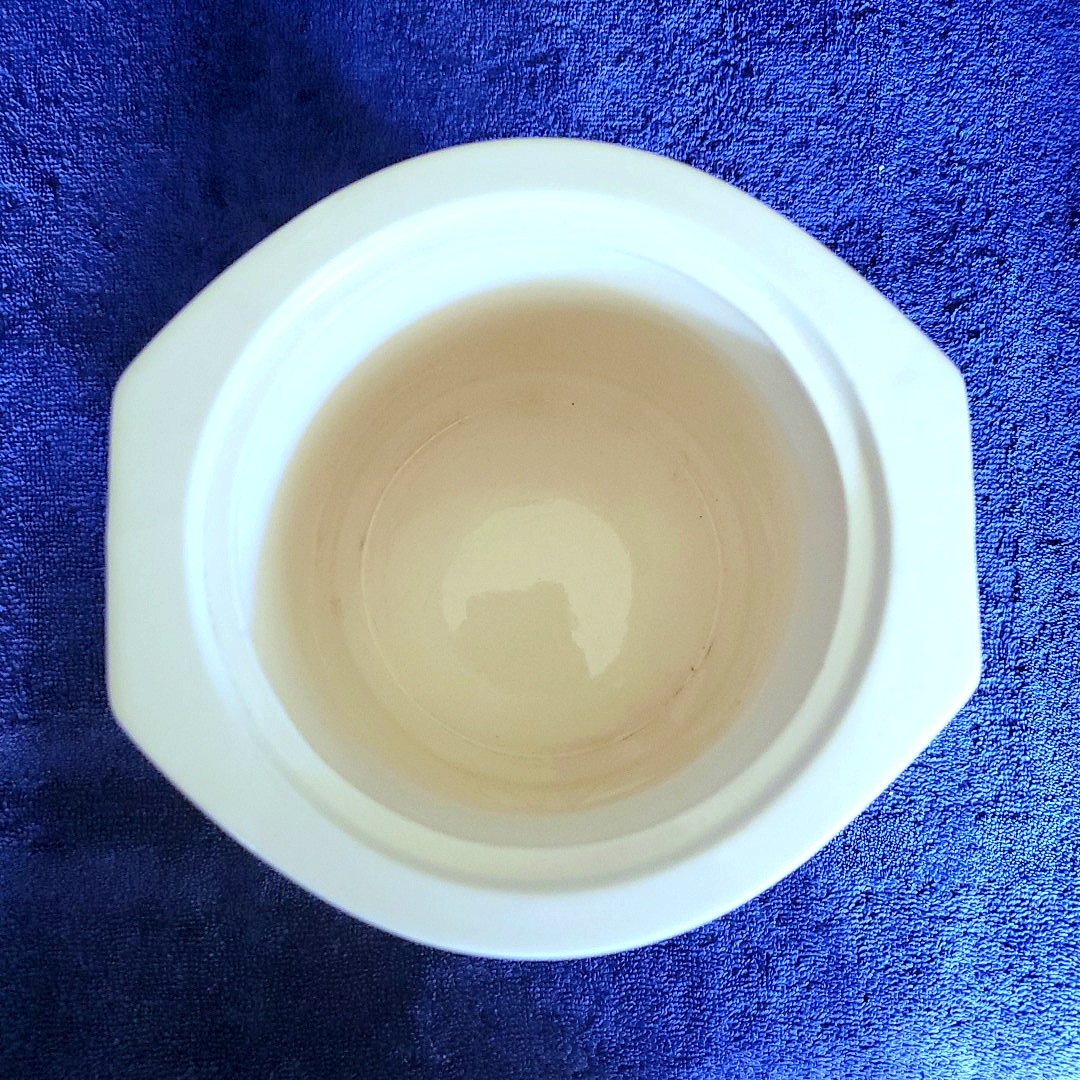
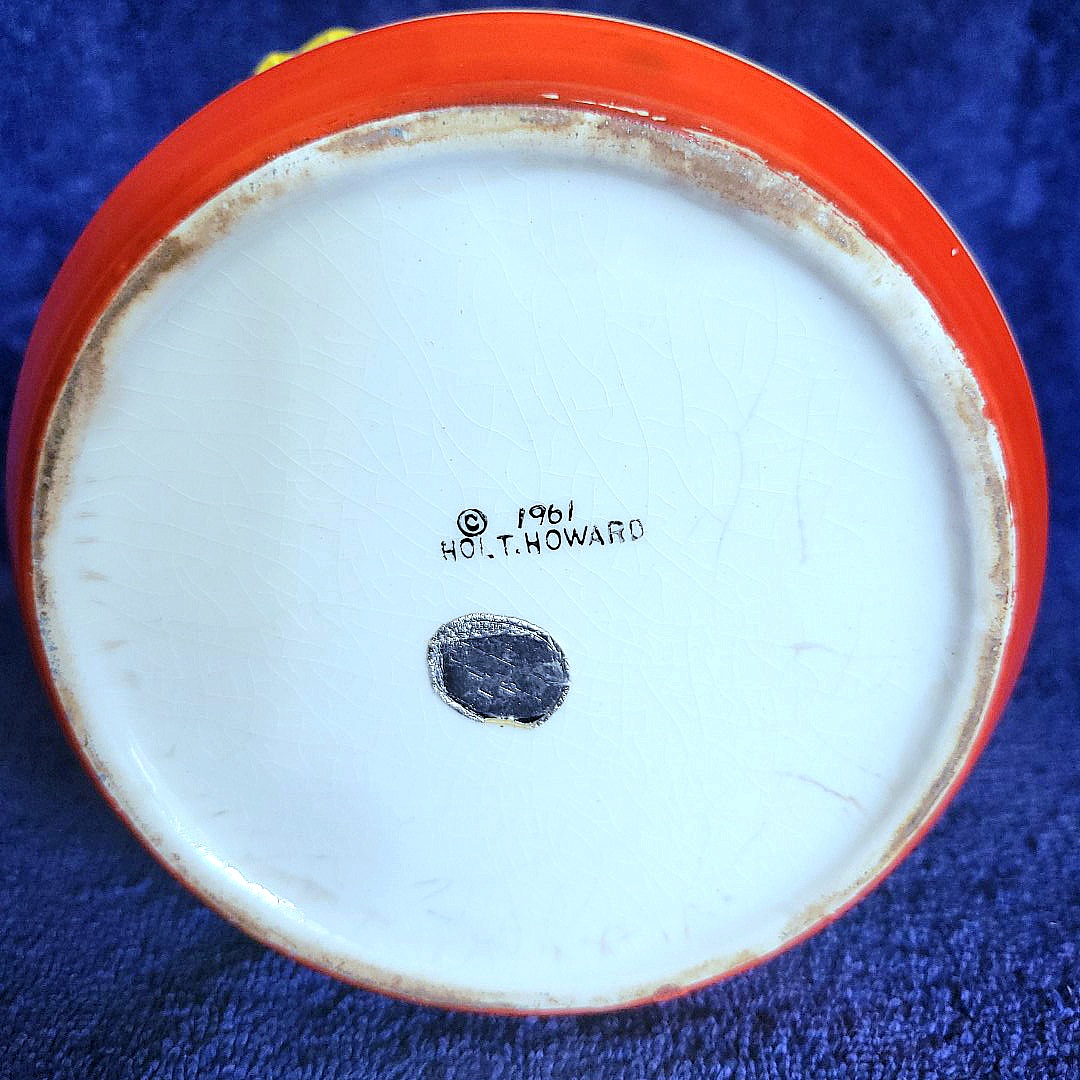
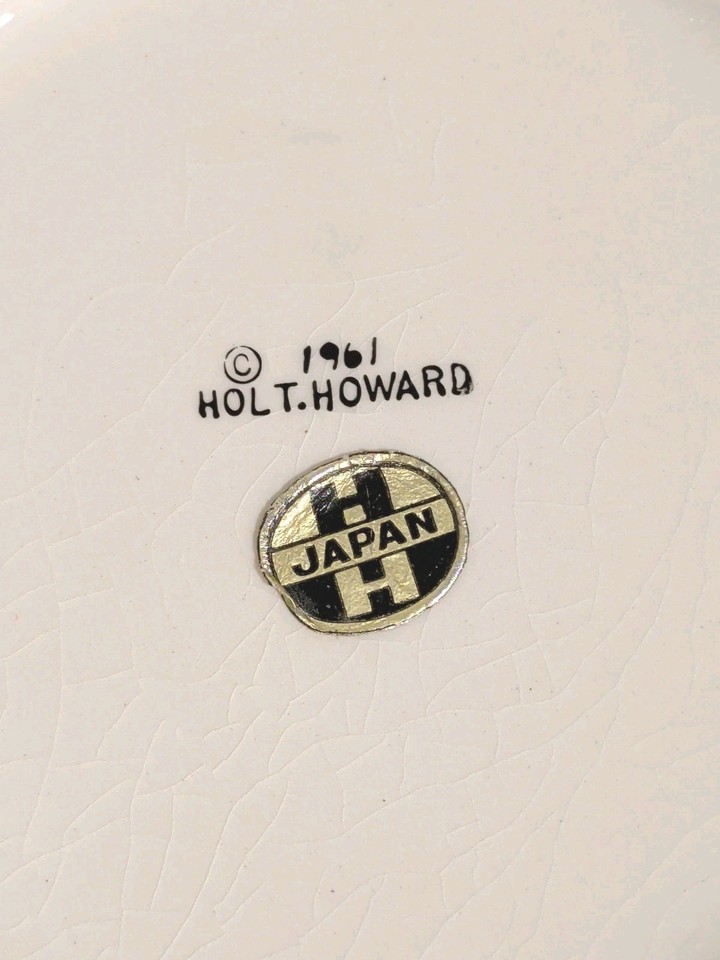
The Coq Rouge Cookie Jar is a tall covered ceramic jar decorated with the rooster-head motif beneath the word “cookies”, set in the collection’s characteristic midcentury lettering. A red-orange band circles the base, and the fitted lid is finished with a matching red-orange knob.
The cookie jar measures approximately 7¾ inches by 5¾ inches and is documented with a 1961 backstamp. The archive example shown here matches that description and retains both the 1961 Holt-Howard backstamp and remnants of the original black-and-gold Holt-Howard foil label.
Cutting Board / Breadboard
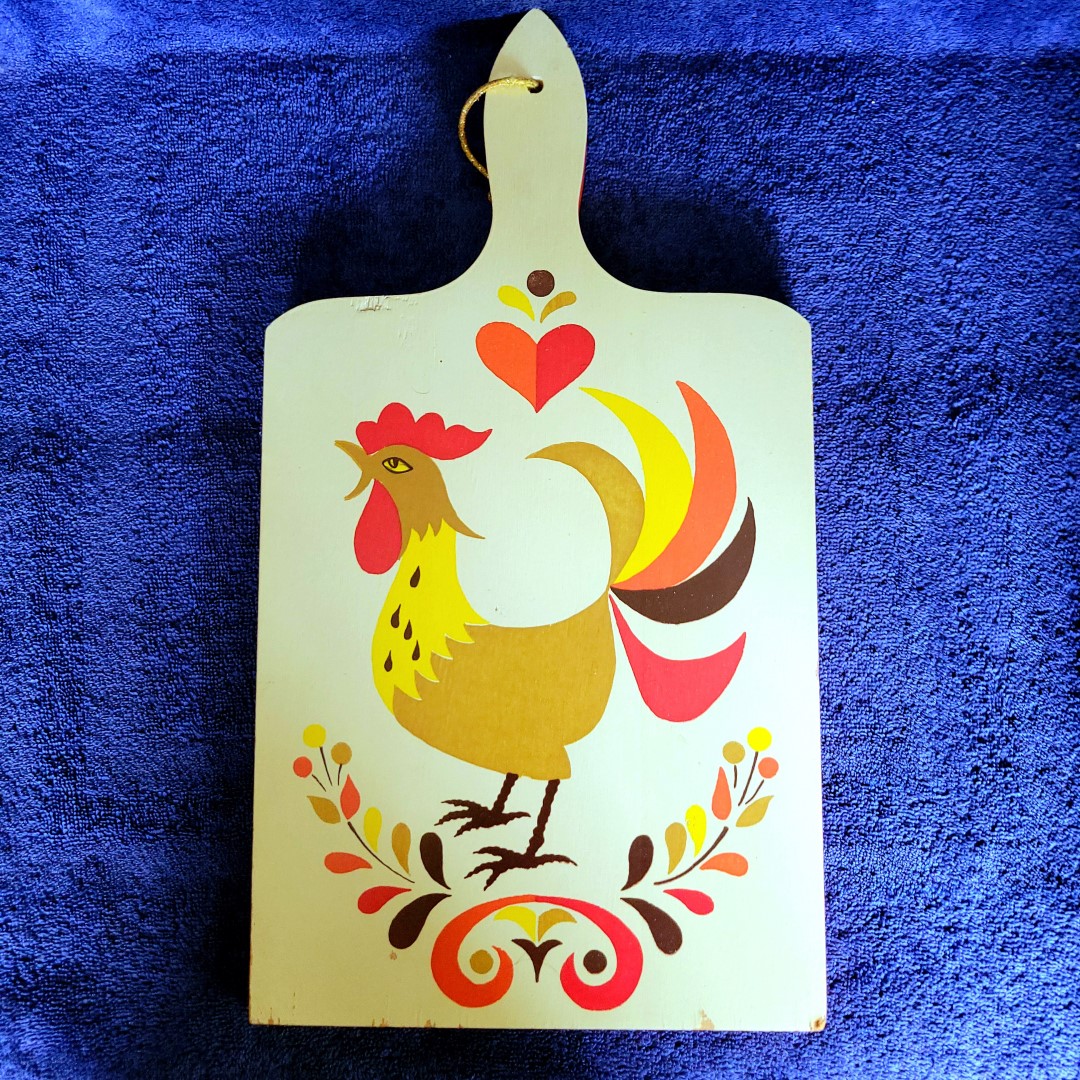
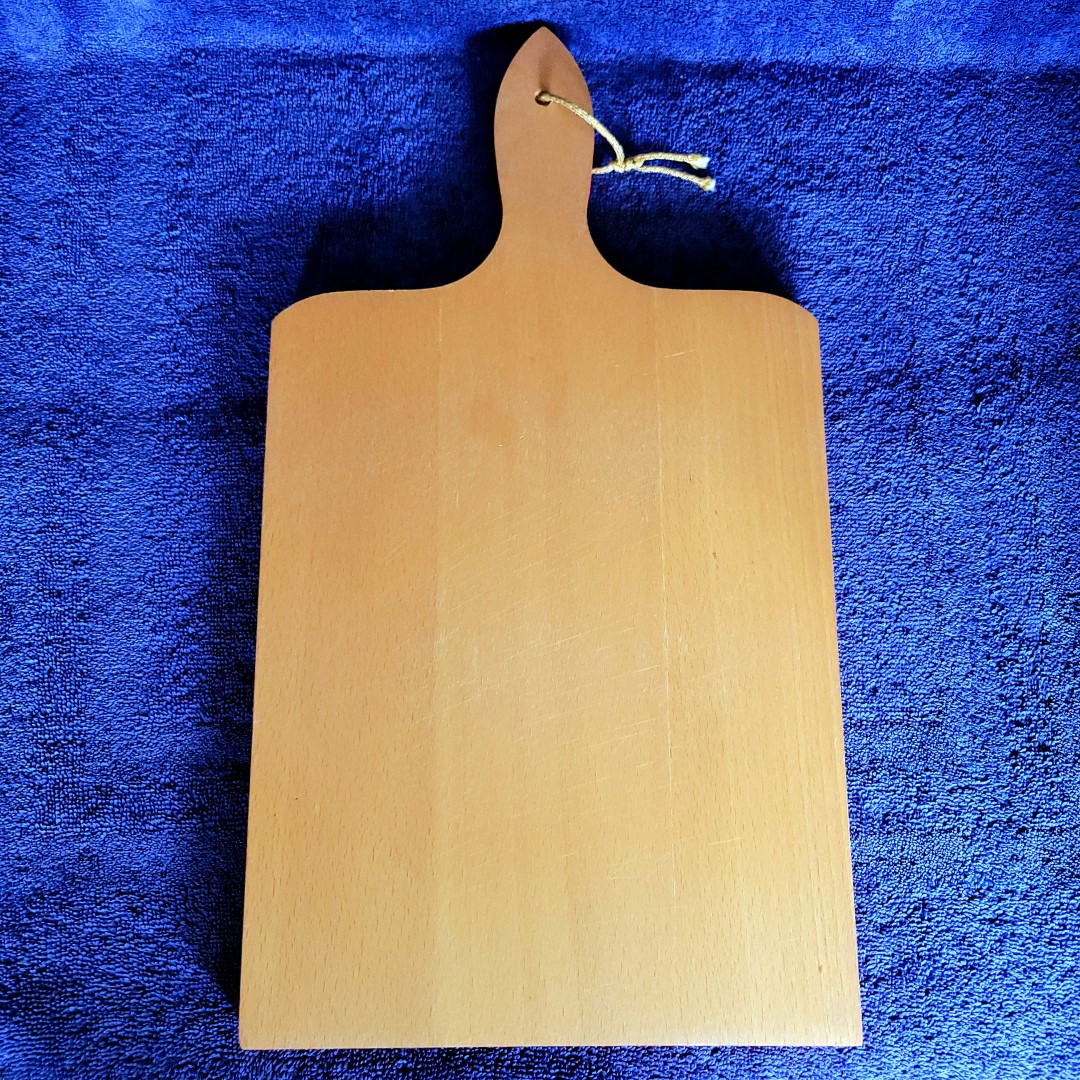
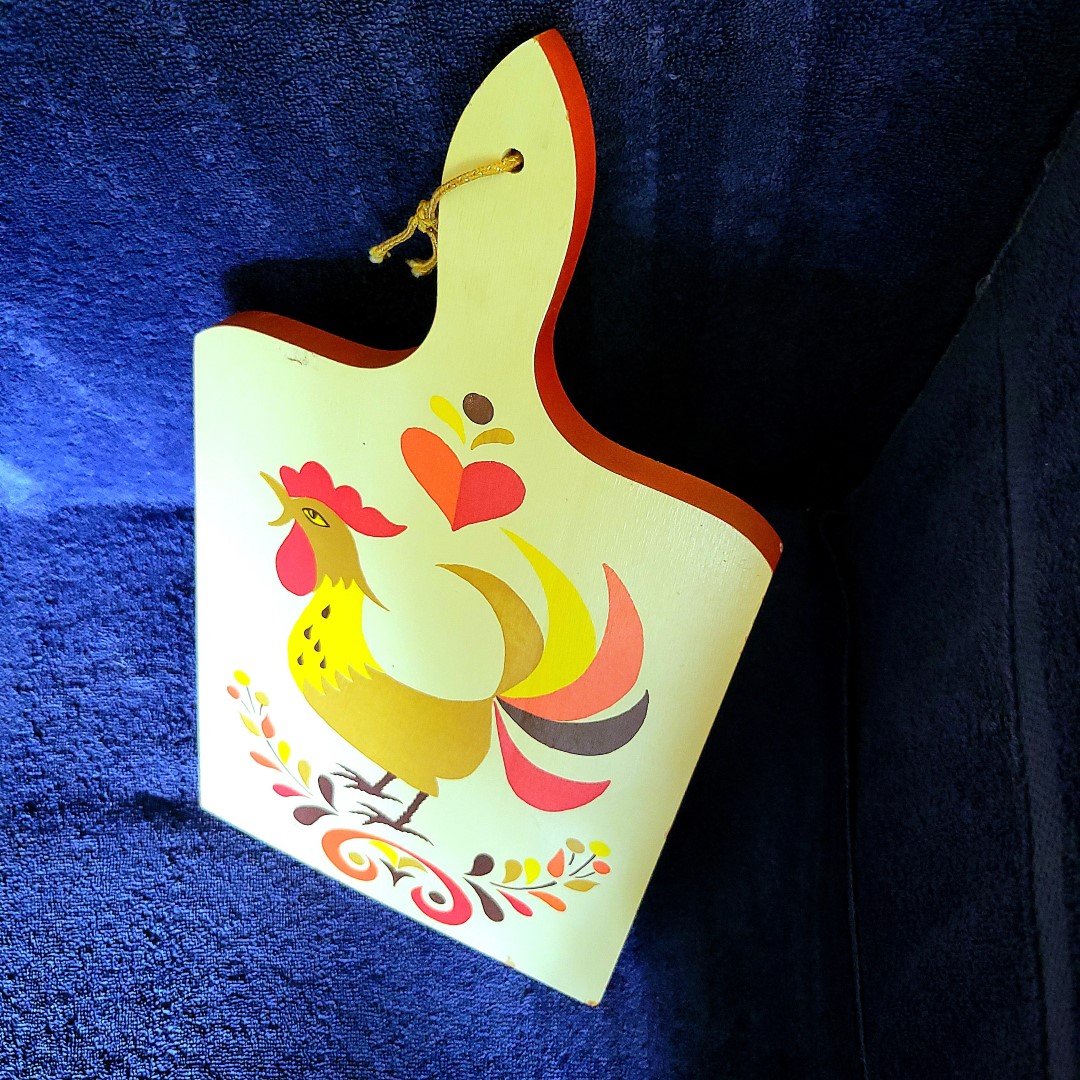
This wooden Cutting Board / Breadboard carries one of the most expansive Coq Rouge graphics in the collection: a full-body rooster framed by stylized floral and folk-art decoration on the painted presentation face. The reverse is left as plain wood for cutting use, while the outer edge is painted red and a cord through the handle allows the board to be hung when not in use.
Both editions of the standard collector guide mention an 8 × 15-inch breadboard among the Coq Rouge wooden accessories but do not illustrate it. The archive example shown here measures 8 inches wide by 15 inches long from the tip of the handle to the opposite end, exactly matching the published specification. The surviving example therefore provides a visual identification for a Coq Rouge accessory previously documented only in text.
Wooden Canister Set
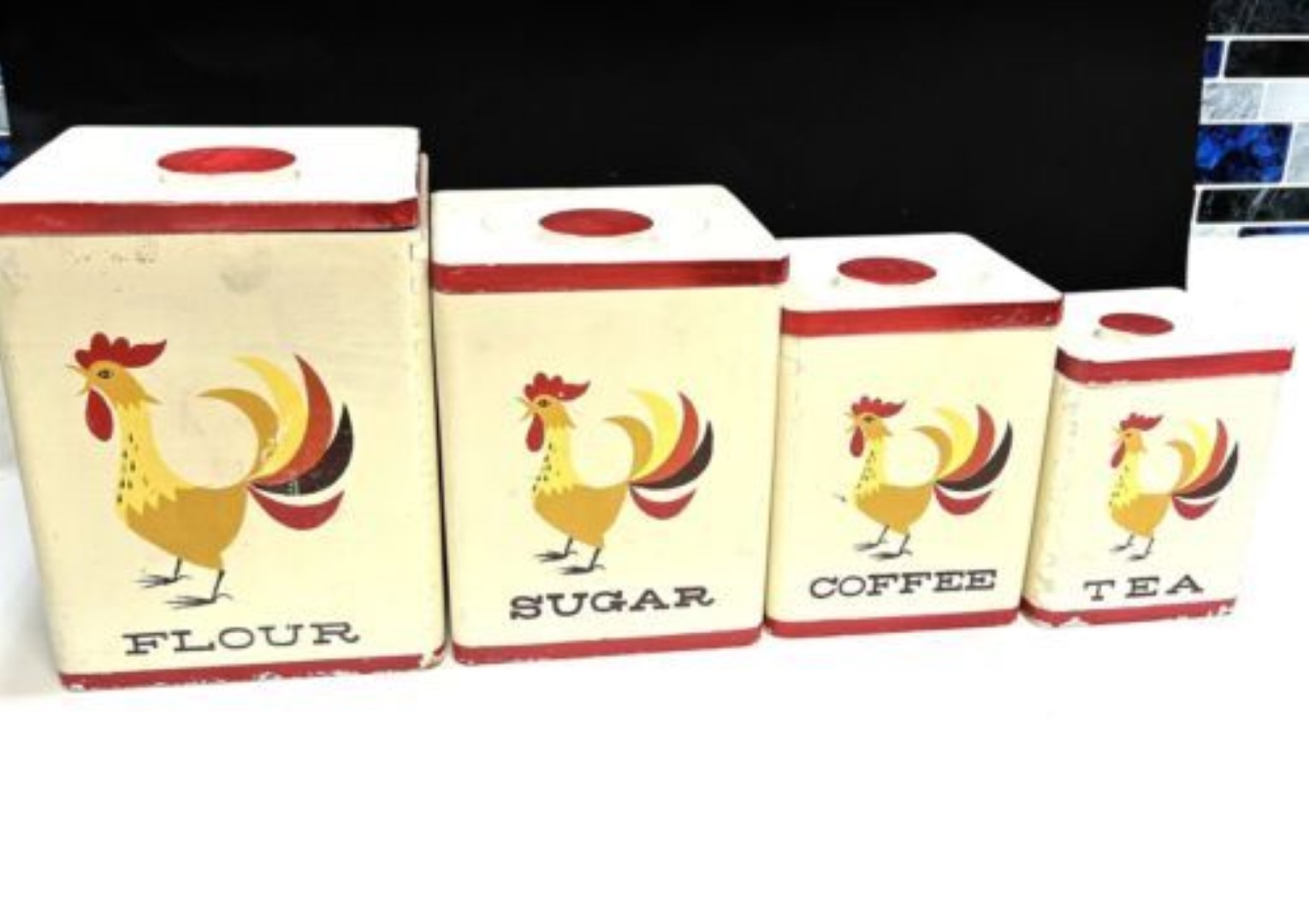
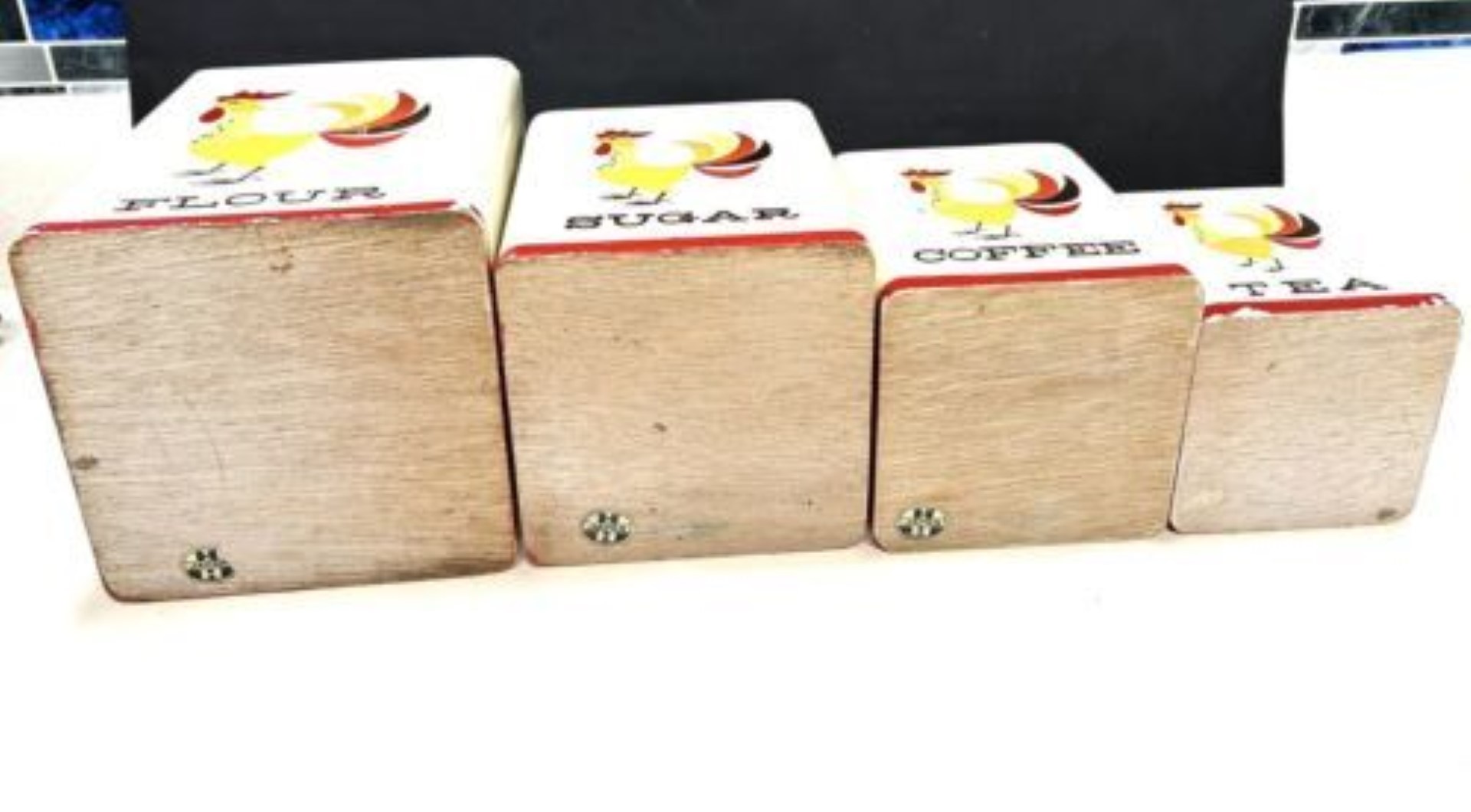
This Wooden Canister Set translates the Coq Rouge rooster into a distinctly folk-art, utilitarian format. The four square storage canisters — labeled FLOUR, SUGAR, COFFEE, and TEA — are painted in a soft off-white with red trim, lift-off lids with red circular pulls, and simplified full-body rooster decoration on the fronts. The backs are left in plain wood, emphasizing that these were working kitchen pieces rather than ceramics.
Wooden Salt & Pepper Set
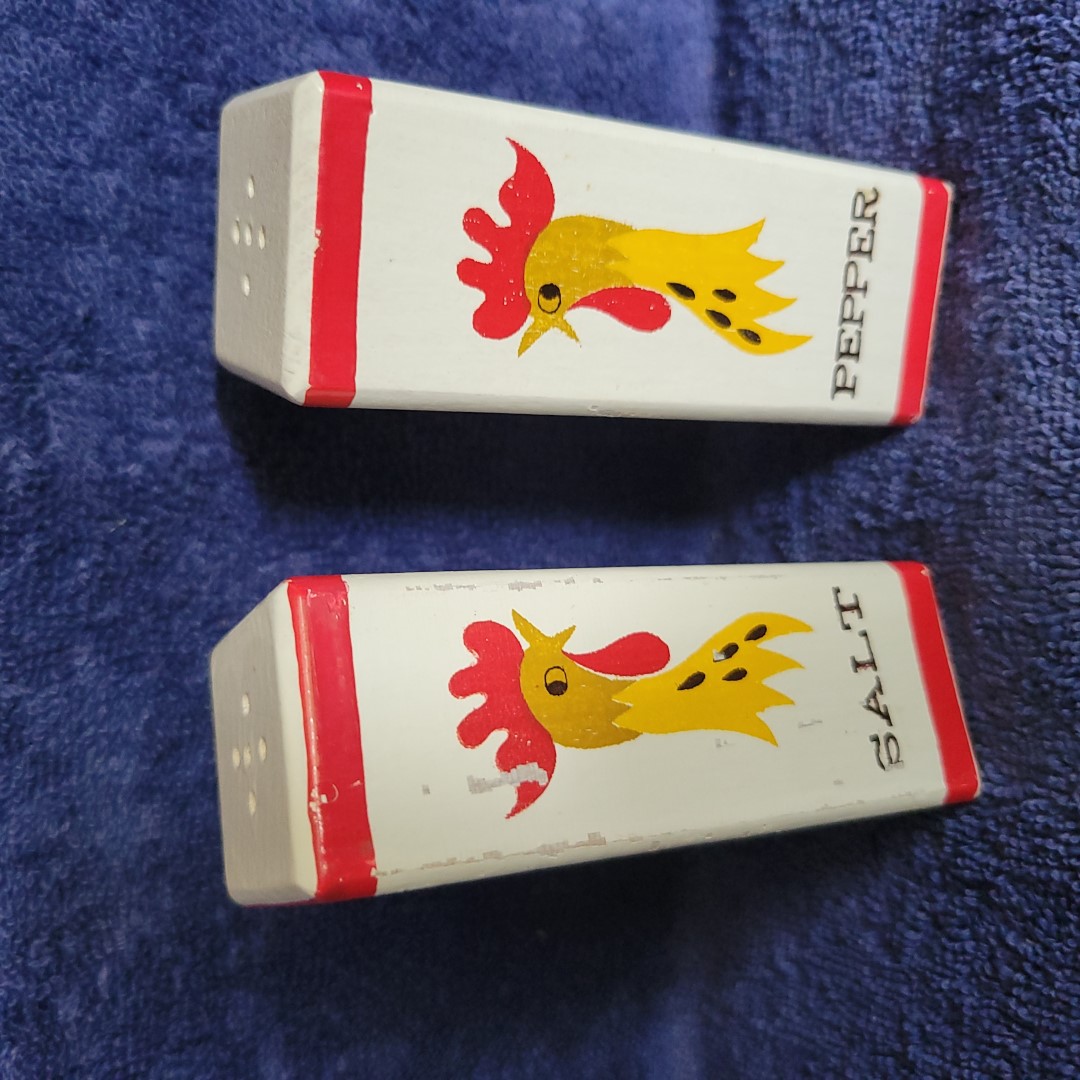
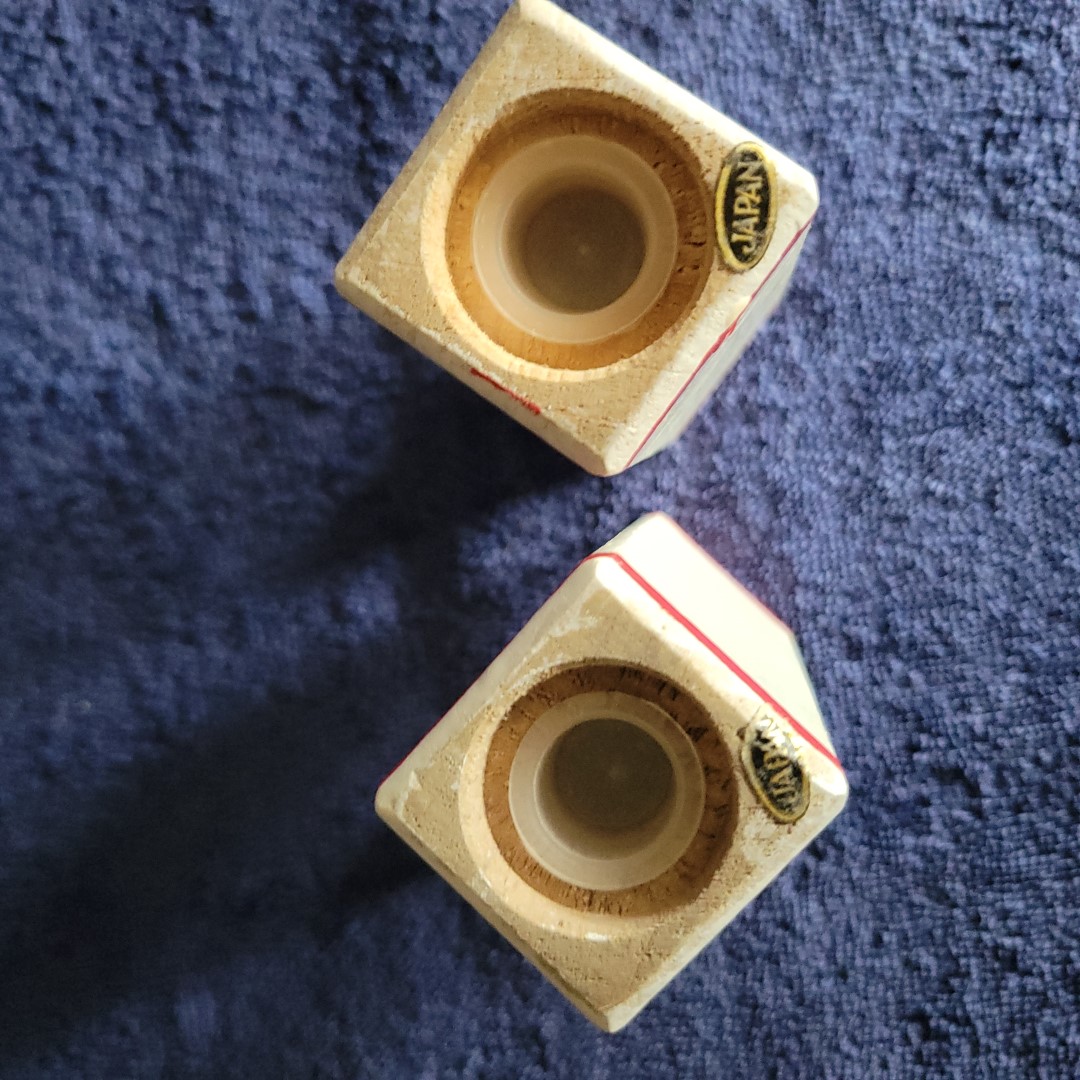
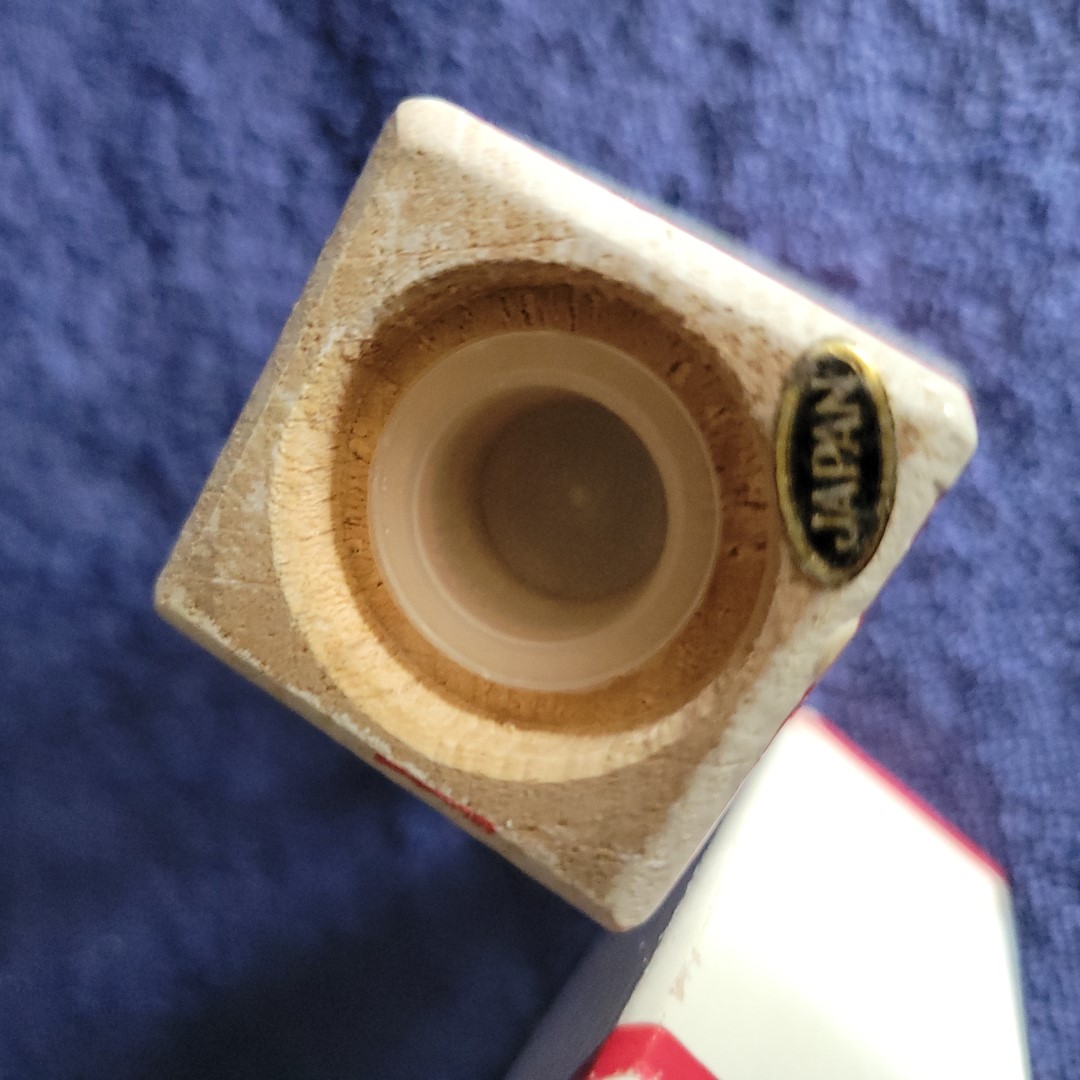
This Wooden Salt & Pepper Set adapts the Coq Rouge design to tall rectangular table shakers. Each piece is painted off-white with red bands at top and bottom, black lettering naming SALT and PEPPER, and a rooster-head motif that echoes the simplified rooster imagery used throughout the line’s wooden accessories. Plastic stoppers are fitted into the bases, and both surviving examples retain their black-and-gold JAPAN foil labels.
This set is part of the wooden canister group and stands approximately 3¾ inches high, matching the role of the pair as the smallest members of the broader wooden kitchen group. The archive example confirms the basic construction and markings but also shows noticeable surface wear to the paint, evidence that the shakers were used rather than merely displayed.
Wooden Recipe Box
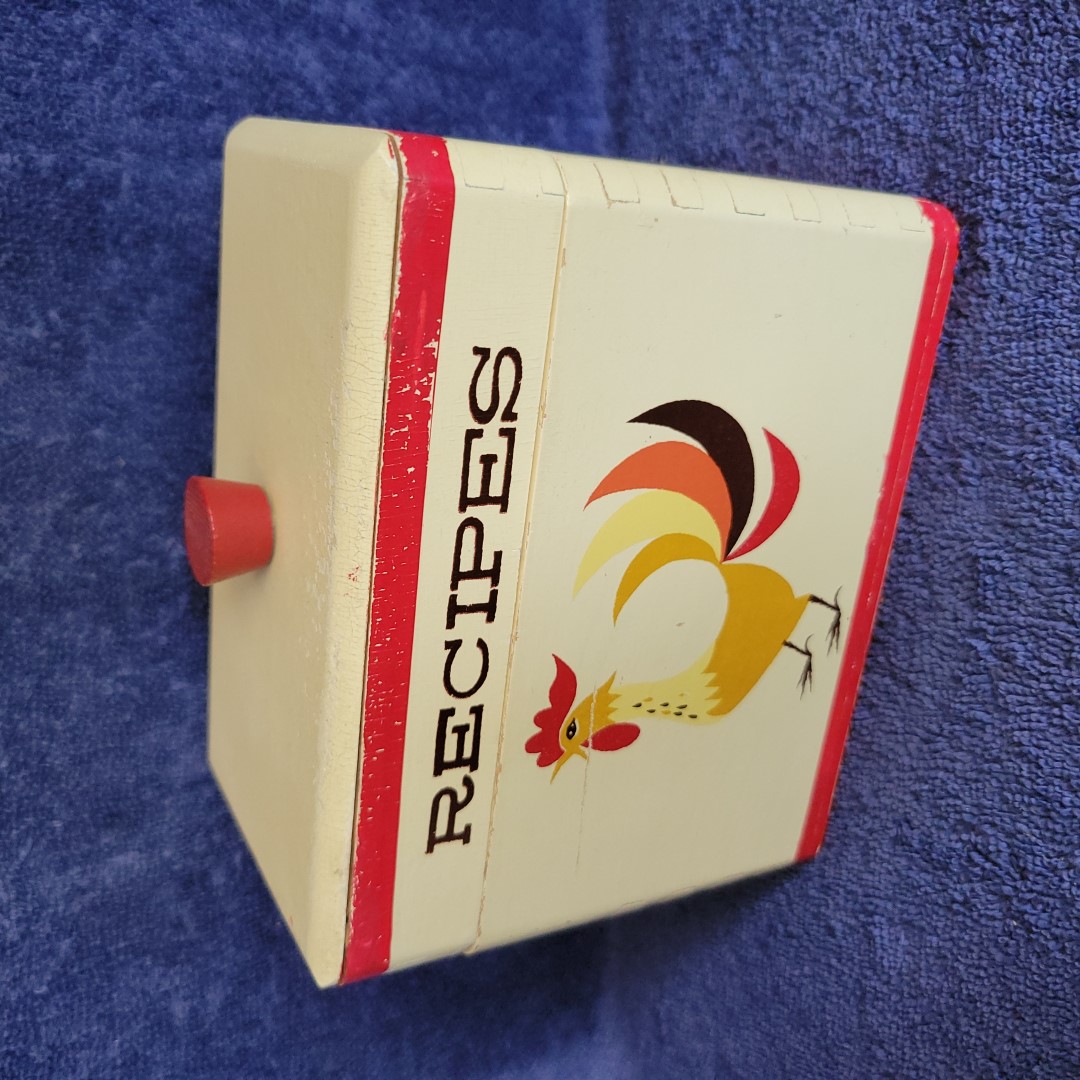
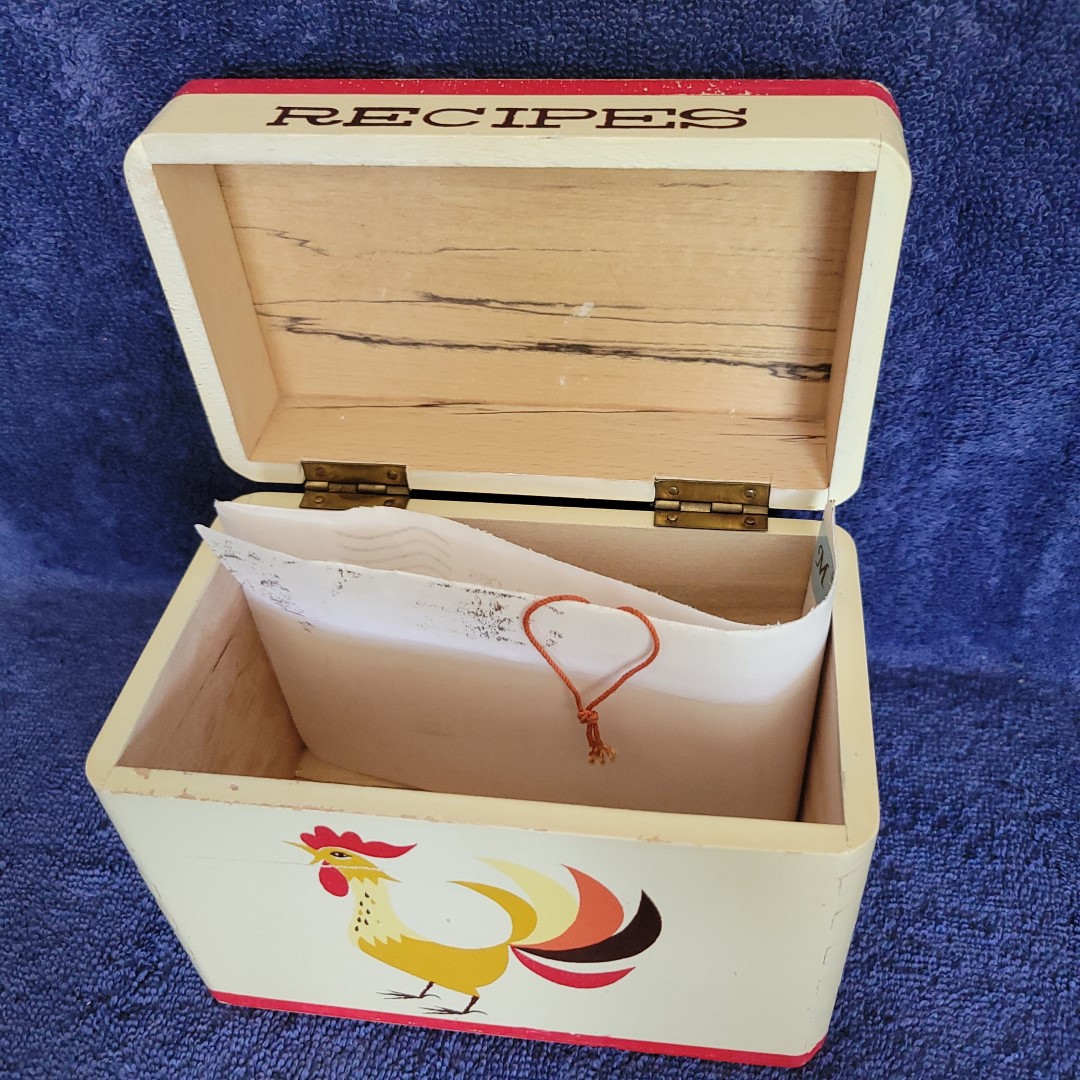
This Wooden Recipe Box is one of the most appealing non-ceramic Coq Rouge accessories. The rectangular box is painted off-white with red trim and a small red knob on the lid. Across the front upper band, the word RECIPES appears in bold black lettering above a full-body rooster graphic, while the hinged lid opens to a plain wood interior sized for recipe cards and clippings.
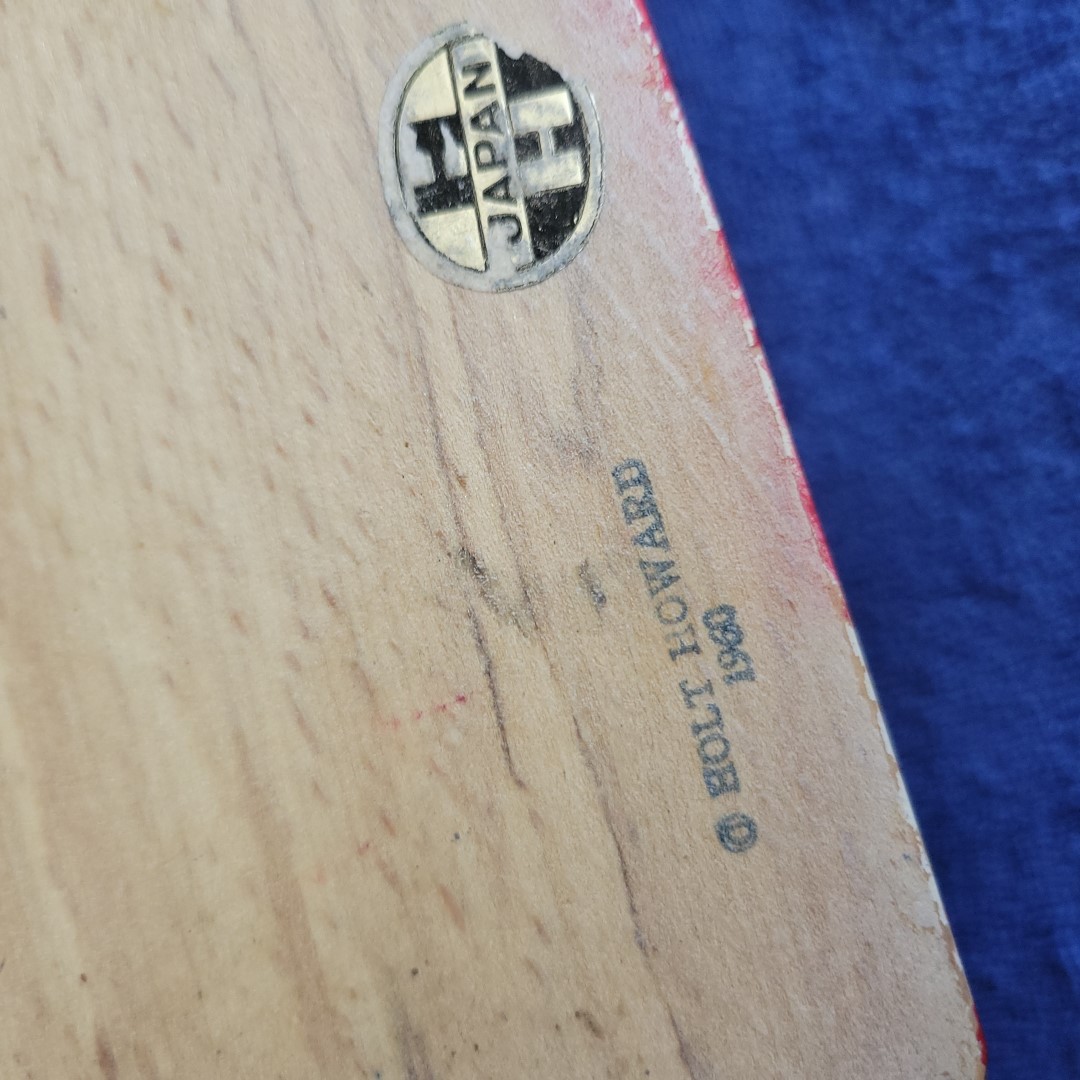
The recipe box measures approximately 5½ inches by 3¼ inches by 4¼ inches. The archive example adds several useful identifying details not visible from a simple catalog-style photograph: the box’s mortised corner construction, the brass hinges, the interior stamp © HOLT HOWARD 1960, and a surviving black-and-gold HH JAPAN foil label. Together these features firmly place the box within the original early Coq Rouge wooden accessory line.
Metal Recipe Card Holder
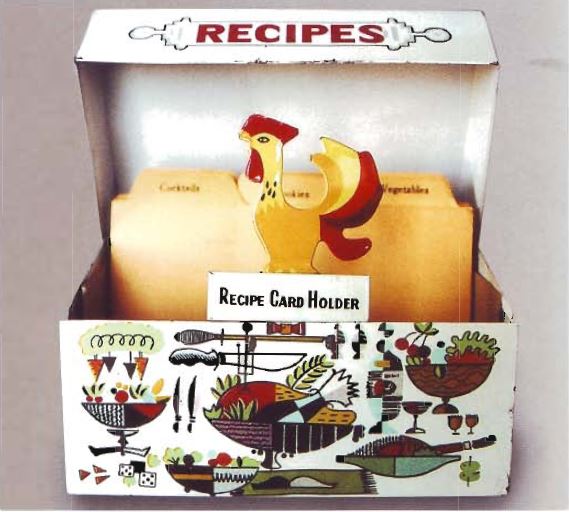
The Coq Rouge Metal Recipe Card Holder is an all-metal recipe box built around a playful mechanical feature: a rooster pops up behind the recipe cards when the box is opened. The front is decorated with a dense assortment of stylized midcentury kitchen and serving motifs, while the raised rooster carries the familiar Coq Rouge colors and elongated tail treatment.
The holder measures approximately 5¼ inches wide × 3 inches long × 3 inches high, with the pop-up rooster itself measuring 2⅜ inches high. The box originally came with yellow paper recipe dividers. Surviving examples have not appeared with a Holt-Howard backstamp; a “Made in Japan” marking is documented.
Large and Small Salt & Pepper Shakers
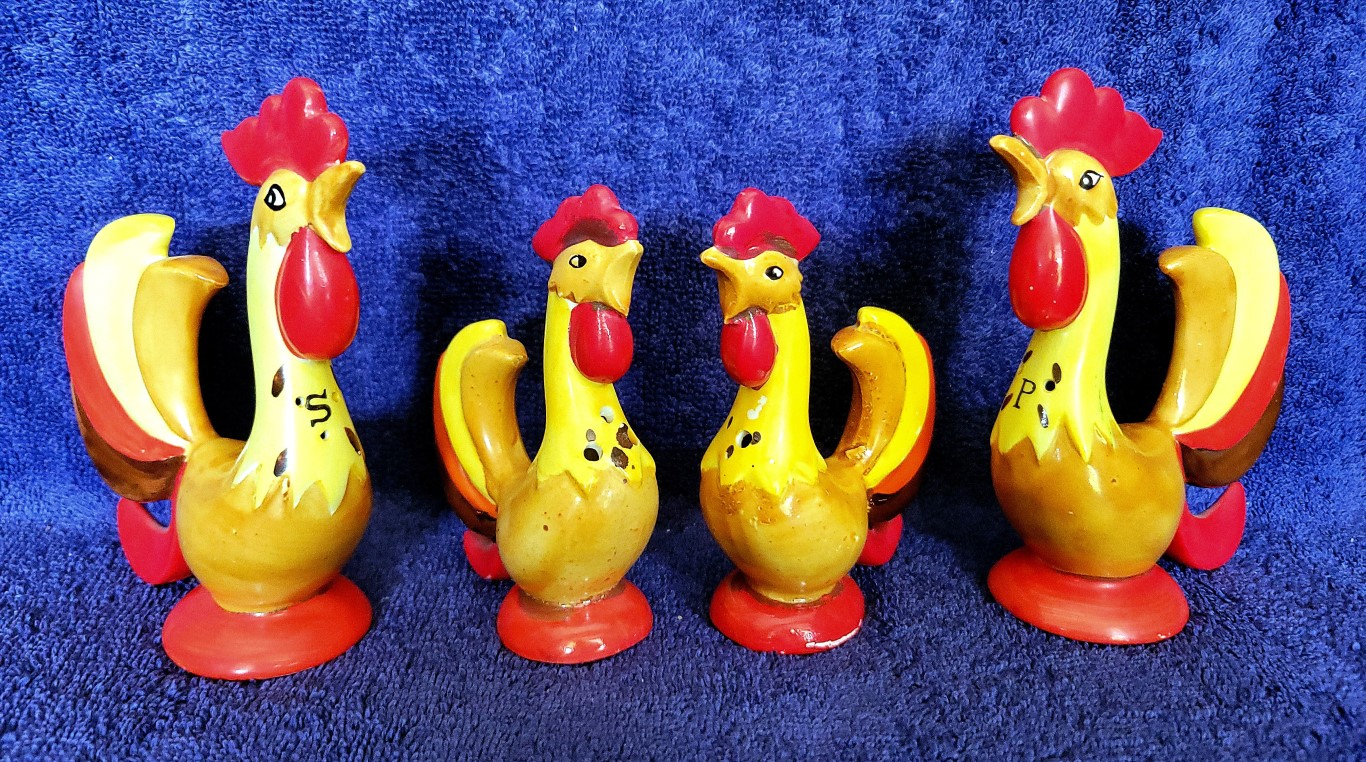
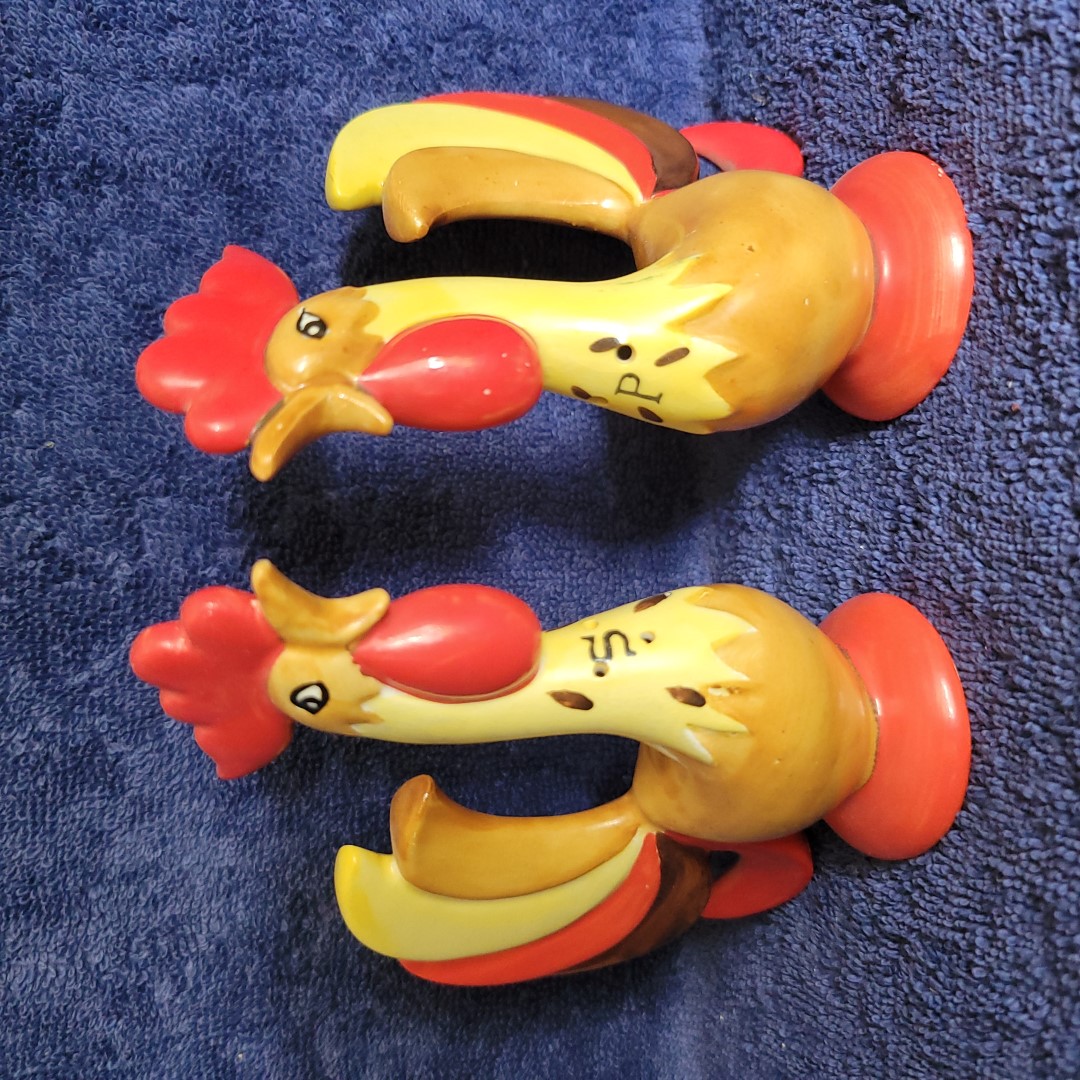
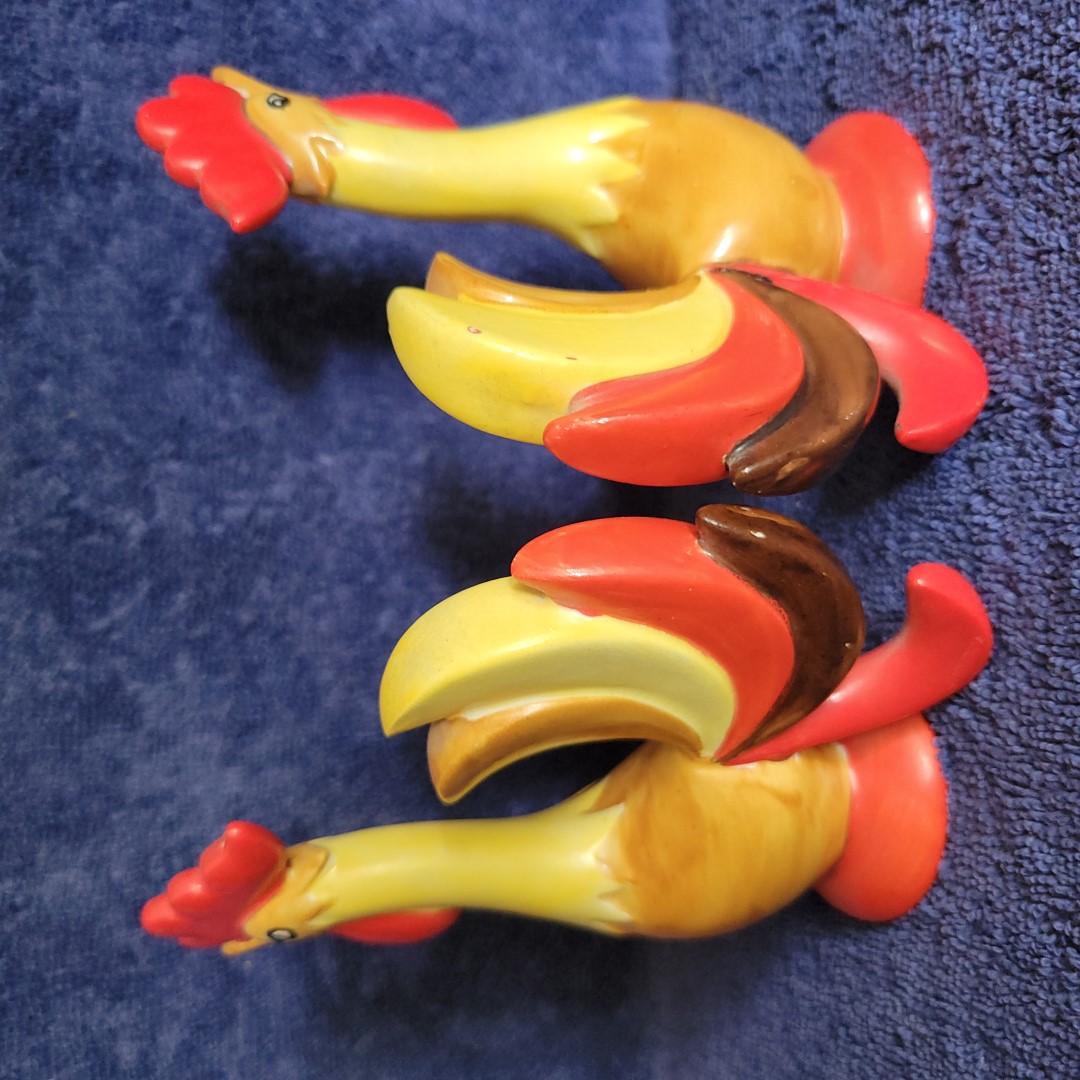
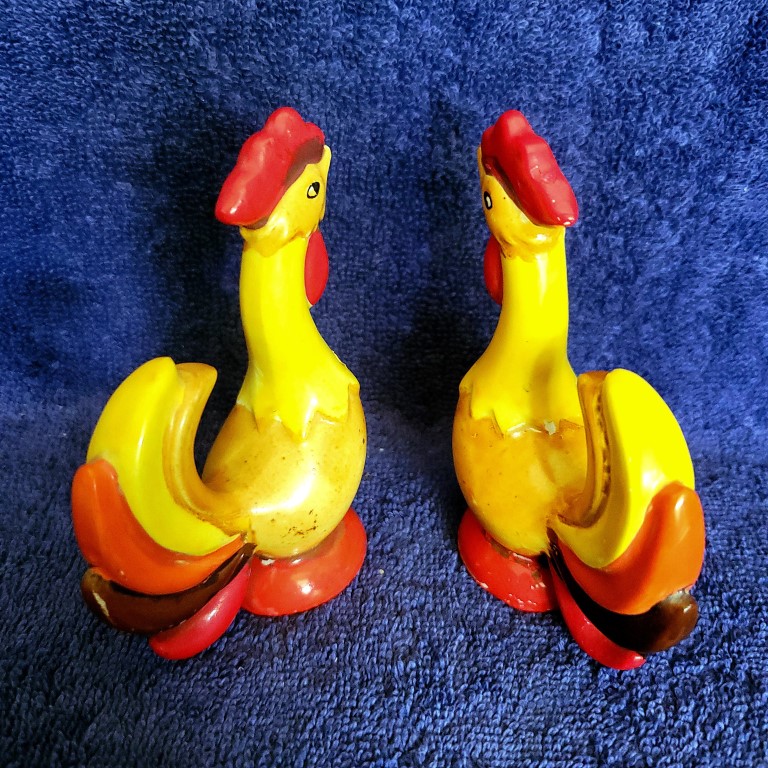
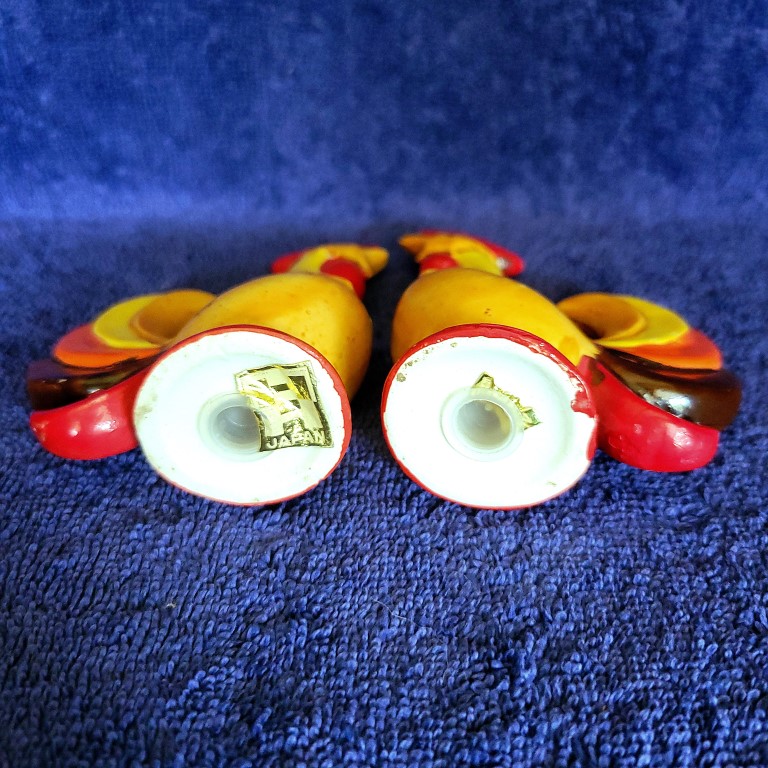
The Coq Rouge line includes two figural rooster salt and pepper sets in closely related forms. Both pairs use the same upright rooster silhouette with high red combs, pendulous wattles, and layered yellow, orange, red, and brown tail feathers, but they differ in scale and in how the front decoration is handled.
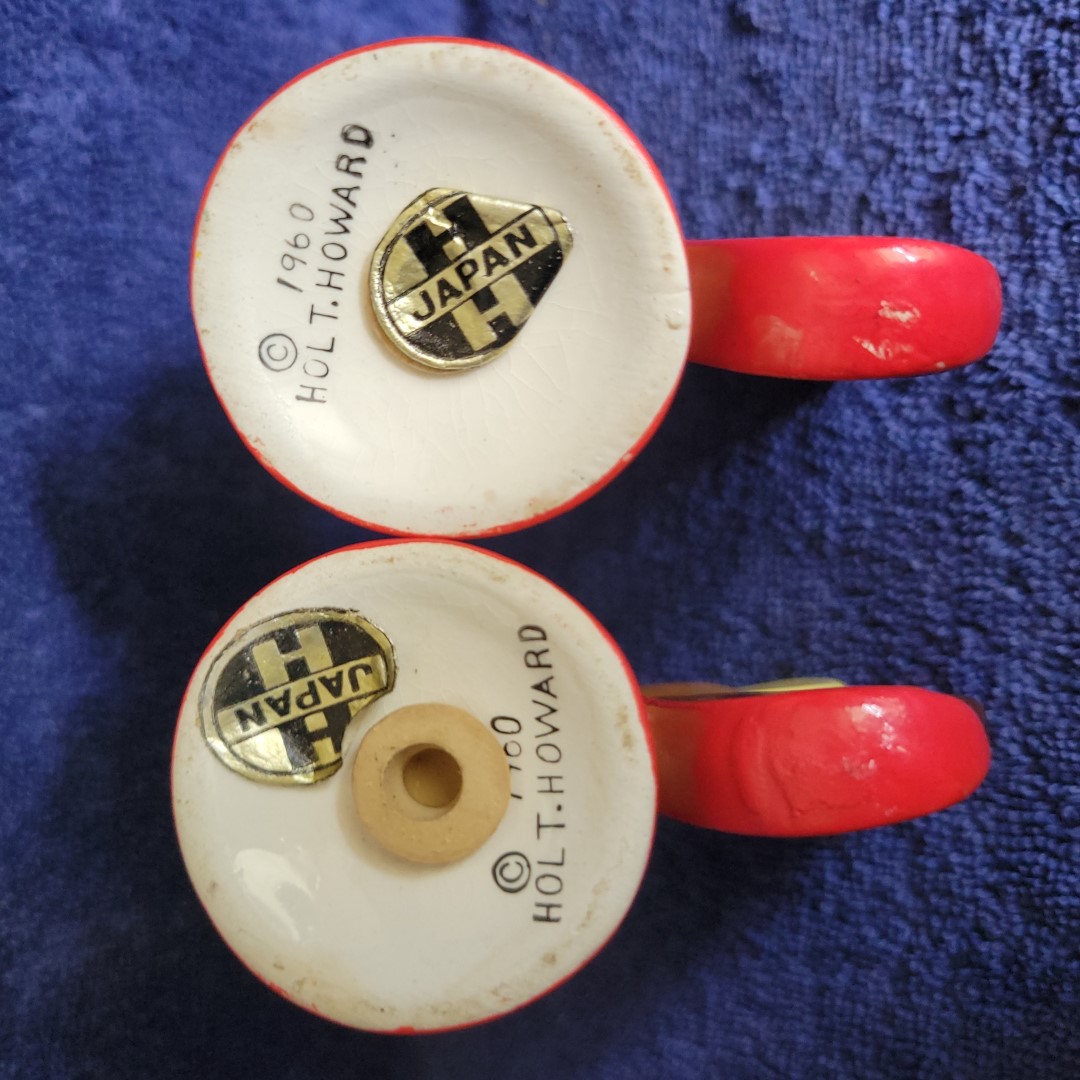
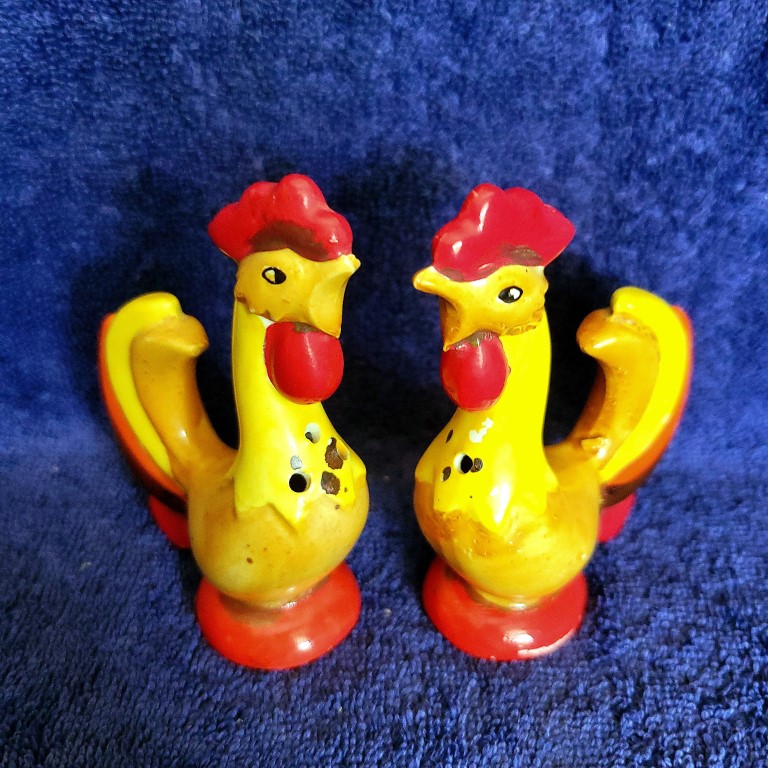
The smaller version stands approximately 3¾ inches high, while the standard larger set stands approximately 4½ inches high. The larger set is backstamped 1960 and has the letters S and P printed on the roosters’ chests. The smaller set omits those chest letters, making the side-by-side comparison especially useful for distinguishing the two versions.
The archive’s large set is represented here by a documented example showing the original chest lettering, molded stopper openings, © HOLT HOWARD 1960 base marks, and surviving HH JAPAN foil labels. The smaller set is currently represented by listing photographs, included here because true small examples appear much less frequently and are best identified when size is explicitly documented or directly comparable.
Trivet — Square Design
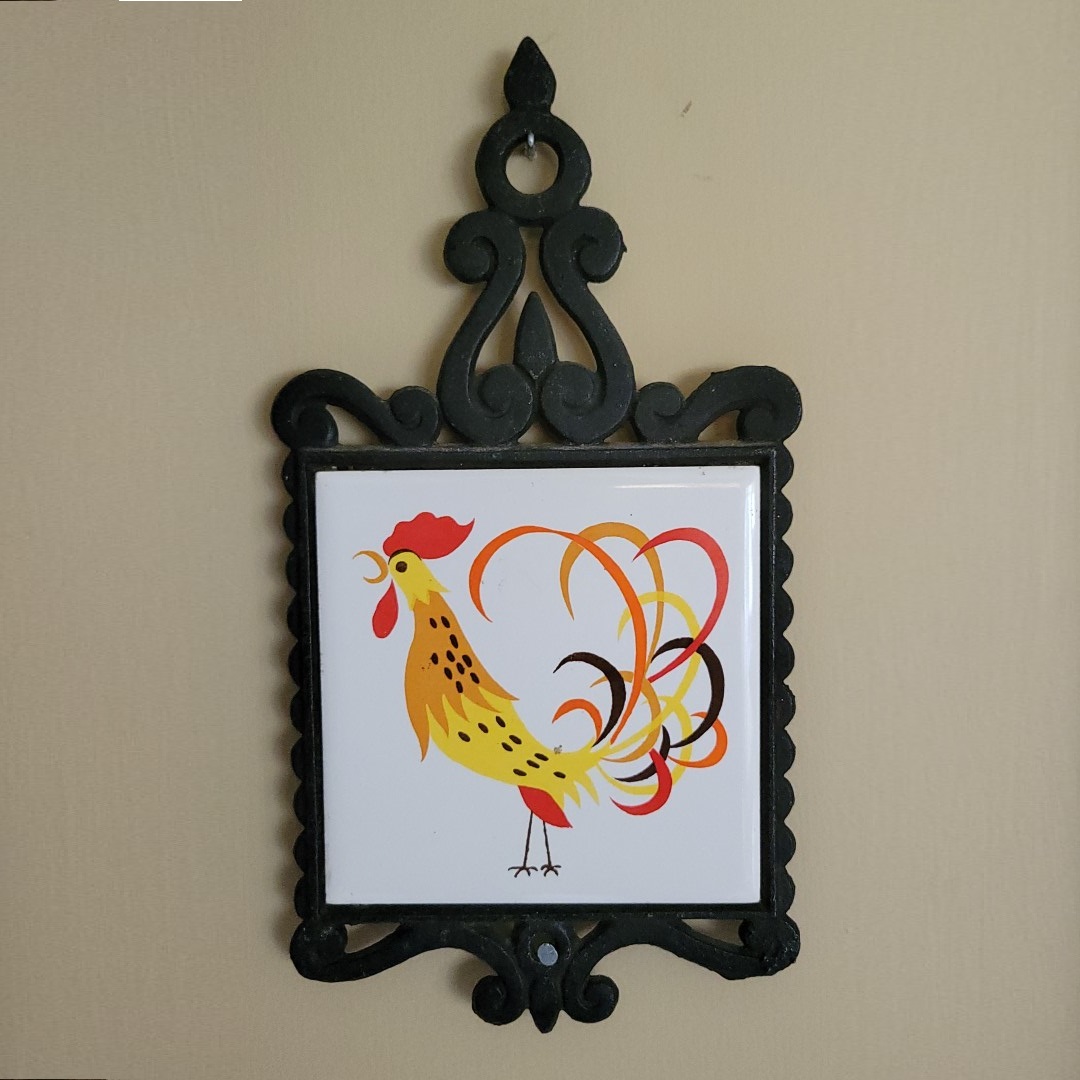
This Coq Rouge square-design trivet combines a ceramic tile insert with an ornate black metal frame. The white square tile carries a large full-body rooster in the collection’s familiar yellow, orange, red, and brown palette, while the surrounding frame gives the piece a decorative wall-hanging quality as well as a functional role as a trivet.
At least three different versions of the Coq Rouge rooster trivet are documented. This square version consists of a ceramic tile surrounded by black wrought iron, with a 4¼-inch-square tile insert and an overall size of approximately 10½ inches long by 5 inches wide. The trivet is documented with a “Holt-Howard” backstamp.
Candle Holders
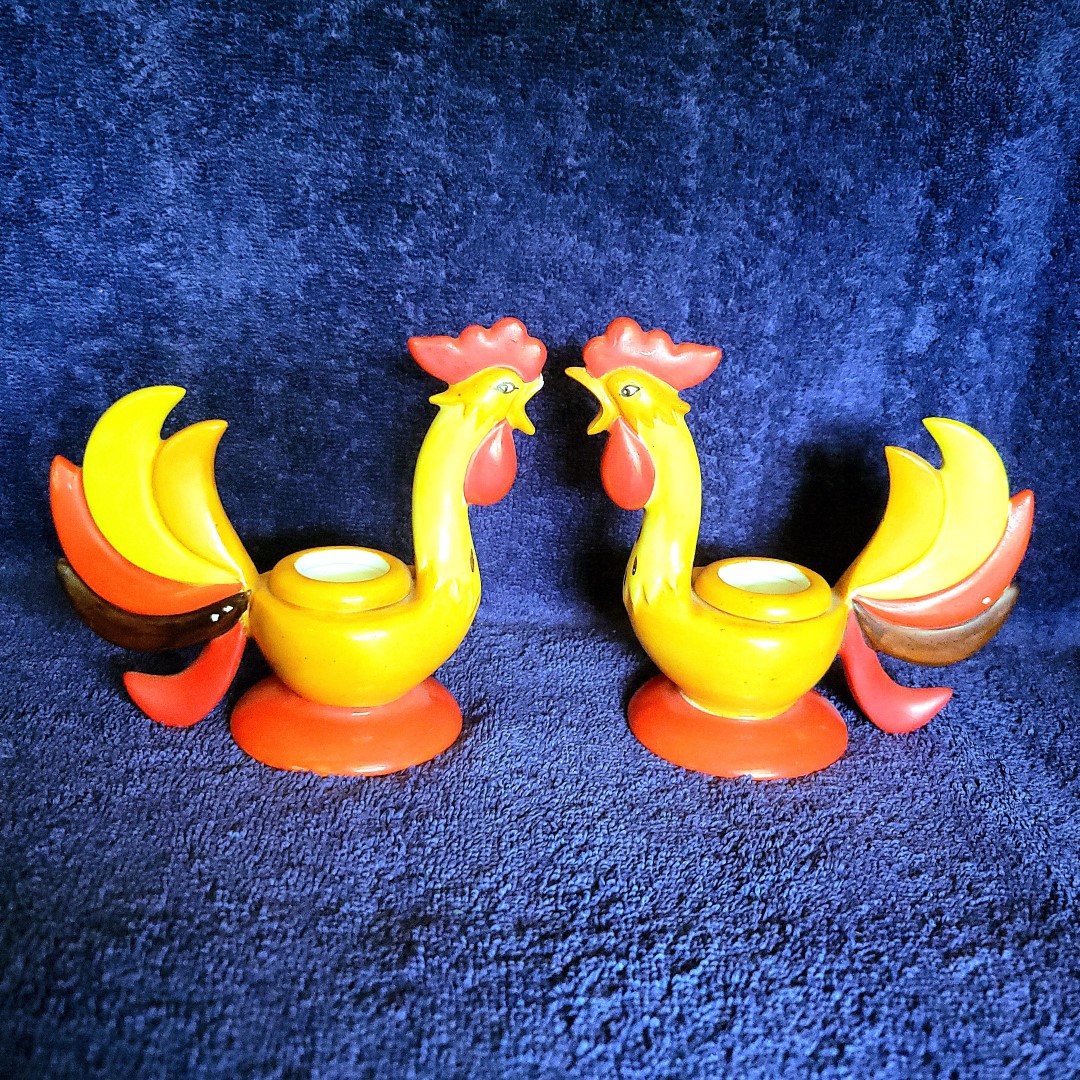
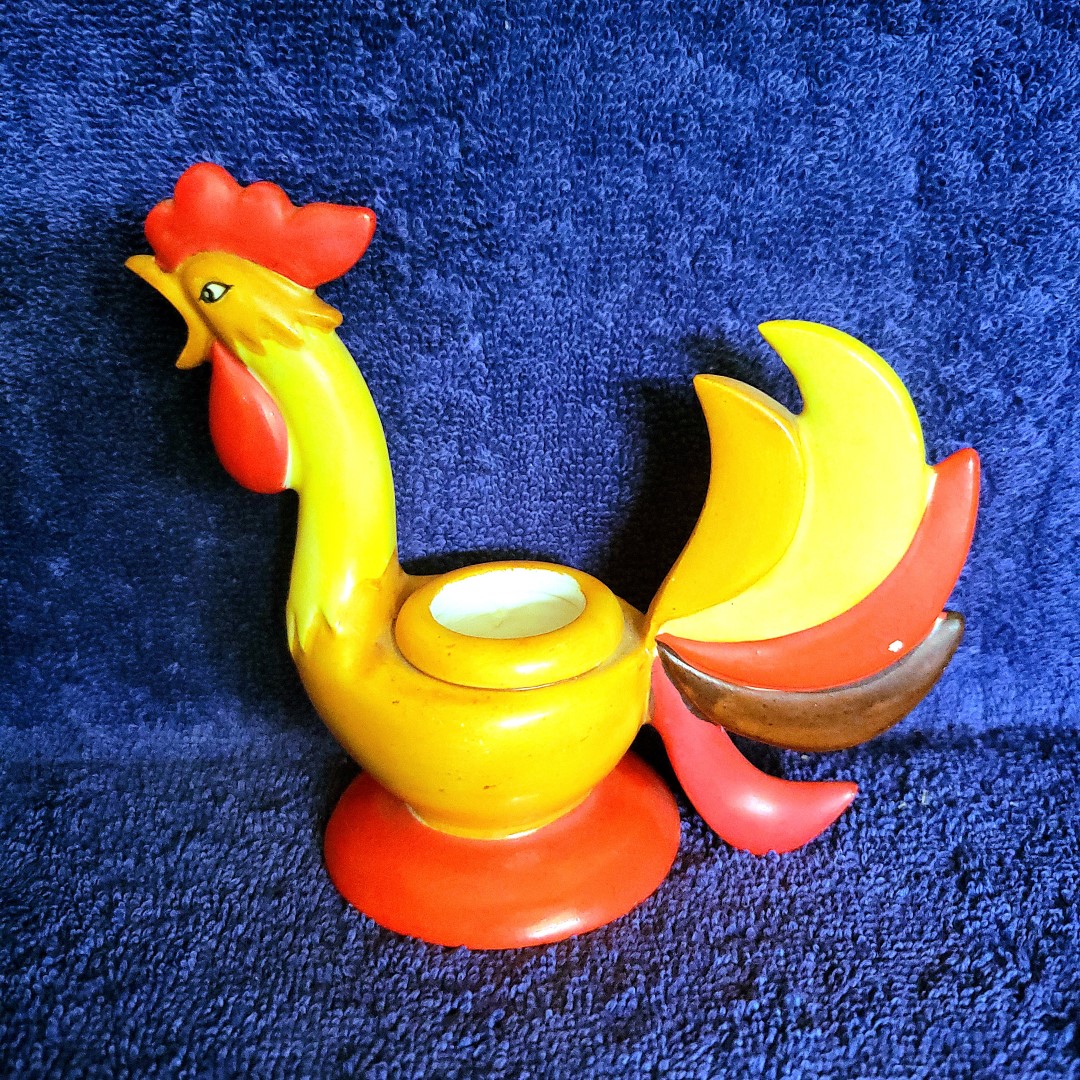
The Coq Rouge Candle Holders were sold as a matching pair of figural roosters. Each bird is modeled with the collection’s sweeping layered tail feathers and stands on a broad red-orange foot, while a circular candle socket is recessed into the back of the body. Viewed together, the pair forms a particularly sculptural interpretation of the Coq Rouge rooster.
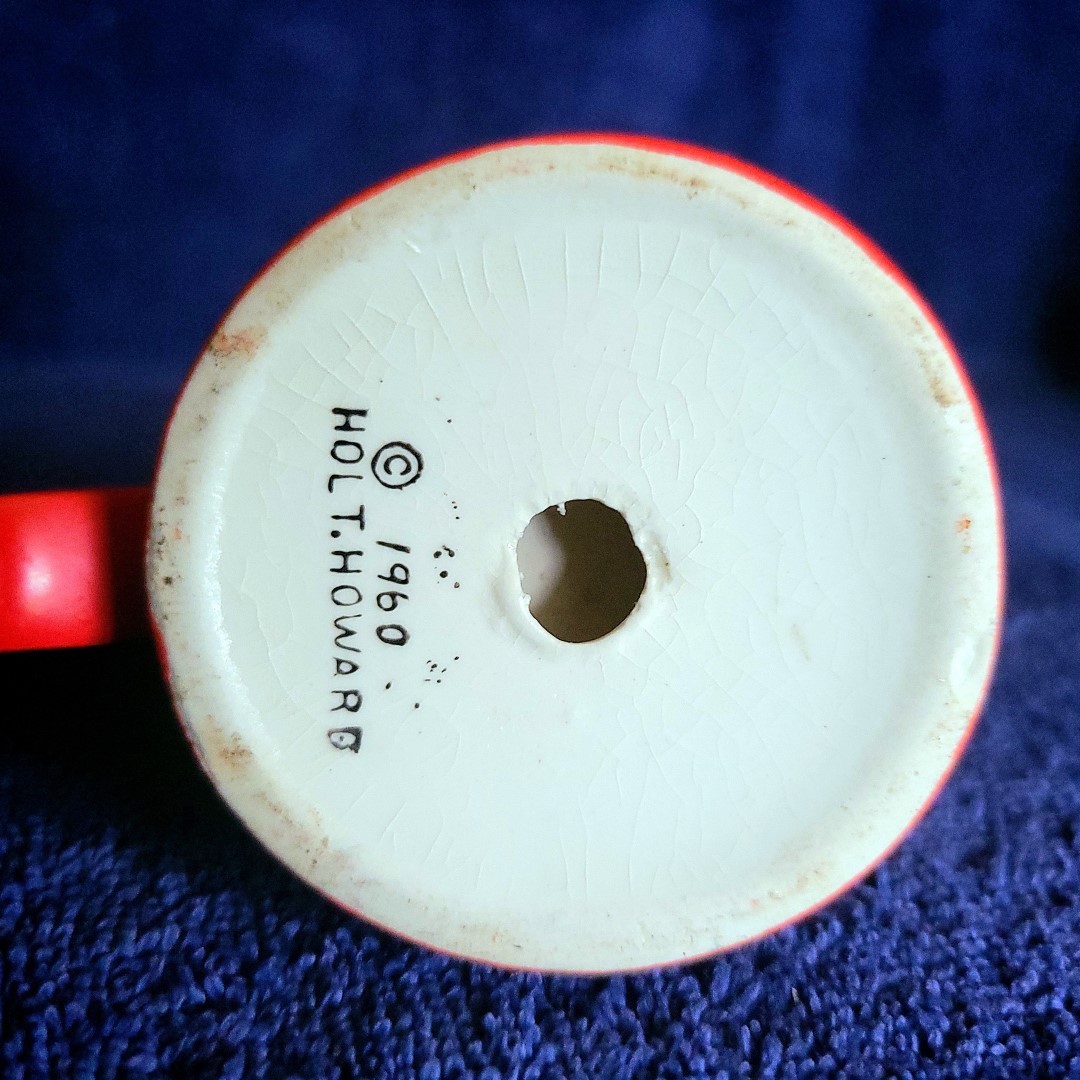
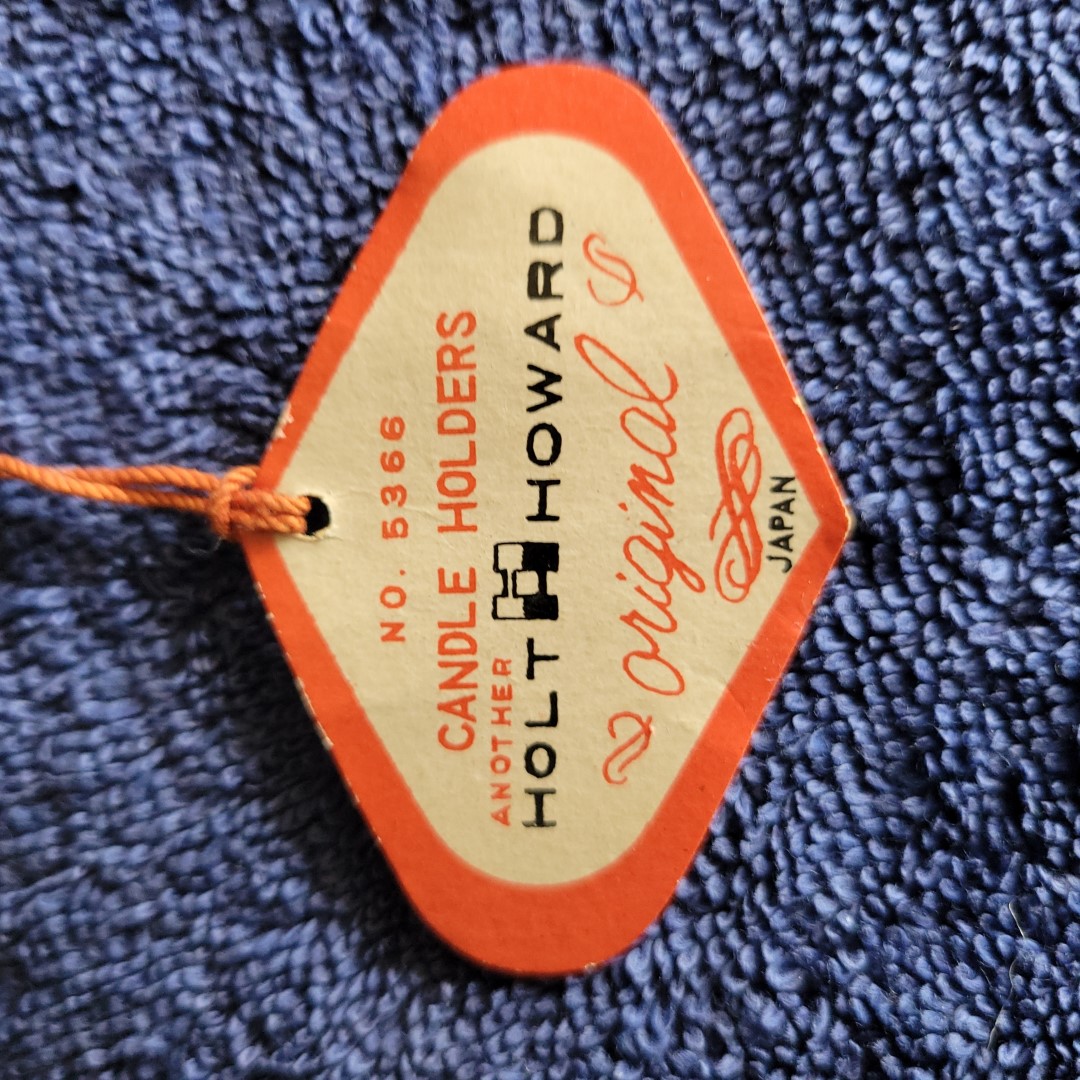
The candle holders measure approximately 4⅜ inches high, were sold as a pair, and are documented with a 1960 backstamp. The archive pair shown here matches that documentation, and the surviving original hang tag identifies the set as No. 5366 CANDLE HOLDERS.
Bud Vase
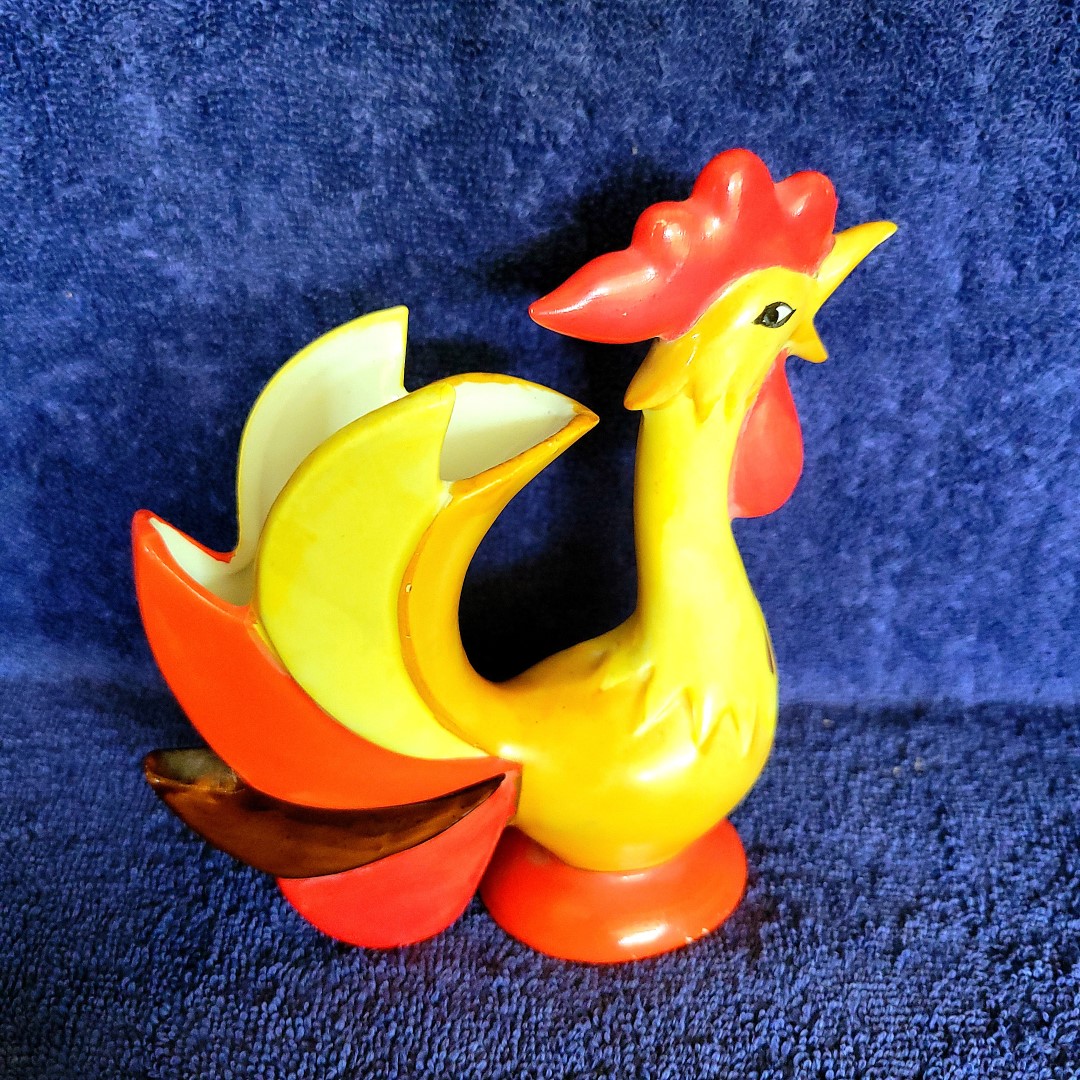
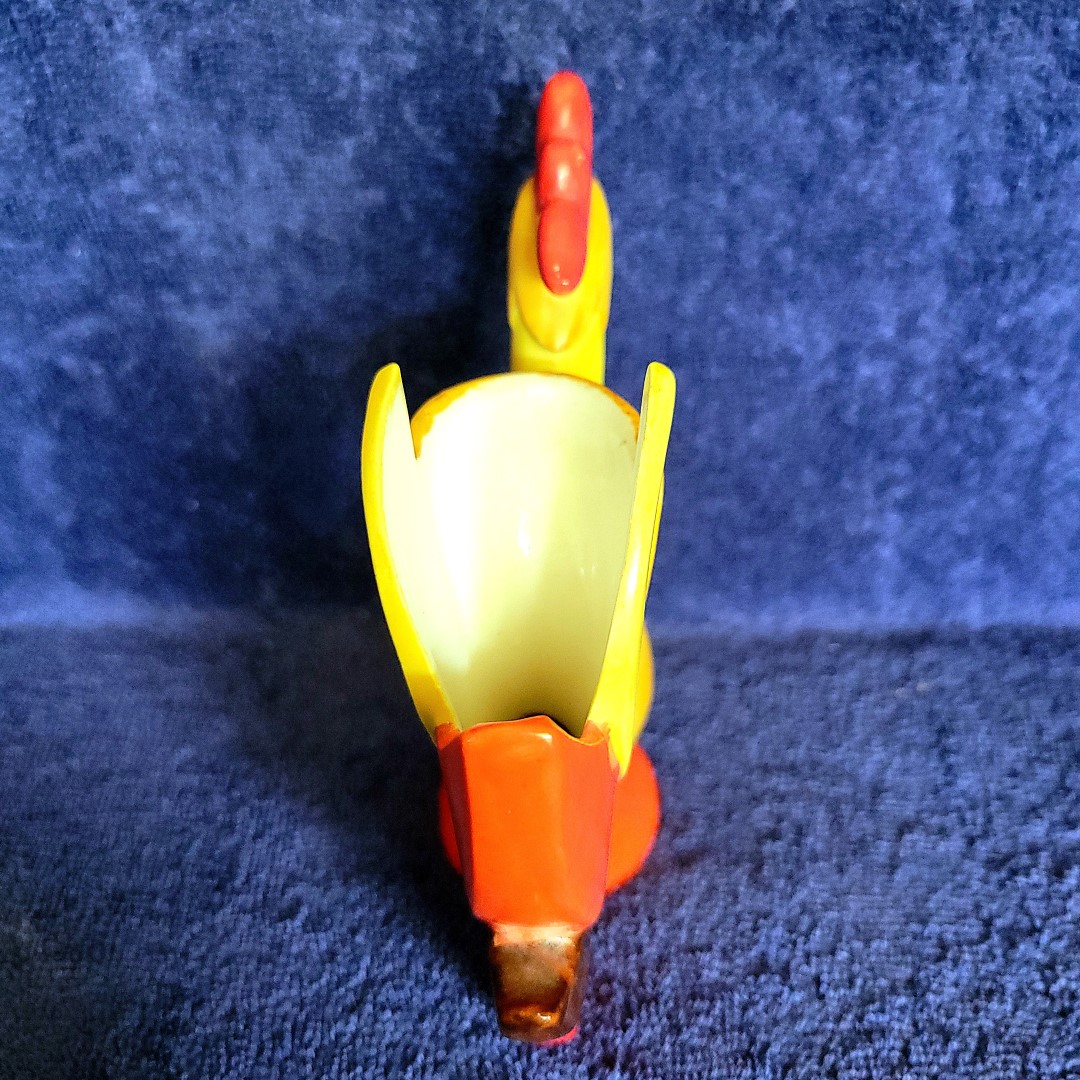
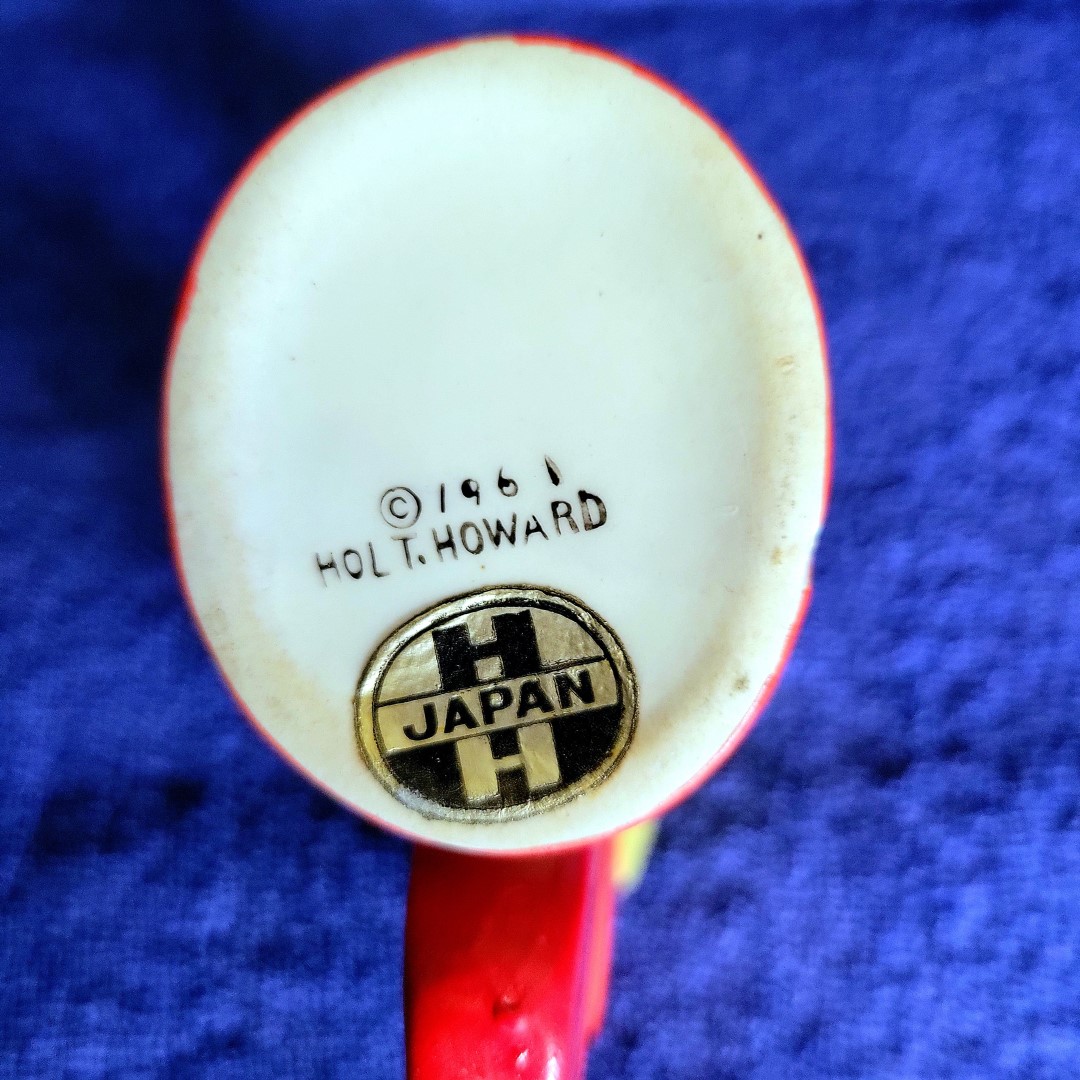
The Coq Rouge Bud Vase turns the rooster’s sweeping tail into the functional heart of the piece. The upright figural bird stands on a red-orange base, while the layered tail feathers rise around an open cavity designed to hold a small floral arrangement. The result is both a decorative rooster figure and a usable table vase.
The matching rooster vase measures approximately 6 inches by 5 inches and is documented with a 1961 backstamp. The archive example shown here represents the standard larger form and carries the corresponding © 1961 HOLT-HOWARD base mark together with its black-and-gold HH JAPAN foil label.
Wooden Match Holder
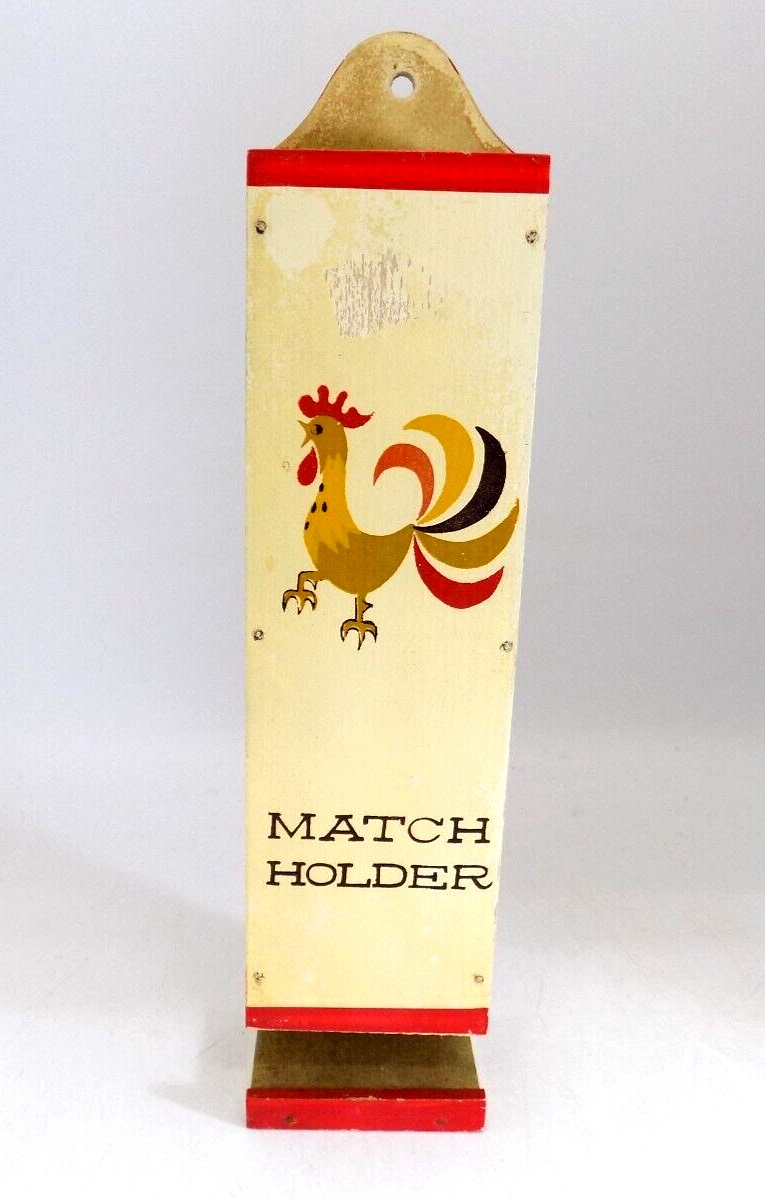
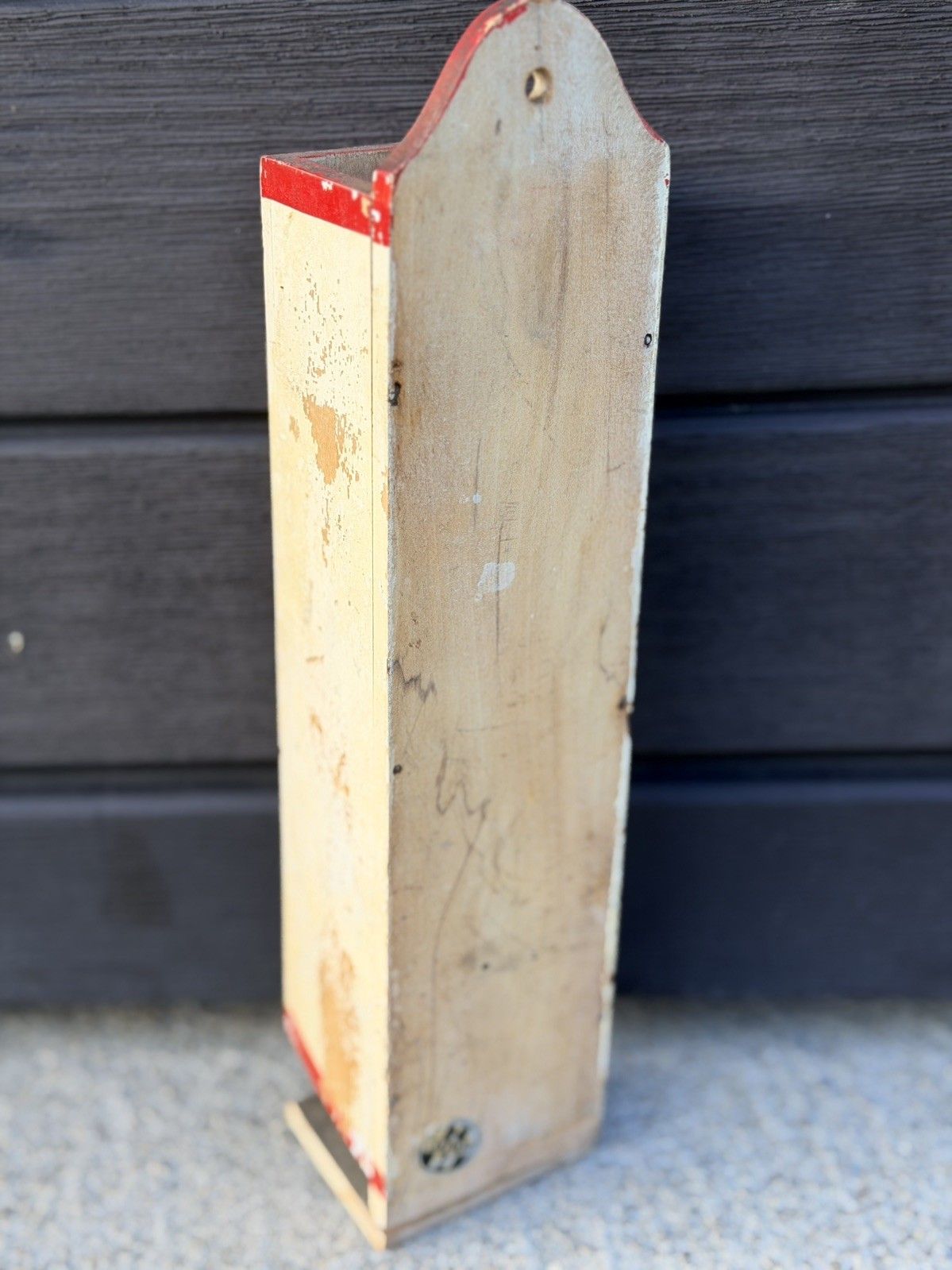
The Coq Rouge Wooden Match Holder is a narrow wall-hanging accessory designed to keep kitchen matches close at hand. Its painted front carries the full-body rooster above bold MATCH HOLDER lettering, with narrow red bands at the top and bottom and a small projecting wooden shelf at the base to support the matches.
The piece is the companion to the line’s wooden cigarette holder and measures approximately 11¾ inches long. The surviving example documented here also reveals the plain wooden reverse, the hanging hole cut into the shaped top, and a surviving Holt-Howard foil label on the back.
Cigarette Package Holder
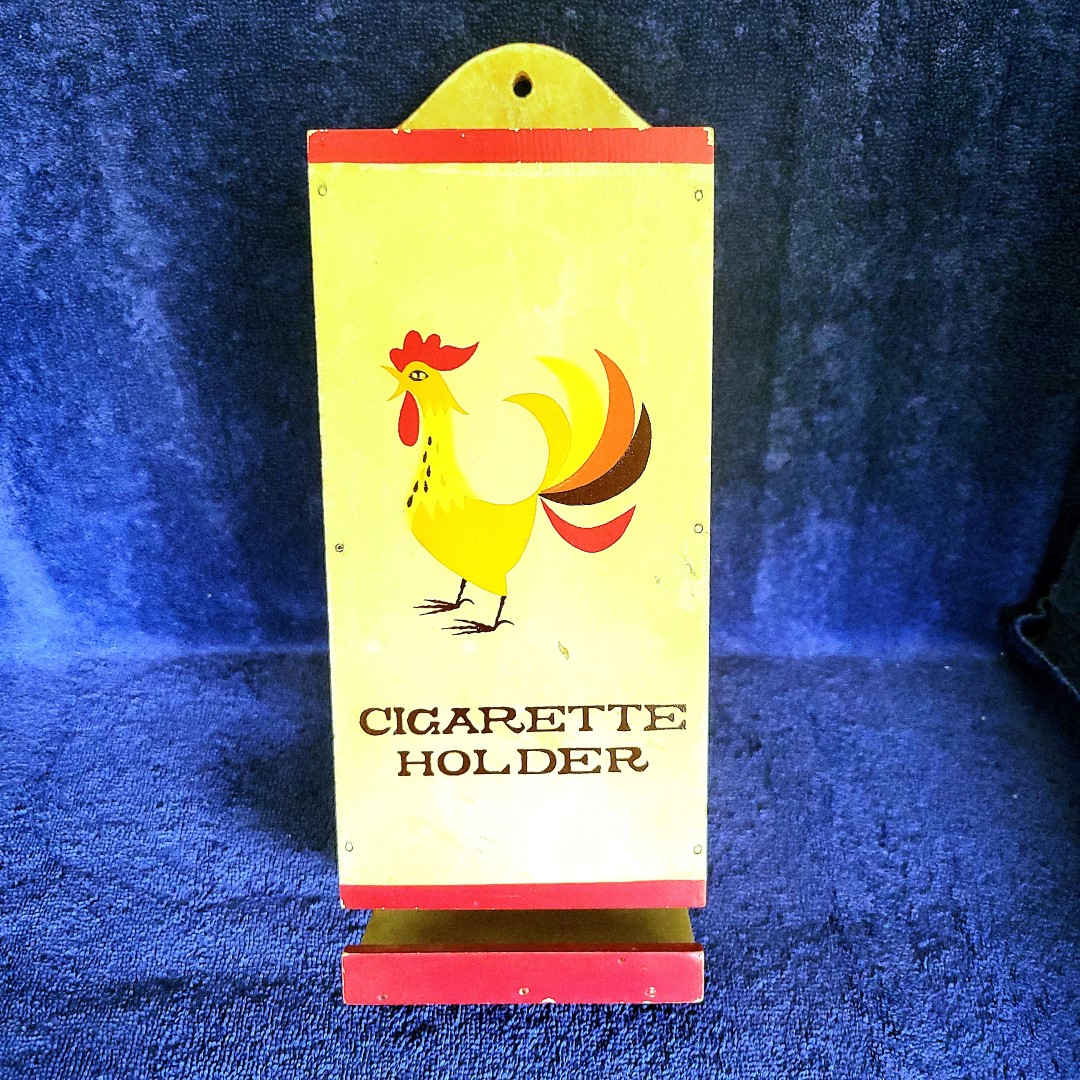
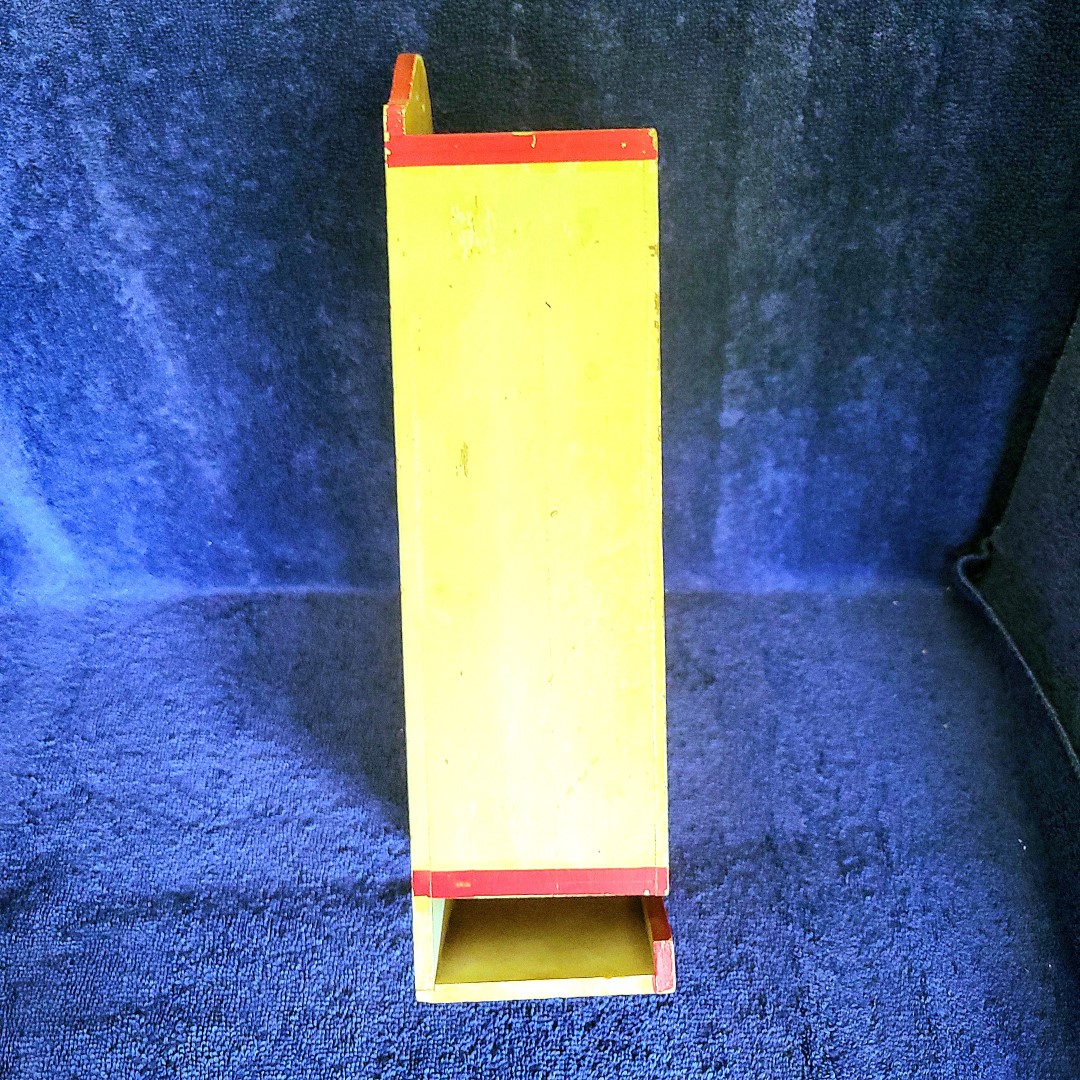
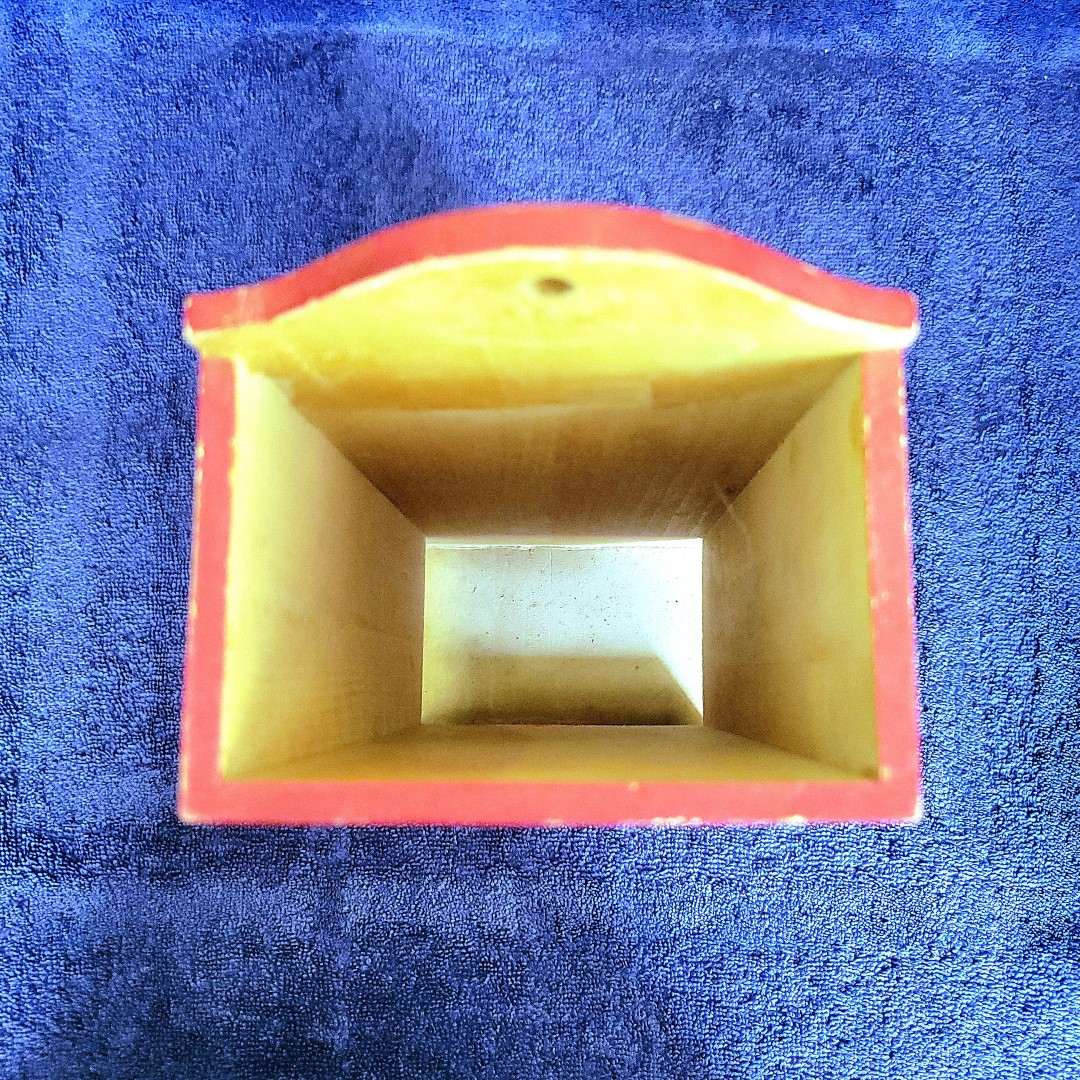
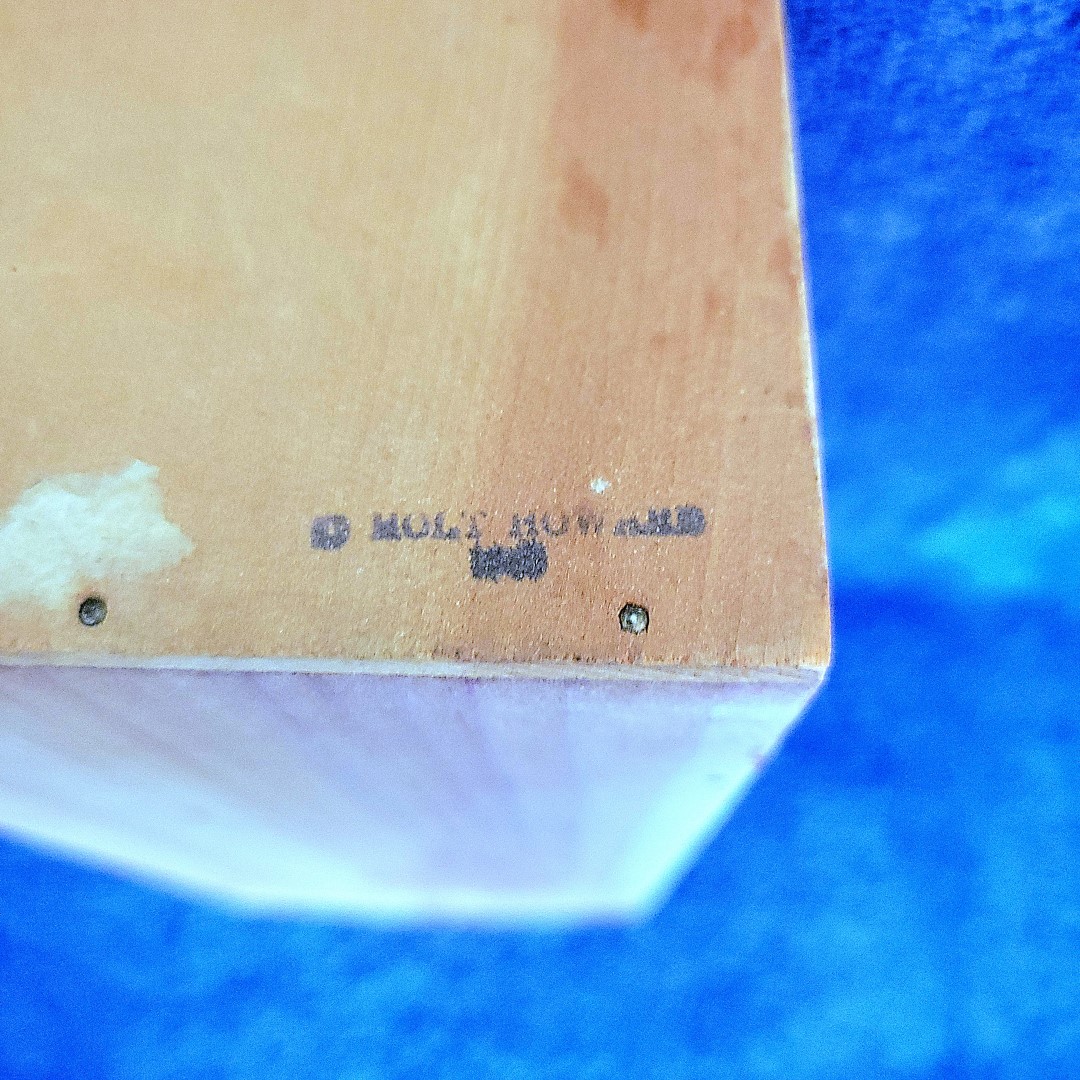
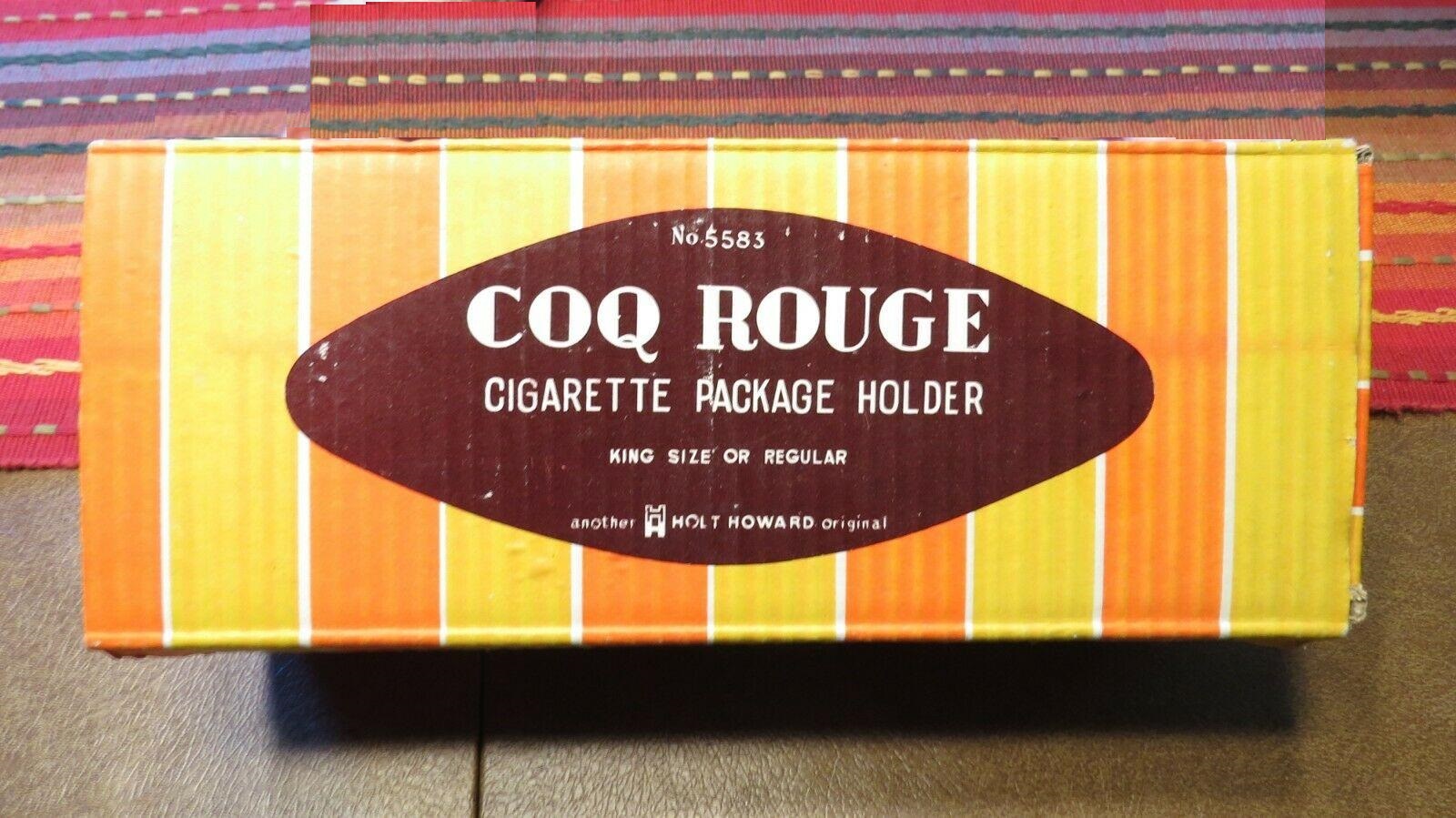
The Coq Rouge Cigarette Package Holder is a tall painted wooden wall dispenser intended to hold packaged cigarettes while keeping them accessible from the open shelf at the bottom. The front is decorated with a full-body rooster and CIGARETTE HOLDER lettering, while the narrow cabinet body is finished with red trim and a shaped hanging tab at the top.
The piece is a wooden cigarette box approximately 11¾ inches long that hangs on the wall and stores a full carton of cigarettes. Surviving original packaging sharpens that identification: the factory box names it the Coq Rouge Cigarette Package Holder, gives it catalog number No. 5583, and states that it accommodates king-size or regular cigarettes.
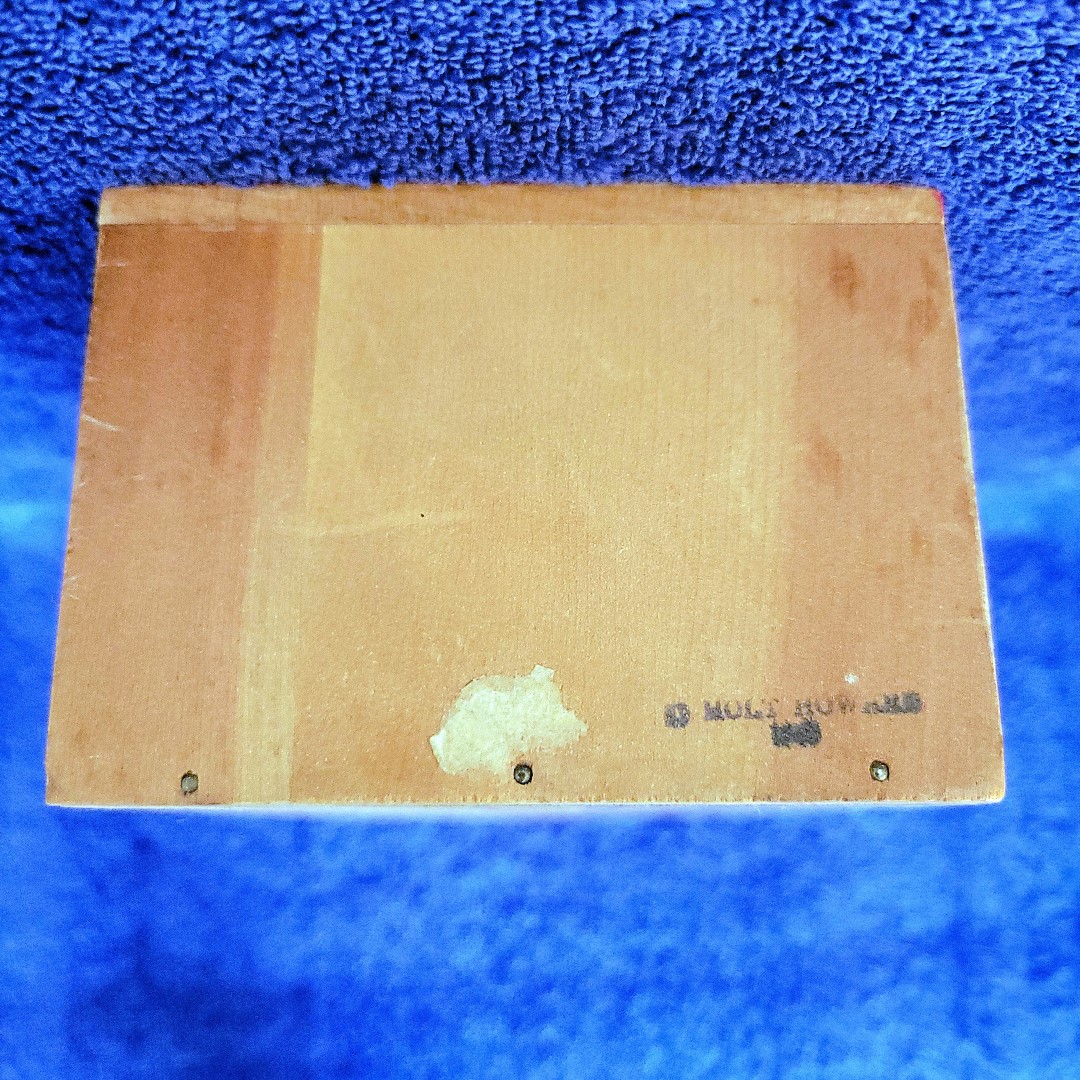
The archive example also documents the holder’s construction in detail, including the deep wooden interior, open-bottom dispensing arrangement, plain wood back, and surviving Holt-Howard marking.
Ashtray
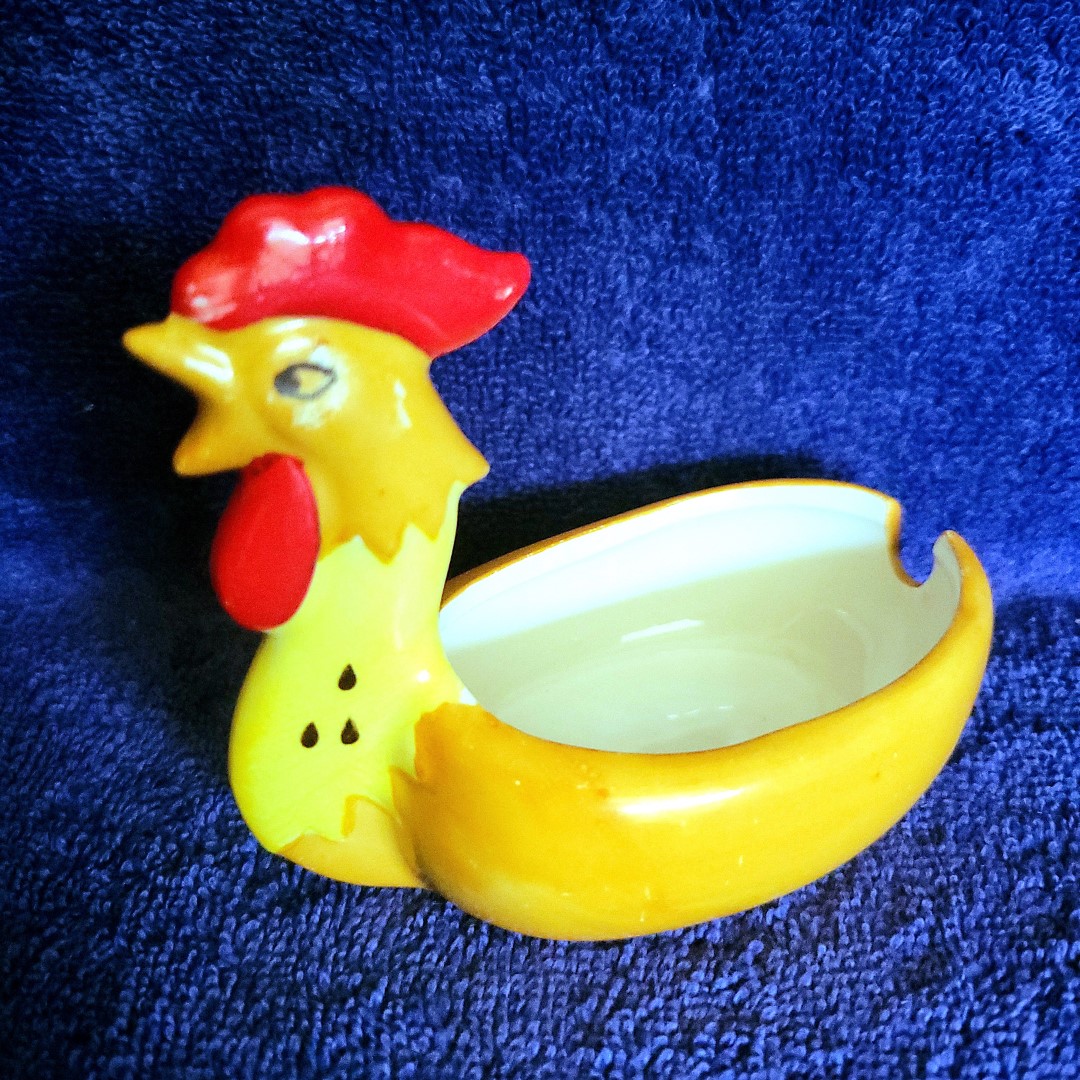
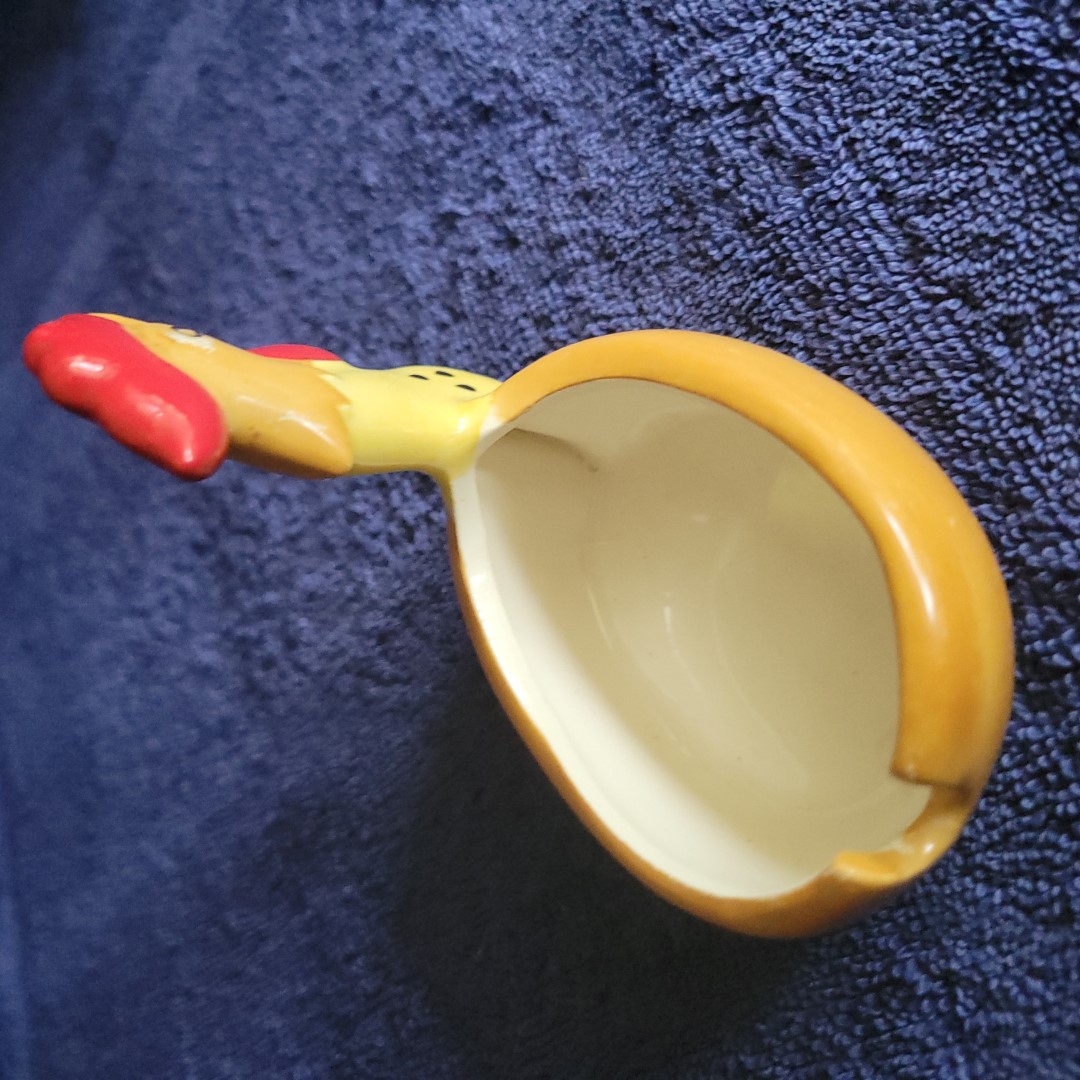
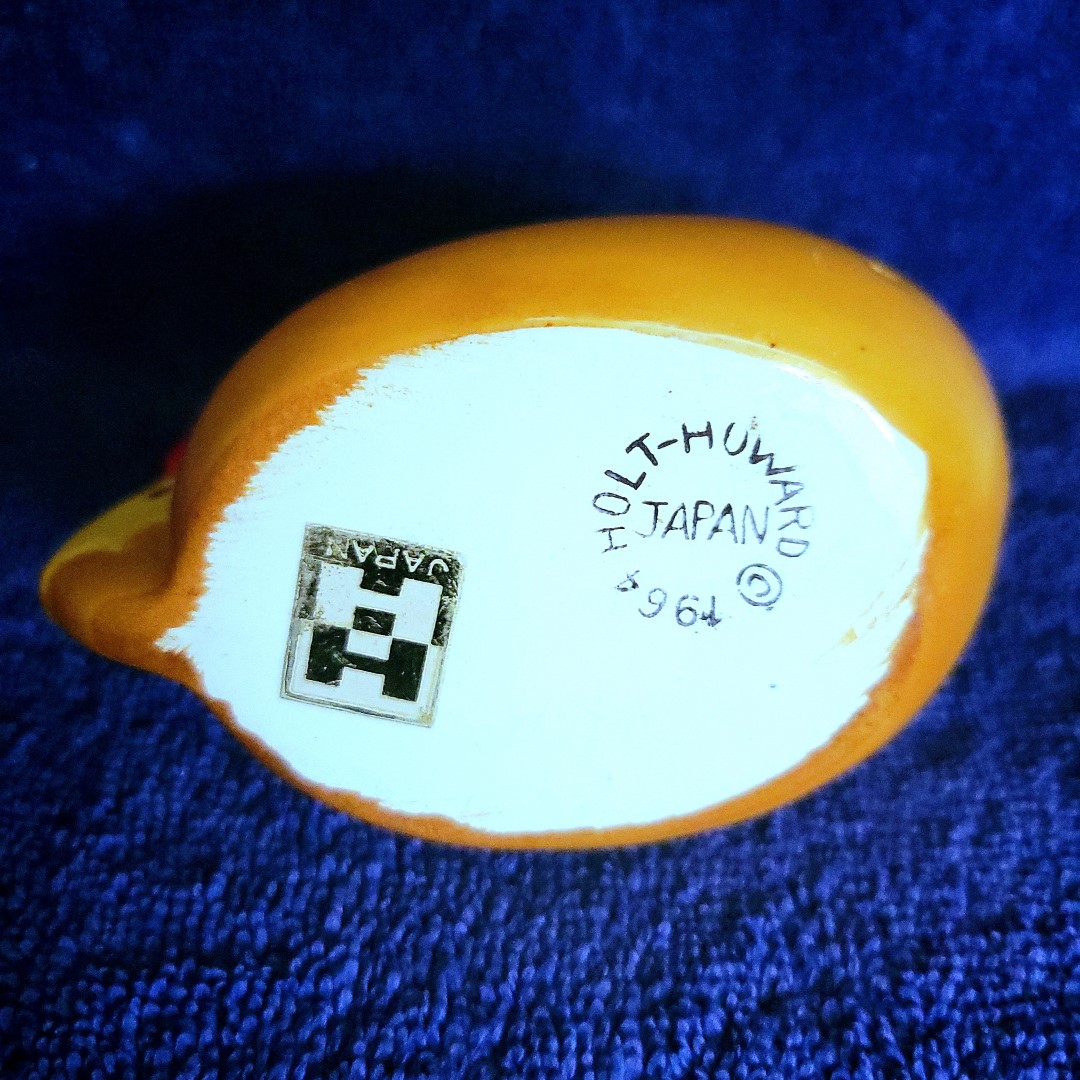
The Coq Rouge Ashtray is a compact figural rooster piece built around a shallow oval basin, with the rooster’s head and neck rising from one end and a molded cigarette rest cut into the opposite rim. Its small scale distinguishes it immediately from the much larger Spoon Rest despite the dimensions published in the standard collector guides.
Both editions of the standard collector guide give the ashtray a length of 6 inches. That measurement is incorrect. The archive example shown here measures approximately 3¾ inches long × 2 inches wide × 3¼ inches high. The surviving base is marked HOLT-HOWARD JAPAN © 1964 and retains its black-and-gold HH JAPAN foil label.
Napkin Holder
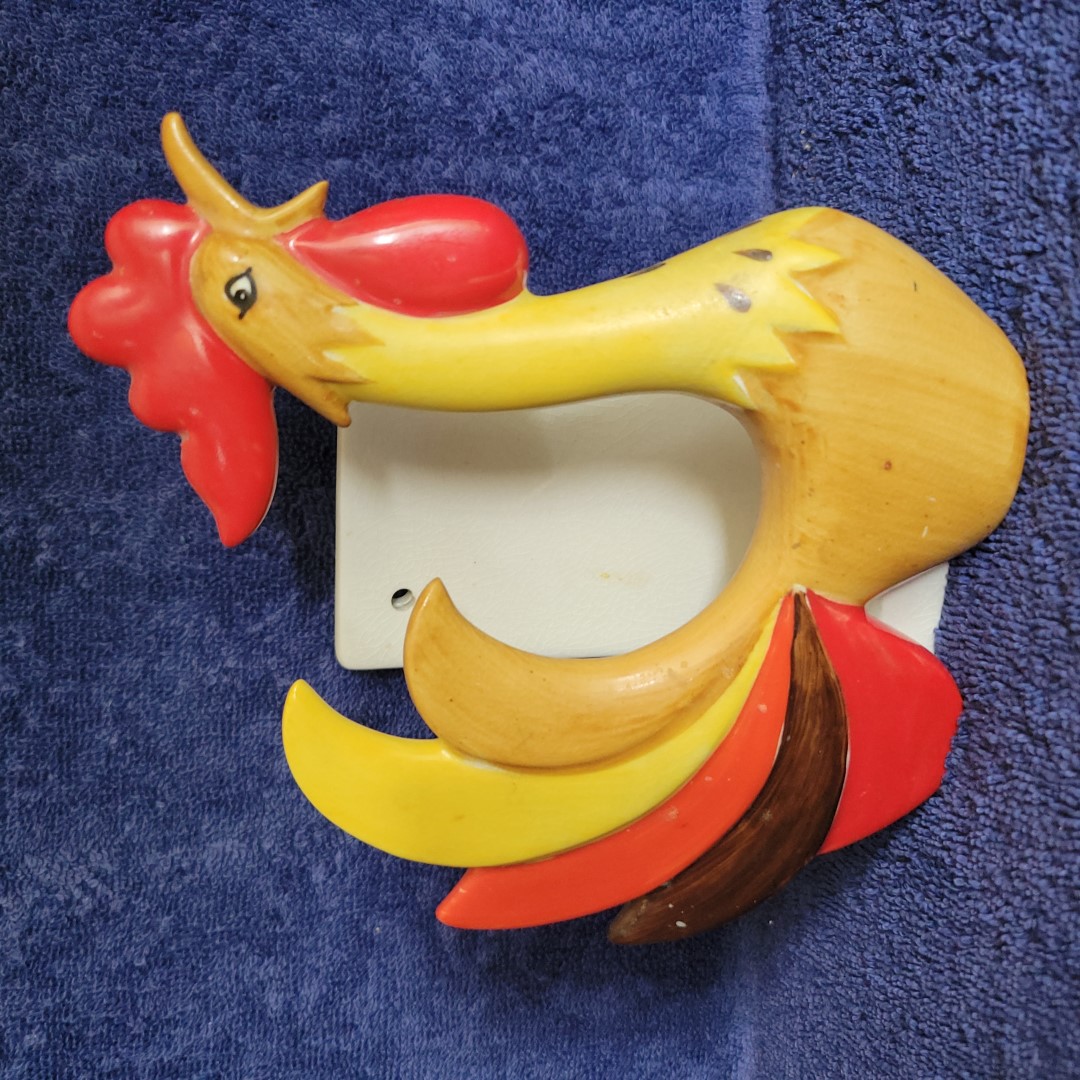
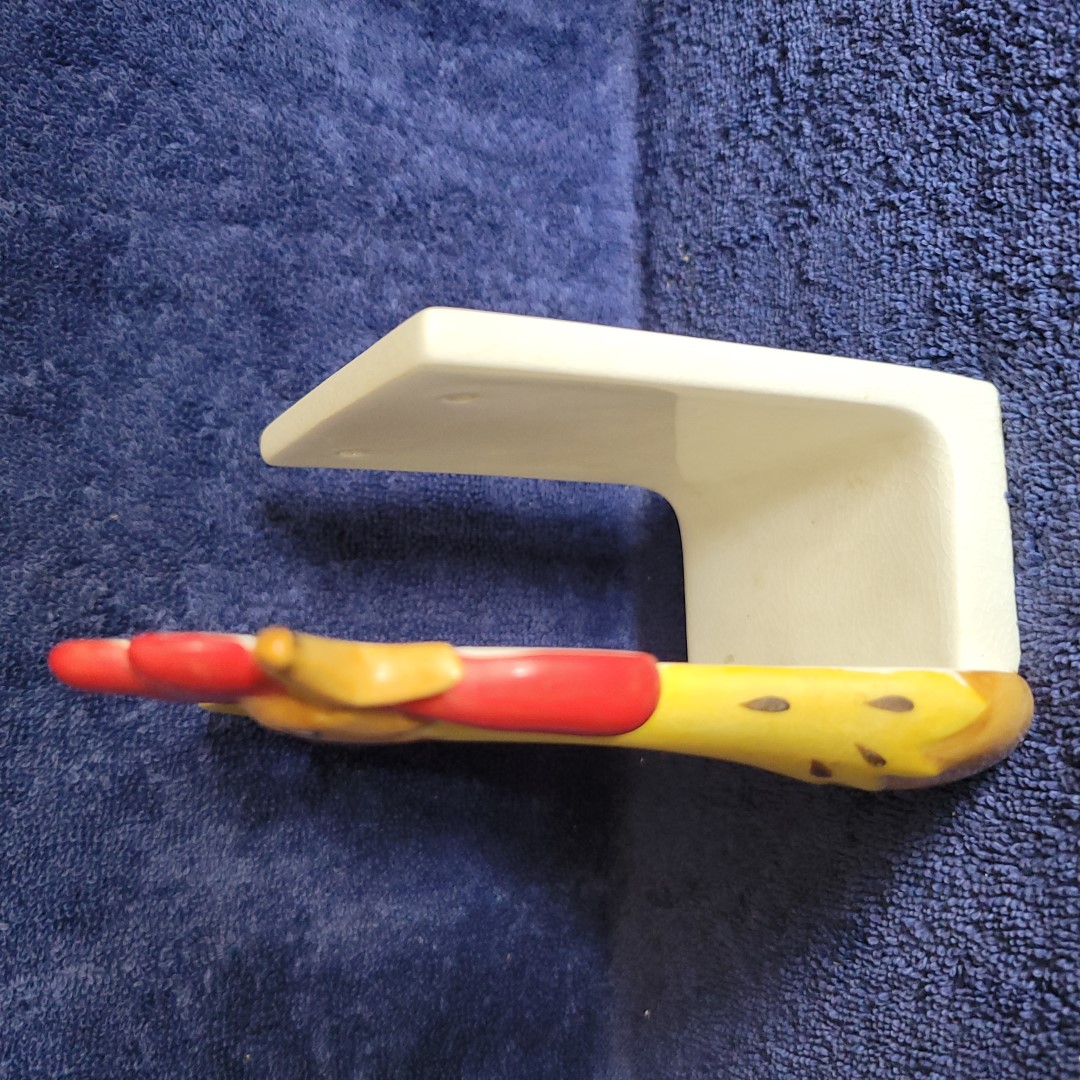
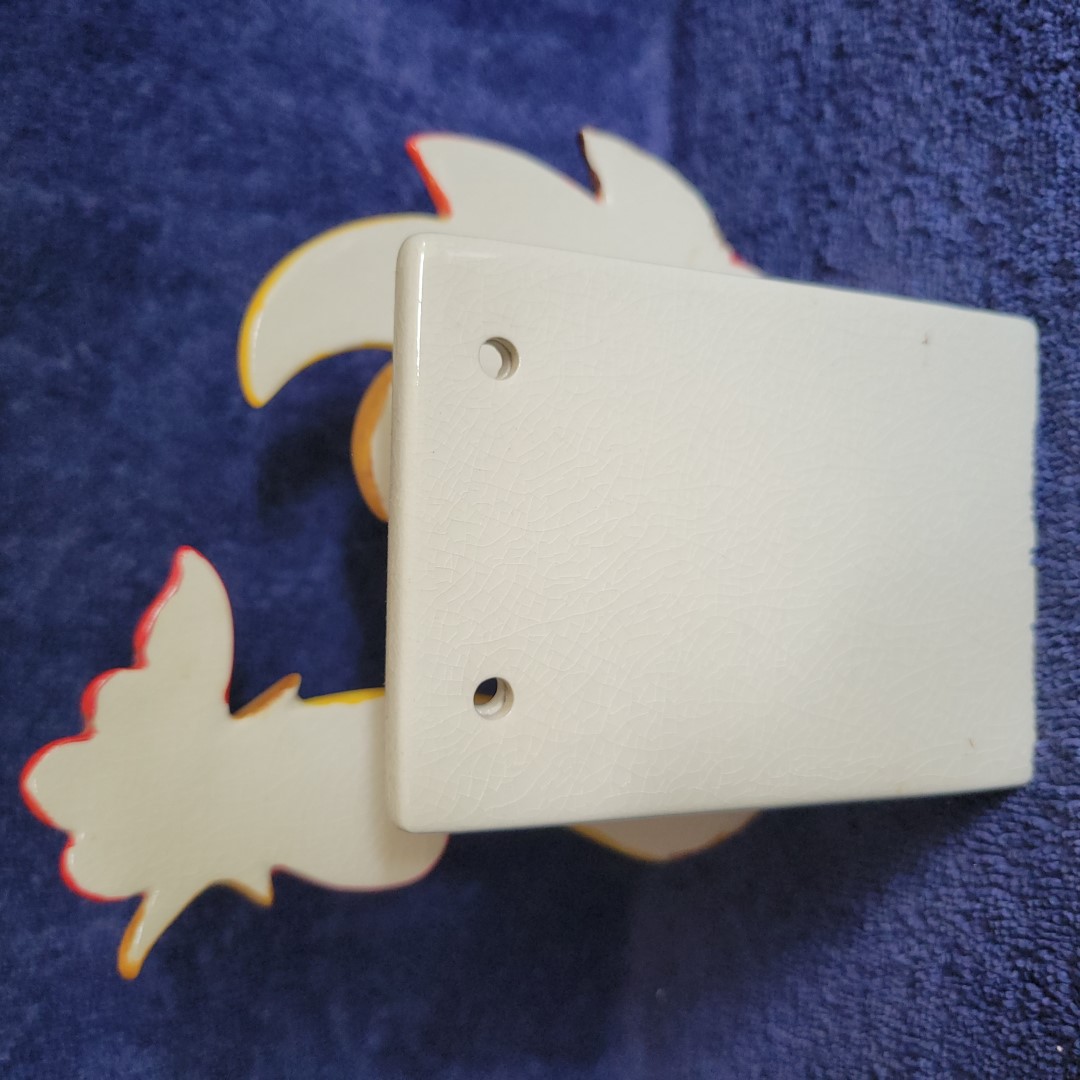
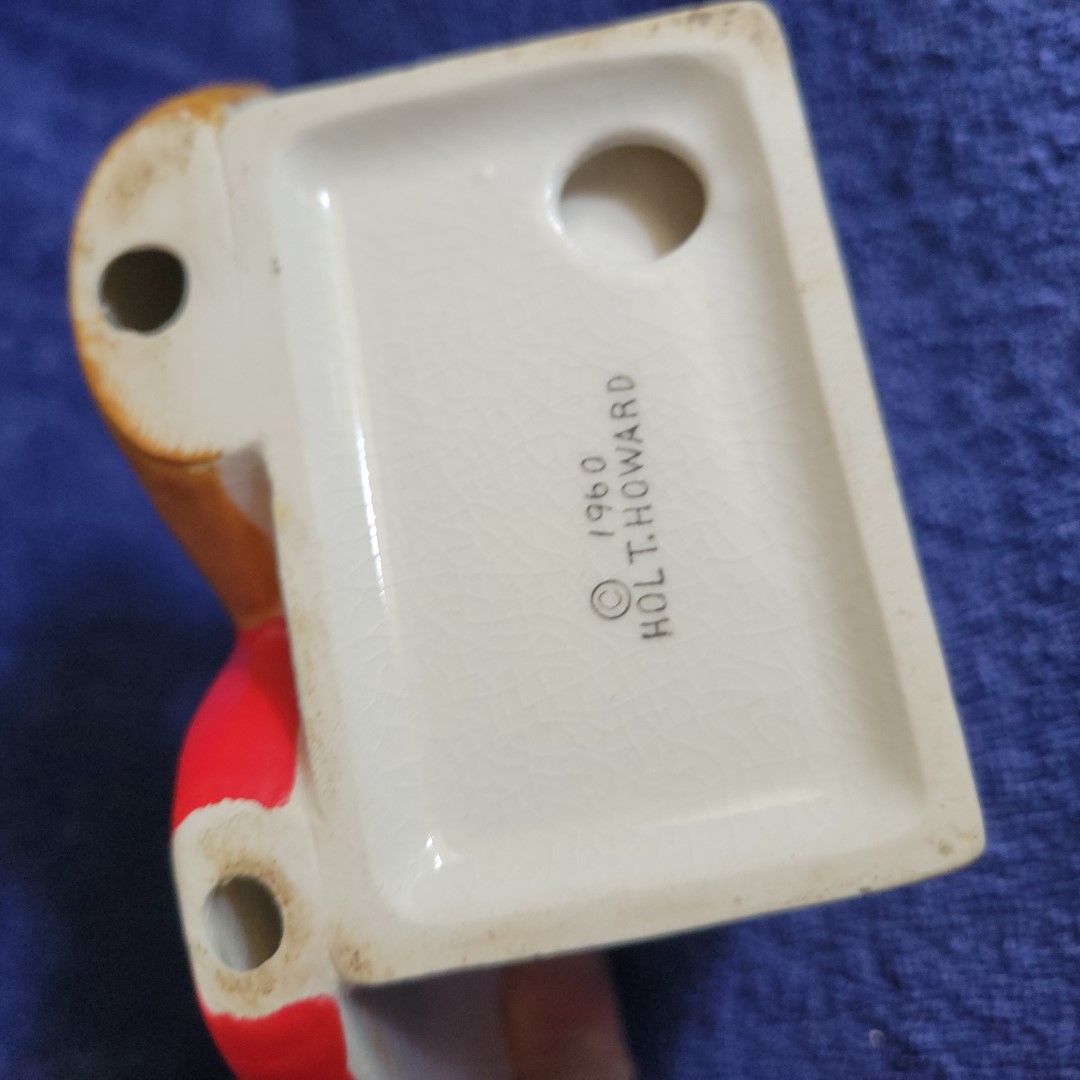
The Coq Rouge Napkin Holder combines a sculptural rooster front with a simple white ceramic back plate, creating an open compartment sized to hold folded napkins. Two holes near the top of the rear plate also allow the piece to be hung on a wall rather than used only on a countertop or table.
The napkin holder is approximately 7 inches high and has two wall-hanging holes. The standard collector guide records the piece as backstamped 1961; the archive example shown here is instead clearly marked © 1960 HOLT HOWARD, documenting that the form was already in production a year earlier than the published date.
Nut Dishes — Large and Small
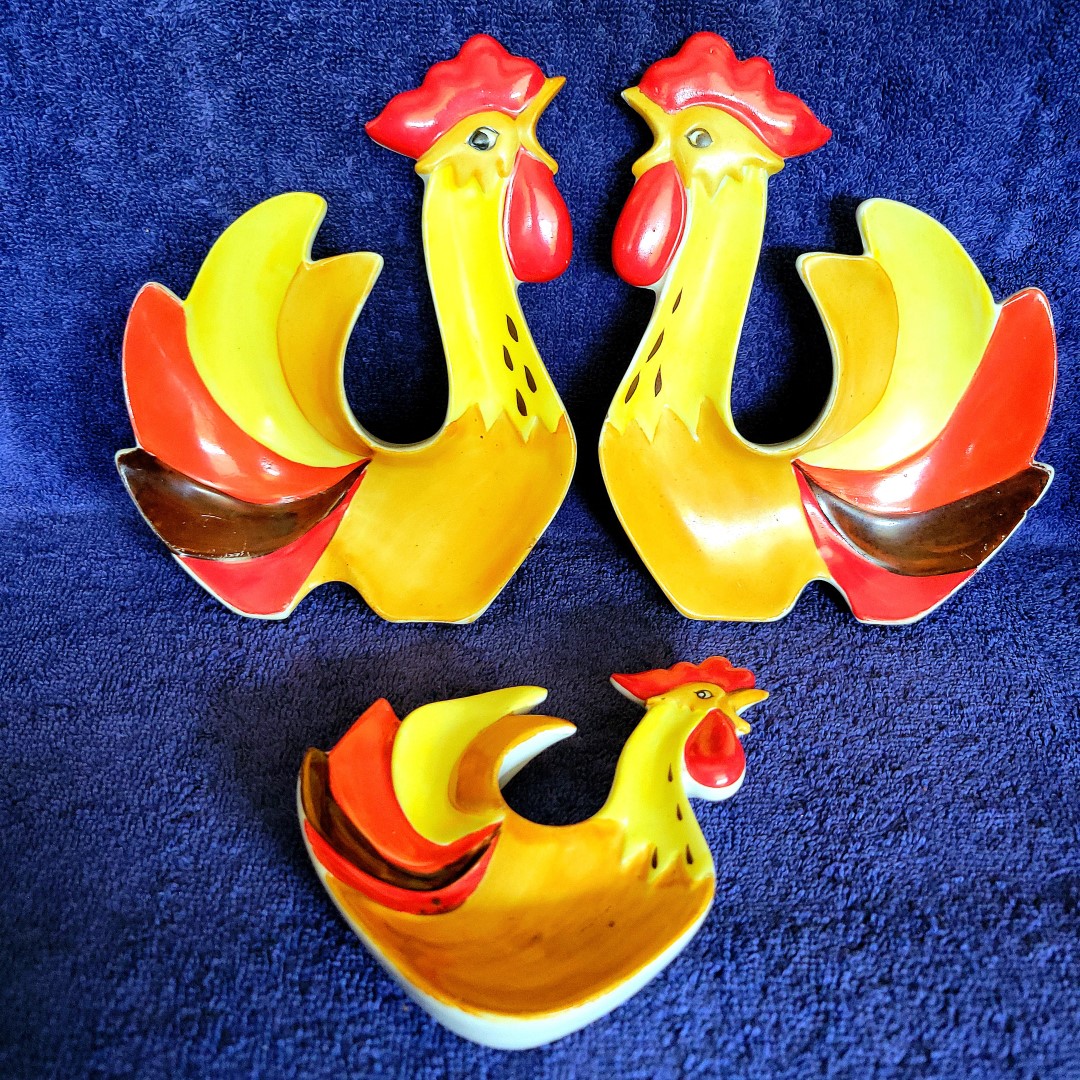
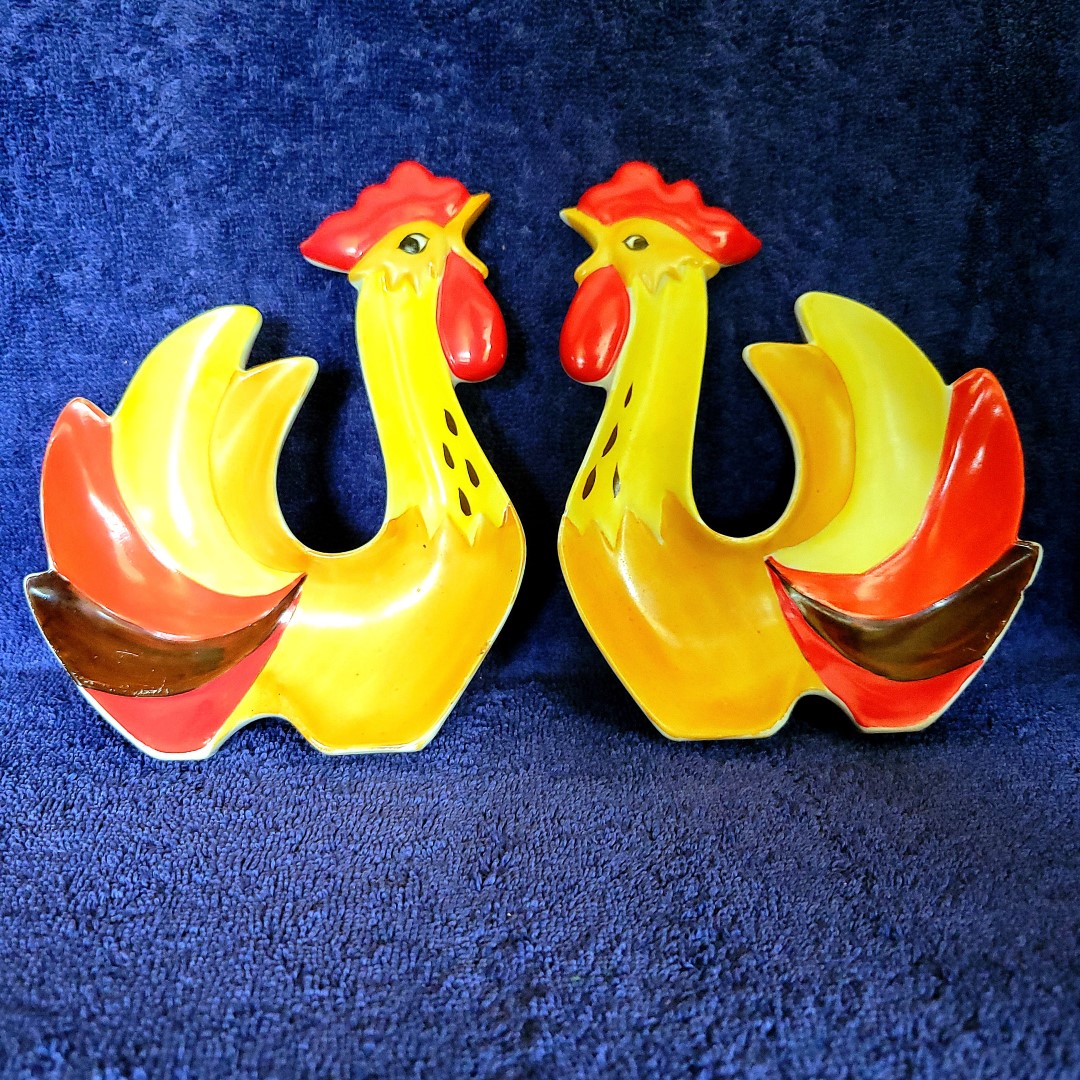
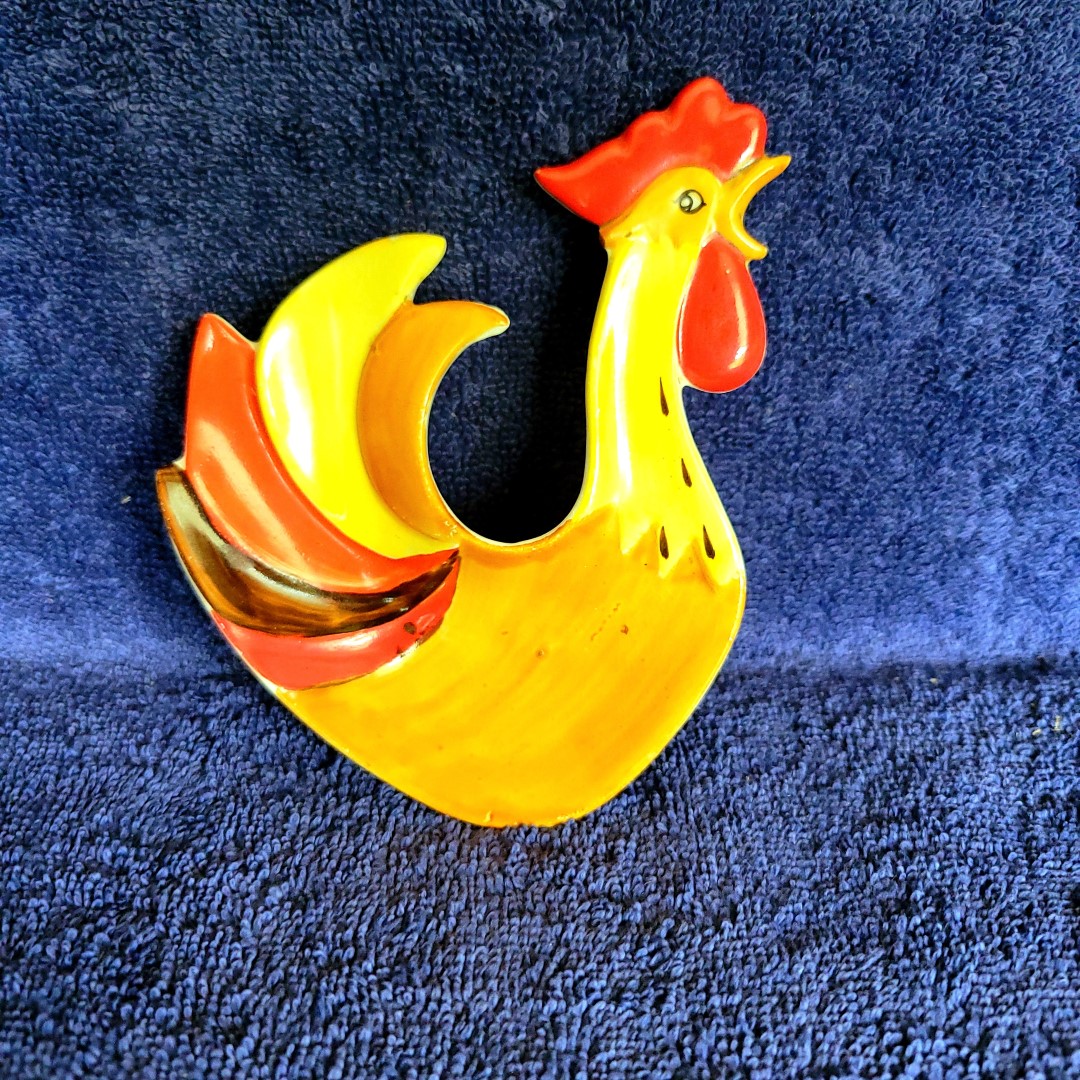
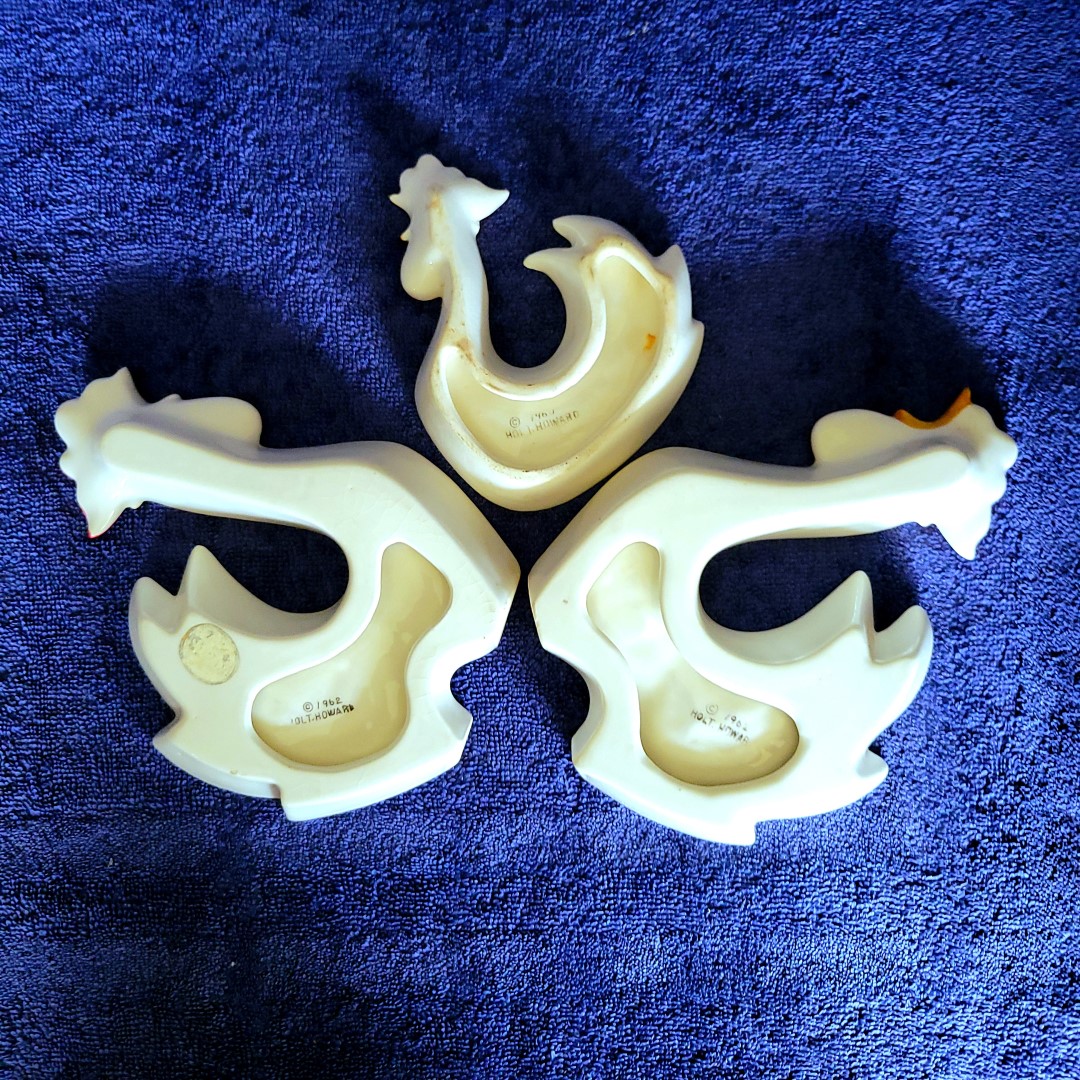
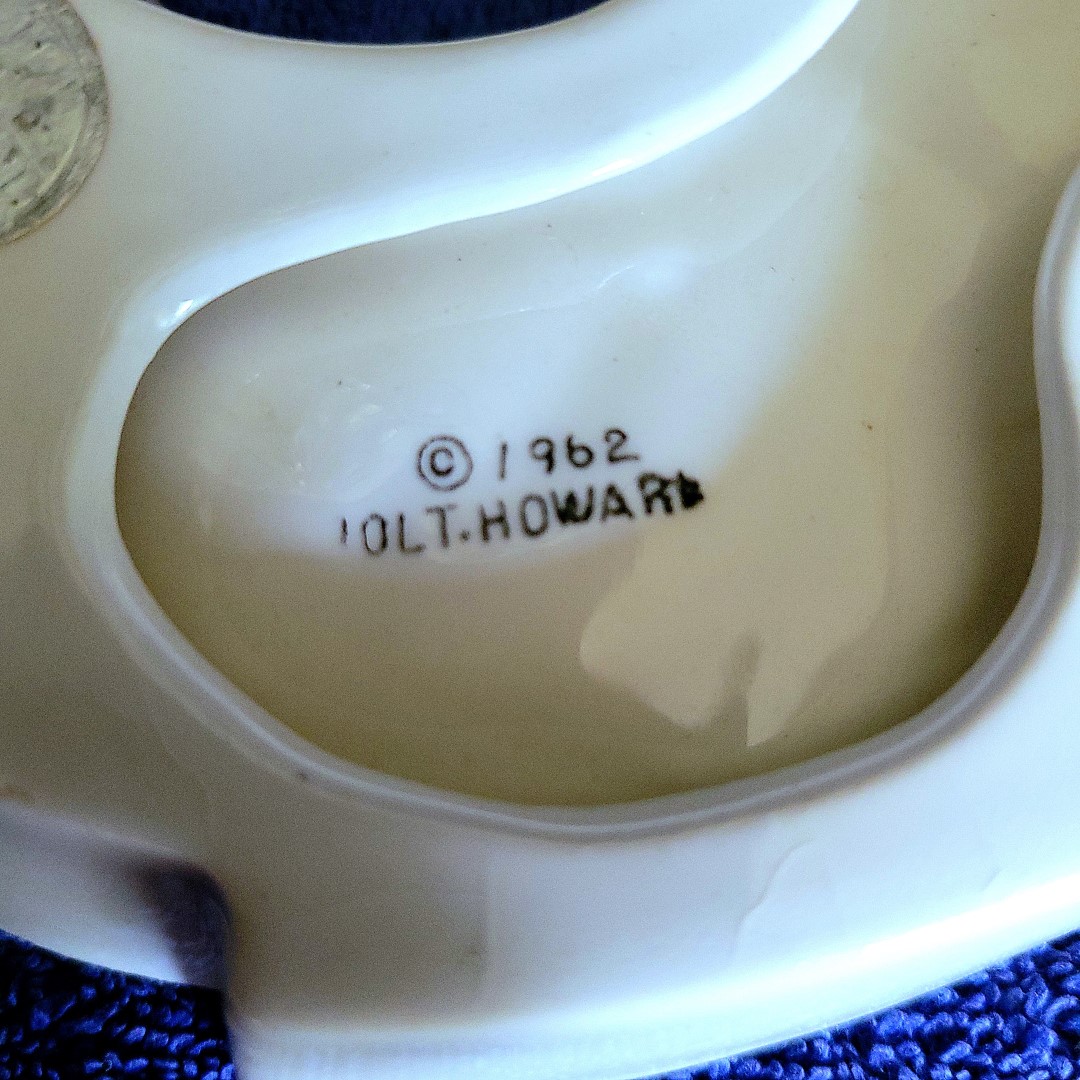
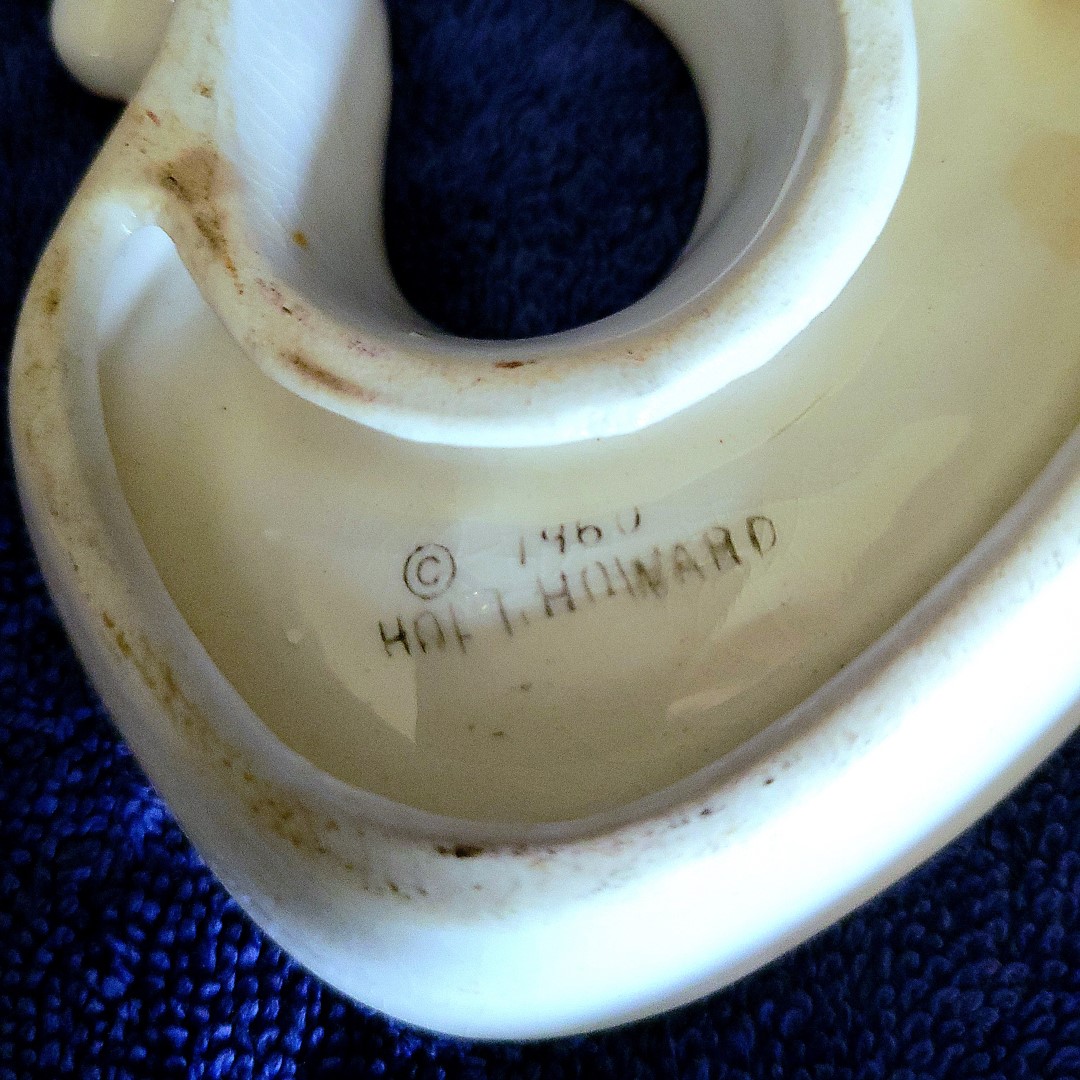
Coq Rouge included at least two sizes of figural rooster nut or snack dishes. The larger version measures approximately 6⅛ inches long × 4⅞ inches wide, while the smaller dish measures approximately 4 9⁄16 inches long × 3½ inches wide. The large form is also documented in opposing left- and right-facing versions, allowing a pair to be arranged facing one another.
The standard collector guide describes the larger dishes as part of a four-piece table-tray set and dates them to 1961. The archive’s documented large example shown here is instead backstamped 1962, demonstrating continued production beyond that published date. The guide’s 1960 date for the smaller dish is consistent with the archive example, which carries a matching © 1960 HOLT-HOWARD mark.
These small serving dishes could be used for nuts, jam, condiments, or even as ashtrays, underscoring how loosely such specialty pieces could be marketed and used.
A Rooster for Nearly Every Corner of the Kitchen
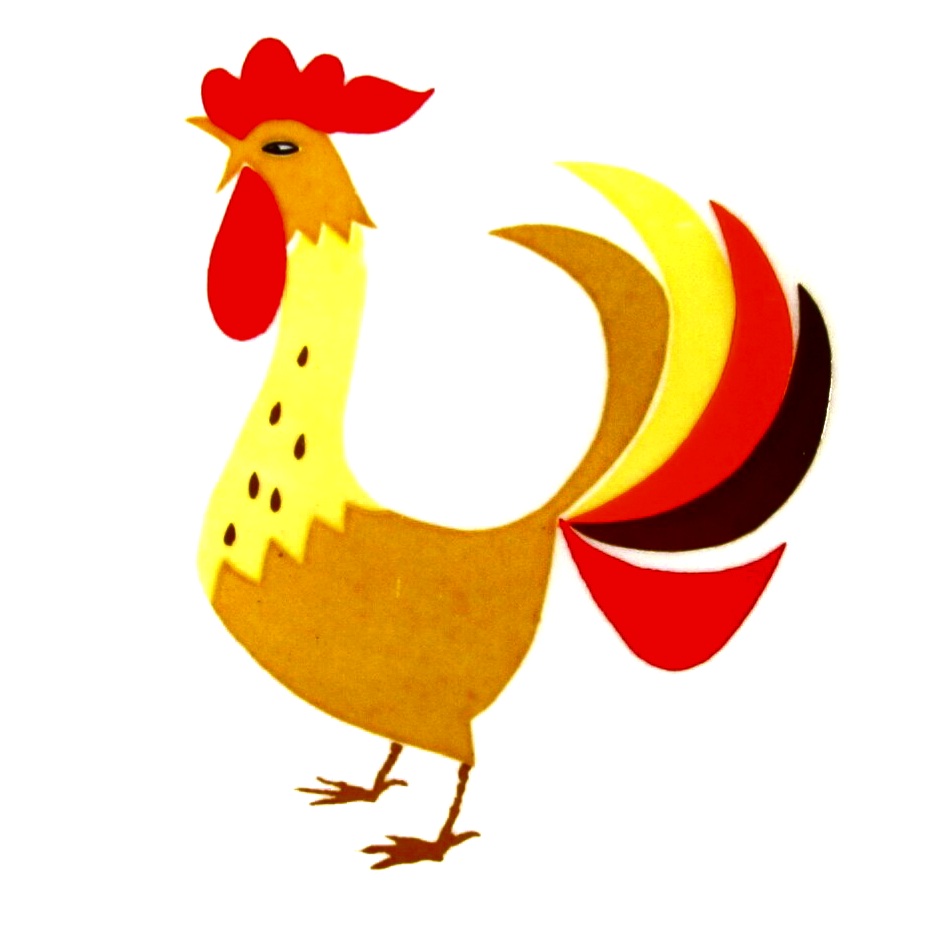
Few Holt-Howard collections demonstrate the company’s ability to turn a single decorative idea into an entire household environment as completely as Coq Rouge. Introduced in 1960 and expanded through the early 1960s, the line moved far beyond basic tableware. The same brightly colored rooster appeared on serving pieces, beverage sets, kitchen tools, small appliances, wooden storage accessories, wall-mounted pieces, smoking accessories and decorative objects — sometimes rendered as a painted graphic, sometimes as a fully sculptural figure.
That variety also makes Coq Rouge unusually rewarding to document. Surviving pieces reveal changes in form, size, markings and production dates that are not always apparent from the published collector guides, while original tags and packaging occasionally clarify product names or uses that were misunderstood later. Taken together, the surviving objects show a collection that was broader, stranger and considerably more inventive than any simple checklist suggests.
More than six decades later, the rooster remains one of Holt-Howard’s most recognizable non-Pixieware designs — exuberant, unmistakably midcentury, and apparently capable of finding its way onto just about anything that would sit on a table, hang on a wall, or fit in a kitchen.